Thank you!
Your support is sustaining the future of local news in our communities.

You Lookin' at Me?


What is this fascination we have with celebrity? We so badly want to see what the famous look like - why? Do we want to see if they look like us? Are we hoping to find flaws? Whether your celebrity of choice is Britney Spears or T.S. Eliot, we love to look.

It helps if the photographer is a very good one, because then - we assume - we'll see even more.

And such is the case in "Close Encounters": Irving Penn Portraits of Artists and Writers, which exhibits 67 of the master's black-and-white portraits from 1944 to 2006 at the Morgan Library in New York, which acquired them last year.

Here we find Salvador Dali, Saul Bellow, Stephen Sondheim, all in Penn's trademark straightforward, look-you-in-the-face style (all gelatin silver prints). With few exceptions - Aaron Copland sillhoutted at the piano, pencil to his chin (1965), Rudolph Nureyev, perversely dressed in a baggy overcoat (1965) - the portraits include no props or costumes. Instead, we have close-ups of bodies or, more often, faces, the camera fiercely demanding to see. Penn shows occasional playfulness, as in a 1972 portrait of Woody Allen made up as Charlie Chaplin, smelling a rose, or Vladimir Nabokov, barely visible behind a screen of high grass, chasing butterflies with a net (1966). But most of the portraits have a formality to them, less in design than in feel; there are no candids here. Penn's camera may not lie, but it may manipulate.

While Penn eschewed props, he did resort to other means of containing his subjects: In one series in the 1940s, he set people in the tight corner of two adjoining blank walls and let them pose at will. Thus we see Georgia O'Keeffe, hands behind her back, staring straight into the camera, showing just the hint of a smile; Truman Capote, wrapped in an overcoat, kneeling huddled on a chair; Marcel Duchamp striking a debonair pose, one foot forward, scarf tossed around his neck, smoking a pipe.

In the 1950s, Penn began closing in on his subjects. Some seemingly reacted by trying to stare down their aggressor; others appear to cooperate, as in a beautiful portrait of the aging French author Collette, a frizzy mop of hair surrounding a face in which lines are etched in heavy makeup (1951).

Everywhere the artist's hand, though subtle, is evident: Simone de Beauvoir, half her face cast in shadow, is a prim burgeoise matron in a wool suit jacket, her hair piled atop her head, a slight purse to her lips (1957).

While most of Penn's subjects are shown solo, some interesting pairs are included here. In a 1947 portrait, Oscar Hammerstein II, head in his hands, sits close to Richard Rodgers, chin in hand, both in dark suits and white shirts; in a 1960 photograph, the architect Frederick Kiesler is alongside artist Willem de Kooning, both in white shirts, elbows on a table, Kiesler to one side, looking down, de Kooning very much taking up more space, staring straight ahead at the camera, cigarette in one hand, ash about to drop.

Eyes play an increasingly important role in the later photographs. S.J. Perelman's eyes bulge behind glasses that clearly enlarge them; Isaac Bashevis Singer's head is turned, so we see just one eye; similarly, Pablo Picasso's face, half shrouded behind a high collar and wide-brimmed hat, features one glittering eye, staring right at the camera.

Ingmar Bergman holds both his eyes shut (his wedding ring visible on his finger), while Arthur Miller holds just one eye closed, behind his glasses. An elderly Louise Bourgeois (1992) shuts her eyes entirely, turns her head away and rests her chin on her hands, as if to say, Go away, I'm thinking about something else. Or trying to.

One of the most recent (and remarkable) portraits in the show is a hulking Jasper Johns, facing the camera (and the viewer) in what can only be seen as a nearly confrontational posture: eyes staring, mouth resolute, face thrust forward. As if to say, You lookin' at me?

And we are. As one viewer was overheard to say, "Isn't it amazing? All these incredible icons." She added loudly to her companion, "And yet they all made such messes of their personal lives."

Well, maybe so. Britney Spears isn't the only one to pay the price of celebrity. For anyone who is interested in the literary and artistic movers and shakers of the latter half of the 20th century, this is a fascinating show.


"Close Encounters" runs through April 13 at the Morgan Library, 225 Madison Ave. Hours: Tuesday-Thursday, 10:30 a.m.-5 p.m.; Friday, 10:30 a.m.-9 p.m.; Saturday, 10 a.m.-6 p.m. and Sunday 11 a.m.-6 p.m. Tel.: 212-685-0008.www.themorgan.org.

Latest News

‘So Little to Do,’ so much to discover at James Barron Art

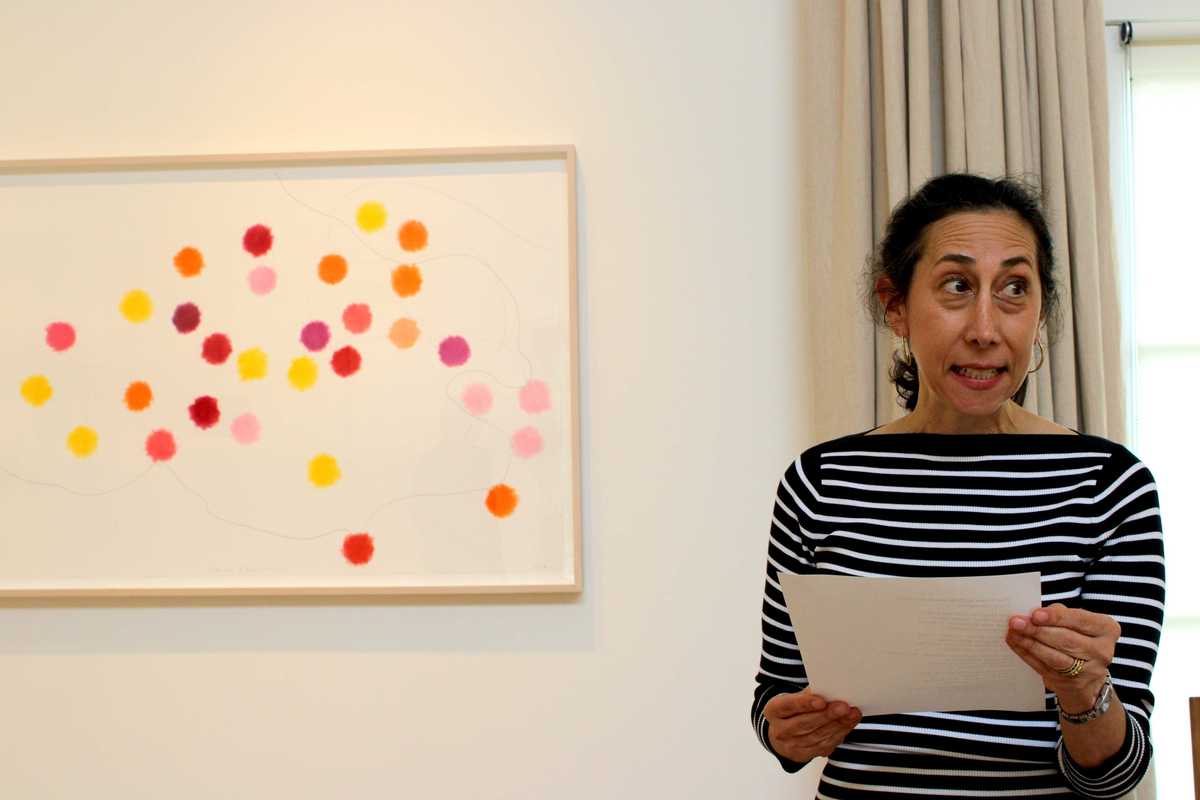
Curator Deborah Goodman Davis reads the Emily Dickinson poem “The Grass So Little Has to Do.” Spencer Finch’s “Following Three Bees (Zinnias)” buzzes in the background.

Photo by Natalia Zukerman

“The Grass Has So Little to Do,” on view at James Barron Art in Kent, takes its title from Emily Dickinson’s poem “The Grass So Little Has to Do,” written in 1862:

“The Grass so little has to do—
A Sphere of simple Green—
With only Butterflies to brood
And Bees to entertain—”

Keep ReadingShow less

Marina Kotchoubey is not a woodworker

Marina Kotchoubey is not a woodworker

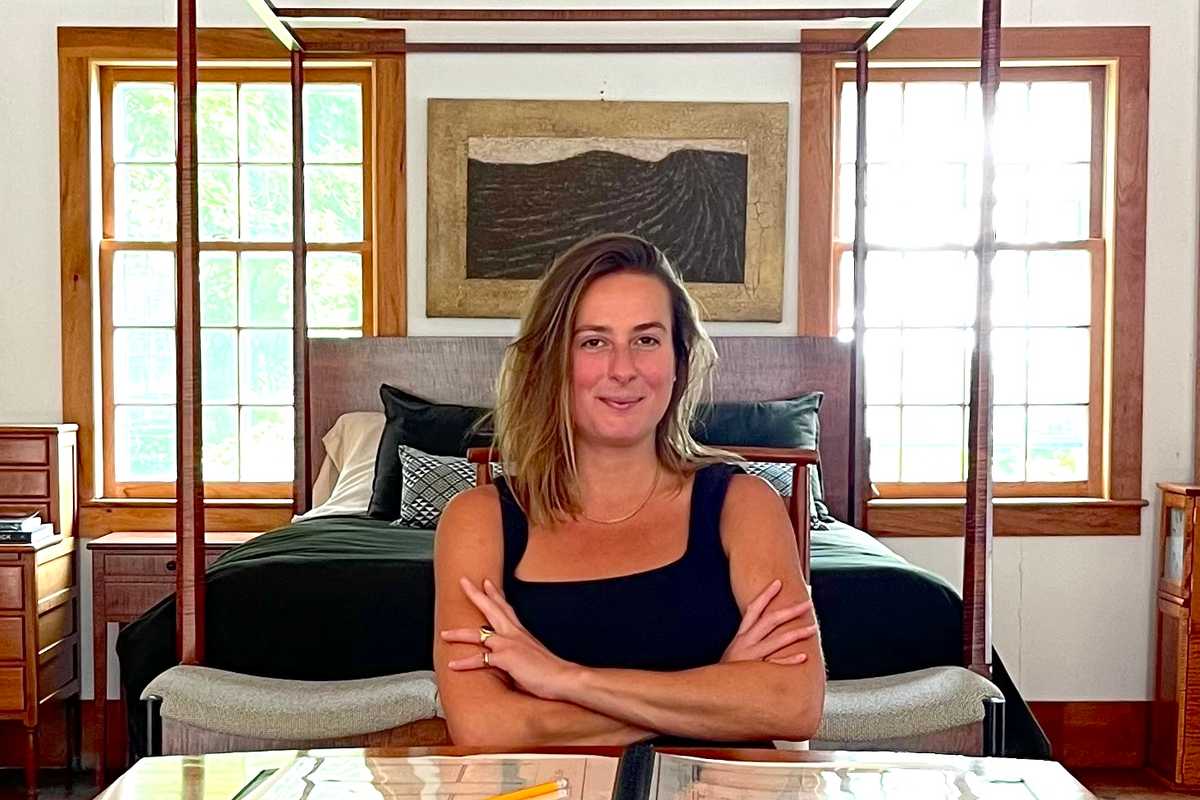
Marina Kotchoubey at the Ian Ingersoll Cabinetmakers showroom in West Cornwall.

Photo by D.H. Callahan

After 40-something years navigating the world of custom fine furniture, Ian Ingersoll was getting ready to retire. Starting off with a little dovetail stool that he sold at a shop in West Cornwall in the 1970s, he’d grown his skill and his business into something he — and the whole town — could be proud of. Shutting down that business was not an option.

Ingersoll built Ian Ingersoll Cabinetmakers, which produced mainly classical Shaker furniture, on passion: the passion he had to make a living through creative challenges and the passion of his employees, who all seem deeply in love with their craft.

Keep ReadingShow less
A legacy of giving at Norfolk Chamber Music Festival

One hundred and twenty years ago, Carl and Ellen Stoeckel commissioned New York architect E.K. Rossiter to design The Music Shed in Norfolk, Connecticut. After nearly a decade of entertaining their friends and neighbors with the finest music of the day, they built a permanent home for their beloved Litchfield County Choral Union.

The commission and full funding of the construction was not unheard of in an era when great fortunes led to public enrichment. Railroad tycoon John D. Rockefeller was instrumental in funding institutes of higher education. Steel baron Andrew Carnegie was building libraries all over the country, and famously said that a man who dies rich is a disgrace, challenging his peers to give their fortunes back to the people.

Keep ReadingShow less
google preferred source

Want more of our stories on Google? Click here to make us a Preferred Source.
Two unique exhibitions at Geary Gallery

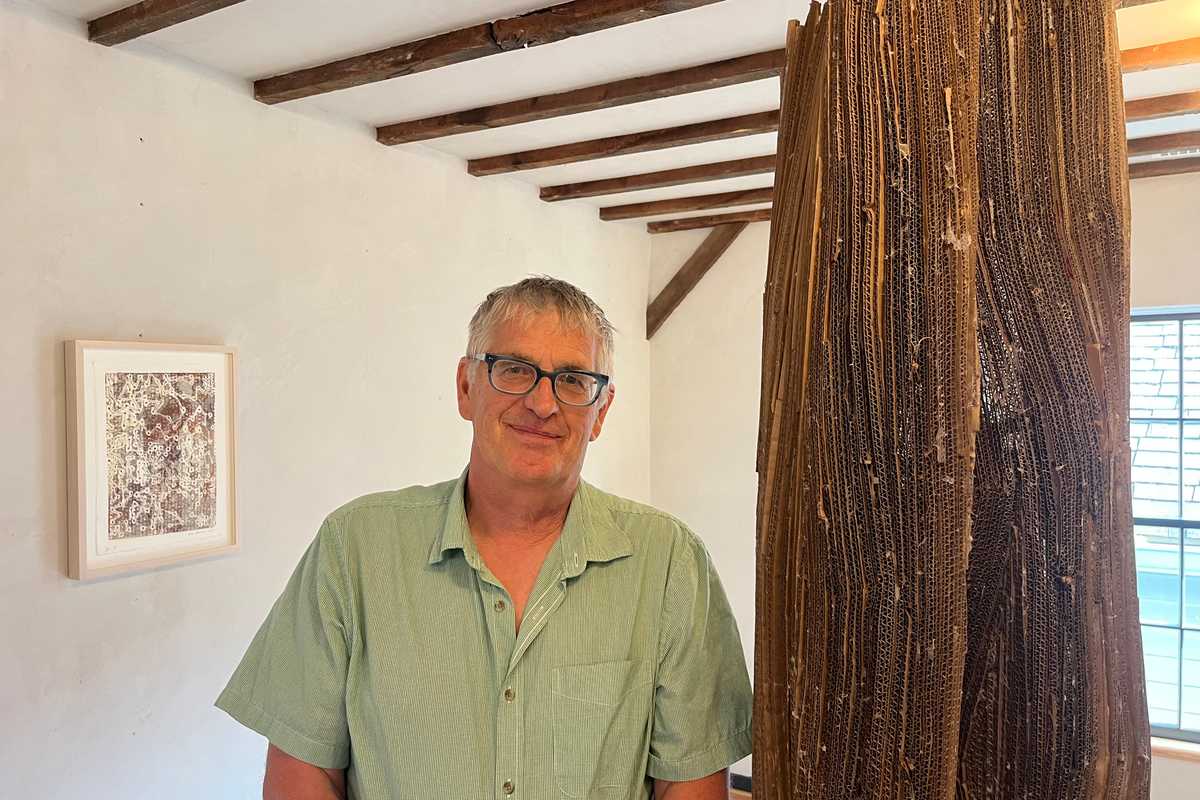
Henry Klimowicz with his sculpture, “Partial Pillar 1”

Photo by D.H. Callahan

On Saturday, Aug. 1, Geary Gallery opened its doors in Salisbury for two unique shows in its first- and second-floor gallery spaces. Art lovers flooded both floors over the course of the afternoon, giving the events a vibrant feeling that enhanced the importance of the art.

On the first floor is a show by Chicago-born, Colorado-based photographer Summers Moore, titled “Lobitos: Pueblo Fantasma,” or “Lobitos: Ghost Town.” The work centers around her daughter’s current hometown in Peru. Moore herself found a home away from home in Colorado in the mid-1980s and encouraged her children to seek out new places outside of their comfort zones.

Keep ReadingShow less

Writer’s retreat in the woods

Writer’s retreat in the woods

Participants in a 2024 Great Mountain Forest Woodland Academy workshop at Yale Camp.

Photo by Mike Zarfos

Great Mountain Forest (GMF) will host its first Nature Writing Retreat at the historic Yale Camp in Falls Village from Aug. 7-9, 2026. Writers of all levels are invited to draw inspiration from one of New England’s most notable forest landscapes. GMF envisions the retreat becoming an annual event celebrating writing, conservation and the relationship between people and forests.

This immersive three-day retreat reflects on the legacy of Hal Borland, the American writer and New York Times nature columnist whose work was deeply connected to this landscape. The retreat explores how wilderness shapes language, strengthens close observation and fosters environmental consciousness.

Keep ReadingShow less
From Cornwall to Rome, Adam Van Doren at Berkshire Botanical Garden

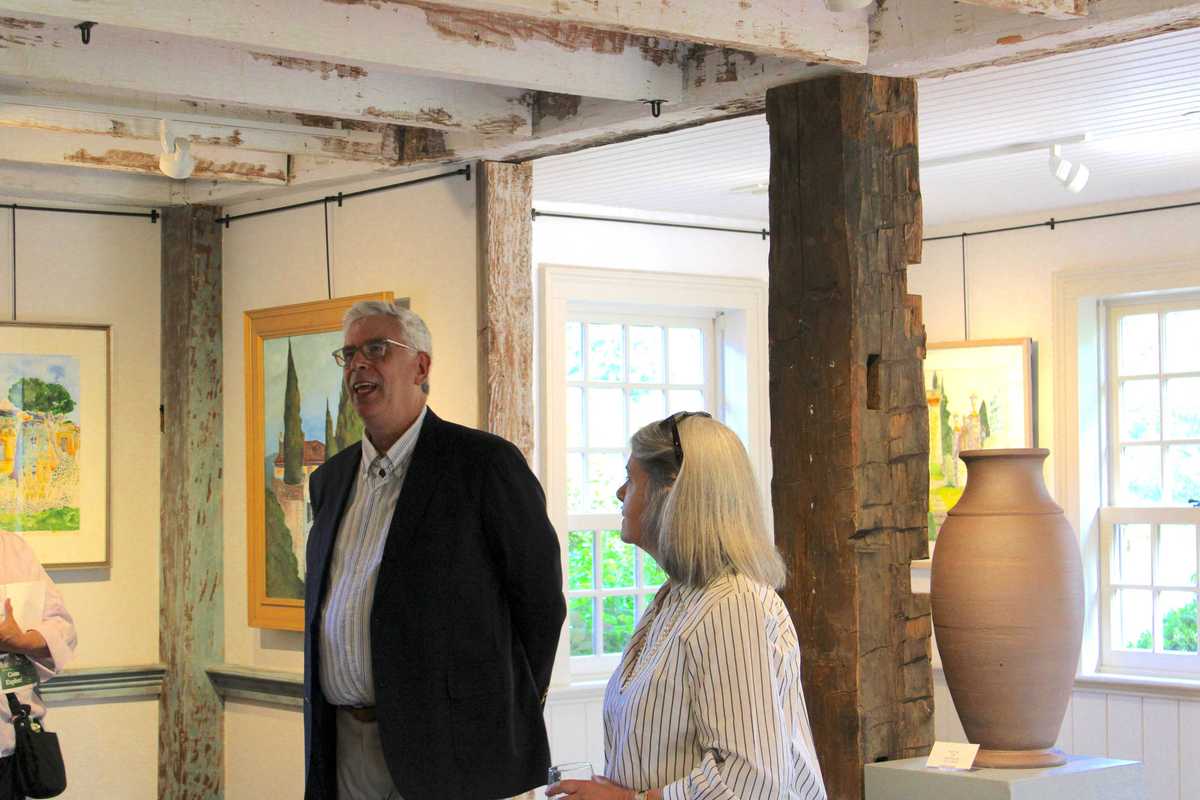
Artist Adam Van Doren and curator Donna Hassler talk to a group of visitors at the Berkshire Botanical Garden. A Stephen Proctor vessel sits to their left.

Photo by Natalia Zukerman

This summer, the Berkshire Botanical Garden in Stockbridge has hosted “Grounded in Nature: Paintings by Adam Van Doren,” an exhibition exploring the intimate relationship between architecture and the natural world.

On view for only a few more weeks in the Leonhardt Galleries, the exhibition features more than 35 watercolor and oil paintings by the New York-based artist, architect, author and Yale professor, curated by art historian Donna Hassler, director emerita of Chesterwood. The works span three distinct places that have shaped Van Doren’s artistic practice: New York City, Cornwall, Connecticut, and his travels throughout Europe.

Keep ReadingShow less
google preferred source

Want more of our stories on Google? Click here to make us a Preferred Source.
google preferred source

Want more of our stories on Google? Click here to make us a Preferred Source.