Latest News
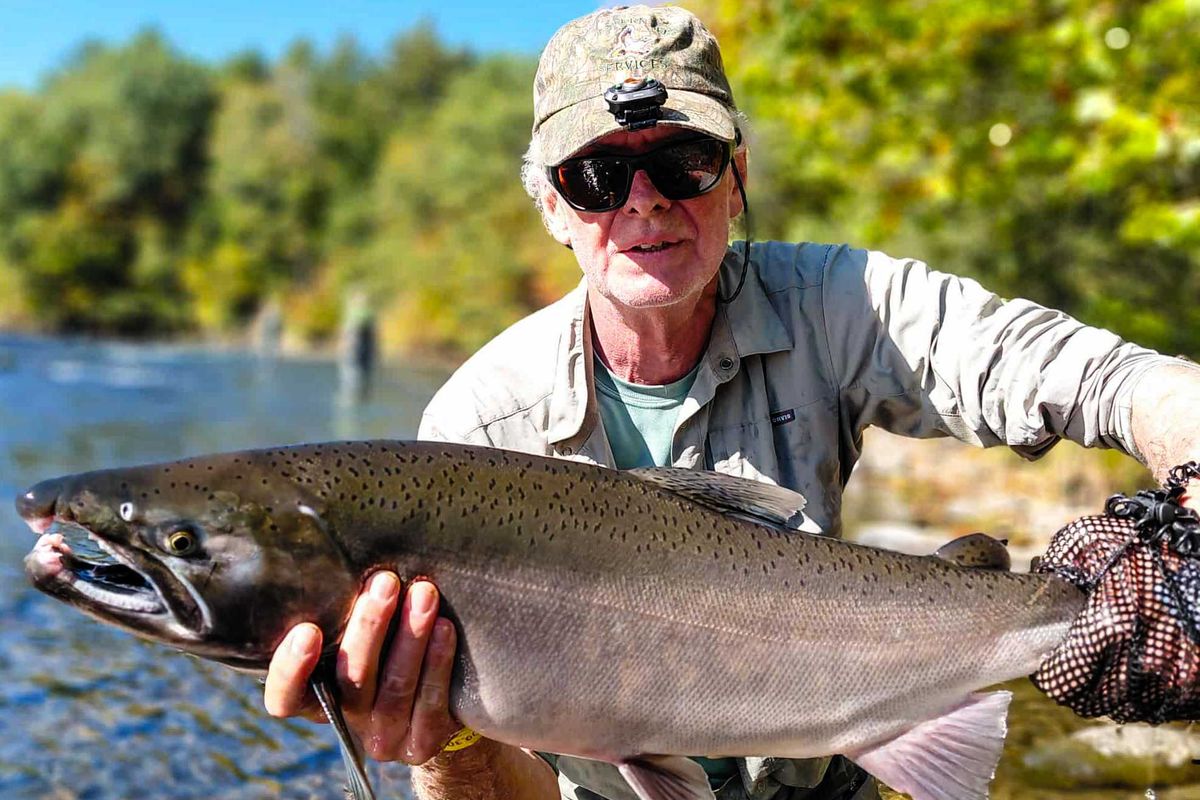
Gary Dodson managed this Coho salmon in the Salmon River in western New York two weeks ago despite low flows in that watershed.
Patrick L. Sullivan
This is disappointing because fall fishing is my favorite time. Trout put on the nosebag in anticipation of the long, bleak winter, and the chiller temps chase off the more casual anglers.
Not that I’d be able to fish much right now, which brings me to the second problem. Fate has given my right hip the gang gong.In early September I could hardly walk. With the aid of a steroid shot about a month ago, I slid back into the convalescent class and could do a bit of controlled hobbling, but surgery seems inevitable.
A few weeks back I took a week off in the Catskills and on day one limped out into the Esopus, where I played with the switch rod rig my main Catskill fishing buddy Gary Dodson assembled for me and managed one small rainbow before declaring victory and making my painful and awkward way out. I spent the rest of the week chopping firewood, which doesn’t involve the hip much, and watching bad cinema, which doesn’t involve the hip at all.
So I am in the unenviable position of getting my fishing kicks vicariously.
Gary has been out in Pulaski chasing salmon in similarly low flows. As per usual on the Salmon River, it’s hit or miss. Lately more hitting than missing, and he keeps me updated with photos and cryptic text messages such as “Had a good one come unbuttoned last second. Nick said it was at least 25 pounds.” Nick is Gary’s favorite guide, because he is a fearless wader and gets Gary’s salmon in the net.
He also went all the way down to where the Esopus empties into the Ashokan Reservoir with the idea of throwing streamers for big browns. He got smallmouth instead.
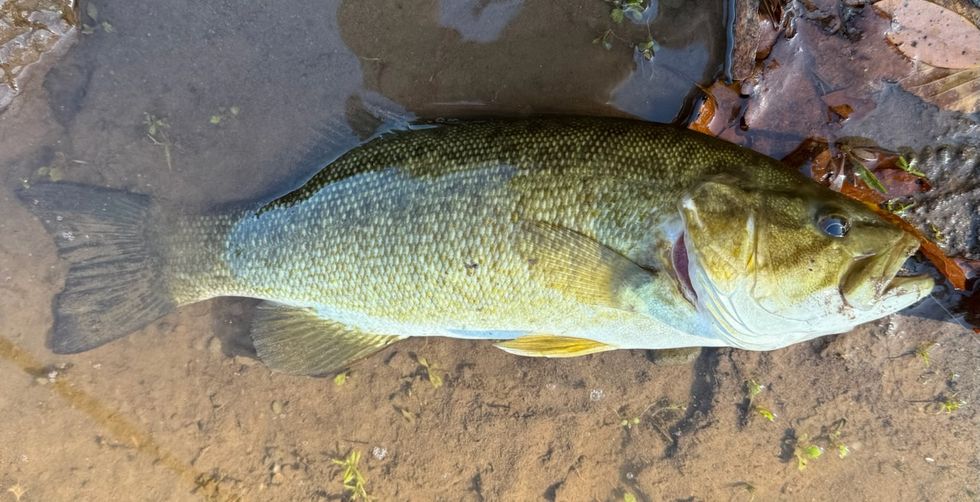 Gary Dodson also coaxed this smallmouth bass out of the very low Esopus Creek two weeks ago, using a Clouser pattern. He was trying for a spawning brown trout but was happy to get anything.Patrick L. Sullivan
Still, it’s better than a poke in the eye with a sharp stick.
On the other hand, what would be worse than a poke in the eye with a sharp stick? Leprosy?
Meanwhile, the Connecticut Department of Energy and Environmental Protection stocked the two Trout Management Areas of the Housatonic recently, and with the flow low but water temperatures acceptable this is the time to get out there and practice stuff with willing participants.
I would be doing two things.
The first is playing around with dry-dropper rigs. This is when you attach a nymph on a dropper tied to the bend of the hook of a very visible dry fly. It is very similar to indicator nymphing except the fish might hit the dry fly instead of the nymph. It also appeals to my inner traditionalist in a way a bright orange bobber most decidedly does not.
I usually go with short droppers, no more than two feet, but I got to thinking about maybe adding a foot or two more and using an unweighted nymph or a wet fly. The idea is the extra length would allow the thing to sink a bit more and wiggle around in a way that suggests it is not in fact tied to that bug bushy thing that just floated by.
Suggestions: Stimulator for the dry, and a leadwing coachman wet fly on the dropper, thus imitating the stone fly and isonychia. Or the almost unsinkable Chubby Chernobyl for the dry, and an unweighted Prince or Zug Bug trailing behind. In deeper runs, assuming you can find any, I might go with a beadhead nymph, but probably not a tungsten head or Perdigon, as I think they’d just get hung up.
The other thing I want to try is using the switch rod rig and a slow-sinking leader to chuck out teams of three wet flies, swinging them downstream. The 11 foot rod and the elaborate combination of running line, shooting head and long leader (15-18 feet once it’s all assembled) requires at a minimum a well-controlled roll cast, a high stick, and a lot of mending.
But it also allows the angler to cover a lot of water without moving around much, which suits my present state. And it would allow me to work on my roll cast, not the strongest part of my game.
As I peck this out on Sunday, Oct. 5, I’ve had three straight days of walking almost normally, indicating the steroid shot has finally kicked in. So if you see someone on one of the more easily-accessed sections of the Housatonic making bad roll casts and cussing profusely, pull over and say hello.
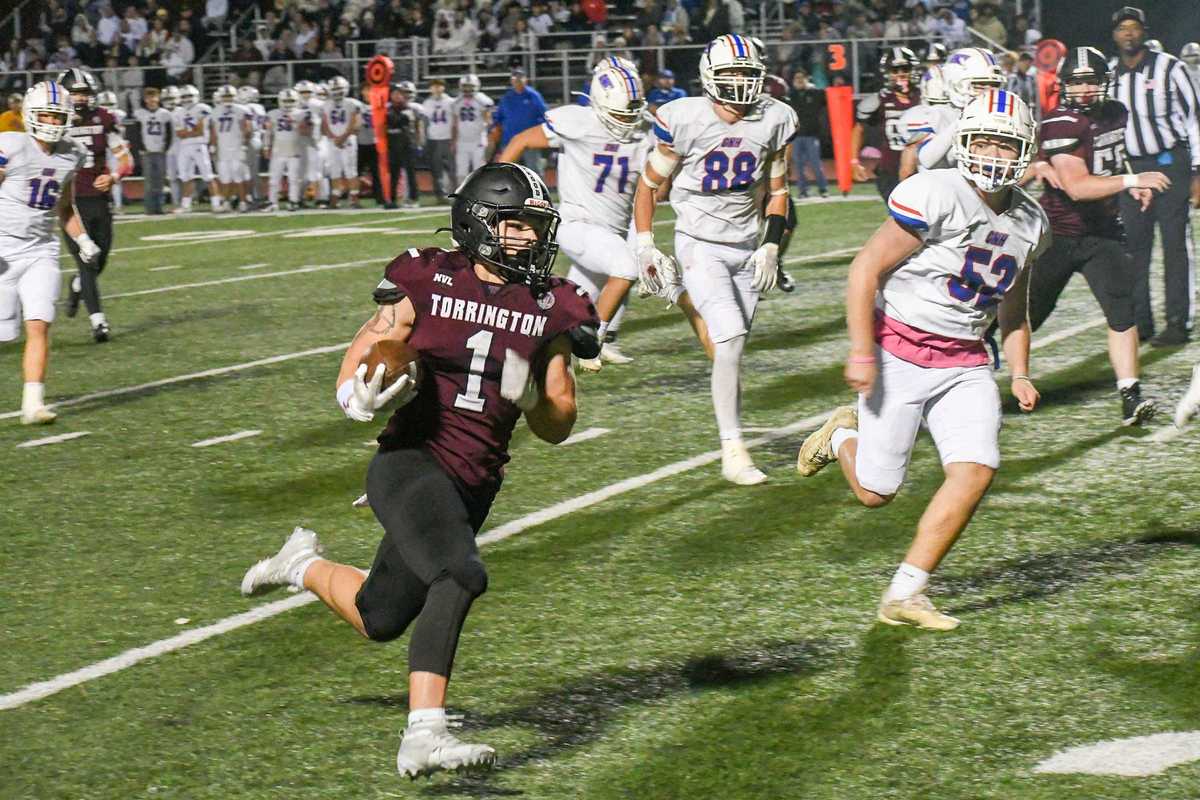
Torrington RB Aiden Hansen scored seven touchdowns against GNH on Friday, Oct. 10.
Riley Klein
Torrington capitalized on early penalty trouble for GNH and quickly opened up a lead. RB Aiden Hansen rushed for four touchdowns in the first half to help give Torrington a 34-0 lead after two quarters.
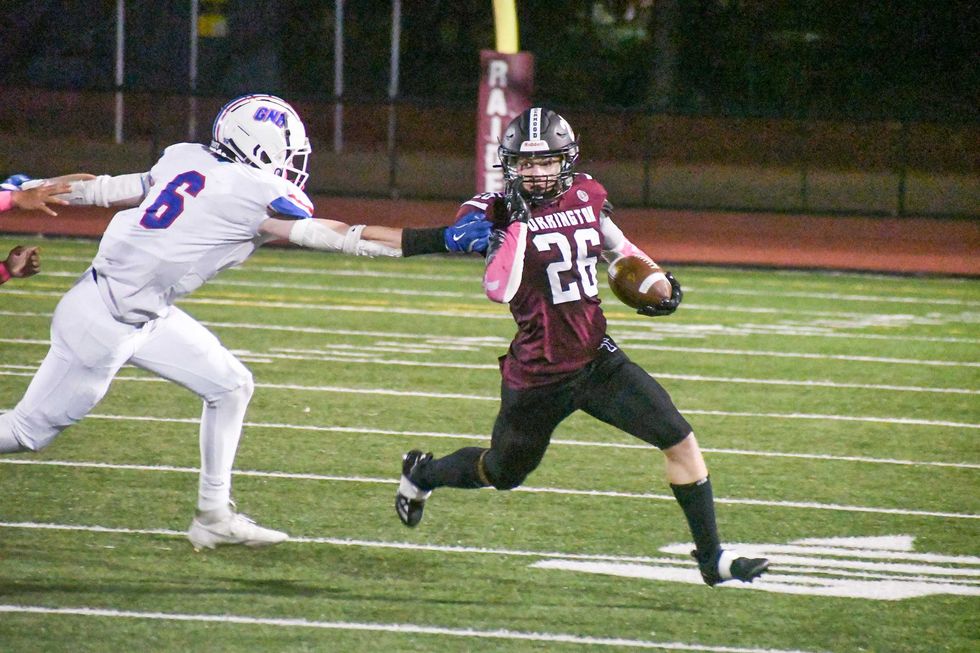 Wes Allyn reaches for Torrington RB Evan Roman.Riley Klein
GNH generated offensive momentum in the second half with big breakaway plays from the full-house backfield. The Yellowjackets battled with three touchdowns, but Torrington responded in kind and ultimately won 55-21.
The Raiders were led by Hansen with a total of seven touchdowns. Torrington’sRB in jersey No. 5 rushed in one touchdown.
GNH QB Trevor Campbell completed four of six pass attempts for 100 yards including a 48-yard touchdown throw to Owen Riemer. Airyn Berube returned a kickoff 88-yards for a TD. Jadiel Perez rushed in a four-yard TD for GNH.
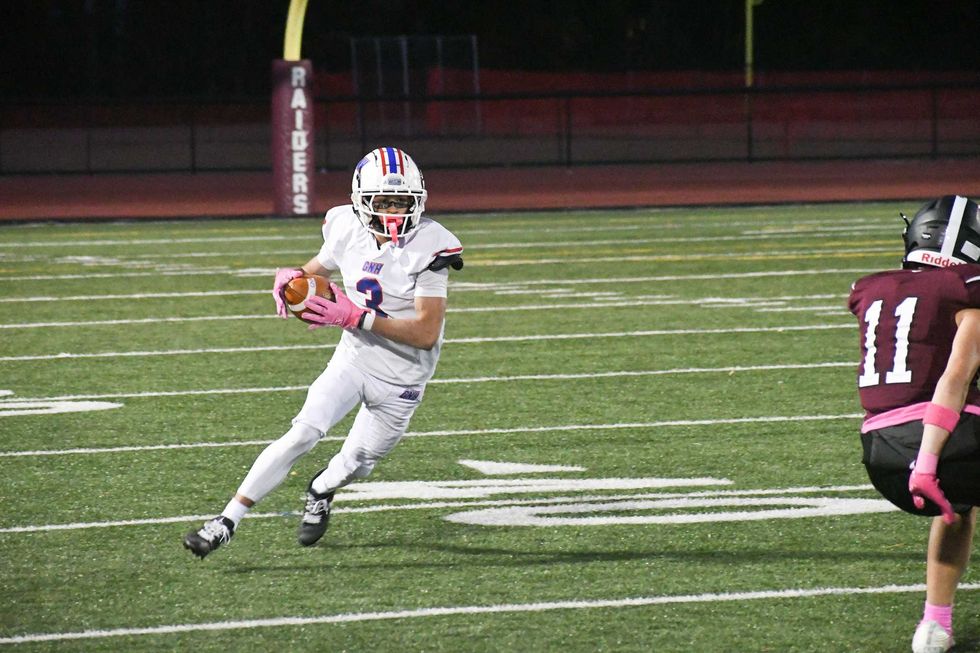 Airyn Berube returned a kickoff 88-yards for a TD.Riley Klein
Torrington’s season record advanced to 3-2 and GNH moved to 1-4.
Both teams will have a bye week before returning to their home fields the following week. Torrington hosts Oxford High School (2-3) Oct. 24 at 6 p.m. at Robert H. Frost Sports Complex.
GNH will play at Van Why Field in Winsted Oct. 25 at 1 p.m. to host Wolcott High School (3-2).

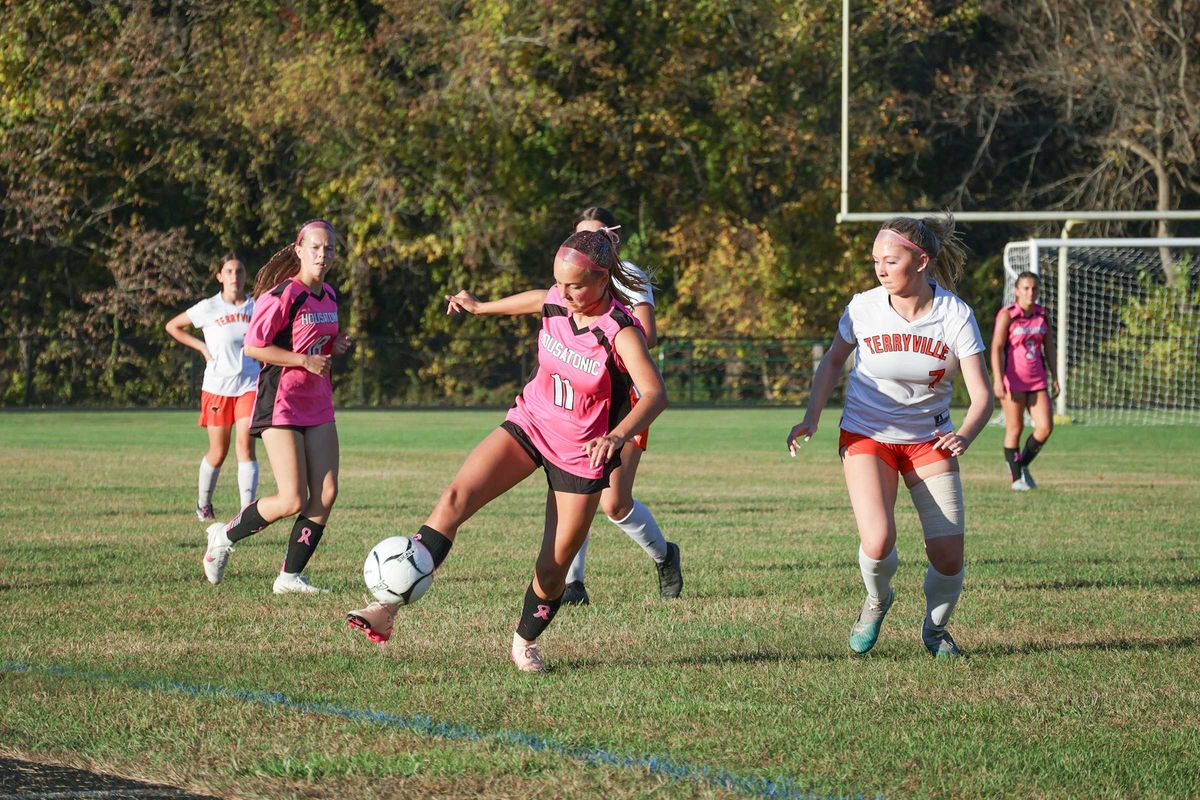
Simon Markow
Housatonic Valley Regional High School girls and boys varsity soccer continued to rack up wins last week. The girls’ record advanced to 10-3 after back-to-back wins, first with a score of 5-0 against Terryville High School on Oct. 6 and then 5-3 against Thomaston High School on Oct. 9. The boys’ record moved to 8-3-1 with a 2-0 win against Terryville on Oct. 7 and then won 7-0 against Thomaston on Oct 9. With just a few regular season games remaining, both squads will qualify for the Berkshire League playoffs and the Connecticut Interscholastic Athletic Conference Class S postseason tournament.
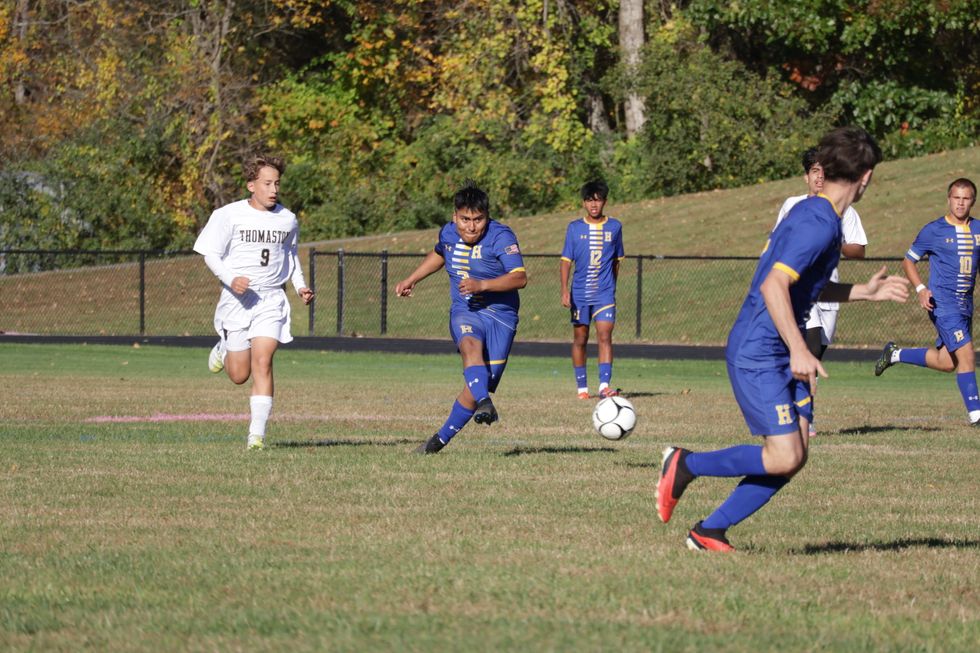 Simon Markow