Latest News
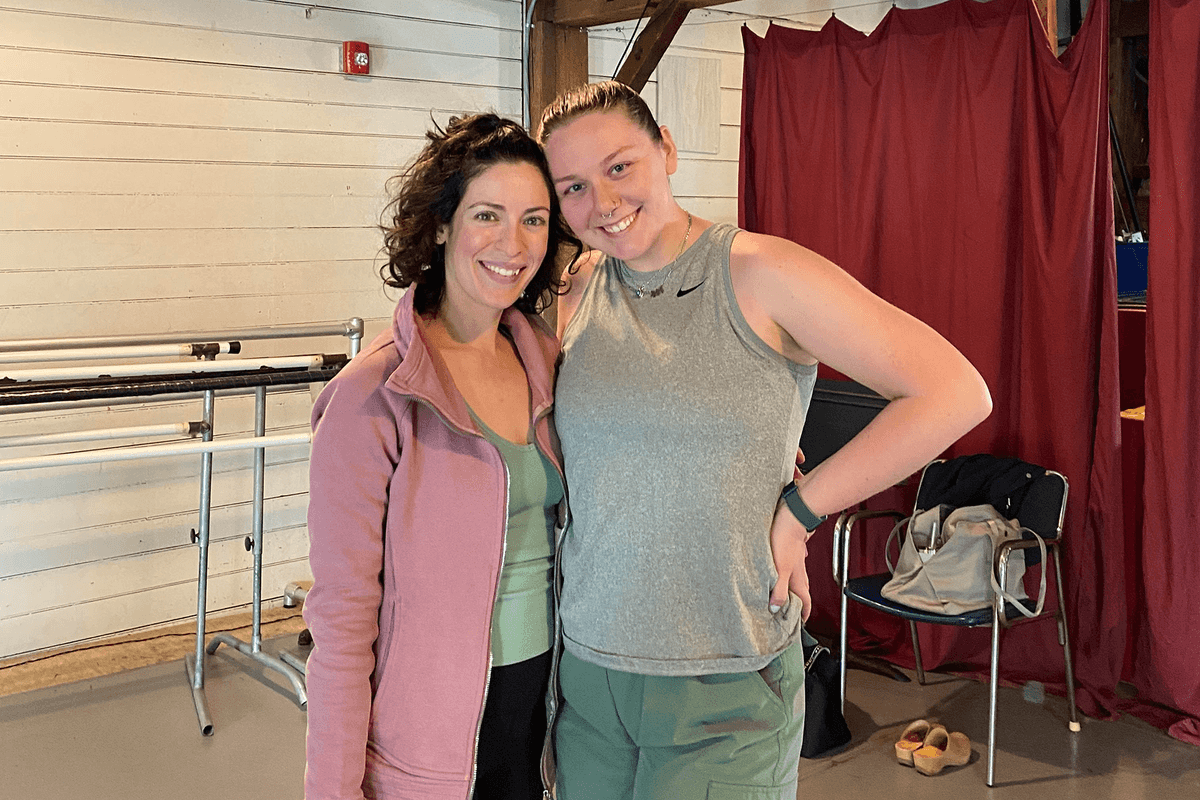
Elizabeth Frabizzio and Zoe Czerenda, once both students at FineLine, are now co-owners.
Provided
“It felt like the natural progression of my career,” Frabizzio said.
Frabizzio joined FineLine as one of its earliest students during her senior year of high school. Not long after graduating, the founders offered her a small class to teach.
“They gave me my first class as I was dabbling in the professional world and auditioning and performing,” she said.
Her career soon took her well beyond New Milford. She performed as an ensemble dancer in the Radio City Christmas Spectacular at Radio City Music Hall, with the modern dance company Momix, and appeared in Darren Aronofsky’s “Black Swan.”
Over time, teaching pulled her back toward the studio. About 10 years ago, after getting married, Frabizzio began gradually taking on administrative responsibilities and helping run the school behind the scenes.
Also a New Milford native, Czerenda began dancing at FineLine as a child and later joined the studio’s pre-professional repertory company, Artists in Motion. By age 15 she was assisting with classes.
 A FineLine ballerina.Provided
Today, Czerenda and Frabizzio share the day-to-day work of running the studio. Their first school year as owners has come with a few surprises.
“It’s been kind of a wild ride,” Frabizzio said, laughing. She welcomed her second child last summer, just as the transition to ownership began.
“I’m so lucky that I have Zoe,” she said. “She’s an amazing partner. She kind of steered the ship and ran the show the first trimester of the year.”
While the leadership is new, the philosophy of the studio remains firmly rooted in what Parkinson and Wise built.
“I’m definitely preserving the technique and the passion that Elizabeth and Scott brought to FineLine,” Frabizzio said.
The founders’ Broadway backgrounds shaped the studio’s approach to training, emphasizing strong technical foundations for dancers of all levels.
“A solid technique is something that anybody would want, regardless of aspirations,” said Frabizzio. “If you want to be a professional or if you want to be a recreational dancer, it’s important to learn the right way.”
FineLine now serves more than 100 students ranging from age 3 through adults. Classes include ballet, tap, jazz, contemporary, lyrical, acrobatics and musical theatre, along with vocal performance and drama. The theatre program is led by Robin Frome, who also runs the Sherman Playhouse.
 Students at FineLine Theatre Arts.Provided
The studio recently received another sign of its local support, earning first place in Litchfield Magazine’s 2026 Readers’ Choice awards.
“We were really excited to come in first place,” Frabizzio said. “It’s so great for the area.”
At the same time, the new owners are mindful of how demanding dance culture can sometimes become.
“What I pulled from the professional world was how toxic it could be,” Frabizzio said. “I just want these kids to feel loved. I want them to feel empowered and to know that they are enough at any ability.”
For the past 15 years, Frabizzio has primarily taught children between the ages of 3 and 10 — often their first introduction to dance.
“I don’t take that role lightly, especially now that I’m a mom,” she said. “I know what those first impressions are and what they mean.”
Her goal is simple: “I want them to walk away with love and joy,” she said. “I want them to be excited to come to class.”
Accessibility is also part of the studio’s mission. This school year, FineLine awarded $23,000 in scholarships to students through an application process supported in part by community performances at the studio.
Looking ahead, FineLine will present its annual spring performance at the end of May, followed by its summer programs in July and August.
For Frabizzio and Czerenda, the studio’s next chapter is less about reinvention than stewardship.
“We’re really trying to preserve what they gave us,” Frabizzio said. “And that’s the love and the joy of dance.”
“Being an educator has been the greatest blessing of my life,” said Czerenda. “To be a safe space, a light of positivity or an outlet for these kids is what makes this experience so special. They teach me how to be a better educator and I like to think I help them become better humans as well as dancers and performers.”
Find out more and sign up for a class at finelinetheatrearts.com

Lenore Mallett at The Colonial Theatre.
Rebecca Bloomfield
That Mallett is a creative, entrepreneurial, energetic and successful professional is indisputable. Today she holds two almost full-time jobs. The first is as a top-rated sales executive at William Pitt Sotheby’s International Realty, where she connects clients to the “homes of their dreams.” The second is managing the Colonial Theatre.
“We took on the acquisition and renovation of what was once the town’s popular movie hub decades ago and reconfigured it for the benefit of the town and its surrounding communities,” Mallett said. “It was our intention to remake it into a cultural hub, one that could house a wide diversity of events with broad public appeal.”
“We figured a good way to start was to rent out small spaces within the building,” she added. “We loved helping young entrepreneurs, acting as a launching pad for their small businesses, and we kept the rent affordable. Initially we had a housewares store, a hair salon, a baker in the basement and a photographer on the second floor. They all flourished, outgrew their spaces and successfully moved on. For us, it was like baby birds leaving the nest.”
Today the Colonial Theatre continues to support community programs, including its largest tenant, Canaan Kids Art Space. The organization hosts an after-school club for children ages 6 to 10 and a summer program with four one-week sessions, providing families with a safe and creative environment where children can learn about many forms of art and create their own work. Organizers also maintain a policy that no child is turned away for lack of funds, working with families to ensure participation.
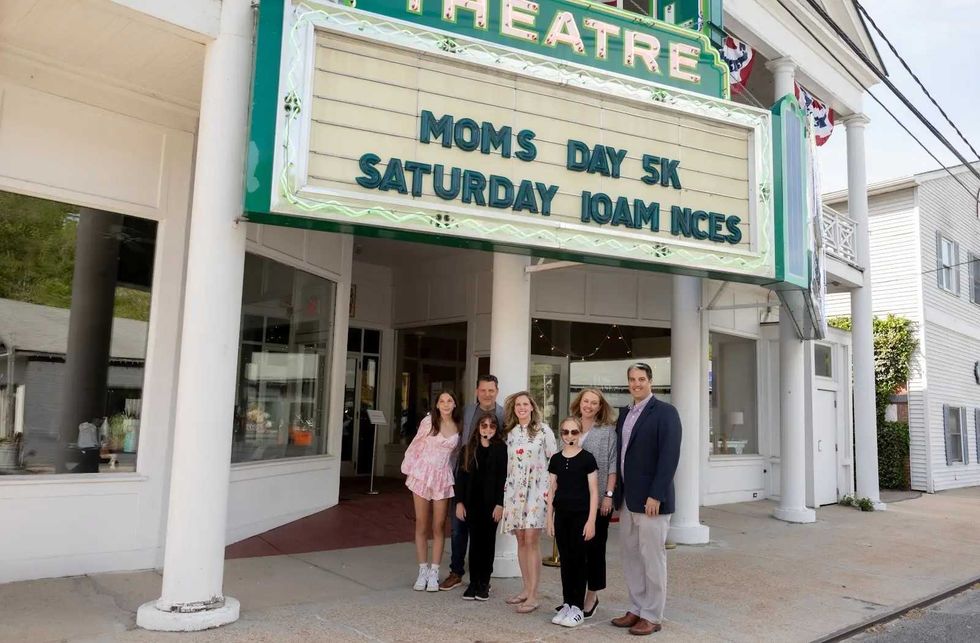 The Malletts and the Fiorillos outside of The Colonial Theatre. Sonja Zinke
The Colonial’s space — encompassing a second-floor ballroom, a 120-seat theater and several smaller rooms — is highly versatile and can be reconfigured to accommodate a wide variety of events and audiences. The venue has hosted movie screenings and festivals, graduation and awards ceremonies, large family reunions, birthday parties, cultural festivals, arts and crafts fairs, educational workshops and literary events including book readings and author talks.
“The space is open for the community to use as they see fit,” Mallett said.
Mallett’s generosity of spirit is also reflected in her volunteer activities. When her children were younger, she became a reading tutor at their elementary school, helping more challenged readers catch up with the rest of the class. She was also the co-founder of ReGroup, a Stamford-based nonprofit that helped women successfully return to the workplace after taking “gap years” to raise families.
More recently, Mallett and her husband became partners in Robbie’s Community Market in Great Barrington, the eatery founded by Sheffield native Robbie Robles that opened last summer.
Most recently, the Colonial hosted the Falls Village and North Canaan historical societies’ George Washington Ball celebrating the 250th anniversary of George Washington’s birth.
Coming up is a movie series featuring notable films from the 1980s and 1990s, to be shown once or twice a month. Planned titles include “Back to the Future,” “Top Gun,” “Jurassic Park,” “The Princess Bride” and “Ferris Bueller’s Day Off.” More events are in development, Mallett said. Community members can follow announcements on the Colonial Theatre’s website, canaancolonial.com, or watch the theater’s marquee for upcoming programs.


Want more of our stories on Google? Click here to make us a Preferred Source.
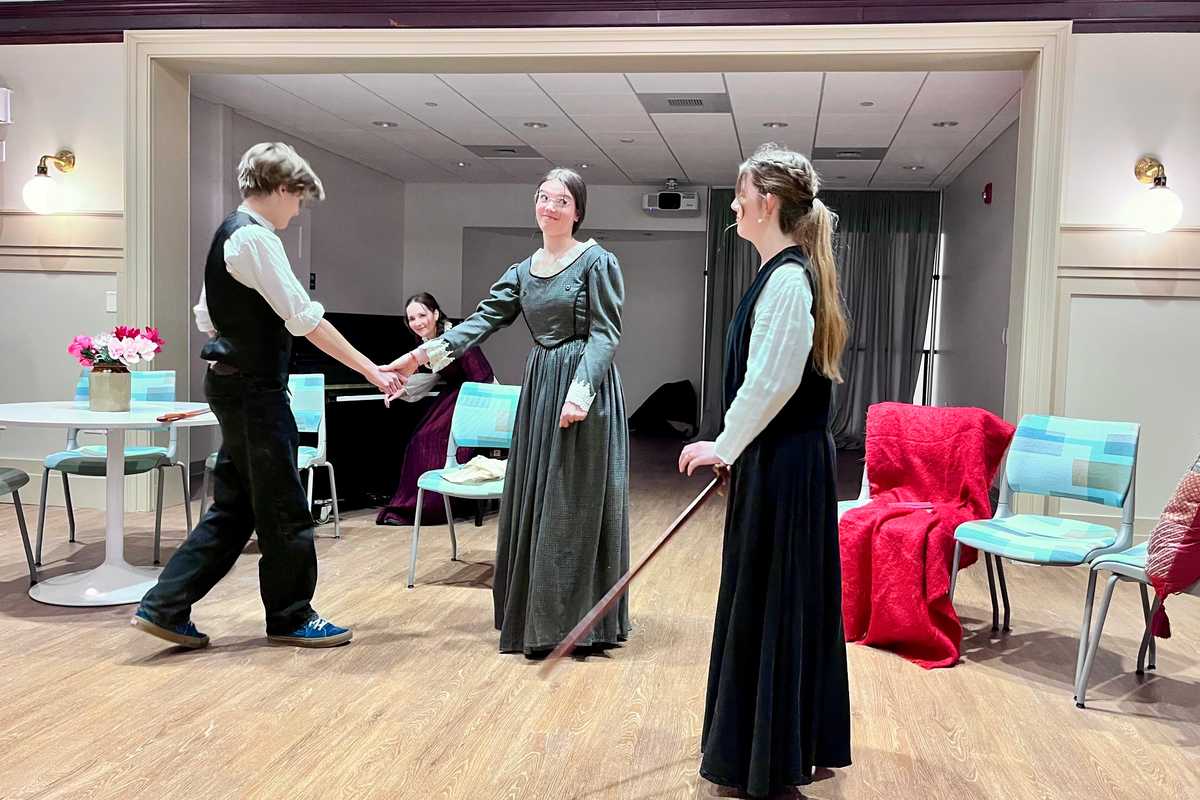
Students at Berkshire Waldorf High School rehearse for the performances of “Little Women” March 13-15 at The Unicorn Theater in Stockbridge.
Mike Cobb
“The idea of ‘Little Women’ came from our senior girls who wanted a play with a heavy female cast after doing ‘The Outsiders’ last year. Kate Hamill’s adaptation is spunky, funny, with a contemporary feminist slant that transcends Louisa May Alcott’s ideas to today’s audience.”
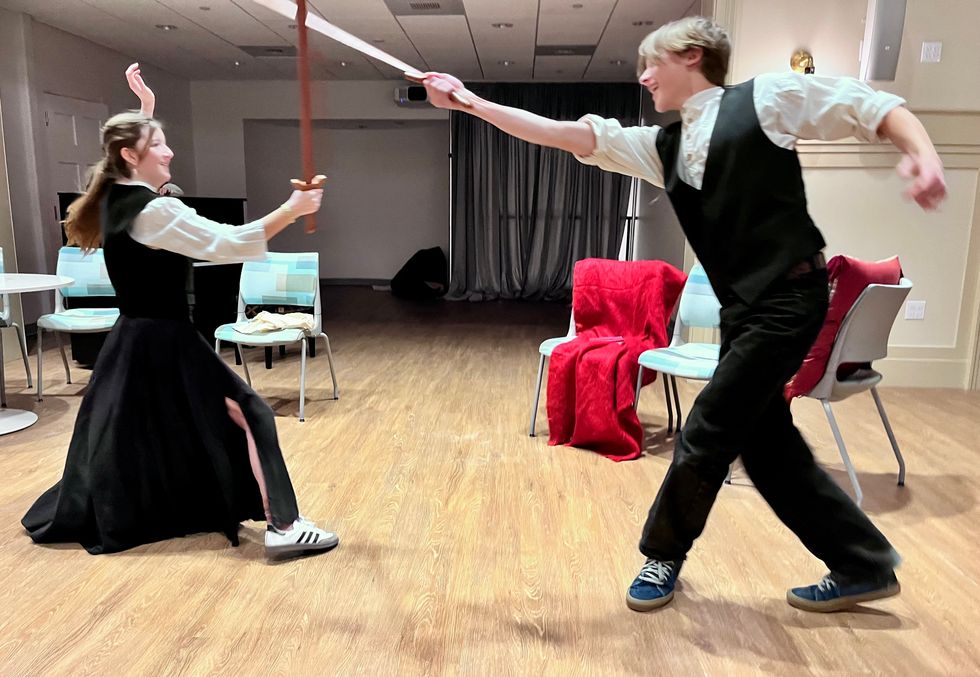 Students learning “fight” choreography.Mike Cobb
Actor Noelle Bodenstab said, “My role is Hannah. She’s very sassy and a very big contrast from the role I played in ‘The Outsiders’ last year. I feel as though it’s exercising my acting abilities, and I’m really excited to see how it turns out in the play.”
Actor Leo Martinez said, “I am playing Laurie, who is a friend of the Marches and this lonely, rich, sentimental guy who doesn’t really like the traditional idea of a man. His character revolves around his love for Jo, who doesn’t fit into the role of a girl very well, and them growing up together.”
The production features contemporary and original songs performed by the Berkshire Waldorf High School rock band.
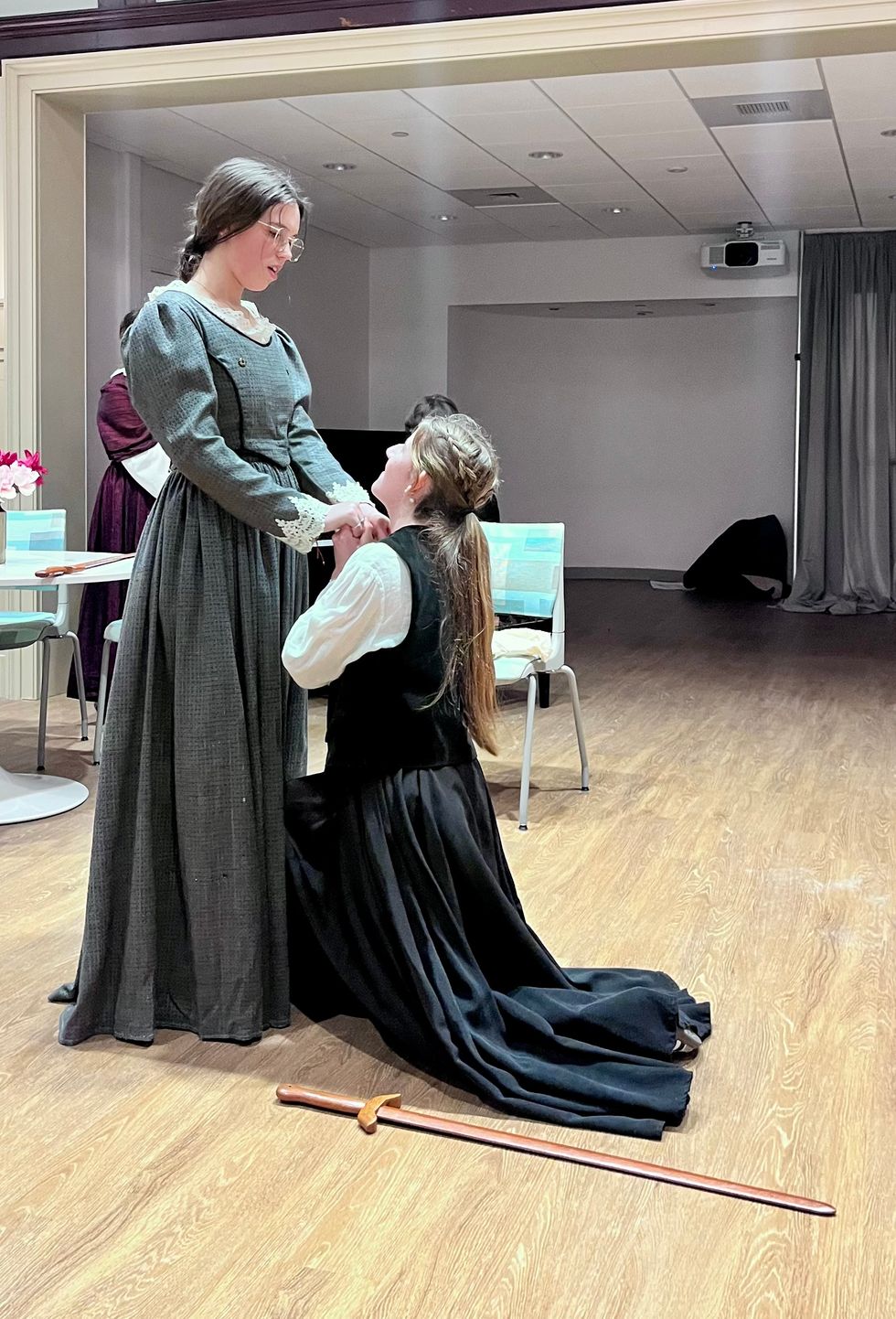 Some of the updates to the production involve changing traditional gender roles.Mike Cobb
“Having been a TV producer in L.A. before relocating to the Berkshires, I like to add live music to plays I direct, similar to underscoring a film or TV episode,” said Shaffer. “The music helps guide the emotion and elevates the experience for both the audience and actors. Using contemporary music performed by our school’s rock band updates this classic play.”
“We are fortunate to have so many talented students at the Berkshire Waldorf High School and professional mentors working with the students as costume designer, choreographer, musical director, and vocal coach. The Berkshires are alive with artists, and it’s a gift to work with its seasoned and emerging talent,” Shaffer added.
Performances start at 7 p.m. Friday, March 13; 7 p.m. Saturday, March 14; and 2 p.m. Sunday, March 15.
For more information, visit berkshiretheatregroup.org.
Want more of our stories on Google? Click here to make us a Preferred Source.