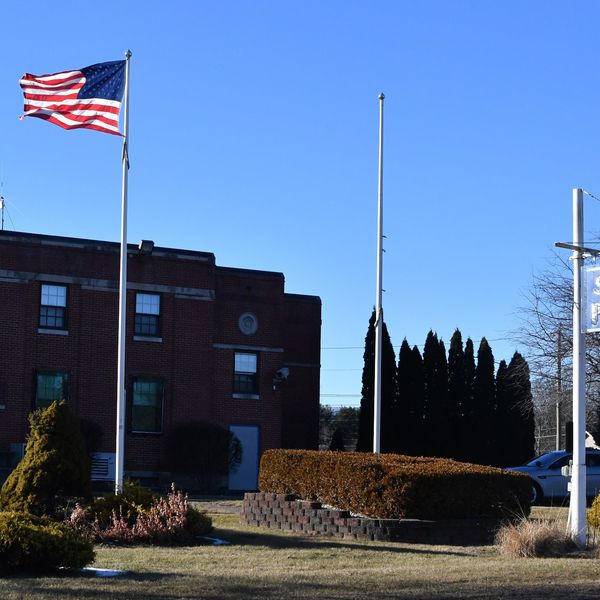
One of the first indications that spring is really here is the appearance of asparagus at local farmstands. Last week, asparagus season arrived at Silamar Farm on Route 22 in Millerton (across the road from the Harney and Sons Tea factory). The asparagus season here in the Tri-state region is very short, usually running from April to June. This spring’s cold weather has pushed the season back a bit. But a staff member at Silamar said the warmer temperatures at the end of last week finally pushed the first stalks into maturity. So, there may not be a mad abundance of asparagus, but what’s there is choice. It’s also beautiful, with a deep purple tint (a response to the cool air) on the tips and on some parts of the stalks.This is one vegetable for which locally grown makes a difference. The country’s largest producers of asparagus are California, Washington and Michigan, so a lot of what you find in the big grocery stores is trucked in from out west. It is not a popular crop for small farmers because it takes up a lot of space and must be hand-picked. It’s also a fussy little plant, and requires three years to mature in its bed before it can be harvested.So when you see asparagus selling at a farmstand for as much as $6 a pound, be forbearing and remember: It ain’t easy to be an asparagus farmer. As far as taste, local asparagus is generally sweeter and more tender than the sturdier stalks that have to survive cross-country truck voyages. (Keep this in mind when you’re cooking: fresh local asparagus will very quickly turn to liquid mush if you’re not attentive.)Nutritionally, asparagus provides a plenitude of vitamins and minerals, especially the B vitamins — B1 through B6. It also has a ton of folic acid. All these together support (and increase) metabolism, keep your skin healthy and boost the immune system. But wait, there’s more. Asparagus also has vitamin C, calcium, iron, magnesium, phosphorus, potassium and zinc — as well as 2 grams of fiber per 100 grams (3.5 ounces). The amino acid asparagine, which the nervous system requires, was named for the plant because it contains so much of it.Asparagus is low in calories, sugar and fat. And as if that weren’t enough enticements, it’s exquisitely easy to cook. If you get it fresh, there’s very little you need to do to this flavorful vegetable. Blanche it, boil it (but not for long), roast it, grill it.In celebration of warmer weather (finally!) and longer days, I offer a very simple recipe for grilled asparagus. Break out the Weber, throw on your favorite meat and enjoy a large helping of asparagus on the side. Grilled asparagus1 pound fresh local asparagus, ends trimmed1 tablespoon olive oilSalt and pepper to tasteGet the grill good and hot. Brush asparagus with olive oil, sprinkle with salt and pepper. Grill for two to three minutes or until just tender. Be careful, because fresh asparagus cooks nearly twice as fast as store-bought. Once the asparagus is cooked, there are many things you can do with it. Toast some nice rugged bread and slather it with fresh ricotta; lay some asparagus spears on top. Or simply rub toasted bread with a cut garlic clove and make a sandwich of plain asparagus, doused with a few drops of good olive oil and some crunchy salt and pepper. Add some thin slices of a creamy cheese (havarti is nice; so is St. Andre) to make it more filling.Asparagus is heavenly with soft scrambled eggs. In fact, its taste and texture perfectly enhance all savory custards, including quiche.Needless to say, grilled asparagus is excellent on any kind of salad you can concoct. If you have some fresh tarragon or chive flowers sprouting up in your garden, they’ll enhance the more subtle flavor of the asparagus.
Latest News
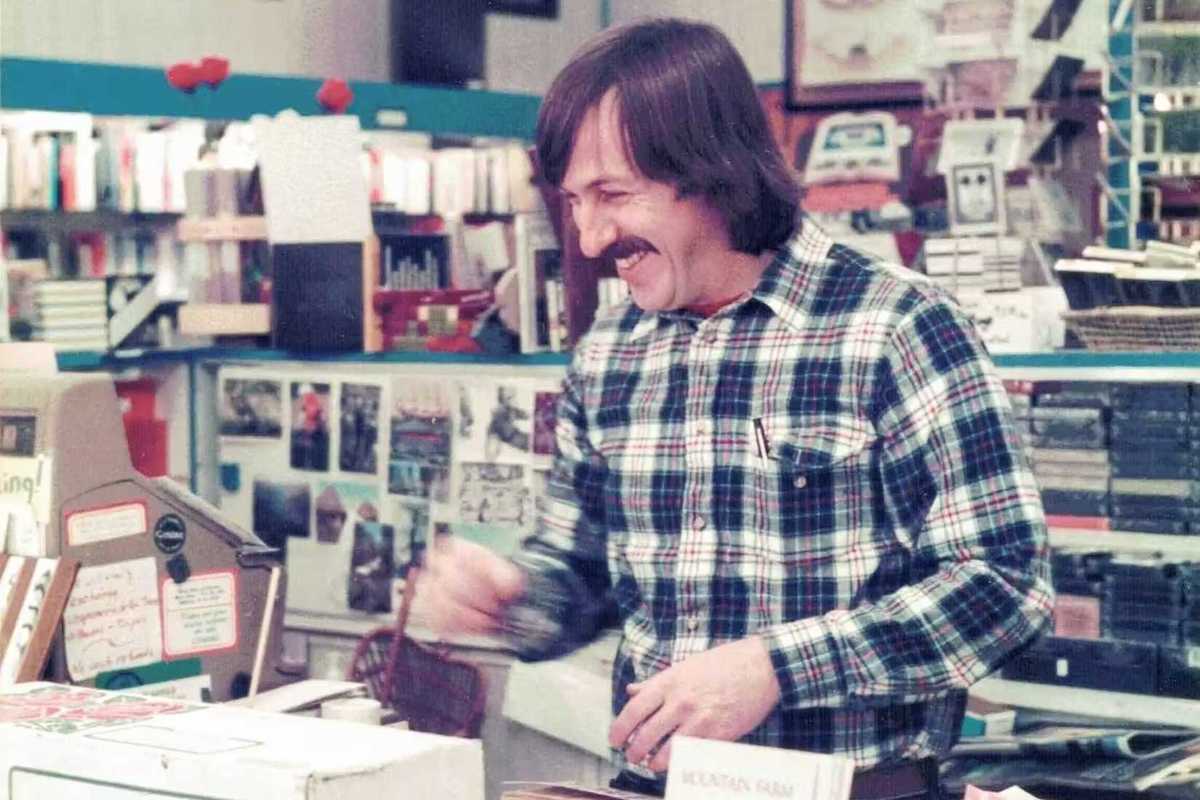
Dick Hermans in the Oblong Bookstore on Millerton\u2019s Main Street in 1985.
Provided
For Hermans, the award has prompted some reflection about why he has spent so much of his life involved in community projects.
“I was thinking about it this morning: Why do I do what I do?” he said. “And I think no matter what I’ve done, whether it’s been school board or rail trail, I’m trying to be useful to the communities I’m associated with.”
Hermans is perhaps best known as the longtime co-founder and steward of Oblong Books in Millerton, a business that began almost by accident. He and his former partner, Holly Nelson, were living in Millerton and looking for something to do during the winter. They had been painting houses, including the Grange Hall in Millerton, a job Hermans got through his aunt, who belonged to the Grange.
At the time, Hermans was also working in insurance for his father, doing collections.
“It was fine except I was doing collections, and it really kind of left me cold,” he said.
He and Nelson began thinking about what they might do together. Nelson was an avid reader, while Hermans had studied journalism and had worked in a record store. They noticed a chain of book and record stores operating elsewhere in the Hudson Valley and decided to follow that model.
And so Oblong was born.
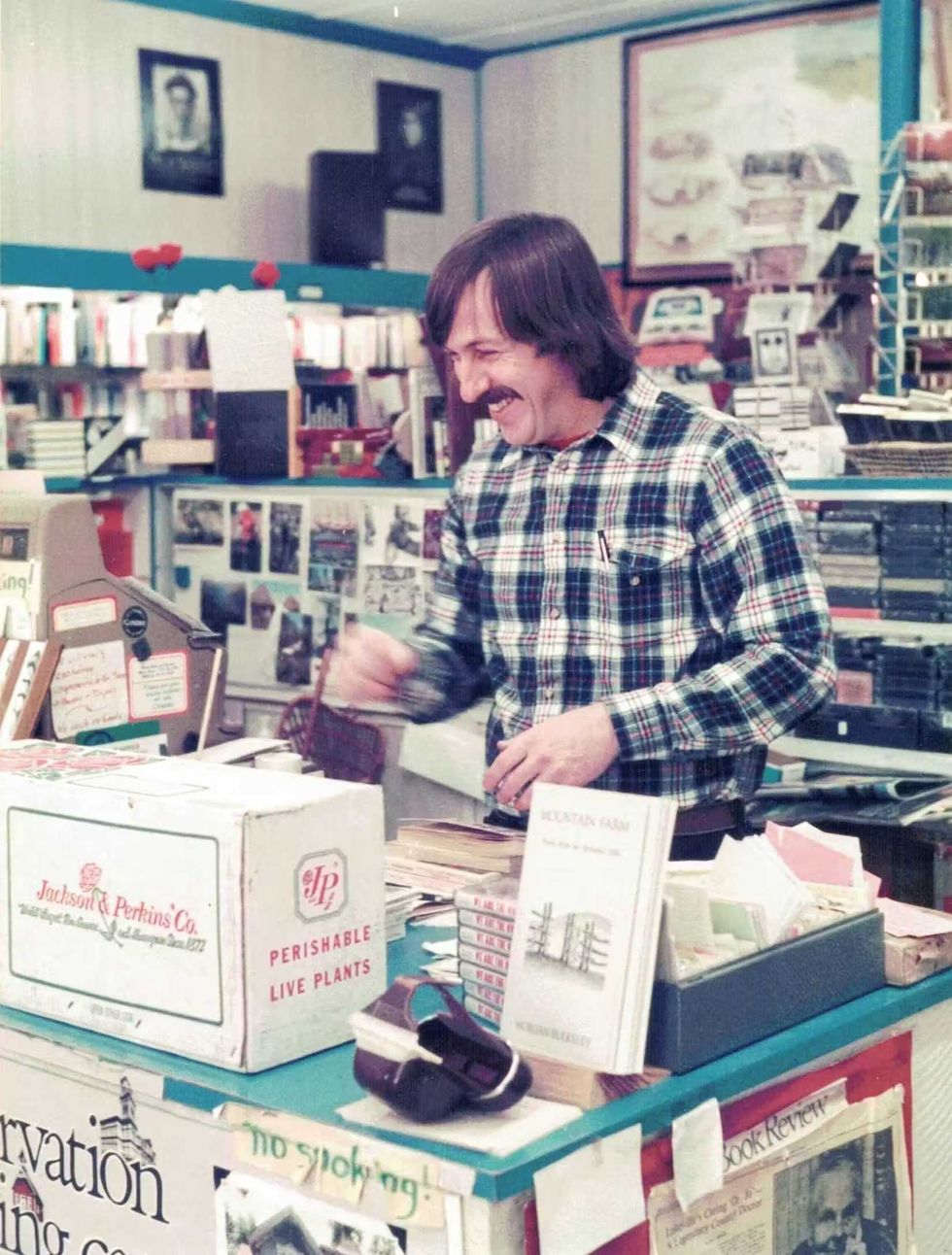 Dick Hermans in the Oblong Bookstore on Millerton’s Main Street in 1985.Provided
“We really learned it by the seat of our pants,” Hermans said.
The business would eventually become a beloved and integral part of Millerton’s commercial life. But although Hermans may have learned the book business as he went, his affinity for retail — and for the connections that happen across a counter — had begun much earlier.
As a child, his second-grade teacher operated a little cardboard pencil shop in the classroom, and Hermans still remembers the satisfaction of selling a pencil for a nickel.
“I really liked selling somebody a pencil for a nickel,” he recalled. “I can remember that experience, and it was so pleasant.”
Later, while living in Arizona, he helped establish a food co-op and worked at the counter.
“I kind of knew that I liked doing that kind of thing,” he said. “It’s a nice way to be pleasant with people, but without making too much commitment to them.”
His relationship with Millerton also predates Oblong. His grandparents lived in the village, and he first came to Millerton as a baby. Over the years, he has watched the town change through several generations.
He remembers a Millerton with a much broader array of businesses, when stores such as Delson’s, the Main Street department store that stood for nearly 40 years in what is now Millerton’s Antiques Center, seemed to carry almost everything a resident might need.
“You could find everything from a set of dishes to a shotgun,” he recalled.
The rise of shopping malls changed that kind of downtown retail, he said, but Millerton has remained a lively commercial village.
“For us, it’s been a great place to have business,” Hermans said. “It’s a busy village.”
For Hermans, running a store was never simply about selling books and records. It was a way of being part of a place.
Music has remained another constant. Hermans continues to sell music at Oblong and hosts the radio program “New Harmony” on WKZE. The business of selling music has changed dramatically over the years, particularly with the rise of streaming, but Hermans has adapted.
He was initially reluctant to bring vinyl records back into the store because of their expense. But about four or five years ago, he began stocking LPs again, and they have become the main form of music the store sells.
He finds that many of the customers buying them are reconnecting with music they loved years ago.
“I do best with classic albums that people may have had when they were young,” he said. “And now that they’re retired, they want to hear it again.”
Hermans still reviews between 700 and 1,200 new music releases each week through the store’s distributor, Alliance Entertainment, carefully deciding what belongs on Oblong’s shelves.
That same commitment to place has led Hermans into a wide range of community projects. His work with the Harlem Valley Rail Trail is among the efforts he mentions when reflecting on his years of civic involvement. He has also served on the school board and has been involved with the Millerton Business Alliance and the Irondale Schoolhouse. He is now involved with The New Pine Plains Herald, which he sees as complementary to the work of The Millerton News and The Lakeville Journal.
“I really think that the important thing about this award is that people understand what a newspaper does to connect them to their community,” he said. “And if that means anything to their lives, they gotta support it.”
Hermans knew Mary Lou and Robert Estabrook and remembers them as people who were deeply conscious of their responsibilities to the community.
“They were really nice folks,” he said. “They were very conscious of what their role in the community was.”
There is, in fact, still plenty on his plate. Hermans admits he needs to scale back because he has taken on more than his current abilities can comfortably accommodate.
“To be given this award is very special,” he added. “But I don’t feel like I’m done.”
This article has been changed to reflect that Hermans and Nelson were partners. A prior version states that they were married.


Want more of our stories on Google? Click here to make us a Preferred Source.

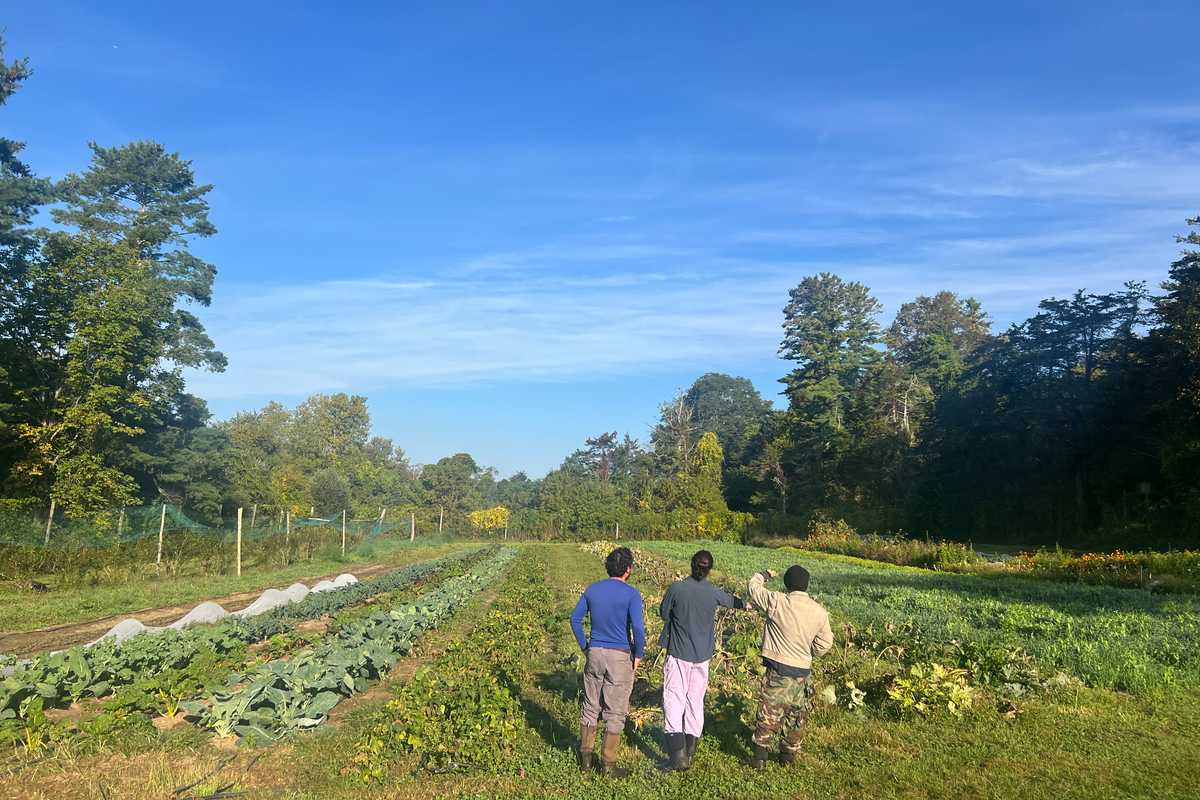
Adamah Farm crew members planning out the day’s tasks on a late September day.
Janna Siller
Over my 15 years of growing vegetables in Falls Village, I’ve exerted my will over all kinds of conditions, from drought to humidity to crows with a taste for cantaloupe. That’s what farming is all about. You zip around the field, hopping on and off tractors, moving hoses and chasing weeds, all in an effort to arrange conditions in favor of your crops. It is the crops’ job to gulp up sunlight and move water through their stems, to transform solar energy into your next pesto or ratatouille or butternut squash soup. It is the job of the farmer to irrigate just enough but not too much, to slice dandelion leaves without damaging delicate cabbage roots, to pander and pamper and stay in tune with what plants need to thrive.
The easy part of farming is trusting plants’ resilience. I have seen bright green shoots barrel ahead out of a plant torn to shreds by hail. I’ve watched wilty, heat-stressed seedlings turn rigid overnight and greet the next morning with vigor. The hard part is letting go of what you can’t control. As our crops lapped up Friday’s gentle sunshine and I considered the weekend forecast, I imagined roots holding tight to wet earth and branches supporting each other in sideways, pelting rain. I made sure all of our storage crops were already harvested and tucked away. I battened down the sides of our greenhouses and wished the remaining field crops good luck.
The nor’easter didn’t materialize too dramatically in our corner of New England. A few broken branches and debris blown about, nothing like the July Fourth storm that sent half a tree crashing onto the deer fence and left crates of fresh veggies in coolers without power.
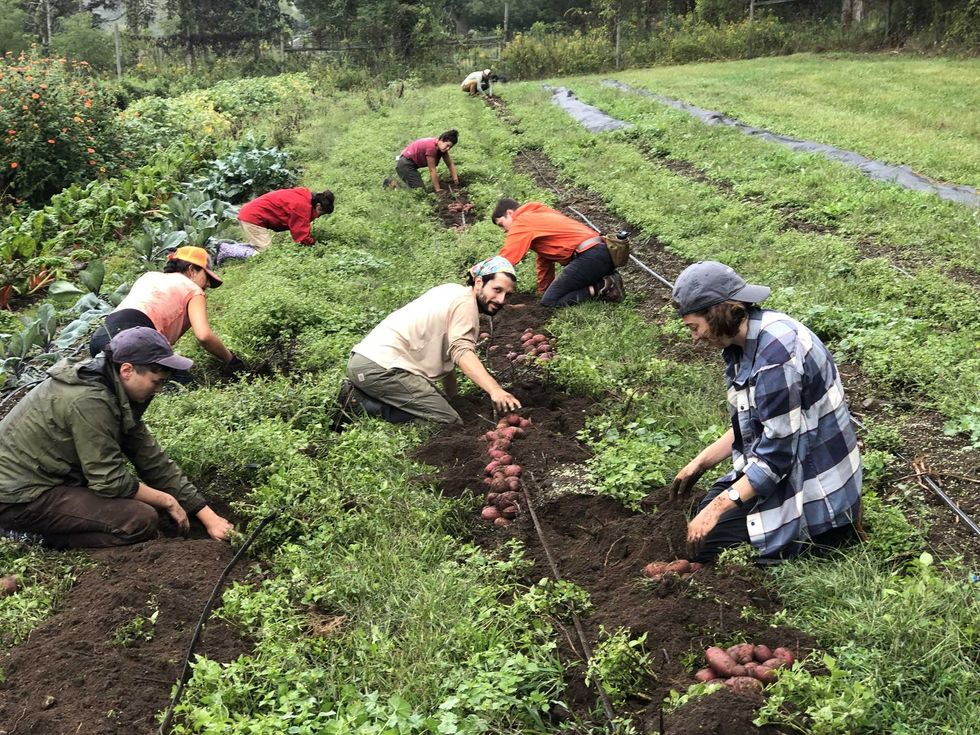 Fall storage crop harvests amid soil building cover crops at Adamah Farm in Falls Village. Janna Siller
Farming is an exercise in acceptance. To do it well and return year after year, you have to balance hubris and humility. The prize can often be a certain equanimity, a training in the art of moving into the next day even when the last one scrambled all your plans.
Epic change is not always about the unexpected. It also comes like clockwork on the seasonal calendar. As I type, the last of summer’s watermelons wait naively on the vine for a few hot days to finish ripening. Broccoli are holding their leaves wide as they did in June and July, only to find that the hours of sunlight decrease with each earlier sunset. Plants can’t pick up and go south or call the manager to order a bonus round of sunshine. Their growth slows and they get a resigned look to the hue of their leaves, so different from the frenzied growth of summer.
The release of fall is not tragic or gloomy. It is not an ending because so many fall tasks are about setting up for the new beginnings in spring.
We turn the vines that yielded thousands of pounds of fruit into the soil, where healthy microbes feast on their rotting stems. Then we plant cover crops — a mix of cereal grains like rye and oats and legumes like peas, vetch and clover. Cover crops hold the soil and its nutrients in place over winter, feeding the soil food web and adding organic matter that next season’s crops will need to grow.
We sort sprinklers and repair hoses. We inventory tarps. We take notes about which plants did well where and how we might try a new approach for this or that. We stack crates of cured garlic and onions and winter squash in a cool, dark room.
We save seeds from tomatoes and beans and lettuce, carefully labeling each variety for next season’s long, sunny days.
Janna Siller is the farm director at Adamah, a community farm in Falls Village offering CSA shares, educational programs and a food access program.

Want more of our stories on Google? Click here to make us a Preferred Source.