Part 2 of 2
To understand the enormity of the Boeing 737 Max 8 crashes (Lion Air 610 and Ethiopian Airlines 302) that took a combined total of 346 lives, it is useful to look at past events and anticipate future possible problems.
In 2011, Boeing executives wanted to start a “clean sheet” new narrow body air passenger plane to replace its old 737 design from the 1960s. Shortly thereafter, Boeing’s bosses panicked when American Airlines put in a large order for the competitive Airbus A320neo. Boeing shelved the new design and rushed to put out the 737 Max that, in Business Week’s words, was “pushing an ageing design past its limits.” The company raised the 737 Max landing gear and attached larger, slightly more fuel efficient engines angled higher and more forward on the wings. Such a configuration changed the aerodynamics and made the plane more prone to stall (see article: www.aviationcv.com/aviation-blog/2019/boeing-canceling-737-max).
This put Boeing’s management in a quandary. Their sales pitch to the airlines was that the 737 Max only received an “amended” certification from the FAA, so it did not have to be included in more pilot training, simulators and detailed again in the flight manuals. The airlines could save money and would be more likely to buy the Boeing 737 Max.
Boeing engineers were worried. They knew better. But the managers ordered software to address the stall problem without even telling the pilots or most of the airlines. Using only one operating sensor (Airbus A320neo has three sensors), an optional warning light and indicator, Boeing set the stage for misfiring sensors that overcame pilot efforts to control the planes from their nose-down death dive. These fixes or patches would not have been used were the new 737’s aerodynamics the same as the previous 737 models.
Reacting to all the documented derelictions, a flurry of investigations is underway. The Department of Transportation’s Inspector General, Calvin L. Scovel III, is investigating the hapless, captive FAA that has delegated to Boeing important FAA statutory and regulatory duties. The Justice Department and FBI have opened a criminal probe, with an active grand jury. The National Transportation Safety Board, long the hair shirt of the FAA, is investigating, as are two Senate and House Committees. Foreign governments are investigating, as surely are the giant insurance companies who are on the hook. This all sounds encouraging, but we’ve seen such initiatives pull back before.
This time, however, the outrageous corner-cutting and suppression of engineering dissent, within both Boeing and the FAA (there were reported “heated discussions”) produced a worst case scenario. So, Boeing is working overtime with its legions of Washington lobbyists, its New York P.R. firm and its continued campaign contributions to some 330 members of Congress. The airlines and pilots’ union chiefs (but not some angry pilots) are staying mum, scared into silence due to contracts and jobs, waiting for the Boeing 737 Max planes to fly again.
But the Boeing 737 Max must not be allowed to fly again. Pushing new software that will allow Boeing to blame the pilots is a dangerous maneuver. Saying that U.S. pilots, many of whom are ex-Air Force, are more experienced in reacting to a sudden wildly gyrating aircraft (consider the F-16 diving and swooping) than many foreign airline pilots only trained by civil aviation, opens a can of worms from cancellation of 737 Max orders to indignation from foreign airlines and pilots. It also displays an aversion to human-factors engineering with a vast number of avoidable failure modes not properly envisioned by Boeing’s software patches.
The overriding problem is the basic unstable design of the 737 Max. An aircraft has to be stall proof, not stall prone. An aircraft manufacturer like Boeing, notwithstanding its past safety record, is not entitled to more aircraft disasters that are preventable by following long-established aeronautical engineering practices and standards.
With 5,000 Max orders at stake, the unfolding criminal investigation may move the case from criminal negligence to evidence of knowing and willful behavior amounting to corporate homicide involving Boeing officials. Boeing better cut its losses by going back to the drawing boards. That would mean scrapping the 737 Max 8 designs, with its risk of more software time bombs, safely upgrading the existing 737-800 with amenities and discounts for its airline carrier customers and moving ahead with its early decision to design a new plane to compete with Airbus’s model, which does not have the 737 Max’s design problem.
Meanwhile, airline passengers should pay attention to Sen. Richard Blumenthal’s interest in forthcoming legislation to bring the regulatory power back into the FAA. Sen. Blumenthal also intends to reintroduce his legislation to criminalize business concealment of imminent risks that their products and services pose to innocent consumers and workers (the “Hide No Harm Act”).
What of the near future? Airline passengers should organize a consumer boycott of the Boeing 737 Max 8 to avoid having to fly on these planes in the coming decade. Once Boeing realizes that this brand has a deep marketing stigma, it may move more quickly to the drawing boards, so as to not alienate airline carriers.
Much more information will come out in the coming months. Much more. The NASA Aviation Safety Reporting System (ASRS), which receives incident reports from pilots, air traffic controllers, dispatchers, cabin crew, maintenance technicians, and others, is buzzing, as is the FlyersRights.org website. Other countries, such as France, have tougher criminal statutes for such corporate crime than the U.S. does. The increasing emergence of whistle-blowers from Boeing, the FAA and, other institutions is inevitable.
Not to mention, the information that will come out of the civil litigation against this killer mass tort disaster. And of course the relentless reporting of newspapers such as the Seattle Times, the Wall Street Journal, The New York Times, The Washington Post and AP, among others, will continue to shed light on Boeing’s misdeeds and the FAA’s deficiencies.
Boeing executives should reject the advice from the reassuring, monetized minds of Wall Street stock analysts saying they can easily absorb the $2 billion cost and move on. Boeing, let your engineers and scientists be free to exert their “professional options for revisions” to save your company from the ruinous road you are presently upon.
Respect those who perished at your hand and their grieving families.
Consumer advocate and former presidential candidate Ralph Nader grew up in Winsted and is a graduate of The Gilbert School. He is the founder of the American Museum of Tort Law in Winsted.

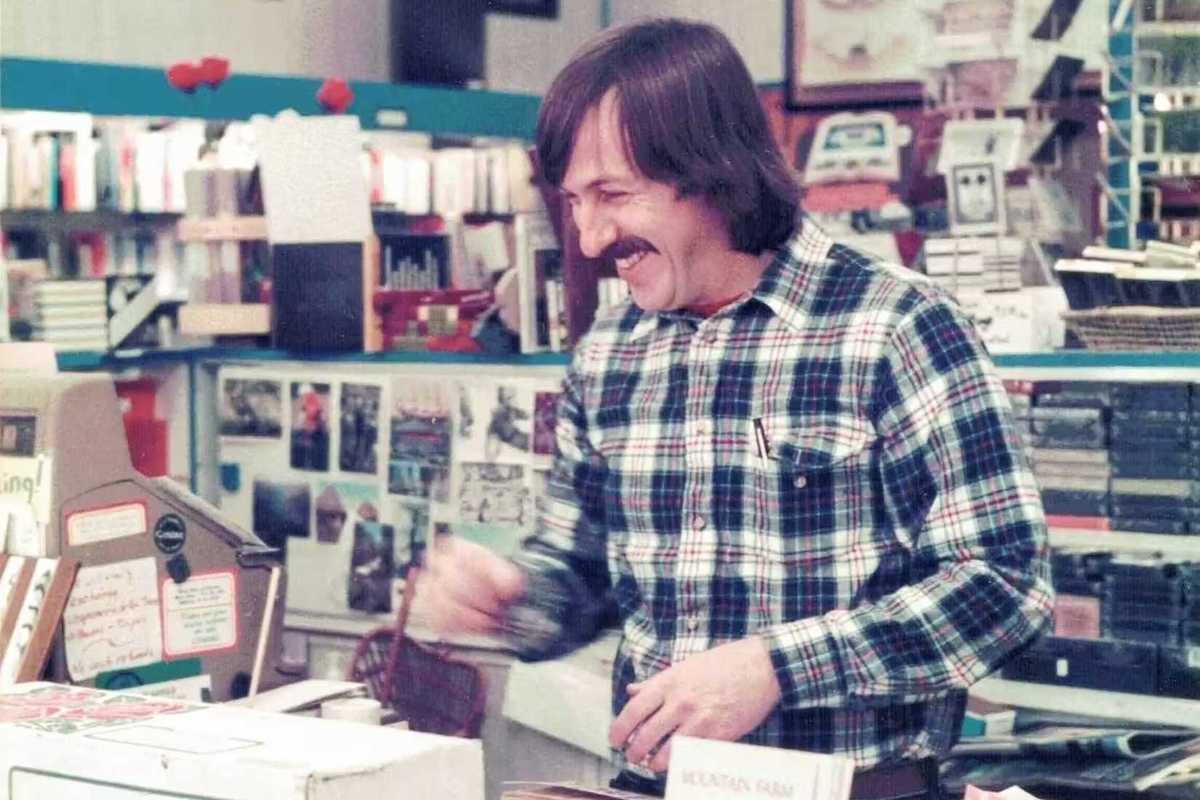
 Dick Hermans in the Oblong Bookstore on Millerton’s Main Street in 1985.Provided




 Fall storage crop harvests amid soil building cover crops at Adamah Farm in Falls Village. Janna Siller