SHARON — When First Selectman Bob Loucks ran for office last year, he campaigned on the promise that he would begin repairing the town’s ailing infrastructure if elected.
He took a giant step toward fulfilling that promise at a town meeting last Friday, Aug. 27, when about 120 voters unanimously approved an ambitious plan to fix numerous roads and culverts around town.
Standing before the overflow crowd at Town Hall last week, Loucks said that the first roads to be worked on will probably be parts of Calkinstown Road and the West Cornwall Road, which have deep potholes. Also to be repaired is the culvert on West Woods Road No. 2. He stressed that the roads are a visible symbol of the vitality of a town.
“Our roads are crumbling. If we want new people to come to town and start new businesses, then we need to look like we’re open for business,� he said.
But the list of roads that need attention is extensive, with about 45 of them named in the “call� for the town meeting. Voters also voted in favor of giving the first selectman the option to add roads to the list.
The work will need to be done for the $6,280,000 that was appropriated at the meeting. The money will be raised by issuing bonds.
Not all the road repairs to be done in town will be paid for with this money. Some of the other roads in town can be fixed by the town crew.
But, Loucks said several times during the meeting, “The town crew can’t keep up with all the patching.�
Using a flip chart, he explained to voters at the meeting that there are 84 miles of roads in Sharon; 56 miles are blacktopped or “improved� and the rest are “unimproved.� The roads to be repaired through this new bonding package are all improved roads. But of those 56 miles of road, nearly all of them need major work. This appropriation is expected to pay for upgrades and fixes to 40 miles of roads; 31.5 miles of road will be “reclaimed� and 7.8 miles of road will benefit from a new overlay.
To reclaim a road, workmen will dig up 12 inches of road, drain the roadway and lay down a new base and new soil, then add new blacktop. The secret to creating a road that will last for decades, Loucks said repeatedly, is to be sure it’s compacted properly.
Driving fast
His remarks at the meeting made it clear that he plans to get the work going as soon as possible. One resident who lives near the badly rutted West Cornwall Road asked if her road would be repatched before the winter snows begin. Loucks said he hopes to have the road completely repaired this fall.
Several people in the audience expressed concern that Loucks is rushing and that the work will be inferior. The first selectman reassured them that, if it gets too cold for the surfacing materials to set properly, then the work will be delayed until spring. But Roger Elwood, a Sharon resident and owner of Sharon Auto Body, noted that a portion of Main Street was repaved last December and it’s held up beautifully so far.
The secret, Loucks reiterated, is to compact it properly.
Jim Gillespie was concerned that the schedule of road repairs will not leave time for the town to properly correct any undersized or inadequate culverts under the roads. Loucks said that all the culverts will be properly attended to.
Several people asked when the Mitchelltown Bridge will be completed and asked if it will be paid for with this bond issue. Loucks said that the town can’t repair the bridge without the consent of the person who owns the property on either side of it and on either side of Mitchelltown Road. He’s been in Nova Scotia all summer, Loucks said. The town has prepared eight possible ways to approach the bridge repair; when the home-owner has a chance to look at them and agree to one, the work can proceed.
Low taxes or good roads
Fred Schwerin commented that, “You’ve already raised our taxes 6 percent this year. Where do we go now? You’re already spending $900,000 a year on roads.�
Loucks pointed out that Sharon has one of the lowest mill rates in the state (the mill rate determines property taxes in Connecticut towns).
“Of the 169 towns in the state,� he said, “Sharon’s mill rate is number 165.�
“We’ve kept our mill rate artificially low at the expense of our infrastructure,� he said.
Roger Liddell commented that ragged roads create a hidden tax on car owners, because they do so much damage to vehicles.
Loucks ran through a checklist of how much money the town spends annually on road repairs.
“Since fall 2009, we’ve spent $80,000 on blacktop patching and paving. A lot of that work wasn’t done properly and has to be redone, because the heavy roller was broken and a light roller was used instead. Since April 2010, we’ve used 172 tons of blacktop to patch the roads at a cost of $12,900, and 1,168 man hours at a cost of $21,024. And the town crew could have been doing many other tasks instead of repairing the roads.�
The broken roller has been replaced, Loucks said, a new paving machine has been purchased and the town crew can now do proper repairwork.
Questions were raised about why state and federal funds are not being used for these road jobs. Loucks and former First Selectman Malcolm Brown replied that the federal American Recovery and Reinvestment Act funds were available last year but only for projects that were “shovel-ready.� State funds are being applied to other repair jobs around town, such as the four bridges that need repairs.
But, Loucks and Brown said, the state is not handing out large sums of money at this time. In fact, the state recently issued a bond so it could provide the budgeted amount of Town Aid Roads funds.
“Expecting money from the state is like standing around a grave that’s being dug,� Loucks said.
The tax impact
Loucks explained the details of the financing, noting that this is not in fact a bond issue but a bond anticipation note.
“We can keep it for four years and roll it over into a real bond,� he said. “We want to do that as quickly as we can, probably within a year, to take advantage of the low interest rates. The rates are very favorable right now, money is at a 60-year low.�
The impact per household is hard to anticipate because of a bond for work on Sharon Center School that is about to drop by $225,000 in 2011 (in 2012, it will be reduced further, to $125,000) and because of the costs that will soon come to the town for construction of a new transfer station. But he estimated that the roadwork will add .6 mill to the town’s mill rate of 10.9. That estimate did not include the shifts in the mill rate based on the school bond (which will decrease town spending) and the transfer station (which will increase town spending).
A mill represents $1 in tax for every $1,000 of assessed property value. A 15-mill tax rate would translate into a tax bill of $1,500 for the owner of a home assessed at $100,000.
The meeting lasted one hour. The vote passed unanimously. Bid packages will now be sent out to eligible contractors. Loucks said that the lowest bidder will not necessarily be chosen; the work needs to be done properly, so references and reputation will be considered, too.


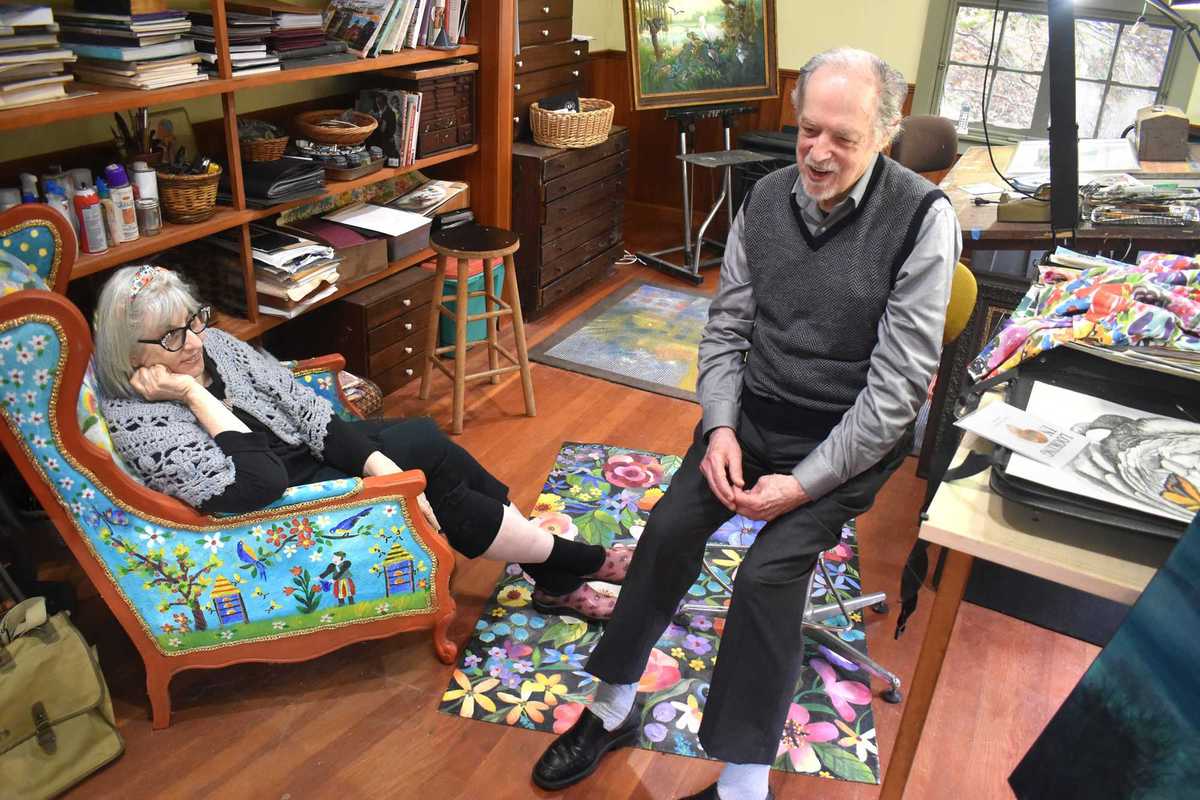
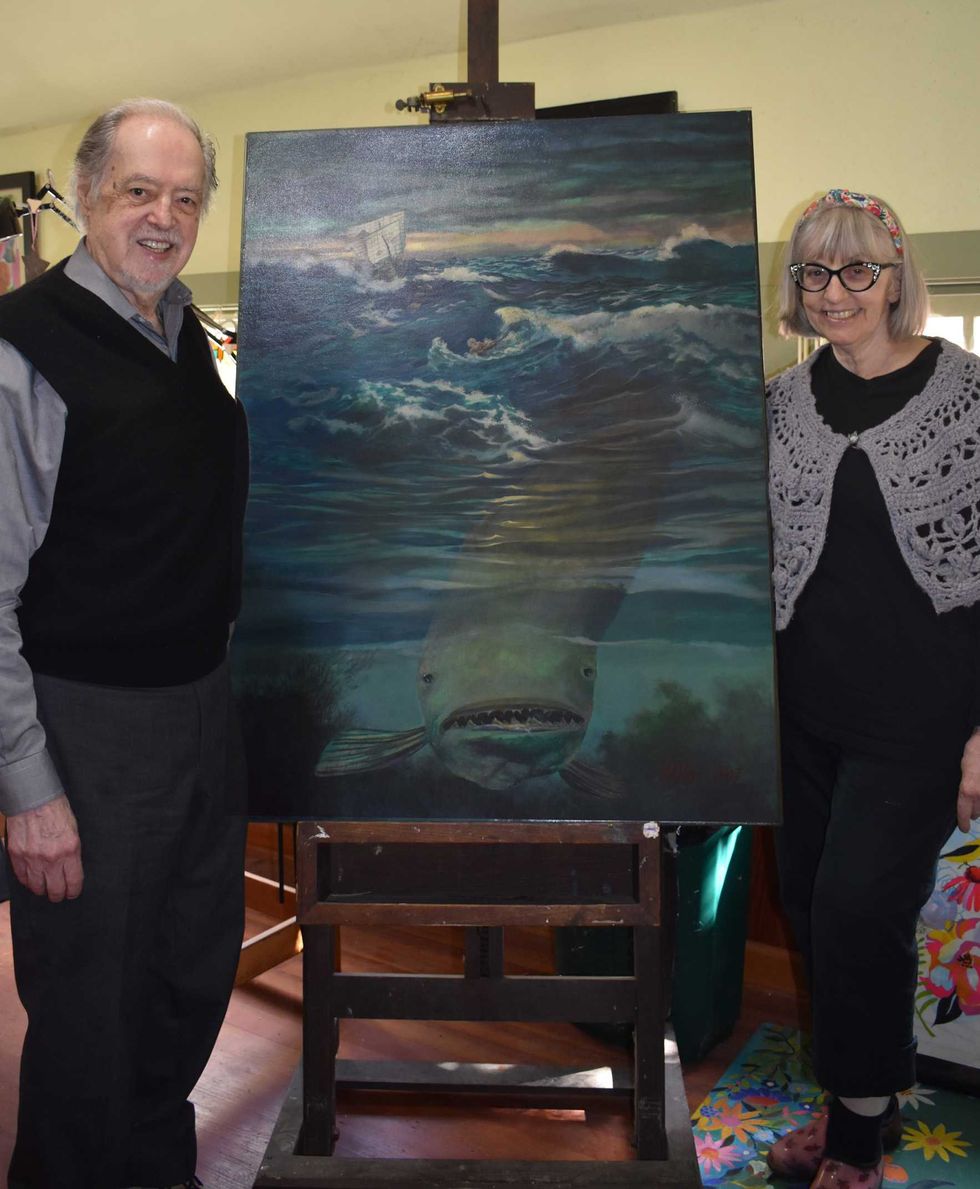 Justine and Victor Valla in their studio with a painting of Victor’s,”Jonah and the Whale.” Robin Roraback

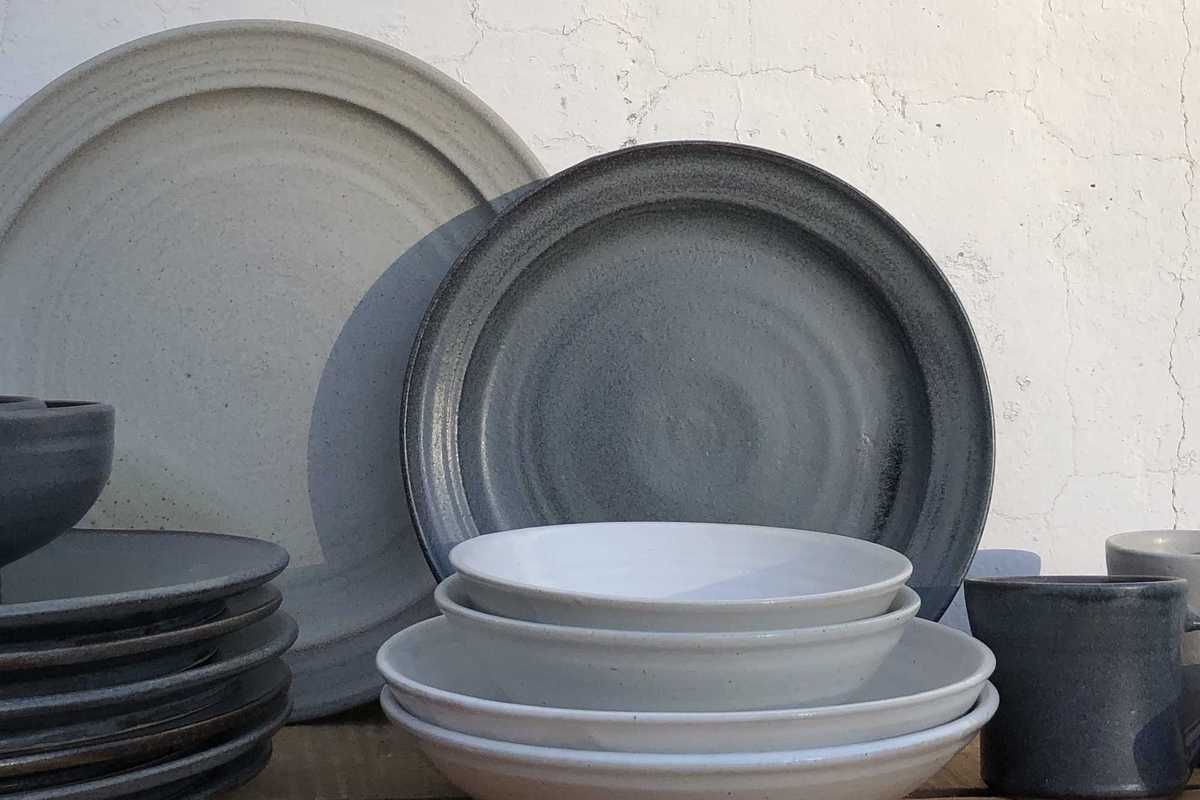
 A ceramic vase by Kathleen Heidemann.Provided
  Joy Brown’s delightful ceramic sculptures.Provided