WINSTED — Several proposed projects have fallen by the wayside at the former Winsted Furniture building on Bridge Street, but Marty Goldin, owner of Goldin Management of Brooklyn, N.Y., says there are now firm plans to make the building an arts community called Mad River Lofts.Originally built in 1887 and home to Winsted Furniture for many years, the building at 10 Bridge St. will be converted into artists’ lofts, Goldin said.Goldin said he looked into converting the building into residential units, but decided against it. “After several years of lying fallow, Mad River Lofts are being made ready for commercial use (sorry, no residential apartments),” the homepage says at www.madriverlofts.com. “We have lofts in all shapes and sizes from light and airy to dark, dank and scary. The plan is to create an eclectic, quirky and creative environment filled with energetic motivated people.”Goldin said the decision to build nonresidential lofts comes down to finances.“From an economic standpoint, it’s too expensive to convert it to residential,” he said. “We are basically taking the building as is. We have a lot of cleaning up and renovations to do, but it’s much easier to make it commercial.”Goldin said 10 Bridge St. consists of two buildings with approximately 100,000 square feet of space. He said the plan is to renovate and clean up the smaller back building first before working on the front building.The front building is the one that is most prominently seen from Main Street and still has a Winsted Furniture Company sign displayed on its exterior.“To get these lofts all ready, we need to do exterior work, replace the roof and various windows throughout the building, work on installing an electrical and heating system,” Goldin said. “I am hoping to get this whole project completed by the summer, but I do not have a committed date yet.”Goldin said he is trying to attract customer interest at the project’s website, which states, “We’d like this project to be tenant driven. As the basic lofts are reoccupied, specialty areas could be developed. There could be an area utilized to sell and/or display the products produced in other areas of the complex. We might create an outside eating area or small shops accessible from the courtyard within the front building or build a platform overlooking the river for late afternoon diners. Come join us as we make Mad River Lofts the jewel of Winsted and the Berkshires.”Goldin said the back building on the property is slated to have 12 artist lofts, and he has not determined how many lofts will be in the front building. He said he is not trying to compete with the Whiting Mills building in the east end of town, which provides artist spaces (see story, this page).“What I am trying to do is looking to bookend the town with artist communities, with Whiting Mills on one side of town and my project on the other side,” Goldin said. “This is a nice and pretty area, and I am hoping that people in town will help us to make this project work.”Before Goldin’s new project began, the last renovation activity at the building was in 2006 when a new roof was installed, windows were being replaced, and the building’s plumbing, electrical and sprinkler systems were set to be upgraded.However, as the renovation project continued, pieces of the building started to fall into the street.For some time, a fence was erected to surround the building, which prevented residents from walking along the sidewalk in front of 10 Bridge St.The fence was eventually taken down, but the renovation project remained dormant through the years, and the building remained empty.According to the assessors’ database, the building is appraised at $292,100 and is assessed at $204,470.
Latest News
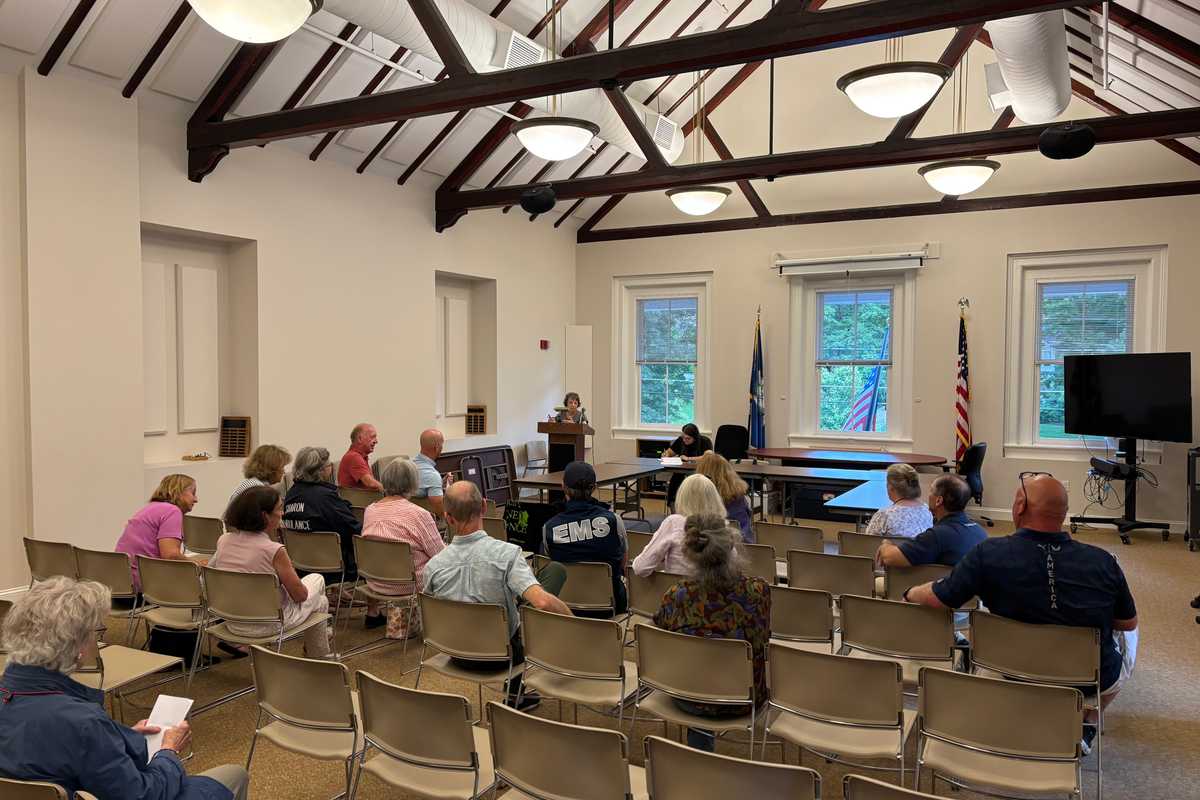
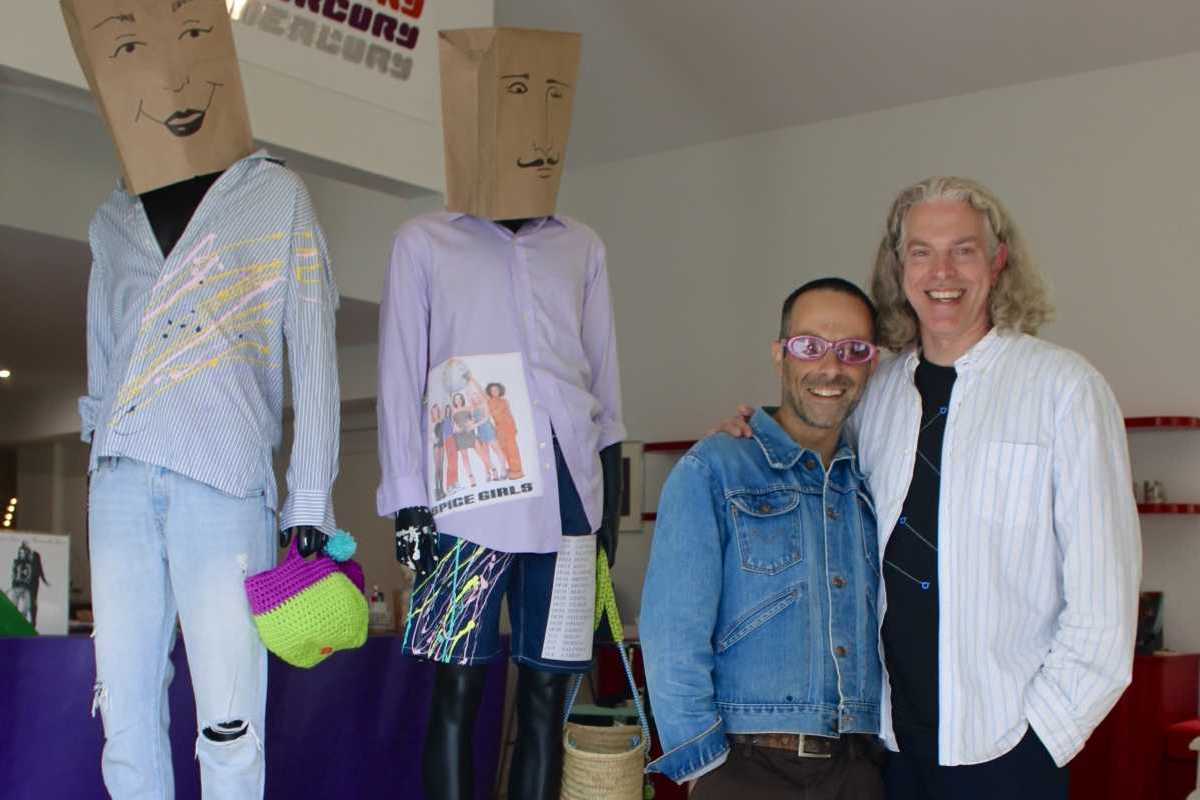
Greg Fricke and James Boehmer, co-owners of Peggy Mercury in Kent, recently launched their first fashion line, “Imaginary Concerts.”
Provided
Fricke and Boehmer are not there to stock their shelves with the same products customers find at standard makeup retailers. They’re there to help customers find what works for them. That usually means asking customers about themselves and learning about their beauty habits, skin, style and the way they like to present themselves. Fricke and Boehmer believe it’s their job to help customers bring out the qualities that suit them and determine what works best for their look.
So much of the Peggy Mercury world is about emboldening people to become more creative, and possibly bolder, versions of themselves. Some of this comes through the store’s creative collaborations with artists, designers and stylists.
It’s part of an ethos that encourages them and their friends to use the shop as a kind of laboratory, trying out new creative experiments without knowing how they might turn out. Whether in fashion, painting, fiber arts or photography, the projects almost always turn out marvelously.
A line of sterling silver charms they sell started as a small project by their friend Nolan Percival. In the beginning, the pieces were for close friends and loved ones. But Boehmer and Fricke encouraged Percival to get a little more serious about the project and create a whole line for the store. Today, it’s one of their top-selling collections.
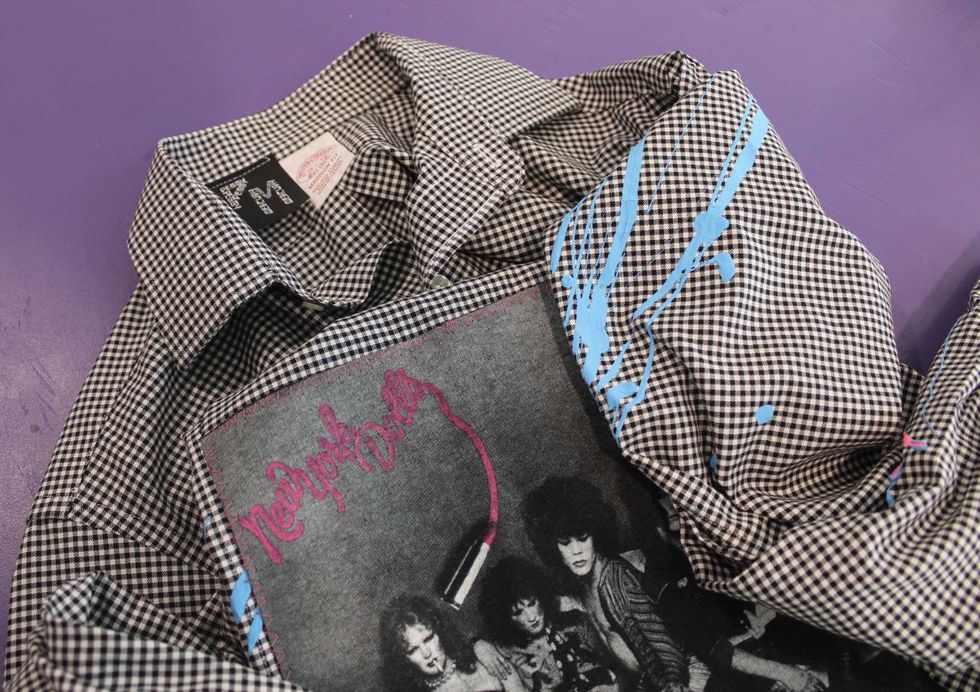 Classic styles, bold colors, and creative concerts make up the “Imaginary Concerts” line at Peggy Mercury.Provided
“Imaginary Concerts” has the duo taking their own advice.
The project started as a way for Boehmer to connect with his mother, who had been diagnosed with Alzheimer’s disease. Taking old concert shirts from his own collection, Boehmer and his mother began cutting out the graphics with the idea that they would make a quilt together. Unfortunately, she died before they could complete the project in 2025. The pieces, which were ready for production, were put on the back burner as Boehmer and Fricke dealt with their loss and the whirlwind of projects that never seemed to cease at Peggy Mercury.
But the harsh winter of 2026 presented an opportunity to take some time and focus on themselves. Part of that meant revisiting and redefining the concert T-shirt project. This time, instead of looking to the warmth and comfort of a quilt, they turned to another passion — fashion.
Taking a page from their own book, they wanted to create something that felt comfortable to them. They took two disparate loves — one rooted in simple preppy style, with clean lines and classic silhouettes, and the other in the nitty gritty worlds of punk rock and pop — and blended them together to create something entirely new. Pulling from the staples of vintage Brooks Brothers and Charvet collections, they applied the graphic elements with bold stitching reminiscent of punk jackets of the ‘70s and ‘80s, but with a much more sophisticated air.
But the remixing isn’t just the pairing of prep and punk. The pieces are not canon. They take liberties with the realities of concert tours, combining one band’s dates with another band’s logos, mixing them all up until the reality is lost and imagination is the only truth.
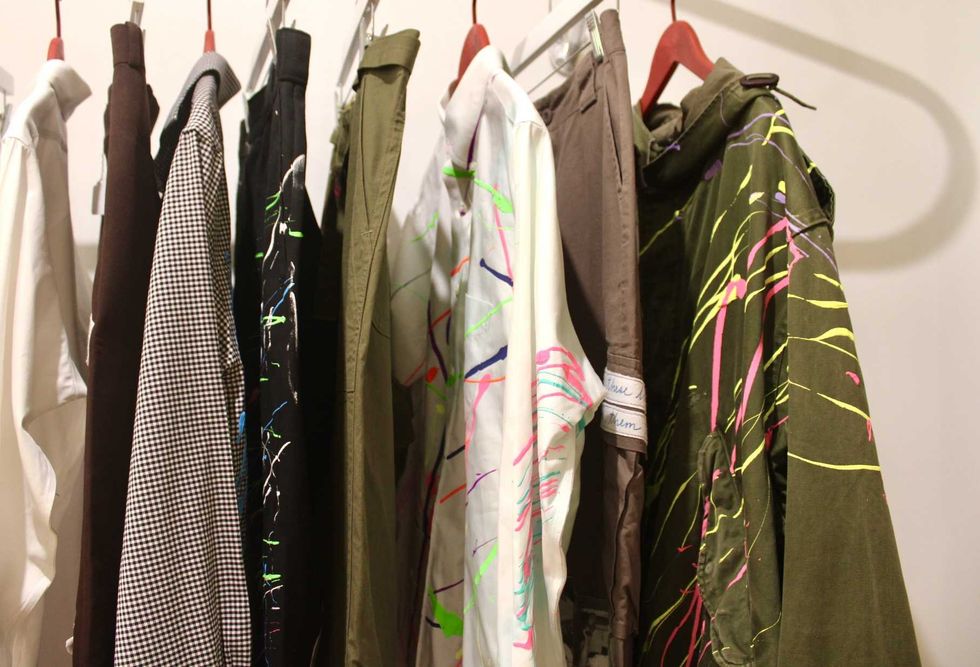 Shirts from Peggy Mercury’s first fashion line, “Imaginary Concerts,” hang on display.Provided
Adding to the mix is an element of perpetual creativity. Art can be messy, both figuratively and literally, and many of Fricke and Boehmer’s artist friends carry evidence of their work on them at all times. As a nod to these tireless creatives, the duo added haphazard splashes of bright color, giving the line an even more distinctive feel.
For them, “Imaginary Concerts” passes the “Peggy Test.” The mythical Peggy Mercury is a fictional figurehead for the company, a character who thrives on creativity and change. The name, much like the clothing line, is a mixture of interests: Mercury is a planet, a deity and an elusive, transformative element, while Peggy is the wonderfully stylish and boundary-pushing Peggy Guggenheim.
Everything Fricke and Boehmer put in their store has to pass this test: Would Peggy Mercury approve? For their first collection, the answer is a resounding yes.
Peggy Mercury is at 9 Maple St., Unit 2, Kent.

Want more of our stories on Google? Click here to make us a Preferred Source.