SALISBURY — The story of the iron industry in the Northwest Corner is well-documented. Of particular interest is the contribution of cannons made in Salisbury to the American army during the Revolution.What’s been missing, however, is an actual cannon, made of Salisbury iron.Bill Morrill and Dick Paddock think they have remedied the situation. The Salisbury Association Historical Society recently took delivery of a cannon that has many of the attributes of a Salisbury piece.The search has been ongoing for several years. Morrill and Paddock have talked to dozens of people and visited many sites.The problem with identifying a “Salisbury cannon” is that they were made in a hurry during wartime, and lacked the embellishments and markings of European artillery pieces — never mind something as helpful as a serial number or trademark.“The patterns were straightforward and simple,” Morrill said. From the furnace in Lake ville, the pieces were taken directly to the boring mill at a site off Cleaveland Street. There was no time for artisanal signatures.The association’s “new” cannon came from Russ Johnson in Millerton. Morrill said the piece was on display in a New Jersey museum (now closed) in the 1940s and 1950s, but tracking the provenance since then has been difficult.The cannon is a 6-pounder, meaning it shot a cannon ball weighing 6 pounds. It is about 5 feet long, the bore hole is 3.6 inches, and it is mounted on a naval carriage.Morrill said that because of the lack of identifying markings, it is not possible to say for sure if the piece is a Salisbury cannon.“On the other hand, we can’t say it isn’t.” The 850 (or so) cannons cast in Salisbury during the Revolution were widely distributed to forces fighting the British.Morrill has learned a lot over the last few years, and has looked at dozens of cannons.“This fits the pattern.”The cannon detectives also came at the identification problem from the metallurgical angle. Paddock, using an X-ray device, tested known samples of Salisbury iron (such as test-fired cannonballs dug out of a Lakeville hillside) to see if there was a specific signature that could be used to assess a cannon.But Paddock said there was “nothing definitive” on the X-rays of the known Salisbury samples.They did find that the samples were better than 99 percent pure iron, and there were tiny amounts of silver present.But there was no “aha moment.”At the suggestion of a visitor to Beckley Furnace in North Canaan, this spring Paddock will come at the problem from the standpoint of the structure of carbon crystals in iron samples. “We’ll see if that leads us anywhere.”Chris Brennan, president of the Salisbury Association, said the organization is thrilled to have the piece — the better to demonstrate to visitors the importance of the iron industry to town and American history.“It’s a tangible object,” said Paddock. “At the very least we can say there were men in Lakeville making these in 1777. It’s much better than a drawing.”The cannon is currently residing in the town garage, as the association determines the best way to display it. It weighs more than 1,000 pounds, so the first question is whether the floor in the Academy Building can support it.“It would be a shame to leave it outside,” Paddock said.
Latest News
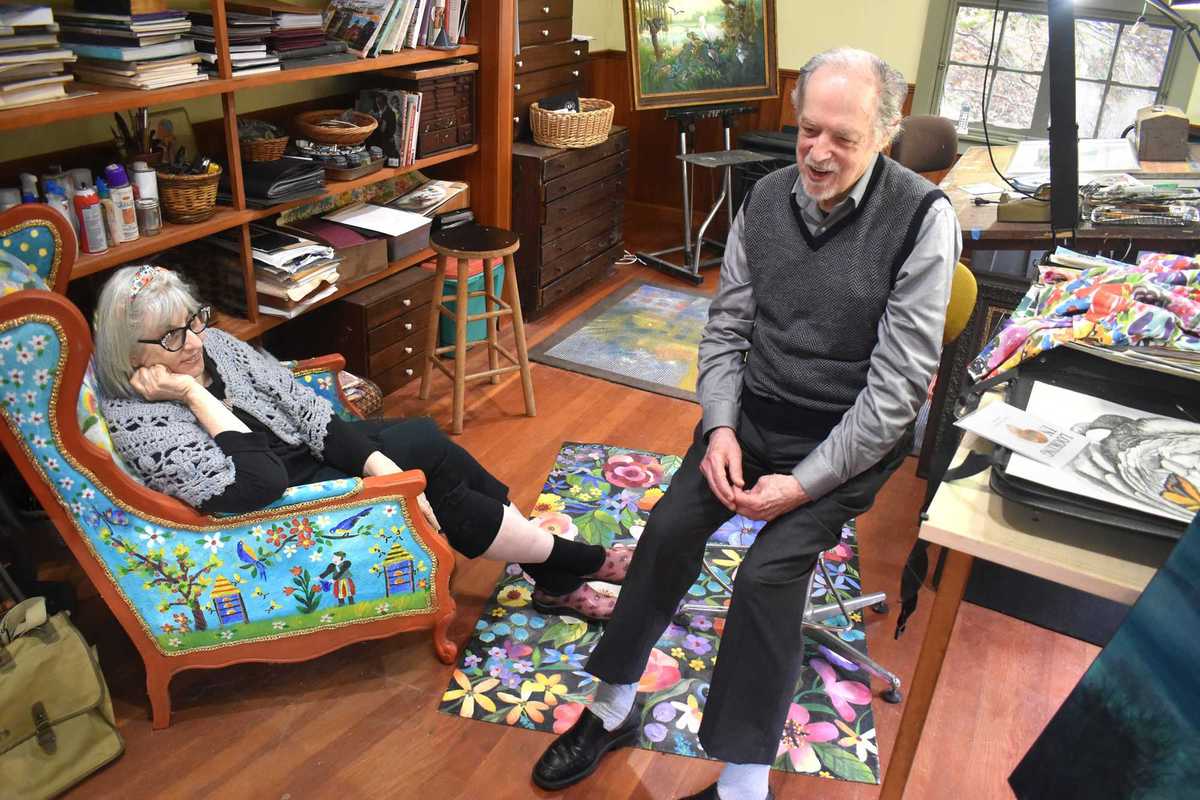
Textile designer Justine Valla sits in her father’s chair, which she painted, alongside her husband, illustrator and muralist Victor Valla, in their Atelier Valla studio.
“I was always drawing as a child,” Justine recalled. Victor dreamed of illustrating magazine covers like those of the “Saturday Evening Post.”
Victor studied design and illustration at Rochester Institute of Technology, then received a fellowship to study painting and printmaking at the University of Illinois at Urbana-Champaigne. He graduated in 1967. The following year, he received a grant from the Tiffany Foundation to study printmaking in Paris at Atelier 17, an experimental graphic arts workshop founded in 1927.
“What a great experience that was!” he recalled.
Returning home after the Paris uprisings of 1968, he discovered that the magazine covers he’d hoped to paint had largely given way to photography. His agent suggested trying record covers, which he pursued along with illustration and graphic design.
He also began teaching at Kean University in New Jersey.
“Kean had a wonderful graphic design and illustration department. I loved teaching Graphic Design, even though I never thought I would.”
He later taught at Syracuse University and Pennsylvania College of Art and Design.
In the late 1980s, he decided to stop teaching and concentrate on his own art. He moved to Falls Village, to a house on the corner of Minor and Prospect Streets.
“I used to call the studio ‘Minor Prospects Atelier,’” he said.
He continued working in illustration and graphic design, creating book covers for stories by H.P. Lovecraft and other authors, along with magazine covers, logos, advertising and murals.
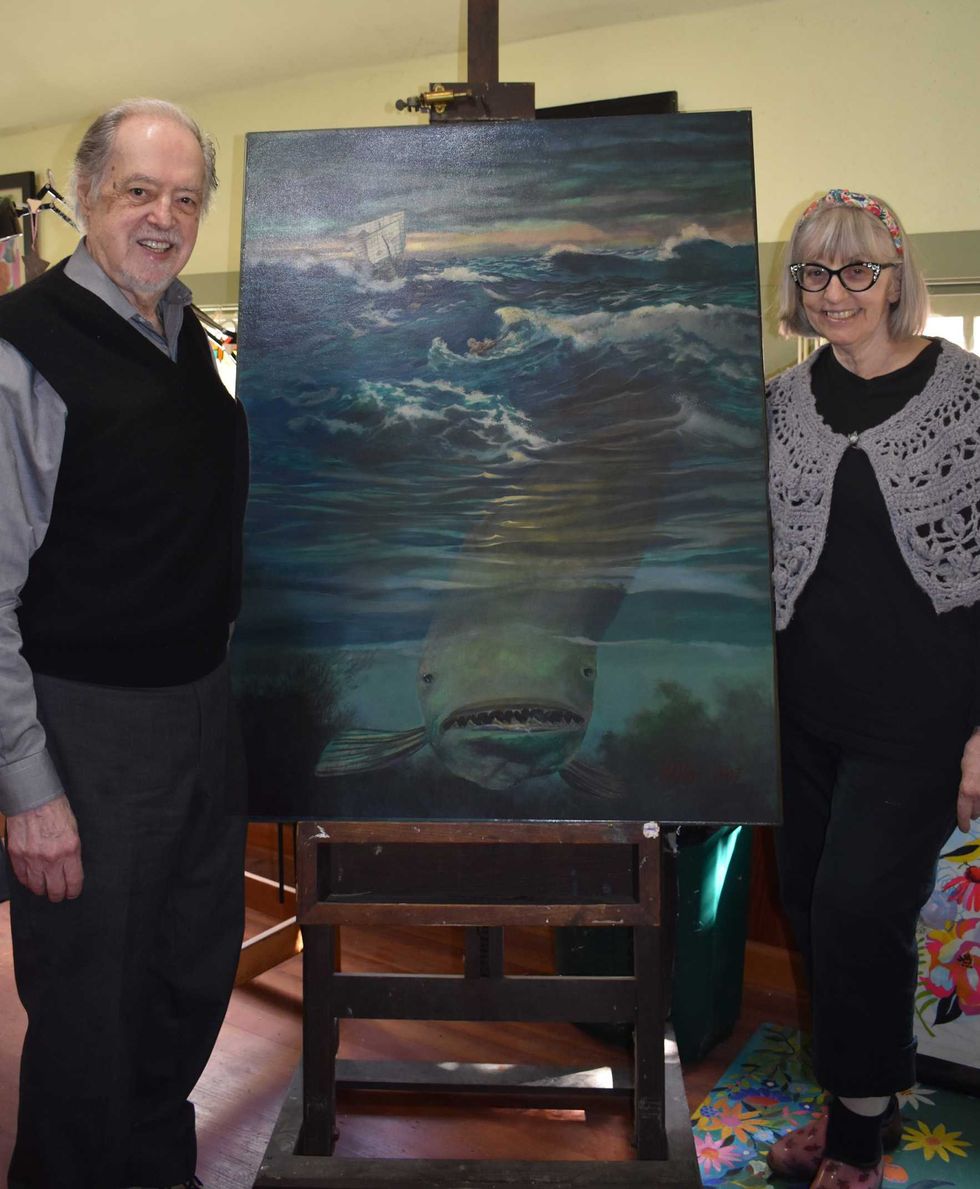 Justine and Victor Valla in their studio with a painting of Victor’s,”Jonah and the Whale.” Robin Roraback
His local commissions include the green and gold Noble Horizons signage and wall murals for the Stockbridge Inn, the Spa at Norwich Inn, Orchards Hotel in Williamstown and the David M. Hunt Library’s children’s section.
Justine grew up in the Bronx and studied at the Fashion Institute of Technology. After graduating, she took on whatever work she could find, including designing toys and novelty items for Russ Berrie. But her true calling was textile design.
She moved to Los Angeles to pursue that calling, where she learned silkscreen printing from 1960s design icon Corita Kent.
“I was in her program at Immaculate Heart College. All fabric design at that time was silk screen. My first job in textile design was in L.A., creating wallpaper for Bob Mitchell Design.”
Justine returned to New York City, where the advent of computers required her to learn new design techniques. She enrolled at Parsons School of Design, studying Photoshop, Illustrator, Lectra U4ia and Kaledo.
Around this time, she met Victor online and moved to Falls Village.
A recruiter found her a job in Arkansas at Dillard’s, a department store chain operating in 30 states and known for its exclusive designer collections.
“They had the best equipment I’d ever seen,” she said.
She became a senior computer-aided design designer there, designing fabric and preparing purchased designs for production.
The Vallas left Falls Village for Little Rock.
“It was a big move,” she said. “It was a different culture, but Little Rock was very progressive.”
The originally planned to stay in Arkansas for five years but ended up remaining for nearly 10.
Then Justine was hit by a car. She suffered injuries to her leg and head and required four years of rehabilitation.
“I lost the ability to paint after the accident. I struggled to paint again.”
The Vallas returned to Connecticut, this time settling in Salisbury, where they’ve lived since 2013.
After leaving Dillard’s, Justine had planned to sell her work through Printsource in New York City, an international showcase for surface and textile design. But after the accident, she no longer had the mobility or energy to travel back and forth to the city.
Instead, she began selling her work locally at craft shows, including clothing, hand-printed tea towels and floorcloths.
She is currently working on selling her collection of textile designs.
In December, Justine will have a show of her tea-themed watercolors at the NorthEast-Millerton Library.
Victor recently exhibited “The American West: A Pictural History” at the NorthEast-Millerton Library. The series, created in the early 1990s, was part of a commission from the Postal Commemorative Society for which he completed 100 paintings in two years.
He hopes to place the series in a museum and has created books from its images, complete with text. Over the years, he has designed many other books that are ready for publication, including “Looking In, Looking Out,” a cosmic view of the universe.
Reflecting on his career, Victor said, “It’s about doing what you love”.
Justine agreed.
To see, purchase or commission work, contact Justine at justinevalla@gmail.com or Victor at victorvalla@comcast.net, or call 860-596-4282.


Want more of our stories on Google? Click here to make us a Preferred Source.
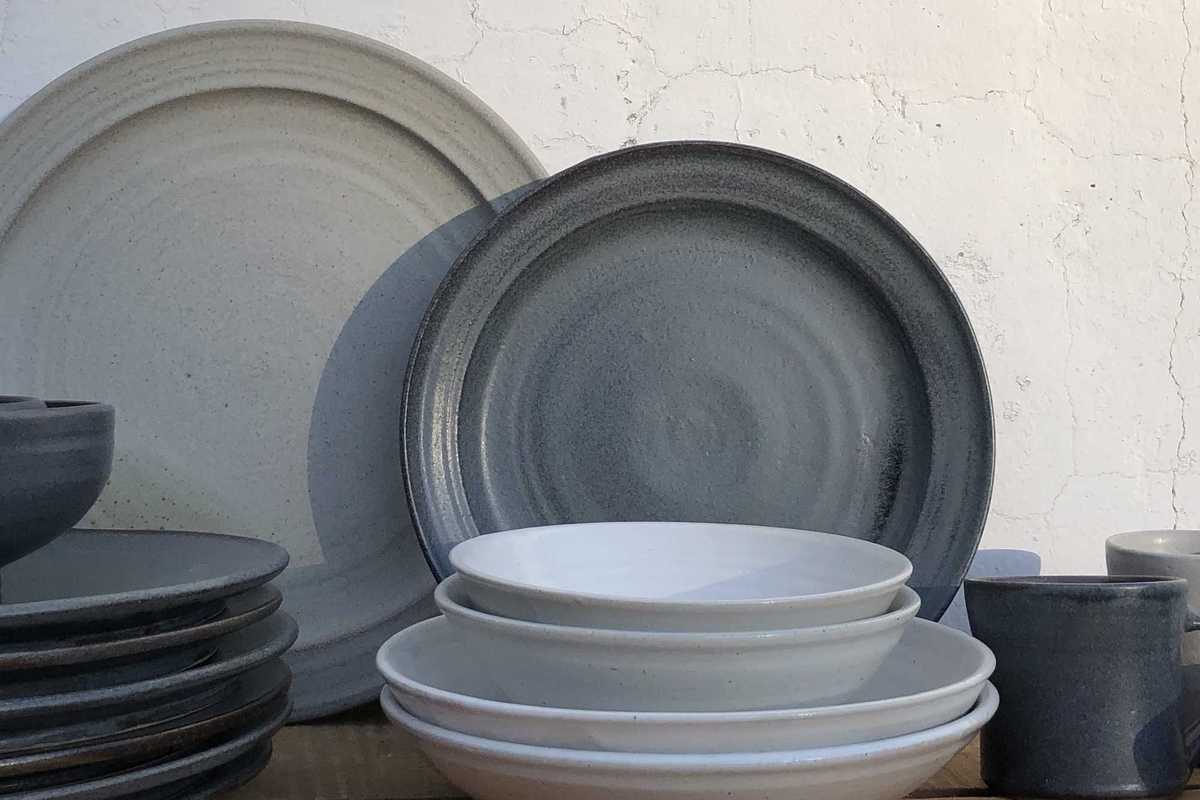
Jane Herold’s beautifully simple dinnerware.
Cornwall ceramicist Jane Herold explained that there’s quite a lot of enthusiasm for Clay Way among the region’s ceramic artists.
“We all need work space, which is hard to find or afford in urban areas. The wood-fire crowd needs lots of wood and outdoor space. This area is great because it’s rural enough for us, but has a wonderfully enthusiastic and supportive population of pottery [patrons].”
While many of the artists are returning from previous years, the loose collection of unofficial organizers likes to keep the event manageable for the public, limiting the number of artists and studios each year. A direct drive from the southernmost point at Ann Heywood’s studio in Wingdale to Herold’s big barn in Cornwall is under 40 minutes. But if you want to catch it all, plan for a full day’s worth of art exploration along some of the most beautiful roads in New England.
Starting at its northernmost point, Herold’s studio will host Matin Malikzada of Afghanistan, whose polished, modern interpretations of traditional forms are instantly recognizable. They’ll be joined by wood-fired ceramicists Steve Johnson, with his raw, organic forms, and Harry Levenstein, whose works relate closely to Johnson’s while making even more direct references to nature.
Herold herself creates work that is both beautiful and utilitarian. Her prolific output of objects is intended to be used by everyday people as part of their daily lives.
Moving south is Todd Piker of Cornwall Bridge Pottery. Piker has been making pots in his giant wood-fired kiln since 1971. The kiln looks more like an ancient blast furnace than something designed to transform clay into ceramics, but over the years, he’s mastered its intricacies and produces an impressive amount of fine work.
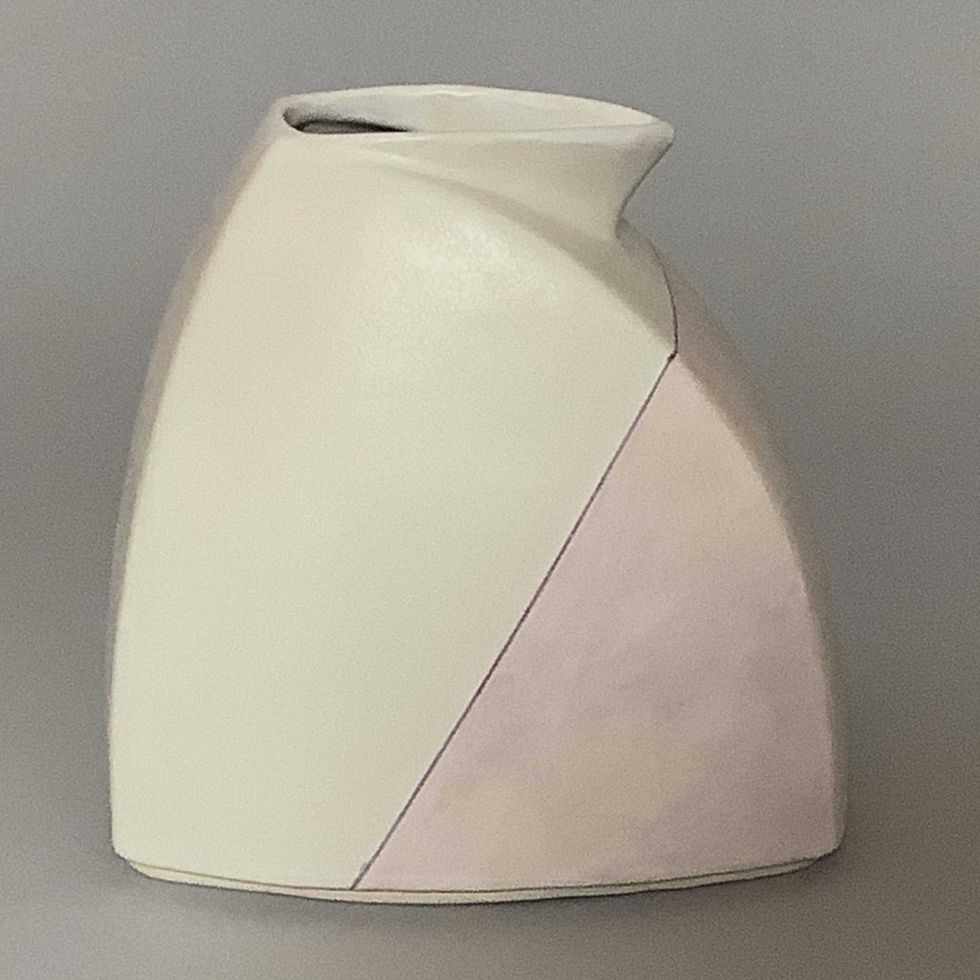 A ceramic vase by Kathleen Heidemann.Provided
Piker will host Sanah Peterson, who works at Cornwall Bridge Pottery and draws inspiration from both her time with Piker and her time traveling the globe as a child. They’ll be joined by Stephanie Haines, whose vibrant, eye-catching work features underglaze illustrations of birds, fruit and the bounty of nature.
Further along in Warren, Jessica Dubin’s pieces will be on display at the studio of Christine Owen. Both artists seem to appreciate the chaos and unpredictable nature of clay but find ways to refine it all using their own unique methods.
Heading east to Washington, Conn., Will Talbot’s creates intricate work while allowing for the unpredictable nature of clay to play a role. His studio will house Tom Knox and his wide variety of textures and forms, as well as New York City-based Alex Lebedev, who lets music and the nature of improvisation guide his work.
There will be two studios participating in South Kent. Alison Palmner, whose page on the Clay Way website states she “strives to achieve a lighthearted meld of human forms, animals and the vessel.” Her studio will host Ben Eberle, who trained under the guidance of legendary potter Toshiko Takaezu; James Guggina, whose intricate work can appear both deliberate and whimsical; and Paula Shalan, who blends rough, unrefined surfaces with polished precision in individual pieces.
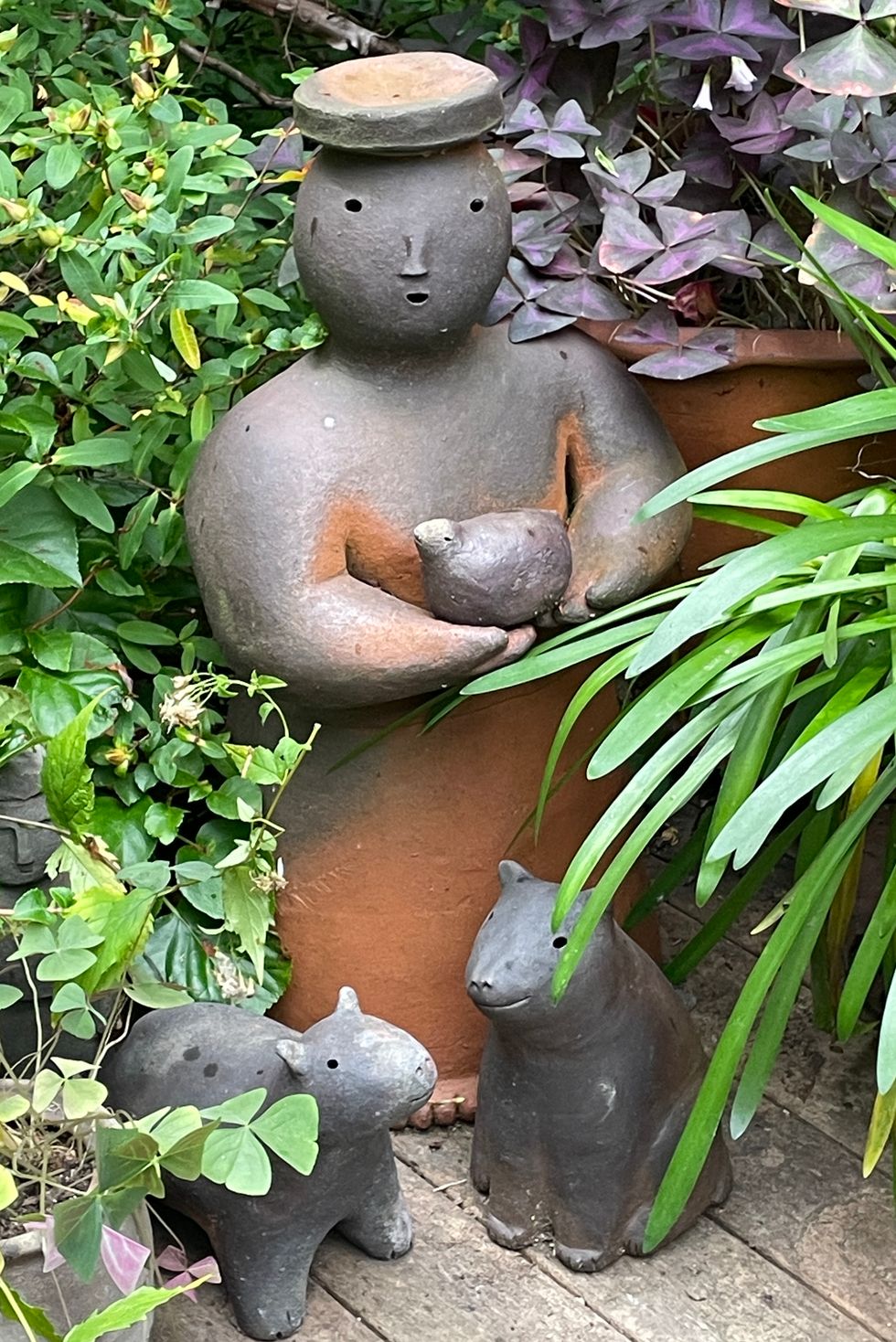 Joy Brown’s delightful ceramic sculptures.Provided
Nearby is Joy Brown, whose work have become a staple of the area, with her figurative sculptures dotting the Northwest Corner. Brown’s studio will also feature Bonnie Levine, who taps into the beauty of chaos and destruction in her work, and Brendan Moore, whose more utilitarian forms are perfect for everyday use.
Finally, the tour crosses the border into Wingdale, New York, where the studios of Drew Montgomery, Ann Heywood and Amy Brenner will host Jackie Sedlock, Lynn Behrendt,and Kathleen Heidemann.
Brenner creates some of the most colorful and vibrant pieces on the tour, while Behrendt’s work is among the most studied and precise. Heywood creates carefully considered, intuitive forms, while Heidemann moves from simple minimalism to intricate textures. Montgomery and Sedlock both find new ways of playing with traditional forms, producing delightfully distinctive pieces.
To learn more about the artists and download a map of participating studios, visit clayway.net
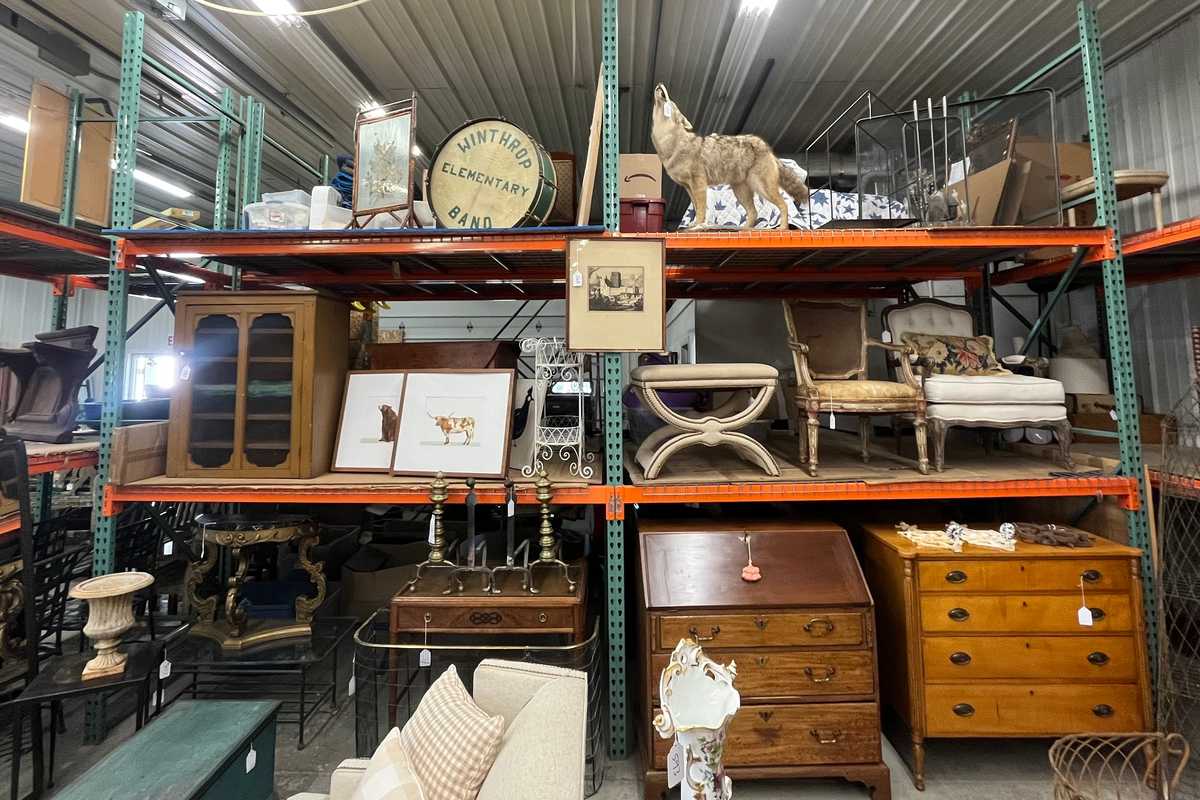
Matteo works as the ever-enthusiastic auctioneer, and he puts on a real show. In just a few hours, he presents and sells hundreds of items, from antique furniture and rugs to art and decorative items, even taxidermy, jewelry and other odds and ends you probably wouldn’t expect. Community is part of the show, with Matteo joking around with regulars. Attendees congratulate each other on their purchases, and even educate each other about the items as matteo keeps the momentum going. If items aren’t moving, Matteo will remind the room that he’s got alimony to pay, and it’s up to everybody in the room to help him raise the funds.
For the past 15 years, this has all happened in that highly visible building at the main intersection in North Canaan. Now, Mattea, Kolbacher and their Stateline Auctions crew have moved off the beaten path. For some frugal bidders, this might seem like a good thing. After all, the fewer people who know about the auction, the fewer people they have to bid against when their lots come up.
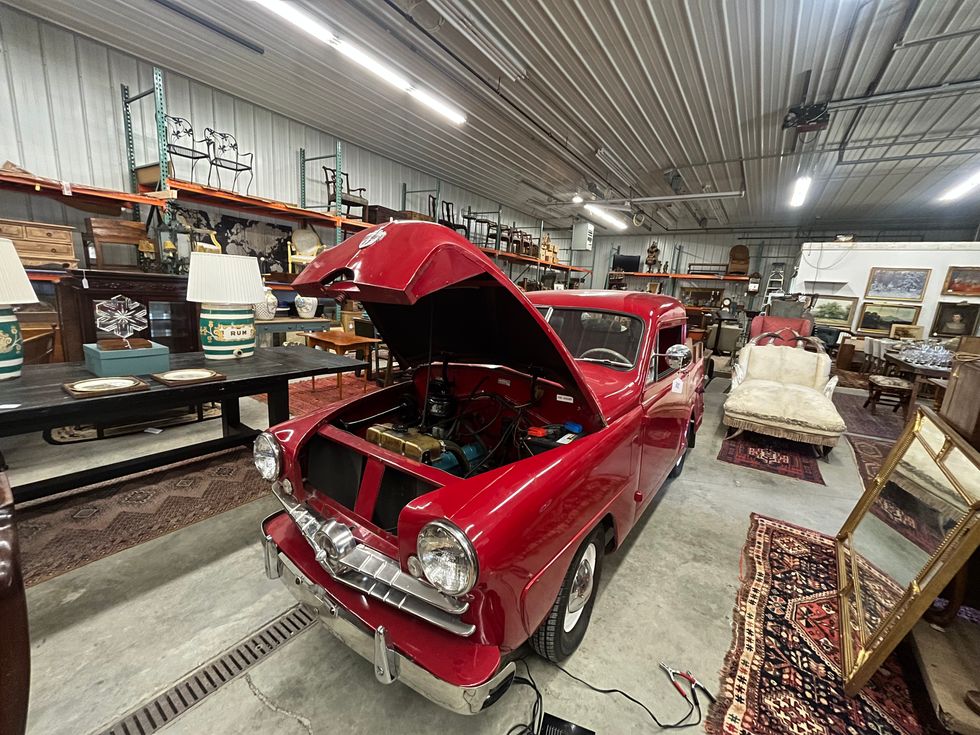 Hundreds of items at Stateline Auctions, including a candy-apple-red Crosley pickup truck.D.H. Callahan
Unfortunately for those who consistently show up, the competition these days is less in the room and more online. Stateline has been running simultaneous auctions through the real-time auction website and app LiveAuctioneers.com, where the entire event is streamed live. Throughout the eight-hour event, the online viewership rarely, if ever, dips below 600 individual users. This technological development creates more potential buyers for Stateline and also allows busy bidders to keep an eye on their lots while out and about.
The new space, still in North Canaan, just barely south of the Massachusetts border, is a sizable warehouse packed to the ceiling with precious finds. It’s bigger, brighter and has ample parking.
The auction on Oct. 11 featured all kinds of lots, including three cars. A candy-apple-red Crosley pickup truck grabbed every eye in the room and even more attention online. Amid all the enthusiasm, it was heartwarming to witness the entire audience erupt in applause as young bidder Molly Seitz burst into tears after winning the truck. The beautiful vintage vehicle had belonged to her grandfather, who had given her driving lessons in it before he died.
Between resellers, collectors and the casually curious, the performance that is a Sunday at Stateline Auctions is a delightful way to breathe new life into old items. There’s rarely a set date for the next auction, but it generally takes about six weeks before they’re ready with their next round of goods. This time, Matteo predicts a sale after Thanksgiving, but if you want to be safe, follow their auction on liveauctioneers.com.
Want more of our stories on Google? Click here to make us a Preferred Source.