Where can one find the work of an artist associated with occult rituals, surrealist visions and the underground California art scene? In a beautifully renovated former carriage house in Pine Plains, of course.
Unexpected discoveries are, after all, part of what Doug Walla has spent his career making possible. The longtime New York City art dealer and founder of Kent Fine Art, has brought the work of Marjorie Cameron Parsons Kimmel, known simply as Cameron, to his new gallery space. The exhibition, on view through Nov. 14, introduces visitors to an artist whose life and work moved between mysticism, poetry, film and the avant-garde.
Born in 1922, Cameron was a gifted draftsman whose intricate drawings explored spirituality, sexuality, mythology and the mysteries of the subconscious. Her work occupied a world somewhere between surrealism and the occult, informed by her interest in theosophy and the possibility of unseen forces shaping human experience.
Cameron also appeared in experimental films, including Kenneth Anger’s “Inauguration of the Pleasure Dome” and Curtis Harrington’s “The Wormwood Star” and “Night Tide,” the latter starring Dennis Hopper.
Her reputation was as unconventional as her art. In 1957, her drawing “Peyote Vision” appeared in an exhibition at Los Angeles’ legendary Ferus Gallery. The work was considered so provocative that police shut down the exhibition and arrested artist Wallace Berman, who had included it in his show.
Both Cameron and Berman subsequently vowed never to exhibit in commercial galleries again.
Although she continued making art throughout her life, much of it remained largely unseen for decades. Her work resurfaced in major exhibitions, including a 2015 retrospective at the Museum of Contemporary Art in Los Angeles. Curator Philippe Vergne described it as existing on “the edge of surrealism and psychedelia.”
For Walla, bringing Cameron’s work to Pine Plains reflects a larger desire to return to the experience of looking at art rather than treating it primarily as a commodity.
“I wanted to get back to looking at art and to get away from the finance, get away from the asset class, get away from the branding, get away from the fashion, get away from the celebrity status,” he said during a recent visit to the gallery.
Instead, he wants to encourage a more personal encounter with individual works.
“Here, getting to live with it, there’s an opportunity to have a more intimate way with the work,” he said.
Walla began his career as a curator in California, organizing Alex Katz’s first retrospective in 1975. He subsequently joined Marlborough Gallery, where he worked with artists including Francis Bacon, Larry Rivers, Katz and Frank Auerbach.
In 1985, he established Kent Fine Art at Madison Avenue and 57th Street in Manhattan. Over the following decades, the gallery moved through SoHo and Chelsea, presenting hundreds of exhibitions and publishing more than 70 scholarly books on artists ranging from surrealists Dorothea Tanning and Meret Oppenheim to contemporary figures including Chris Burden and Antoni Muntadas.
After the COVID-19 pandemic disrupted the gallery business, Walla returned to Marlborough in an executive role. But with the couple’s two daughters heading off to college and many of their artist friends already living in the Hudson Valley, Walla and his wife, painter Nicole Pilorge, decided to make the move north.
They wanted a live-work arrangement, somewhere they could be surrounded by art without the demands of operating a conventional commercial gallery.
The Pine Plains property offered that possibility, although the building that would become Kent Fine Art required a substantial transformation.
When Walla first entered the space, it was essentially a raw woodworking shop, with unfinished walls and a single light operated by a pull chain. Electrical service was rudimentary, and the building needed insulation, windows and proper wiring.
“We had to trench and electrify the building, and then we insulated the whole thing,” he said.
For someone accustomed to pristine gallery walls, the transformation was particularly satisfying. The ability to install Sheetrock and create proper surfaces for hanging art was, in itself, a revelation.
Walla opened the space with an exhibition of Japanese artist Teruko Yokoi, whose work he has long admired. The Cameron exhibition is only the second presentation in the newly completed gallery.
“I don’t run a gallery per se,” he explained.
Instead, he envisions a more flexible approach, mounting exhibitions when there is an artist or body of work he particularly wants to share.
He also writes a weekly newsletter for a mailing list of approximately 3,000 people, generally focusing on a single work of art. The essays are gradually being added to the Kent Fine Art website, creating a growing collection of observations and reflections drawn from decades of experience.
“Maybe they’re more like memories,” he said.
The property also accommodates Pilorge’s studio upstairs, adding another dimension to the couple’s live-work vision, a reminder that the property is as much about making art as presenting it.
Walla said the arrangement allows them to remain connected to the creative community while working at a different pace.
That spirit of discovery seems especially appropriate for an exhibition devoted to Cameron, an artist who resisted easy categorization and whose work remained outside the mainstream for much of her lifetime.
The exhibition offers a chance to encounter her drawings in a setting far removed from the commercial pressures of the New York art world but informed by someone who has spent decades working at its center.
After a career devoted to exhibitions, publications and the business of art, Walla is interested in something both simpler and more elusive: spending time with the work itself.
“It’s a very modest proposal,” he said.
“CAMERON (1922–1995)” is on view at Kent Fine Art in Pine Plains through Nov. 14. The gallery is open Saturdays and Sundays from 11 a.m. to 5 p.m. For more information, visit kentfineart.net.

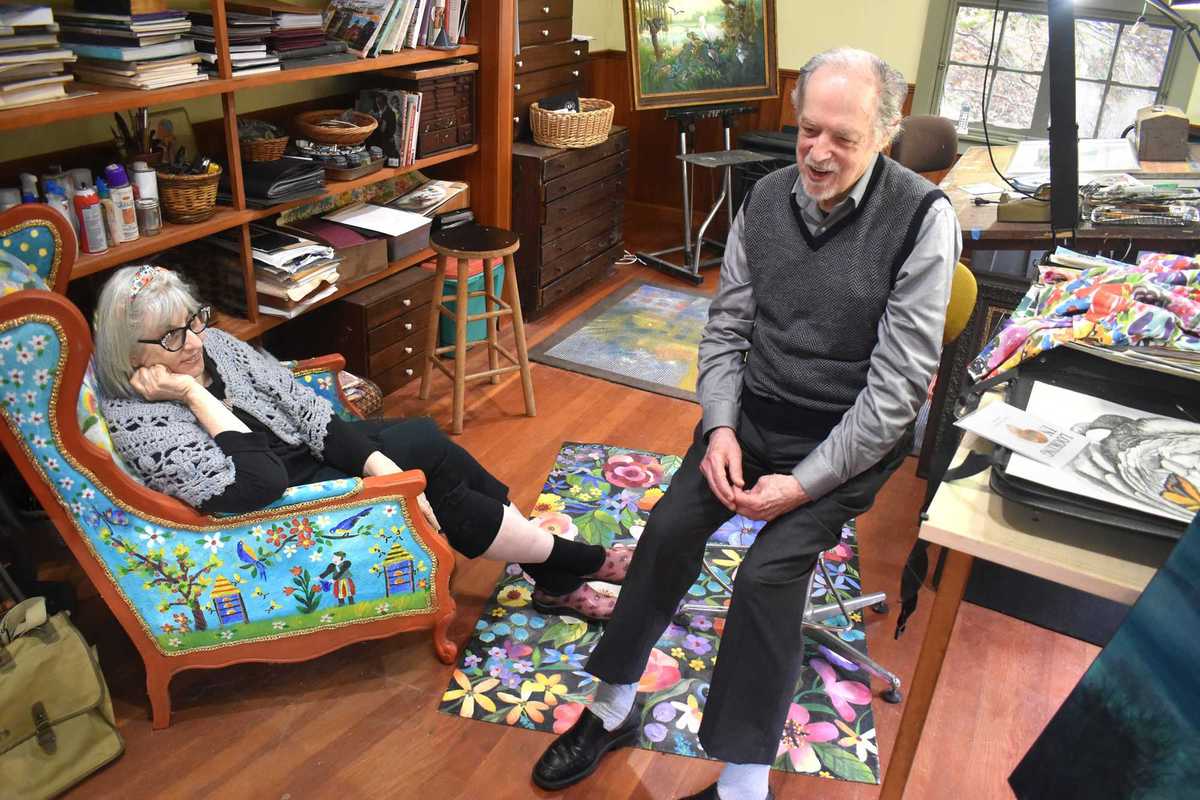
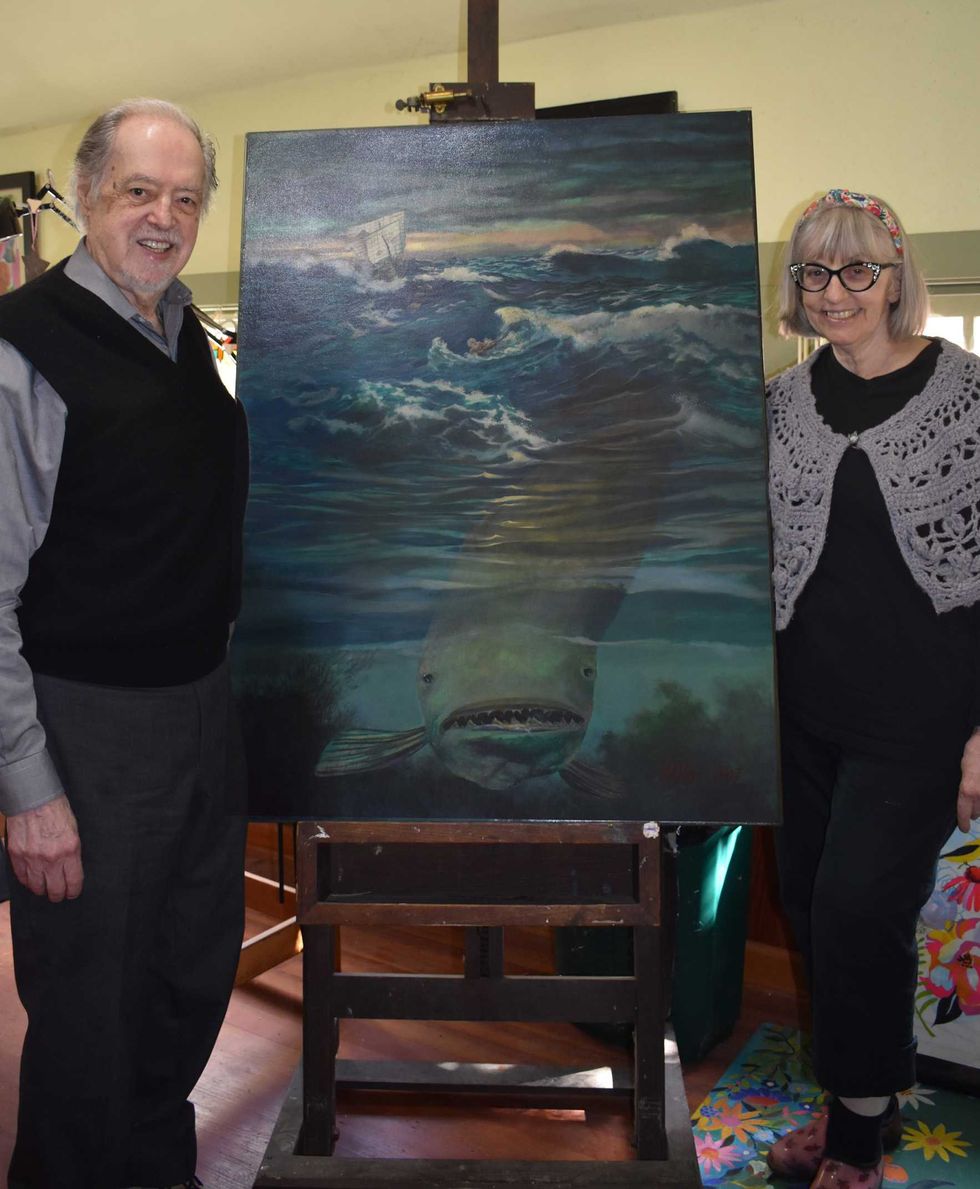 Justine and Victor Valla in their studio with a painting of Victor’s,”Jonah and the Whale.” Robin Roraback

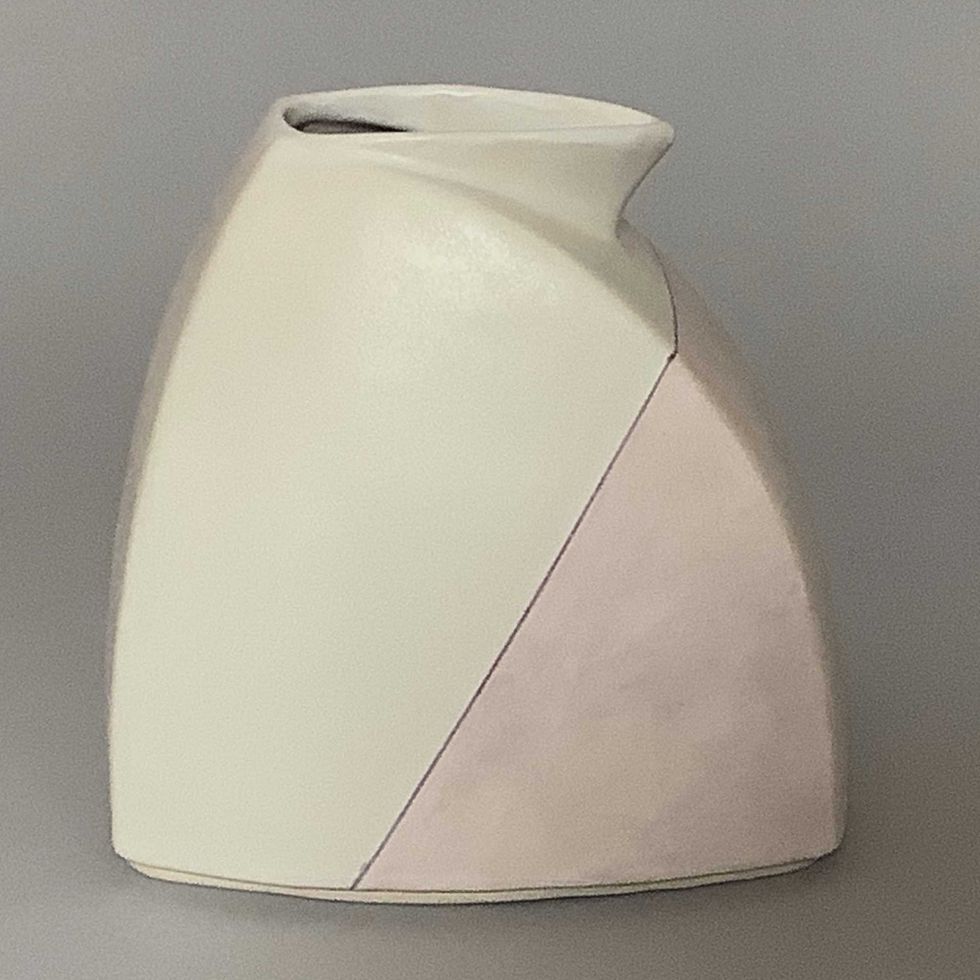 A ceramic vase by Kathleen Heidemann.Provided
 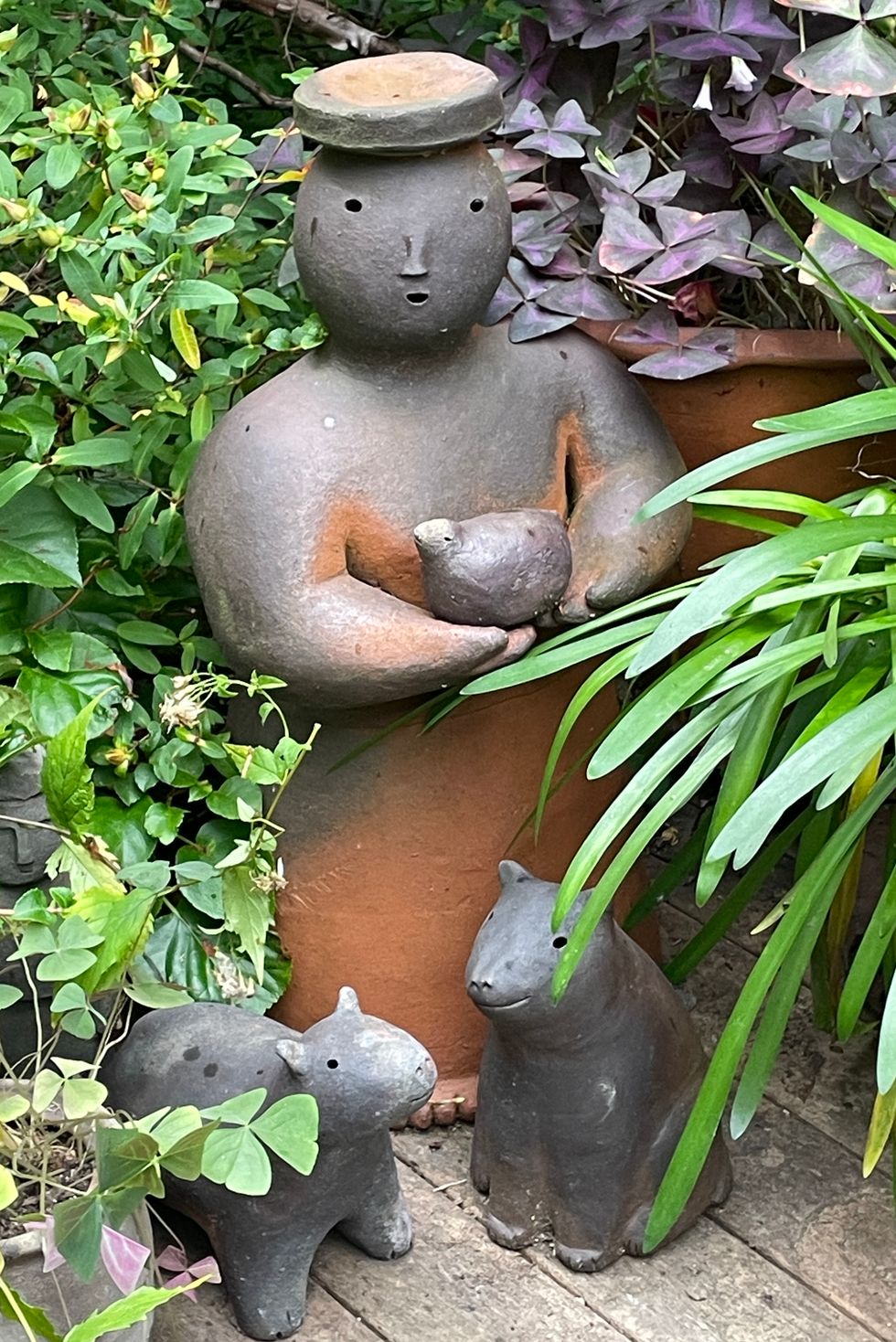 Joy Brown’s delightful ceramic sculptures.Provided
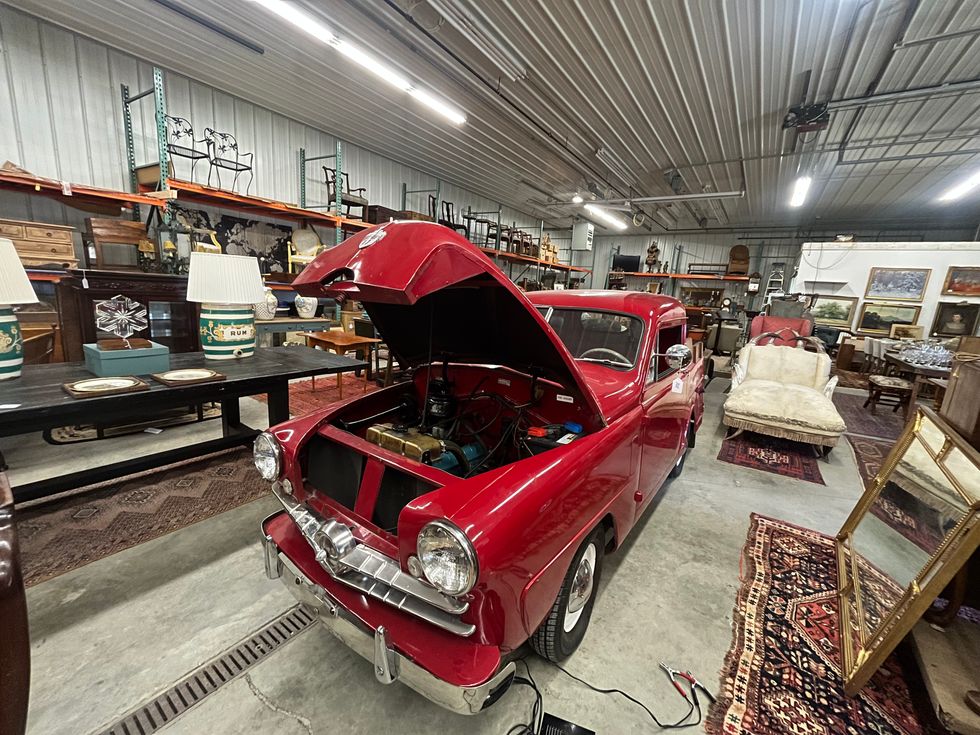 Hundreds of items at Stateline Auctions, including a candy-apple-red Crosley pickup truck.D.H. Callahan