


I liked art and also liked the technical things. Industrial design filled both needs.
—Sergei Fedorjaczenko
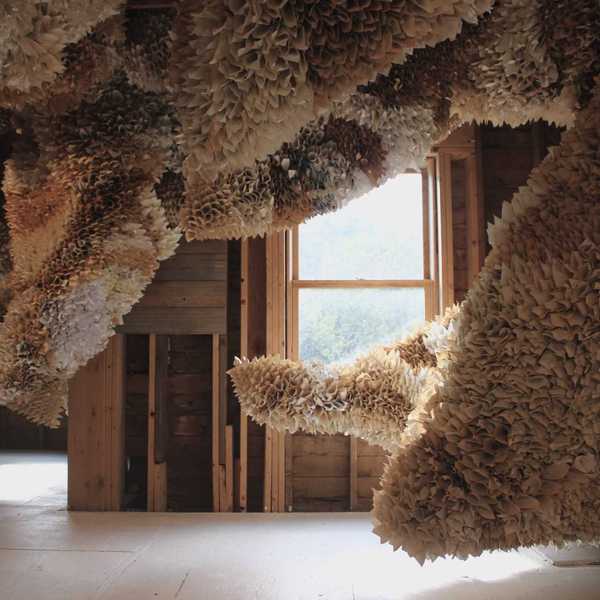
Sergei Fedorjaczenko’s studio is filled with paintings in watercolor, acrylic and gouache, along with sculptures made from wood, metal, plastic and found objects. The variety of materials reflects a lifelong fascination with both art and engineering, two disciplines that have shaped his work.
“I liked art and also liked the technical things. Industrial design filled both needs,” Fedorjaczenko said.
Fedorjaczenko and his family came from Germany when he was just 4 years old. They lived first in New York City before moving to Connecticut about 10 years later, in 1960. He has lived in Connecticut ever since.
“I was always drawing,” Fedorjaczenko recalled.
Although he wanted to study art, his parents insisted he pursue something more practical, so he enrolled in an engineering program.
After a year and a half, he dropped out, realizing engineering was not for him. With the Vietnam War underway, he was drafted into the Army, where he became a photographer.
While serving, he thought about what he really wanted to do. The answer: design cars.
He wrote to Chuck Jordan, vice president of design at General Motors. Jordan “responded with a handwritten note,” advising him to pursue industrial design.
After leaving the Army, Fedorjaczenko earned a degree in industrial design from the University of Bridgeport. He then worked for General Electric for 14 years, during which time he was credited with four patents and a trademark.
“I ended up designing everything but cars,” Fedorjaczenko said.
After General Electric, he sought other jobs and other puzzles to solve.
In February 2000, he read an article in the Hartford Courant about Cornwall artist Tim Prentice, known for his kinetic sculptures. The story made a lasting impression.
“I read the article about 20 times, thinking, ‘This is what I want to be when I grow up. A guy living out in the country making sculpture and stuff.’”
In 2001, he and his wife, Zoe, bought a circa 1730 house in Falls Village. A year later, Fedorjaczenko retired. After spending several years restoring the property and creating a studio for himself, he was able to concentrate more on painting and sculpture.
Today, his three-level workshop is equipped with tools for metalworking and woodworking, including an English wheel, a sheet metal brake and other equipment he has used to make components for a full-size car. He can mill and turn parts, bend and cut sheet metal and tubing, and weld and sandblast components for his sculptural work.
By a window sits a table he designed and made from wood offered to artists when Cornwall’s covered bridge was restored. His “Bridge Table” is a simple, clean design, reflecting his interest in both form and function.
Fedorjaczenko enjoys the physical process of creating art “because I am making something, using my hands.”
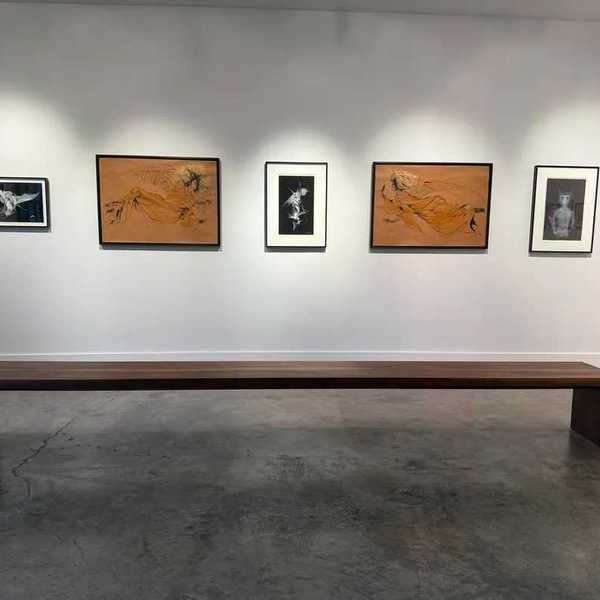
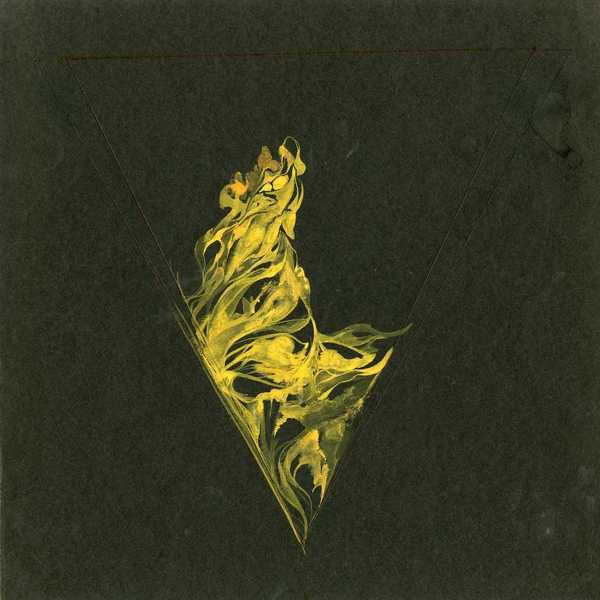
His work is influenced by the Bauhaus, a German design school that operated from 1919 to 1933 and became an international movement. For his upcoming exhibition, “The Engineering of Art,” Fedorjaczenko used the triangle, square and circle, primary geometric shapes associated with the Bauhaus, in each of the pieces.
On his website, Fedorjaczenko shares a quotation often attributed to Pablo Picasso: “I am always doing that which I cannot do so that I may learn how to do it.”
It seems a fitting philosophy for someone who has spent a lifetime moving between disciplines, learning new skills and finding creative possibilities in unfamiliar territory.
Despite his considerable body of work, Fedorjaczenko resists the label of full-time artist.
“I don’t consider myself a full-time artist. I consider myself a jack of all trades … with many interests.”
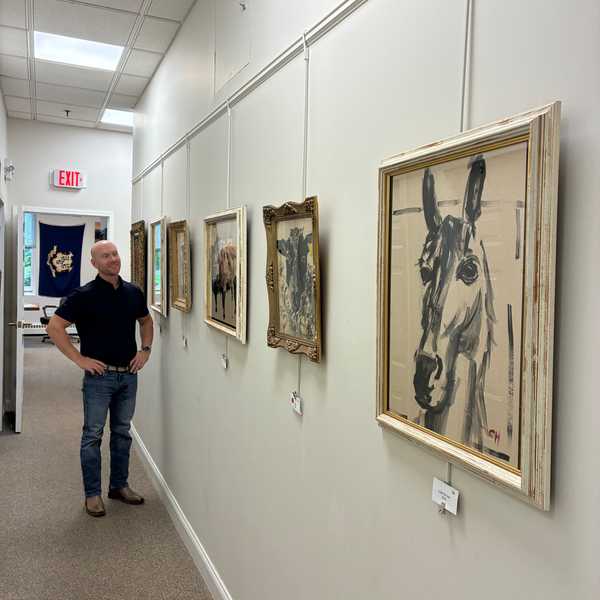
“The Engineering of Art” opens Saturday, Nov. 7, at the David M. Hunt Library in Falls Village, with a reception from 5 to 7 p.m. The show runs through Nov. 27. Fedorjaczenko will give an artist talk about his life and work Thursday, Nov. 19, at 5:30 p.m.



This Veterans Day, say more than “thank you”
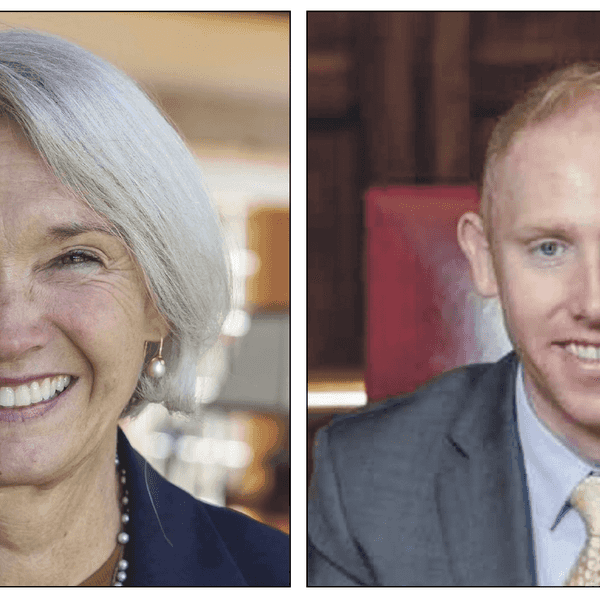
Tim Morris
I grew up next door to a great American, the late Captain Thomas E. Zibrofski of Melrose, Massachusetts. Although Tom was a proud U.S. Marine who piloted a UH-34D helicopter in over 200 Vietnam War combat missions, I knew him primarily for his other roles: generous backyard pool owner, family friend, car-lover.
It was because of this relationship that when I reached adolescence and became curious about Tom’s military service, I did not hesitate to ask him. My thirteen-year-old self spent one memorable afternoon with Tom looking at old slide-projector photographs and listening to his stories. As the projector fan whirred in the background, I remember laughing as Tom shared stories that I could picture. He explained how one of his peers brought a bowling ball to basic training (assuming incorrectly they would have time to go bowling) and was made to carry it around everywhere by the drill instructors. He told me about the competitiveness between Marine Corps and Air Force pilots at Da Nang Air Base, and about the South Vietnamese soldiers who would ride in his helicopter carrying “three-times” their body weight in equipment.
To be sure, Tom spared me from the worst of what he experienced. He did not tell me about the day he was wounded extracting a reconnaissance patrol from a hot landing zone (the same wound that left his voice in a hoarse whisper for the rest of his life).Still, I will never forget the generosity Tom showed me that day. By answering my questions Tom made me feel valued –– like he truly wanted me to understand his military service.
Each Veterans Day, you can find articles published about the growing distance in American society between those who served in the Armed Forces and those who did not. It is commonly referred to as the “civil-military divide.” The oft-quoted statistic is that today less than 1% of the U.S. population serves in the Armed Forces, and less than 7% of the adult population are veterans. Whether or not the numbers are the cause of this so-called divide, one symptom is clear: many adults are hesitant to ask the veterans in their lives about their military service.
The reasons for this hesitation are many. We tell ourselves that we “could never understand what they went through,” so we don’t bother asking. We worry that there may be trauma that we could “trigger” by asking a question, so we decide that we better not. We think that we don’t “have the right” to ask any questions because we didn’t serve ourselves. Better just to say “Thank you for your service” and call it a Veterans Day.
While these thoughts are understandable, they are fictional reasons for a curious person to remain silent. Instead of self-censoring, consider instead striking up a conversation with a veteran in your life. Trust that your genuine curiosity about their service will shine through in your questions. Trust that a veteran is completely capable of choosing what they will and will not share with you. You should not ask to hear about a veteran’s worst day in the military, and certainly avoid “did you kill anyone,” but you may be surprised at how well you can relate to many of their experiences.
Questions like, Who was your best friend when you served? What was the hardest part of boot camp? Do you have any funny stories from training? (Prediction: they do.) Who was your most memorable instructor? What are you most proud of from your military service? What was the weather or food like at your duty station or when you deployed? Why did you join the military? can all help you better understand someone’s service.
Contrary to what you see in movies, there are many long, often boring hours associated with military service; there are countless jokes told, deep relationships formed, and positive experiences to go along with the difficult ones. Growing up, I was fortunate to have a friend and a role model who helped me understand that military service is rarely one-dimensional, even for a Purple Heart recipient. In the years since I joined the Marine Corps, I have tried to help others understand the same.
Here in the northwest corner and Dutchess County, we are fortunate to have great Americans like Tom living all around us. And as Veterans Day approaches, it is worth remembering that expressions of gratitude need not be limited to a single-sentence exchange. On November 11th, try honoring a veteran in your life by saying more than “Thank you.” Ask them about their service. You both may be thankful that you did.
Tim Morris resides in Lakeville.