Tucked away in my recipe box are a few yellowed, typewritten pages from my mother-in-law’s home economics class circa 1960. Knowing that I love food, she thought I might like these notes from a unit on garnishes. As Gen-Xers, my husband and I both had a good laugh at this relic from another time — when women were encouraged to host cocktail parties and serve hors d’oeuvres among displays of pickle fans, fluted mushrooms and beet asters.
While turning fruits and veggies into exquisite works of art might appeal to a caterer, I don’t wish to add such laborious details to my life. But I saved it as an interesting oddity. (And for the record, my mother-in-law hates to cook and never hosts cocktail parties. When we visit her, we usually go to Olive Garden.)
So it was with some surprise that I found myself attracted to the beauty of the bento box. While the word bento comes from China and means “useful thing” and “convenient,” the bento box is a Japanese package that originated 1,000 years ago for farmers, fishermen and soldiers to carry rice.
Over the years, the upper classes developed the bento into elaborately decorated, lacquered boxes for traveling, serving tea or visiting the theater. Today, takeout bento boxes are very popular in Japan, often sold in supermarkets, department stores, restaurants and train stations.
However, a quick online search shows that modern bento boxes have also reached insanely creative heights, with parents (mainly mothers) performing Instagram-worthy feats of gastronomy for their children’s school lunches.
In Japan, making a bento box is seen as an act of love, but its appearance is also a status symbol among families in affluent communities. Many mothers compete to make the most beautiful and nutritious boxes, often spending up to 45 minutes making their child’s lunch — plus hours looking through specialized magazines and shopping for the necessary tools.
Bento boxes typically include rice, meat or fish and pickled vegetables. But picture these dishes formed to look like cute pandas munching on bamboo; baby farm animals nestled in a flowering pasture; or characters like Hello Kitty, Pikachu and Olaf the Snowman. If the idea of making citrus baskets and leek flowers showed me that I would probably fail a 1960 home ec class, then I can’t imagine arranging nori to look like a Sony PlayStation.
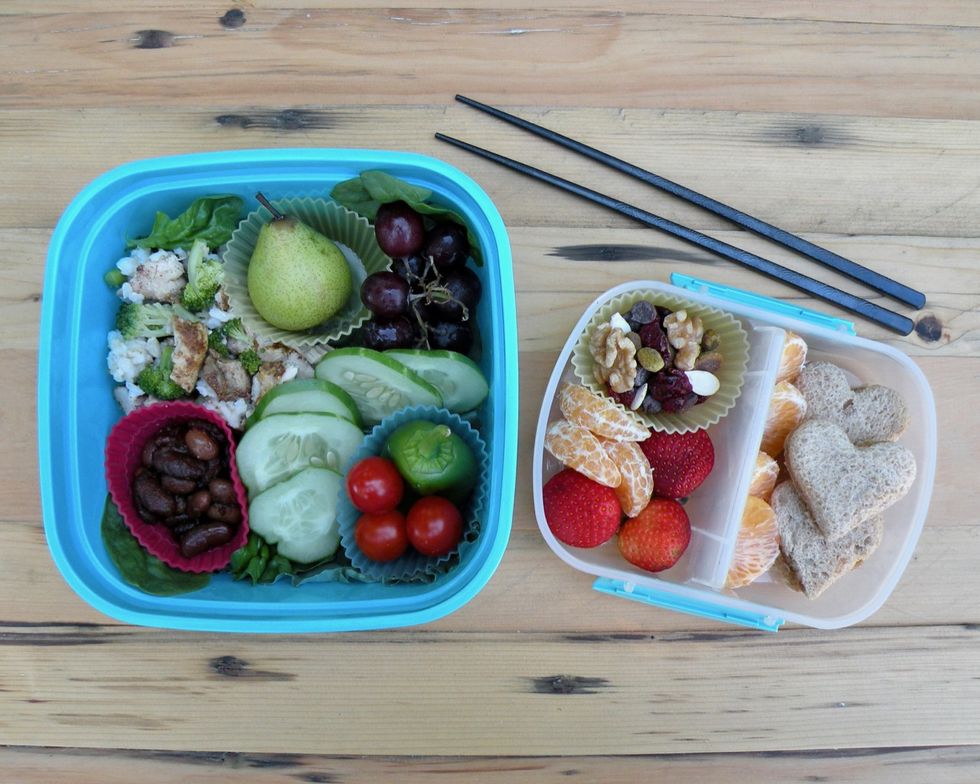
But it got me thinking. Today’s bento boxes can be suitable for all ages, and they don’t need to be elaborate or time-consuming. They are actually perfect for encouraging a balanced, nutritious meal and making leftovers a little more appealing. If you’re looking to wash fewer lunch containers, maintain a healthy diet, entice a picky eater or add a smidge of artistry to your day, then a bento box might be for you.
The first step is to find a box. Bento boxes come in many shapes and materials, such as bamboo, stainless steel, wood and plastic. You can often find suitable containers at stores such as T.J. Maxx in Torrington, Conn., and Marshalls in Great Barrington, Mass. The holy grail of bento materials (including ingredients) is Mitsuwa Markeplace in Fort Lee, N.J., just across the George Washington Bridge from Manhattan. The shopping plaza there has not only Mitsuwa but also a Daiso and Little Japan USA; all three have everything from containers to special forms for shaping rice balls.
But any food container will work and it doesn’t even need to have dividers to allow you to separate the different decorative foods.
When you gather the ingredients, make sure to hit all the food groups. Then, start building your box with an eye for color, shape, texture and portion size.
Some Bento tips
• Prep veggies on the weekend so that you can sprinkle a rainbow of bright, vibrant colors here and there.
• Make extra food for dinner so that you can easily pull out leftovers.
• Cut sandwiches with cookie cutters, or make pinwheels with soft tortillas.
• Rather than chopping veggies for a salad, serve meat, grains or legumes on a lettuce leaf wrap.
• Find ways to separate the food so that it doesn’t all mush together. If your box doesn’t have dividers, try using cucumber slices and orange segments to make a natural border. Or, use silicone baking cups to contain yogurt, applesauce, hummus or guacamole.
• Overall, don’t fuss. Simply remember that the original meaning of bento is “useful thing” and “convenient” — both for the container and its contents.