Thank you!
Your support is sustaining the future of local news in our communities.

Band of Brothers, Generation Kill: Thank You for Your Service

Band of Brothers, Generation Kill: Thank You for Your Service
Damien Lewis, at far right, was one of the young stars of “Band of Brothers.” Photo from IMDB

If I asked you to name some great war movies, you could likely rattle off a half dozen without much thinking. But TV does not dramatize war very often or very well. We do have Ken Burns’ fine documentary “The Vietnam War,” but I can think of only two miniseries worth mentioning here; each depicts a very different war.

Band of Brothers

You have certainly heard of and possibly seen this classic, which many consider the best miniseries of any kind. Let me remind you what makes it great and urge you make time to watch it for the first time or again. 

The story: Based on Stephen Ambrose’s book of the same name, this 10-episode HBO show follows Easy Company of the 101st Airborne Division from jump training to the Normandy invasion to the Battle of the Bulge and to the liberation of Dachau.

The cast: Winner of an Emmy for outstanding casting, the main cast includes David Schwimmer as Captain Herbert Sobel, the flawed leader of Easy during training and Damian Lewis as Dick Winters, the company commander who leads them in combat.

The production: Led by co-producers Tom Hanks and Steven Spielberg, the production is nothing short of astonishing (at a cost of $125 million).  

There are few more thrilling TV moments than the early episodes showing close to 100 C-47s taking off from England heading to Normandy, and then the night sky filled with flak and descending parachutes. This is a sight unlikely to be seen again; airborne troops are now delivered by helicopters rather than jumping from planes.

Generation Kill

In March 2003, the U.S. launched a pre-emptive invasion of Iraq, beginning a war based on misinformation and lies. This in no way diminishes the courage and service of the men and women who fought in it. 

Their story was told in a 2008 HBO miniseries about an elite Marine recon company heading north in the desert in their lightly protected Humvees, a trip marked by confusion and firefights. 

In the final devastating episode they roll into Baghdad and are ordered to stand aside while civil conflict begins. Their interpreter says, “You took this country apart and you can’t put it back together.” 

Generation Kill is notable for its authenticity and its dialogue, which is jumpy, profane, and laced with black humor. It was written by David Simon, creator and head writer of “The Wire.” Marines love this show and say it’s 80% on the mark. 

Both shows are based on actual events and are honest in balancing heroism with the terror and violence of battle. 

When you watch these shows together, as I did, you see the difference in production and tone, but the similarities are more striking. The weapons may have changed somewhat, but one firefight looks very much like another, and for “boots on the ground,” all wars must seem the same. 

The most basic tenet of military training is to obey orders without hesitation or question. When it comes to war we are still back in the 19th century: “Theirs not to reason why, theirs but to do and die.” But when we look away from the screen, we cannot help asking why. 

Then we think of the enormous difference in the mission and the outcome of these two wars and the leaders who sent soldiers into battle: Roosevelt and Churchill and Bush, Cheney and Rumsfeld.
Latest News

A life reshaped by clay in “Matin”

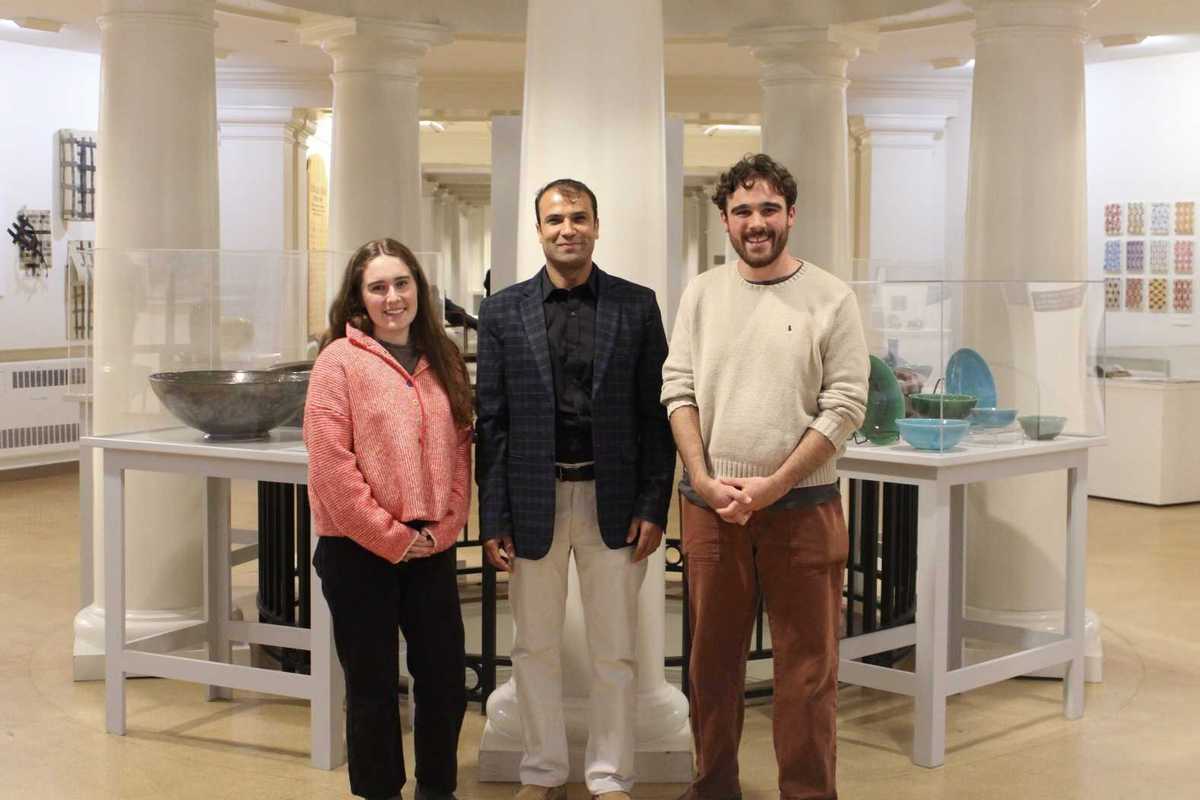
Left to right: Hannah Wheeler, Matin Malikzada and Yonah Sadeh.

D.H. Callahan

On Monday, Oct. 26, a group of students, teachers and local residents gathered at the Hotchkiss School in Lakeville for a screening of the new short documentary “Matin.” The film tells the story of Matin Malikzada, a seventh-generation Afghani potter making a new life in New Milford, Connecticut. The film was made by local filmmaker Yonah Sadeh, creator of the Video Wall at the David M. Hunt Library, and Berkshires-based potter Hannah Wheeler, who were both present for the screening, along with Malikzada himself.

As a member of the seventh generation of his family to master the art of pottery, Malikzada had done things the way his family had for over a century. Istalif, the village where his family has lived for generations, was known throughout Afghanistan for its pottery, with wares sent across the country for use as everyday cups, bowls, plates and other vessels. The pottery-making families of Istalif gathered clay from the same mountain, about 30 to 45 minutes away by donkey. Every July, they would head north toward the Uzbekistan border to gather ishkar, a plant they processed by hand to make their signature glazes.

Keep ReadingShow less
Meg Sher finds her calling among the stacks

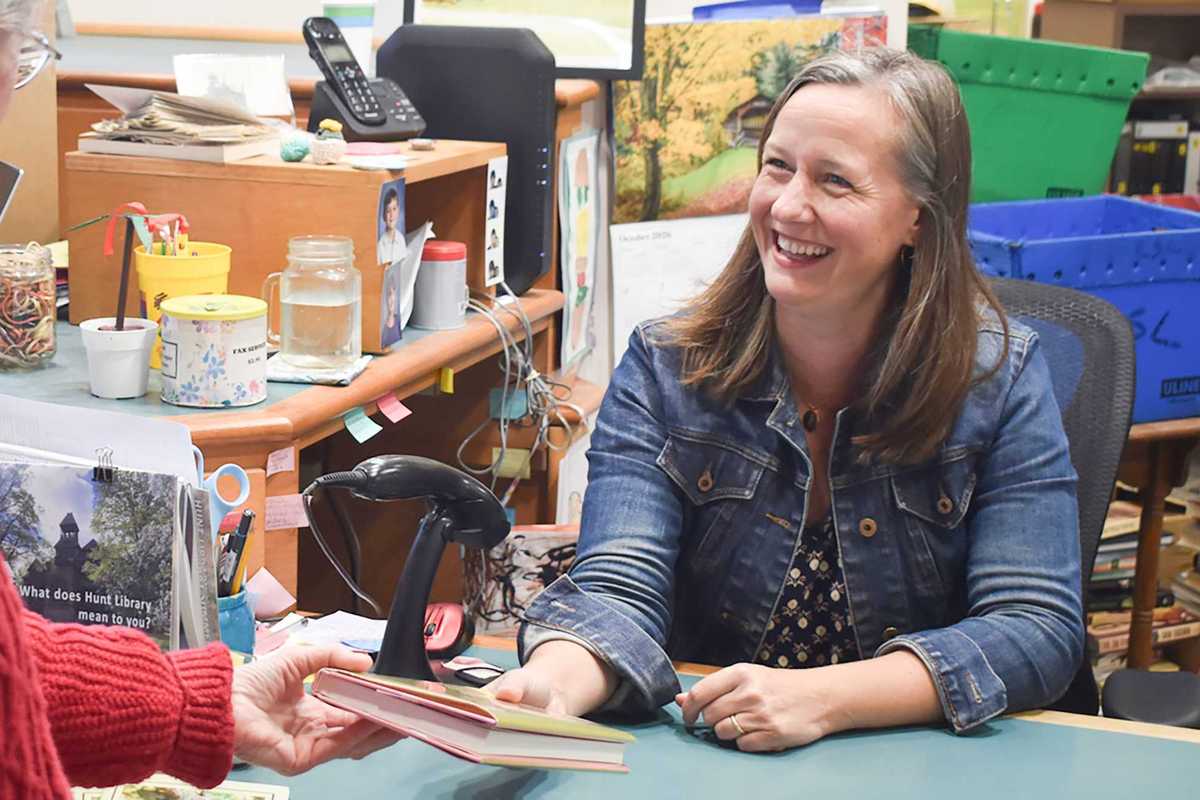
Meg Sher, executive director of the David M. Hunt Library in Falls Village.

L. Tomaino

When Meg Sher came to Falls Village in 2006 from Old Lyme, Connecticut, where she grew up, she never imagined she’d someday be the executive director of the David M. Hunt Library.

Although, in hindsight, perhaps it makes sense.

Keep ReadingShow less
Crescendo’s 23rd season speaks to the heart and mind

Christine Gevert, founding artistic director of Crescendo, conducts the audience at a performance.

Steve Potter

For Christine Gevert, founding artistic director of Crescendo, music from centuries past is anything but a relic. It is a living, breathing art form, full of drama, emotional complexity and, occasionally, surprises. As the regional choral and period-instrument ensemble launches its 23rd season, Gevert is once again bringing forgotten masterpieces into the present.

“Early Music has been my lifelong passion and the focus of my specialization in Europe and South America,” Gevert said. “Bringing this repertoire to our audiences in a nuanced way that does justice to its incredible depth, intensity, and beauty is deeply important to me.”

Keep ReadingShow less
google preferred source

Want more of our stories on Google? Click here to make us a Preferred Source.

Close Encounters with Music celebrates 35 years of musical discovery

Close Encounters with Music’s 35th season opens with “Saluting the Clarinet” featuring clarinetist Alexander Fiterstein.

Provided

For 35 years, cellist Yehuda Hanani has been inviting audiences to experience classical music in unexpected ways. As founder and artistic director of Close Encounters with Music, Hanani has built a concert series that goes beyond the music itself, exploring connections to literature, history, politics and the human experience.

This year, Close Encounters celebrates its 35th season with “Celebration & Discovery,” a seven-concert series that opens Sunday, Nov. 1, at the Mahaiwe Performing Arts Center in Great Barrington.

Keep ReadingShow less
Shinbone Alley brings spooky songs to Spencertown

Seeing isn’t always believing. Sometimes it’s the lack of a defined picture that can be the most compelling. And when Alex Harvey of Shinbone Alley sings his supernaturally charged sea shanties and street ballads, the unseen will be downright scary. On Oct. 30, the historically inclined storyteller and performer will create a spooky evening of forbidden tales and yarns through a carefully chosen series of songs at Spencertown Academy of Arts.

The repertoire for the performance is a bit fraught. Over the years, Shinbone Alley has explored the world of folklore through music. Though the group usually features two musicians, Harvey, a multi-instrumentalist and singer, will be performing solo. That is, of course, unless you include the spirits.

Keep ReadingShow less
Malian blues and Moroccan Gnawa meet in Sheffield
Vieux Farka Touré
Proivded

Desert winds rarely blow into the Berkshires, but on Nov. 5, they will carry the Malian blues and Moroccan Gnawa music to Race Brook Lodge.

That evening, Malian guitarist Vieux Farka Touré, often called “the Hendrix of the Sahara,” and Moroccan musician Samir LanGus will play at the lodge’s Event Barn in Sheffield, Massachusetts, at a benefit for the foundation Touré directs.

Keep ReadingShow less
google preferred source

Want more of our stories on Google? Click here to make us a Preferred Source.

google preferred source

Want more of our stories on Google? Click here to make us a Preferred Source.