A Bloody Good Bloody Mary Mix

Come taste Andy Williams’ award-winning Bloody Mary mix at LaBonne’s market on June 25, where the mix is now being sold in bottles.
Photo by Cynthia Hochswender

The history of the Bloody Mary cocktail is vague, with no one really certain how it got its name or who invented it in the first place.
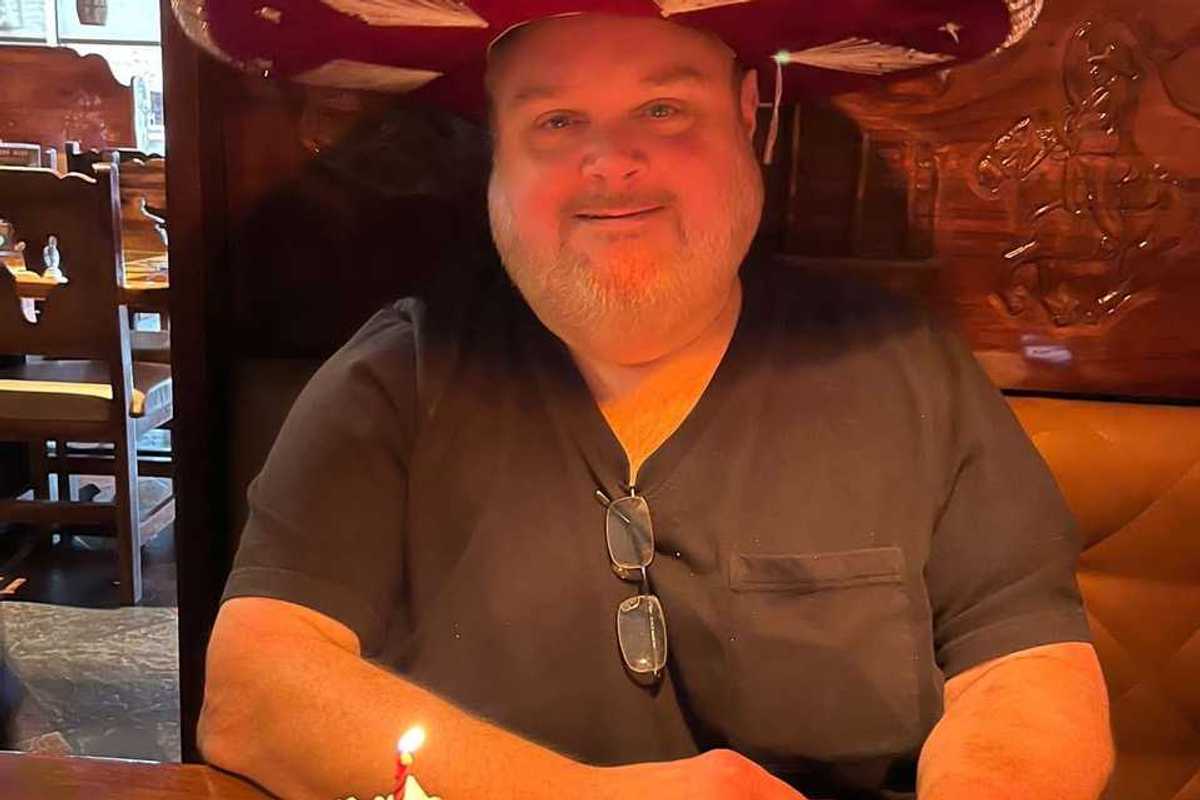
But one thing we do know is that Salisbury, Conn., native Andy Williams has invented a particularly delicious base mix for the cocktail, which is now being sold at the LaBonne’s markets, including the one in Salisbury.
Williams has been working at area bars since 2001, starting when he was 16 at The Boathouse in Lakeville, Conn., when it was still owned by Danny O’Brien. Williams is now on duty at Lakeville’s Black Rabbit Bar and Grill on weekends, where he serves up his very tasty tomato-based beverage with or without vodka (the tamer version is, of course, known as a Virgin Mary).
The perfect Bloody Mary mix took about a decade to perfect, Williams said. It has nine ingredients, including tomato juice and celery salt (and the requisite stalk of celery — no one seems to know how that cocktail tradition got started either, in case you’re wondering).
He’s very specific about his vodka — he likes to use Tito’s, which adds some smokiness to the drink.
Other ingredients include citrus juices, A1 sauce, Worcestershire sauce, horse radish and Tabasco — but Williams promises that he’s found a happy balance between too hot and not hot enough.
The ideal Bloody Mary, he said, is one that can help cure you of a hangover without scorching your windpipe.
One ingredient you will not find in a Williams Bloody Mary: filet mignon.
“I’ve been to many competitions where there will be an entire steak in the Bloody Mary.”
Williams sticks to more modest garnishes: a pimento-stuffed green olive, some fresh citrus, perhaps a cocktail onion.
“And if it’s for a contest, sometimes I’ll add a couple of grilled shrimp.”
The mixture is popular enough that LaBonne’s (where Williams is also an employee; and in his spare time he does a blog called Simply Sports) is now selling the mix at all its stores.
There will be a tasting at LaBonne' in Salisbury on Saturday, June 25, from 10 a.m. to 2 p.m. The mix costs $9.99 for 32 ounces (enough for about five Bloody Marys).
Look for it at the store in the front cooler, next to the fruit juices. It sells out quickly. Williams said he generally makes eight or nine bottles every Thursday.
“I make it in small batches, so you can taste the freshness.
“Once you taste it,” he promises, “you will never want to try another Blood Mary mix.”
You can place individual orders for the mix by calling Williams at 860-318-5800.
And as for the history behind his signature drink, Williams subscribes to the idea that bartender Fernand Petiot mixed the first Bloody Mary in Paris at what would become Harry’s Bar. The drink debuted in 1921, which Williams notes is 100 years ago.

D.H. Callahan
Minimalist works by Agnes Martin on display at Dia:Beacon.
At Dia:Beacon, simplicity commands attention.
On Saturday, April 4, the venerated modern art museum — located at 3 Beekman St. in Beacon, NY — opened an exhibition of works by the middle- to late-20th-century minimalist artist Agnes Martin.
Martin, the Canadian-born New York and New Mexico resident who died in 2004, made the kind of ambiguous abstract art that inspires countless imitators and interpreters.
At first glance, most of the pieces in the new show, “Painting Is Not the Act of Painting,” (on display until June 22) are variations on simple lines and grids painstakingly applied by the artist’s own hand using paint and pencil.
Despite their relative simplicity, it took Martin years of rejecting her own artwork to reach this level of pure abstraction. She would often take knives to paintings she didn’t like, literally slashing work that didn’t live up to her expectations. It wasn’t until she was in her 50s that she began making the work she would become known for.
That evolution is reflected in the exhibition’s 24 works.
Dia:Beacon seems like a perfect place for them. The museum is a monument to simplicity. Even the most complicated pieces are abstractions in their own ways. A straight, unpainted plywood wall with diagonal backing by Donald Judd suggests a room under construction. Michael Heizer’s singular ovoid boulder embedded into a gallery wall strikes unease into visitors.
Subtle grids and softly layered lines by Agnes Martin draw the eye at Dia:BeaconD.H. Callahan
Martin’s pieces feel at home here. In the context of such visual, if not conceptual, simplicity, her art seems louder than it might in almost any other setting. Faint blue and peach stripes gain vibrancy when compared with the all-white canvases of Robert Ryman or the large gray mirrors of Gerhard Richter, both a few rooms away. By comparison, the visibly human-drawn lines of pencil or etched-out paint seem almost complicated, and technically masterful.
It’s enough to make you ponder the name of the exhibition, “Painting Is Not the Act of Painting,” pulled from a quote by Martin: “Painting is not making paintings; it is a development of awareness. And with this awareness, your work changes, but very slowly.”
In a world where studio assistants and fabricators contribute to the output of many artists, Martin relished the act of painting. She painted nearly every day of her adult life. For her, the process was an integral part of the work, and it’s hard to look at these pieces without appreciating her hand.
This repetitive study is also demonstrated across the hall in a gallery dedicated to a single work by Andy Warhol. The piece, “Shadows,” is a study of variations on a single subject. Warhol took photos of shadows in his office and, using a silkscreen process, painted them 102 times on identically sized canvases.
Walking into the room, it may seem like the same image repeated. On closer inspection, the canvases vary widely in color and composition. The work suggests that repetition can produce unexpected forms.
Agnes Martin has become enshrined as one of the leaders of the minimalist movement of the 1960s and ’70s. Her work and artistic philosophies have inspired countless admirers. This exhibition displays a selection of important pieces from nearly 50 years of practice.
Robin Roraback
Hunt Library in Falls Village will present a commemorative show of paintings and etchings by the late Priscilla Belcher of Falls Village.
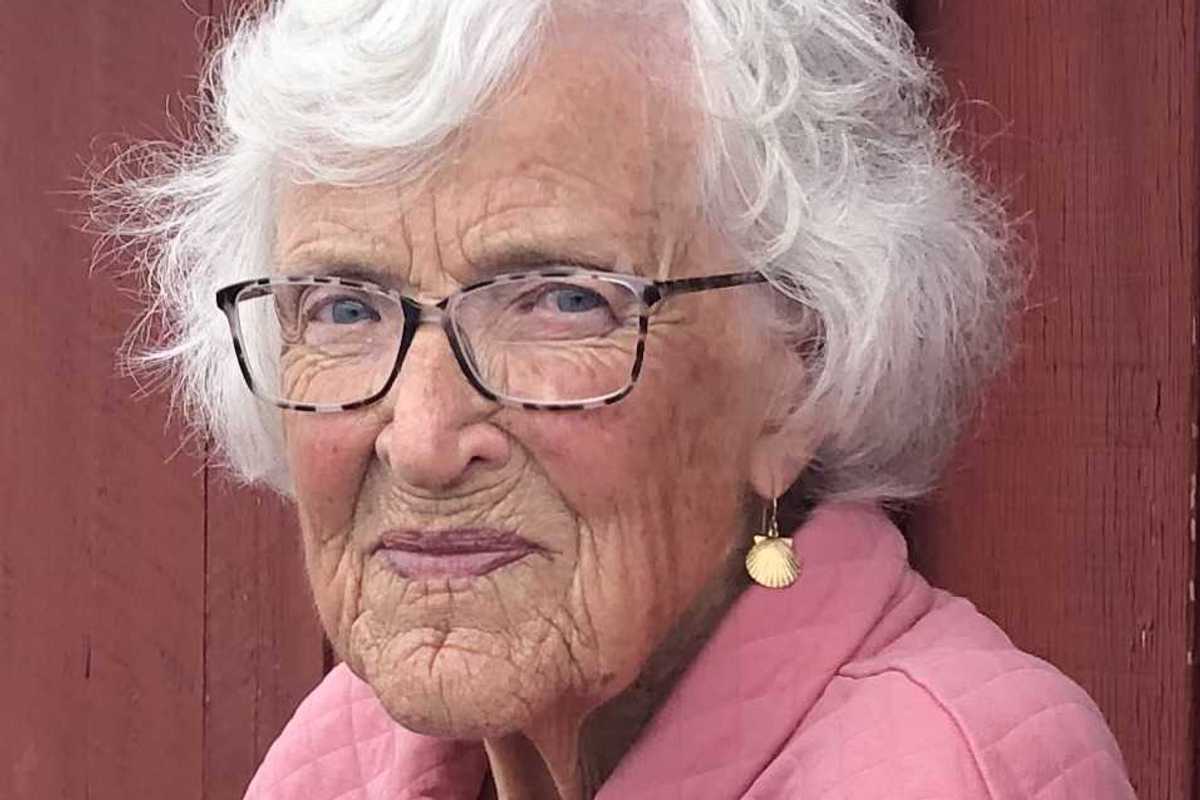
Priscilla Belcher, a Canaan resident who was known for her community involvement and willingness to speak out, will be featured in a posthumous exhibition at the ArtWall at the Hunt Library from April 25 through May 15.
An opening reception will be held from 5 to 7 p.m. on April 25. The show will commemorate her life and work and will include watercolors and etchings. Belcher died in November 2025 at the age of 95.
Christian Allyn, a close friend, said Belcher largely kept her creative work private. “Priscilla was a very private person. She kept her painting and writings to herself and only a few close family members,” he said, noting that she was self-taught.
After Belcher suffered a fall in 2024, Allyn and her neighbor, Gail Sinclair, prepared her home for her return. “During this process is when Gail and I began to uncover the volumes of art that Priscilla did throughout her life,” he said.
Belcher was born in 1930 in the Huntsville section of Canaan, the youngest of 10 children. Her family struggled during the Great Depression. “She could remember the entire family splitting one cabbage for dinner,” Allyn said. Her father died when she was nine.
She graduated from Lee H. Kellogg School, when it was still located at the Hunt Library building, and went on to graduate from Housatonic Valley Regional High School (HVRHS).She married John Belcher, foster son of local landowner Dorothy Haven, and moved in 1952 to a house in South Canaan that Haven gave them, near the South Canaan Meeting house, the “Little Red House.”
Years later, Belcher sold the home to help cover legal expenses for her neighbor, Peter Reilly, who was wrongly accused of killing his mother while a student at HVRHS in the 1970s.
Allyn described Belcher as part of a generation shaped by hardship. “Priscilla was one of the last living examples of the greatest generation,” he said. “Through that struggle, her tenacity and character were formed, which helped shape Canaan and the wider region into what it is today.”
He added that her advocacy ranged from pushing for pollution controls at the Falls Village landfill to calling for reforms in Region One schools. “Her willingness to put her house up to pay for Peter Reilly’s legal expenses, consistent advocacy of pollution controls … and reform to Region One in 2010 led this area into a far better place,” he said.
Belcher worked as a bookkeeper for the Lakeville Journal and Geer Nursing. After 1978, she devoted her time to gardening, documenting local history, refinishing furniture, attending town meetings, supporting people in recovery, and developing her painting and writing.
“She had a very hard life and often upset other people while she was intending to do good,” Allyn said. He recalled a conversation near the end of her life: “She said to me in her last days, ‘You know, I think I went a little too far with what I did in Falls Village,’” referring to her outspokenness. He added that after reflecting, “her entire outlook changed.”
The opening reception will be a celebration of Priscilla Belcher’s life, art, and legacy. All are welcome.
For more information visit www.huntlibrary.org/art-wall
Ruth Epstein
The sounds of Argentine tango and Jewish folk traditions will collide in a rare cross-cultural performance April 25 and 26, when Berkshire’s Crescendo presents the choral program “Stepping Into Song.”
Christine Gevert, Crescendo’s founding artistic director, described the concert as “a world-class, diverse cultural experience” pairing “A Jewish Cantata” with Martin Palmeri’s “Misa a Buenos Aires.”
For Gevert, who was raised in Chile, the program fulfills a passion for bringing Latin American music to the region.
Palmeri will travel to the Berkshires to conduct and accompany his own works in collaboration with Gevert. Born in Buenos Aires, he is not only a composer but also a conductor and pianist known for integrating tango rhythms into classical choral and orchestral forms.
Billed as the biggest concert of Crescendo’s season, “It is not your traditional choral concert,” Gevert said, describing it as monumental. “The two main works on the program are a fusion of sacred, traditional choral music and the dramatic, pulsating rhythms and lush harmonies of Argentine tango. ‘A Jewish Cantata’ is a unique new work that merges Yiddish and Hebrew folk songs with traditional choral writing and Piazzolla-style tango.”
The messages presented go beyond current political ideologies, she said, and are instead universal. She said she commissioned the work to honor her roots and connect to Jewish people.
The performances will feature the Crescendo Chorus, the Manchester Community College Chorus, and Mexican-born soloist Nadia Aguilar, a soprano, scholar and educator.
The two main instrumental soloists are Argentine bandoneon player Rodolfo Marcelo Zanetti and Alexander Kollias, principal clarinetist with the Hartford Independent Chamber Orchestra.
An ensemble of strings led by New York City-based Brazilian violinist Edson Scheid, along with piano performed by both Palmeri and Gevert, will provide the instrumental accompaniment. Palmeri and Gevert will share the conductor’s podium.
Gevert formed Crescendo in 2003 to bring high-level choral music to a region that lacked the offerings found in larger urban areas. The group combines 20 to 30 chamber chorus members with a strong pool of paid professional musicians.
“Stepping Into Song” will take place at 7 p.m. Saturday, April 25, at Trinity Church, 484 Lime Rock Road, Lakeville, and at 4 p.m. Sunday, April 26, at Saint James Place, 352 Main St., Great Barrington. Tickets and workshop registration are available at crescendomusic.org.
Crescendo’s concerts are partially funded by support from the Connecticut State Department of Economic and Community Development, WMNR Fine Arts Radio and NBT Bank.

Want more of our stories on Google? Click here to make us a Preferred Source.
Debra A. Aleksinas
SALISBURY — As millions tune in to the Kentucky Derby at Churchill Downs on May 2, a spirited local tradition unfolds in Salisbury, where the pageantry, fashion and excitement of race day are recreated — with a community purpose.
For the past six years in the Community Room at Noble Horizons, all eyes turn to the big screen as the crowd settles in, drinks in hand and anticipation building. Women in elaborate Derby hats — bursting with oversized silk flowers, feathers and playful cutouts — mingle with men dressed for the occasion in crisp jackets and bow ties, fedoras and the occasional red rose on a lapel.
As post time nears, the room quiets, then hums with nervous energy. When the horn finally sounds, the crowd erupts. The next two minutes determine which thoroughbred will be ceremoniously draped in a blanket of roses.
“They definitely take it to heart,” said Salisbury Rotary Club President Bill Pond of the local revelers. “It’s just tile and bricks here, but when they’re waiting for that horn to go off, it feels like the real thing in Kentucky.”
The club’s annual Kentucky Derby Social has become the Rotary Club’s signature fundraiser, blending high-spirited fun with a deeper purpose: supporting neighbors across the Northwest Corner.
Proceeds from the event support local food banks, student scholarships, backpacks and clothing for back-to-school programs, as well as nonprofit groups serving residents in need.
Between sponsorships, a silent and live auction, ticket sales and monetary donations, the organization is hoping to raise about $6,000 this year.
“Rotary members volunteer their time, and all the money raised goes back to the community,” said Pond, who is also the administrator at Noble Horizons Senior Community, whichprovides the event space, food and refreshments.
Over the past several years, said Rotary treasurer Susan Dickinson, the organization has donated more than $50,000 locally — helping stock food pantry shelves, support families preparing for the school year and provide scholarships to area students.
“All the money raised comes from local people, so it goes back into the community. We try to help those that are most in need,” said Pond. “Everybody’s hurting.”
Planning for the event starts many months in advance.
“A lot of time and effort goes into it,” Dickinson said of the volunteers who take care of the many details, from soliciting donations and sponsorships, to planning the menu, selling tickets, creating the gift baskets and transforming the community room into a festive, Derby-worthy space.
On a recent weekday in April, while planning was in full swing, Dickinson noted that Fran Chapell, the club’s secretary, was busy assembling donated items into themed gift baskets for the silent auction, a highlight of the evening’s fundraising efforts.
There is one element to the Salisbury social, however, that consistently steals the show.
“It’s all about the hats,” said Pond. “Women show up in hats with gigantic pink or red flowers and all kinds of decorations on them.”
Gentlemen, too, often dress to the nines. “There’s a gentleman who wears an authentic suit that somebody at the track would wear. It’s a lot of fun.”
Organizers are optimistic this year’s Derby social will draw a minimum of 100 attendees. “Last year’s turnout was closer to 75,” Dickinson said, citing competition from other local events on that same day.
But if the energy inside Noble Horizons is any indication, the crowd will once again rise to its feet when the starting horn sounds — proving that even miles from Churchill Downs, the spirit of the Derby, and the generosity behind it, runs just as strong.
For details and tickets, email salisburyctrotary@gmail.com or call 860-671-1676 or 860-671-1415
Gary Richter, Ms, Dvm
Bringing home a new puppy or newly adopted dog is exciting, but it can also feel overwhelming once the training begins.
The good news is that training does not have to be complicated. Here are six of the best techniques to keep in mind when training a new puppy or dog:
1. Be consistent from day one.
Dogs learn best when the rules stay the same. If one person allows jumping on the couch and another corrects it, your dog will get mixed messages. The same goes for feeding routines, potty breaks and commands. Keep your language simple and consistent.
2. Reward the behavior you want right away.
Timing is everything in dog training. If your puppy sits when asked, comes when called or goes to the bathroom outside, reward that behavior immediately so they can connect the action with the outcome.
3. Keep training sessions short and manageable.
With puppies, attention spans are limited. Training for too long can lead to frustration for both the dog and the owner. Instead of one long session, aim for a few short sessions throughout the day.
4. Focus on routines before perfection.
One of the biggest mistakes new dog owners make is expecting too much too soon. Before worrying about perfect obedience, focus on building a strong routine. Regular mealtimes, walks, potty breaks, playtime and rest all help create structure. That structure lays the groundwork for better behavior because dogs feel more secure when they know what to expect.
5. Correct gently and redirect quickly.
Training is not about punishing mistakes; it is about helping your dog make better choices. If your puppy starts chewing on a shoe, redirect them to an appropriate chew toy. If they start jumping, ask for a different behavior, like sitting. Calm redirection teaches much more effectively than harsh reactions.
Training a new puppy or dog takes patience, but it is also one of the best investments you can make in your pet’s long-term well-being. With consistency, positive reinforcement and realistic expectations, families can make training feel less stressful and more rewarding.
6. When in doubt, seek expert help.
All dogs are trainable given the right technique. If you are unclear how to proceed or are not getting the results you want, consult a qualified trainer or behaviorist.
When looking for the right trainer or veterinary behaviorist, ask whether they follow LIMA (least invasive, minimally aversive) principles. Resources for positive reinforcement trainers include the International Association of Animal Behavior Consultants (IABC), the Certification Council for Professional Dog Trainers (CCPDT), the Academy for Dog Trainers and the American Veterinary Society of Animal Behavior (AVSAB).
Dr. Gary Richter, named America’s Favorite Vet by the American Veterinary Medical Foundation, is a veterinary acupuncturist, chiropractor and founder of Ultimate Pet Nutrition. He is the owner and medical director of Montclair Veterinary Hospital.
Lakeville Journal
Oblong Books in Millerton will mark Independent Bookstore Day on Saturday, April 25, joining more than 1,600 stores nationwide. The all-day event features signed books, exclusive merchandise and a drop-in, browse-at-your-leisure atmosphere. Free; 10 a.m. to 6 p.m

Want more of our stories on Google? Click here to make us a Preferred Source.

Want more of our stories on Google? Click here to make us a Preferred Source.