WINSTED — About 30 Laurel City residents converged on the Northwest YMCA on Main Street Tuesday night to participate in the new "Winsted’s Biggest Winner" program, a contest modeled on the popular NBC television series, "The Biggest Loser."
Like the TV show, the Winsted program pits teams of competitors against one another to see who can shed the most pounds over the course of several weeks. Six teams were formed upstairs at the YMCA basketball court and Winsted Recreation Director Alesia Corso discussed the rules and regulations of the program.
"I know the first concern you have is your weight and whether or not it’s going to be made public," Corso began. "Don’t worry. I don’t know your weight and I don’t want to know it." Instead, she said, teams will be judged by their combined total weight loss each week, as well as on their percentage of weight loss and body fat loss.
For the record, this writer, a member of the Winsted Elks’ ‘151 Club,’ weighed in at 229.2 pounds, with an ultimate goal of getting under the 200-pound mark. The ‘151 Club’ is named with a lofty goal in mind — six people losing at least 25 pounds each, plus one for good luck. Friendly side wagers have been made as to who will lose the most weight and end up the "Biggest Winner" and win a year-long membership to the Y.
Corso introduced contestants to Canton-based dietitian Teresa Martin Dotson, who explained that most people make the mistake of cutting too far back on foods when trying to lose weight. "The biggest thing people do when they begin a diet is they think they have to give something up," she said. "My first assignment to them is to add something, not take it away." Dotson said she uses the United States Department of Agriculture’s Food Pyramid (mypyranmid.gov) as a foundation for healthy eating, which results in the optimum use of energy in the body.
The USDA’s new food pyramid is slightly different from the one taught in schools for decades (remember the one with the starches at the bottom?). Five food groups, now divided vertically instead of horizontally, include grains, vegetables, fruits, milk and meat/beans.
Dotson reasoned that people need to cut or burn, on average, an extra 3,500 calories to lose a pound of weight. She added that she believes low-carbohydrate and other fad diets are unhealthy. "It’s all about calories, really," she said. "It doesn’t matter where they come from. If you restrict your calories to 1,000 a day, it doesn’t matter if it’s marshmallow fluff or bacon fat. You’re still going to lose weight." But 1,000 calories of fluff or bacon fat will not provide the body with a balanced source of energy, which is vital to a successful exercise regimen.
During a presentation in the YMCA’s cardio room, Dotson gave a presentation for a weekly Biggest Winner television segment, which will air on Charter Community Television’s Channel 13. Airing throughout the six-week competition, the program will update viewers on the progress of competing teams and encourage them to get healthy at home. Competitors will weigh in each Thursday at the Y and keep track of the progress with fitness charts and food logs.
Viewers can catch the "Winsted’s Biggest Winner" show every Friday at 7 p.m. on Channel 13.

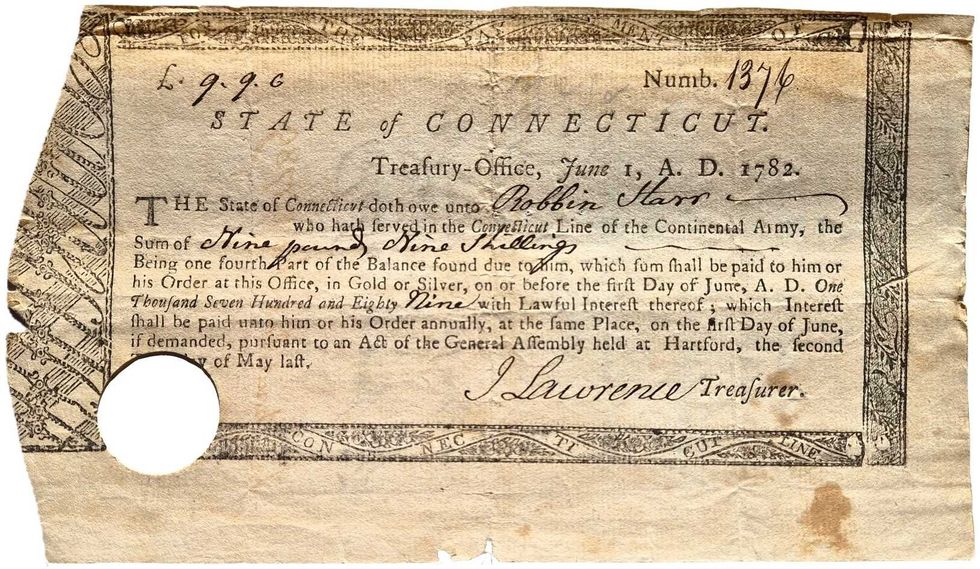 Pay Bill for Robin Starr’s service in the Continental Army.Courtesy the Alex Breanne Corporation
 John Mills speaking at Quinnipiac University.Courtesy the Alex Breanne Corporation
 Stephanie Saetta,with her rescue dog George and Blue (left), a shepherd mix awaiting his forever home.Madi Long
 Blue, a 7 year-old Shepard mix, is waiting for his forever home. Madi Long