
Thank you!
Your support is sustaining the future of local news in our communities.

The creation of Colebrook River Lake

The following material has been presented before regarding the history of Colebrook River Lake, but the public never tires of tales from “The River.�

The Metropolitan District Commission (MDC), a company providing water and other services to the Greater Hartford, Connecticut area, began buying up available land in the watershed area of the West Branch of the Farmington River in the 1930s.

Essentially, this meant the village of Colebrook River would be drowned by the waters behind a dam constructed at a narrow gorge known as the Hogback, just east of the Colebrook town line in the town of Hartland.

u           u           u

The following is a chronology of the events leading up to the elimination of Colebrook’s eastern population center, and the creation of the body of water known today as Colebrook River Lake:

June 11, 1945: The MDC now owns 75 percent of Colebrook River land.

Oct. 13, 1945: The MDC continues clearing land at Hogback.

Sept. 26, 1947: A number of prospective buyers were in Colebrook River looking over houses and other buildings there that the MDC now owns and which are being offered for sale. Purchasers demolish and carry away the lumber and other building materials salvaged. It was understood that the MDC now owns 80 percent of the valley.

Jan. 21, 1949: The Methodist Church and its property was sold with the right to occupy it for three years until Jan. 13, 1952.

May 24, 1949: Despite an aggressive fight against the Hogback “water grab� bill by many throughout Litchfield County, it passed the House of Representatives by a vote of 117 to 84.

Aug. 31, 1949: The MDC plans to spend $10,000,000 for the Hogback Dam. The main expenditures as proposed by their finance board are:

Dam and appurtenances, $4,400,000

Clearing land, $385,000

Relocation of highways & cemeteries, $605,000

Constructing tunnel to Barkhamsted Reservoir, $2,750,000

(This was never done.)

Interest (on money) during construction, $355,000

Unallocated expenses, $705,000

u           u           u

William Wurts, district manager, urged that construction for the reservoir be started in 1950. The MDC hoped to have the reservoir completed by 1955 to fulfill the secret contract with riparian rights owners such as the Collins Company, Stanley Works and others.

Some 4,411 acres are already acquired with a projected 575 additional proposed. Capacity of the completed dam will be 6,500,000,000 gallons. It will back up 4 miles, be 116 feet deep maximum, and cover 550 acres. Besides purchasing additional land that will be filled with excess water during flood stages, the MDC will rebuild about 3-and-a-half miles of state highway along the west shore of the reservoir.

July 29, 1953: Residents of Beech Hill were shaken when blasting for the construction of the realigned Connecticut Route 8 caused damage such as cracked ceilings and walls as well as disruption of water flow. (Springs and wells were affected.) An arrest was made.

July 31, 1953: The MDC is preparing to remove existing cemeteries in Colebrook River to a new location now under construction on Eno Hill. Persons interested in arranging for the removal of the remains of relatives to locations other than the new cemetery are requested to communicate with the chief engineer of the MDC.

Feb. 18, 1954: The MDC has recently acquired the final piece of property needed for the construction of the Hogback Dam. This was property owned by Austin and Hazel McCormack of N. Y. C. It consisted of an 18-room dwelling, large barn and 64 acres located just north of the church property on Route 8. The commission now owns 4,106 acres. The next-to-last property sold was Eugene Bourquin’s 89 acres, sold on Nov. 15, 1953. All bodies from the old cemeteries have been moved. A number of the graves were from former inhabitants of Tolland, Mass.

1955: The MDC, barely finished with the construction of the Goodwin Dam at Hogback, began planning for the construction of the Colebrook River Dam. In 1965, the Army Corps of Engineers took over the project, explaining that the valley and the towns below needed adequate flood protection. They cited the damage caused by the 1938 and 1955 floods. They constructed the 1969 Colebrook River Dam, dedicated on June 27, 1969. The total cost, including 7 miles of Route 8 in Connecticut and Massachusetts, was $14,400,000.

u           u           u

The maximum amount of water stored behind this dam is16 billion gallons, although the normal amount is 10 billion, the rest being an emergency reserve in case of flooding.

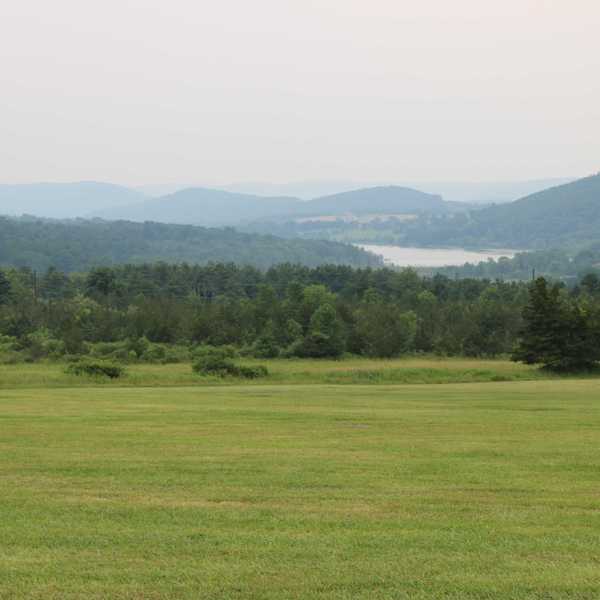
When the pool (as they call the body of water behind the dam) is at its maximum, (the height of the spillway on the east end of the dam) it stands at 761 feet above sea level. This gives it a water surface area of 1,210 acres, extending 6 miles upstream and into Massachusetts.

This is about where present day Route 8 crosses south of New Boston. The depth of the water would then be about 200 feet. The dam that can be seen from Route 8 is 1,300 feet long with a maximum height above the streambed of 223 feet. An earthen dike, 1,240 feet long with the access road on top, stretches from Route 8 to the opposite hillside. A 243-foot high control tower houses three service gates and three emergency gates, all hydraulically operated. The controlled reservoir outlet is through a 10-foot diameter tunnel, and is 778 feet long. The drainage area served by this dam is 118 square miles.

1990s: A power generating plant was added at the dam, its output being added to our electrical grid.

Bob Grigg is the town historian in Colebrook.

Latest News

Join us for

Join us for


Keep ReadingShow less
Sam Lardner returns to the Northwest Corner for Vecinos Seguros 2 benefit

Sam Lardner and Barcelona will play a benefit for Vecinos Seguros 2 at Salisbury Congregational Church on Friday, July 24.

Virgo Martinez

On Friday, July 24, musician and educator Sam Lardner and his band, Barcelona, will take the stage at Salisbury Congregational Church for a benefit concert supporting Vecinos Seguros 2, an all-volunteer organization that provides emergency assistance and rapid-response support to immigrant families in Northwest Connecticut affected by U.S. Immigration and Customs Enforcement activity.

Lardner, who attended and later taught at The Hotchkiss School in Lakeville before moving to Spain in 1997, still considers the Northwest Corner his home in the United States. “It’s such a special place,” he said.

Keep ReadingShow less
Karina Powers and the power of tradition

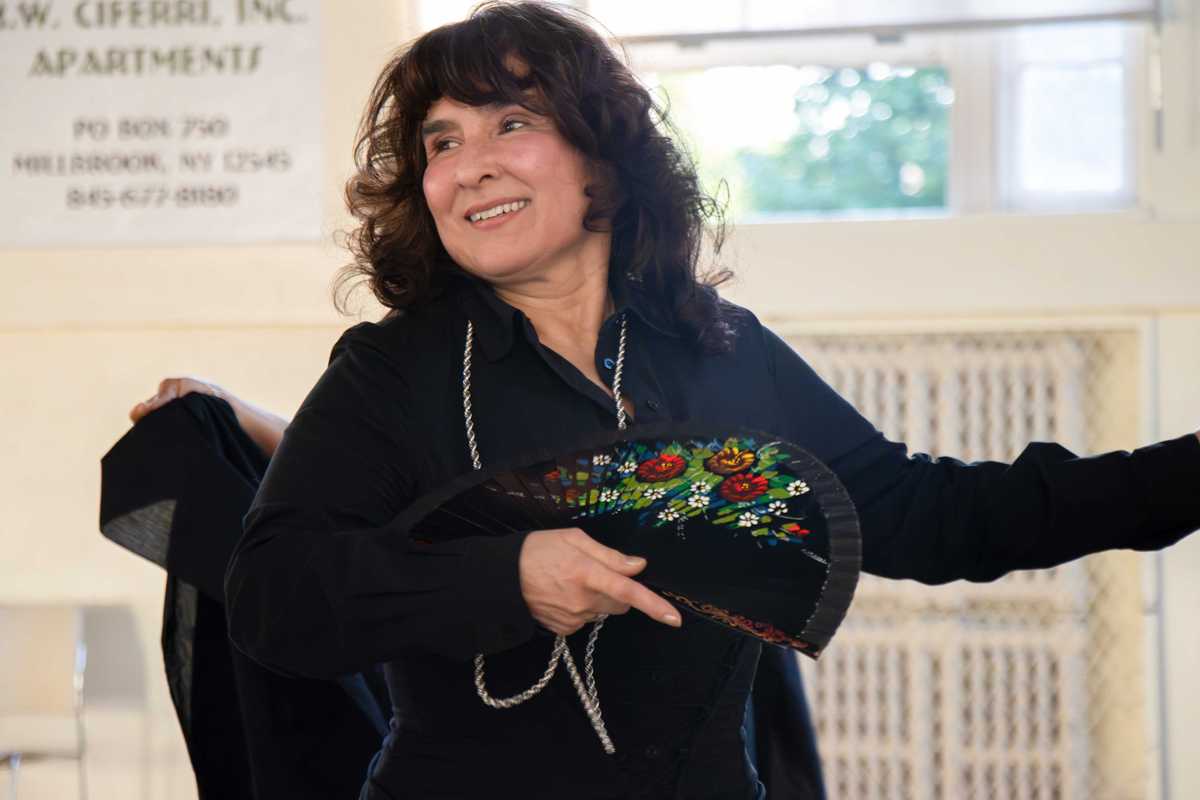
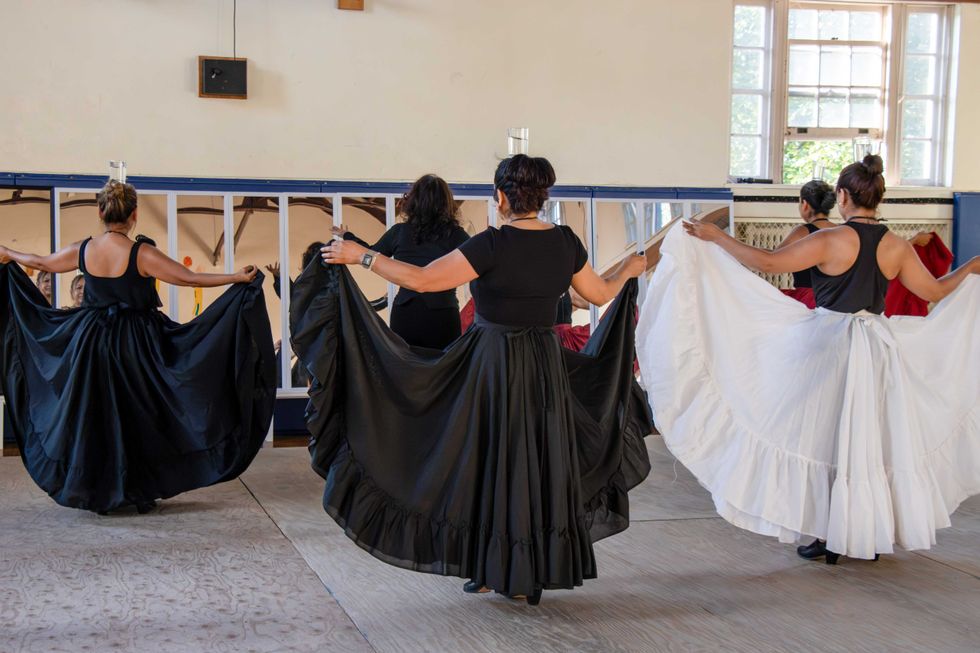
Karina Powers teaches traditional dances from Mexico in Millbrook.

Lucia Iandolo
This is an art and the arts unite nations.
—Karina Powers

Karina Powers began dancing at 4 years old. A professional dancer, singer, performer and Mexican folklore dance professor from Baja California, Mexico, she is the youngest of three sisters who were all involved in the arts. Powers now teaches traditional Mexican dances to adults through her company, Compañía De Danza Folklórica Regional Mexicana, in Millbrook. She said she has a strong passion for the history and art that exist within the dances she teaches, and she hopes to instill that passion in her students.

“Many of them have never danced this type of dance,” said Powers. “They’re from Mexico, but they came to the United States at a young age to work. They have that dream to learn, and now they have this opportunity.”

Keep ReadingShow less
google preferred source

Want more of our stories on Google? Click here to make us a Preferred Source.

Across generations at Litchfield Jazz Festival

Bucky Pizzarelli and Brandon Goldberg at the Litchfield Jazz Festival in 2017.

Lindsey Victoria Photography

The Litchfield Jazz Festival opens its 2026 season on Friday, July 24, at the Frederick Gunn School in Washington, Connecticut. The evening will feature a gala and a concert led by saxophonist Don Braden featuring the Litchfield Jazz Fest Dectet.

The festival began in 1996 and has been going strong ever since. The list of past performers reads like a who’s who of modern jazz greats, including Christian McBride, Soulive, Joshua Redman, Dave Douglas, Brad Mehldau and John Scofield, all of whom helped revive the genre for a new generation of fans at the turn of the millennium. Vocalists like Diana Krall, Dionne Warwick and Dr. John have made appearances as well. And, of course, the festival has been graced by established masters like saxophonists Sonny Rollins and Wayne Shorter; guitarist Bucky Pizzarelli; bassist Rufus Reid; drummers Roy Haynes and Tito Puente; the Preservation Hall Jazz Band; and pianists Dave Brubeck and local legend Ahmad Jamal.

Keep ReadingShow less
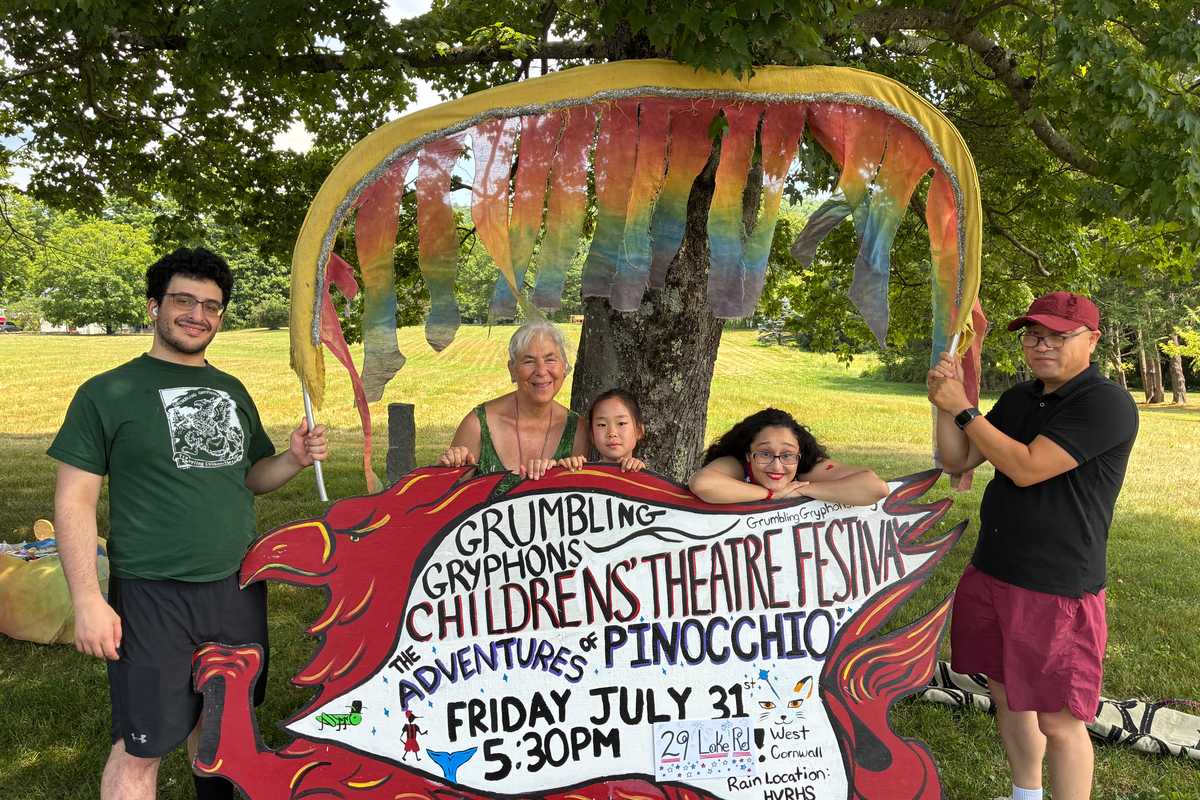
No grumbling here: Children’s theater camp returns

Danny Saed, assistant director of “Pinocchio”; his mother and co-founder of Grumbling Gryphons Leslie Elias; theater arts camper Joyce Sun; artist and counselor Natalie Resto; and Steven Sun, Joyce Sun’s father.

Jack Sheedy

Leslie Elias wants you to understand something about the group she calls Grumbling Gryphons Traveling Children’s Theater: “I like to say that we try not to grumble.”

For 46 years, she has used the nonprofit to educate and entertain children in the performing arts. Summer after summer, young campers learn about acting, singing, mask-making, costume-making and scenery painting. This year, as in years past, a five-day theater arts camp will culminate in a live performance of one of Elias’ original plays, guaranteed, she hopes, to quell all grumbling.

Keep ReadingShow less

Sea bass and shrimp gumbo

Sea bass and shrimp gumbo

Sea bass and shrimp gumbo

Bobby Graham

Each month, Dugazon owners Bobby Graham and Matthew Marden share a recipe inspired by the traditions, stories and sense of welcome at the heart of their shop in Sharon, Connecticut. Visit Dugazon at 19 W. Main St. Wednesday-Sunday, 11 a.m. to 5 p.m. and online at dugazonshop.com.

This month we’re sharing one of our favorite comfort foods: sea bass and shrimp gumbo. While gumbo has a reputation for being a labor of love, this version skips the traditional roux, making it surprisingly approachable. The ingredient list may seem long, but once everything is prepped, it comes together quickly, rewarding you with a rich, flavorful bowl that’s perfect any time of year. Many of the pantry staples you’ll need for this recipe can be found right here at Dugazon.

Keep ReadingShow less
google preferred source

Want more of our stories on Google? Click here to make us a Preferred Source.
google preferred source

Want more of our stories on Google? Click here to make us a Preferred Source.