Direct to consumer (DTC) prescription drug ads in magazines, radio and TV are banned in every country but the United States and New Zealand.
No U.S. law has ever banned DTC advertising, but until the mid-1980s, drug companies gave information about prescription drugs only to doctors and pharmacists. At the urging of the Clinton administration and the major pharmaceutical companies, in 1997 the Food and Drug Administration (FDA) relaxed rules on drug advertising, making it feasible to place direct to consumer ads on television. In particular, the FDA clarified that informing the audience of where further product information can also be obtained (such as a magazine ad, phone hotline, or website) constituted “adequate provision” of risk information and thus relieved them from being included in the ad.
Proponents of DTC prescription drug ads contend that the ads inform patients about diseases and possible treatments, encourage people to seek medical advice, help remove stigmas associated with medical conditions and provide needed sales revenue to fund costly research and development of new drugs. The proponents also claim that DTC ads are protected free speech.
Opponents contend that DTC prescription drug ads misinform patients, promote drugs before longterm safety profiles can be known, medicalize normal conditions and bodily functions, waste valuable medical appointment time and have led to our society’s overuse of prescription drugs. And they add considerably to the cost to patients for drugs. Direct-to-consumer ads have also contributed to the frequency of requests by patients for their physicians to prescribe antibiotics and analgesic drugs including opioids.
In 2007, the World Health Organization made a unanimous recommendation to prohibit direct-to-consumer advertising for prescription drugs. In 2015, the American Medical Association issued a statement calling for a ban on prescription drugs being advertised directly to consumers, saying that the practice was “fueling escalating drug prices.”
Such advertising also inflates demand for new and more expensive drugs, even when treatment for existing conditions do not warrant such use. A significant proportion of DTC advertising goes for selling drugs for relatively minor conditions that never used to be considered serious medical problems, such as wrinkles, flatulence, low testosterone, erectile disfunction, baldness and chronic fatigue.
Approximately $20 billion that health companies spend on medical marketing is for so-called detailing: persuading doctors and other medical practitioners, not consumers, of the benefits of particular prescription drugs. In addition, the drug companies spend well over $6 billion each year on DTC ads for TV and about $3 billion for print advertising and other marketing. All the biggest pharmaceutical companies spend more each year on sales and marketing than they do on research and development.
Prescription drug advertising has become one of the leading categories of TV ads: some programs such as the nightly news and sitcoms aimed at older Americans get as much as half their advertising from pharmaceutical companies.Television, especially, is reaping the rewards of expensive prescription drug ads. Drug companies hire consultants who devise catchy, easy to remember names for drugs and voice-over actors for DTC drug ads who know how to deliver bad news in a calm, reassuring way. When they get to the mandatory descriptions of the complications of a certain drug, the announcer tends to talk faster while reading a long list of side effects. In the video that accompanies some of the adverse reactions it is often difficult to keep track of what he (almost always it’s a “he”) is saying.
Despite popular hostility to DTC ads on TV, Congress has been unwilling to act against them. In 2016, Connecticut U.S. Rep. Rosa DeLauro introduced a bill requiring companies to wait three years after getting FDA approval to sell a drug before marketing it to patients. Her bill died in committee. Were it ever to get through Congress, an actual ban on ads for specific drugs would face a slew of First Amendment challenges in the courts. But there is another possible remedy available. Prohibiting pharmaceutical companies from writing off associated costs on their tax returns would make DTC advertising less attractive.
In 2018, more than three-quarters of the members of Congress, both Democrats and Republicans, each received campaign contributions from the pharmaceutical industry of more than $100,000. It seems most unlikely that Congress will do anything to stifle DTC drug ads on TV unless the American people get very worked up and elect a very different, less beholden Congress.
Architect and landscape designer Mac Gordon lives in Lakeville, Conn.

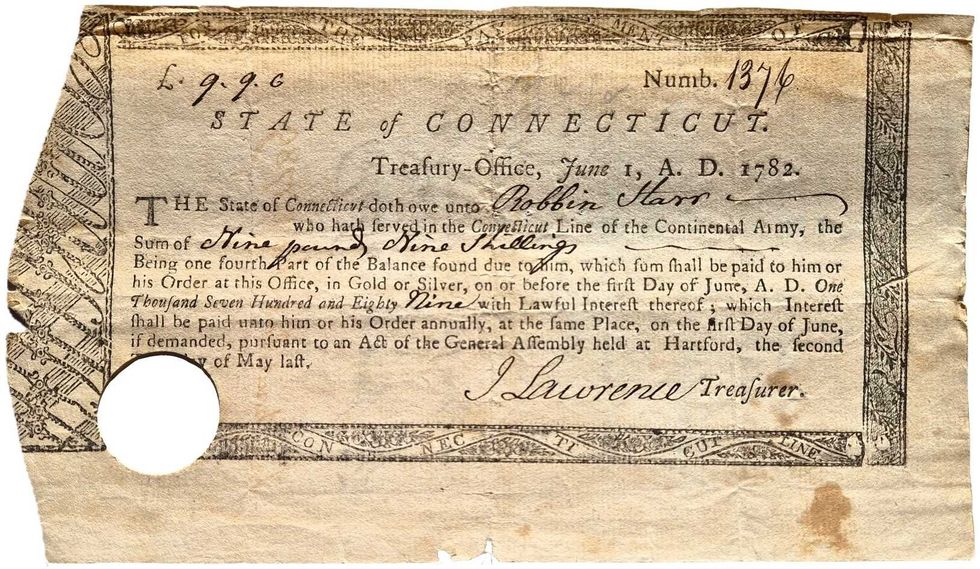 Pay Bill for Robin Starr’s service in the Continental Army.Courtesy the Alex Breanne Corporation
 John Mills speaking at Quinnipiac University.Courtesy the Alex Breanne Corporation
 Stephanie Saetta,with her rescue dog George and Blue (left), a shepherd mix awaiting his forever home.Madi Long
 Blue, a 7 year-old Shepard mix, is waiting for his forever home. Madi Long