SALISBURY — Mary Norris looked around the room at The White Hart inn in Salisbury and said, “I don’t know, this might be too classy for me.”
Norris, a recently retired copy editor at The New Yorker magazine, was in town on Wednesday, April 17, to promote her new book, “Greek to Me: Adventures of the Comma Queen.” It follows her first book, “Between You & Me: Confessions of a Comma Queen,” which came out in 2016.
She said she began to study modern Greek in the early 1980s. She cited inspirations such as the film “Time Bandits,” with the dual delights of Sean Connery in the role of Agamemnon and views of the Greek landscape.
She began by taking a class in modern Greek at New York University. This was her first serious encounter with the Greek alphabet.
“The alphabet scares people, but it’s not such a high hurdle.”
She continued her studies with a tutor, and took trips to the Mediterranean.
“While on a ferry on the Aegean, I decided I wanted to study ancient Greek.”
She signed up for a class at Columbia University — and presented the bill to the executive editor at The New Yorker.
“To my disbelief he turned me down,” Norris said to laughter. “‘Not relevant to the job.’”
So at the copy desk she started keeping a “dossier” of English words derived from ancient Greek that cropped up in the course of her duties.
Words like “ophthalmologist” or, courtesy of writer John McPhee, “autochthonous.”
She showed the dossier to the executive editor.
“It worked,” she said happily.
There was more laughter.
“I know, it sounds like a scam.”
Moving into the 1990s, her facility with ancient Greek improved. She won a part in the chorus of a production — in ancient Greek — of “Electra.”
And although she had started studying Italian by then, she found she still had the ancient Greek bug.
“And a lot of travel stories that hadn’t sold.”
She said the hardest chapter of “Greek to Me” was the one on the alphabet.
She went letter by letter, and was not satisfied with the results.
“It turned out to be boring. I got to ‘lambda’ and said ‘Ah, I’ll skip to the end.’”
Instead she decided to approach the alphabet via something Americans are familiar with: the fraternity and sorority systems.
College fraternities got their start at William and Mary, she said, in the person of one John Heath, who was rejected for membership in a study group with a Latin name.
Undeterred, Heath formed his own group, and gave it a Greek name: Phi Beta Kappa.
In the course of her research, she discovered that the Greek organizations take their vows of secrecy seriously.
She also noted in passing that Sigma Tau Delta’s initials in English — “STD” — are an easy target for jokes.
Ancient Greek has no punctuation, she said. Also no spaces, and everything is in capital letters. And nobody really knows how it’s supposed to sound.
It does use the letter “k” as a comma.
“So there are no serial commas,” said the copy editor.

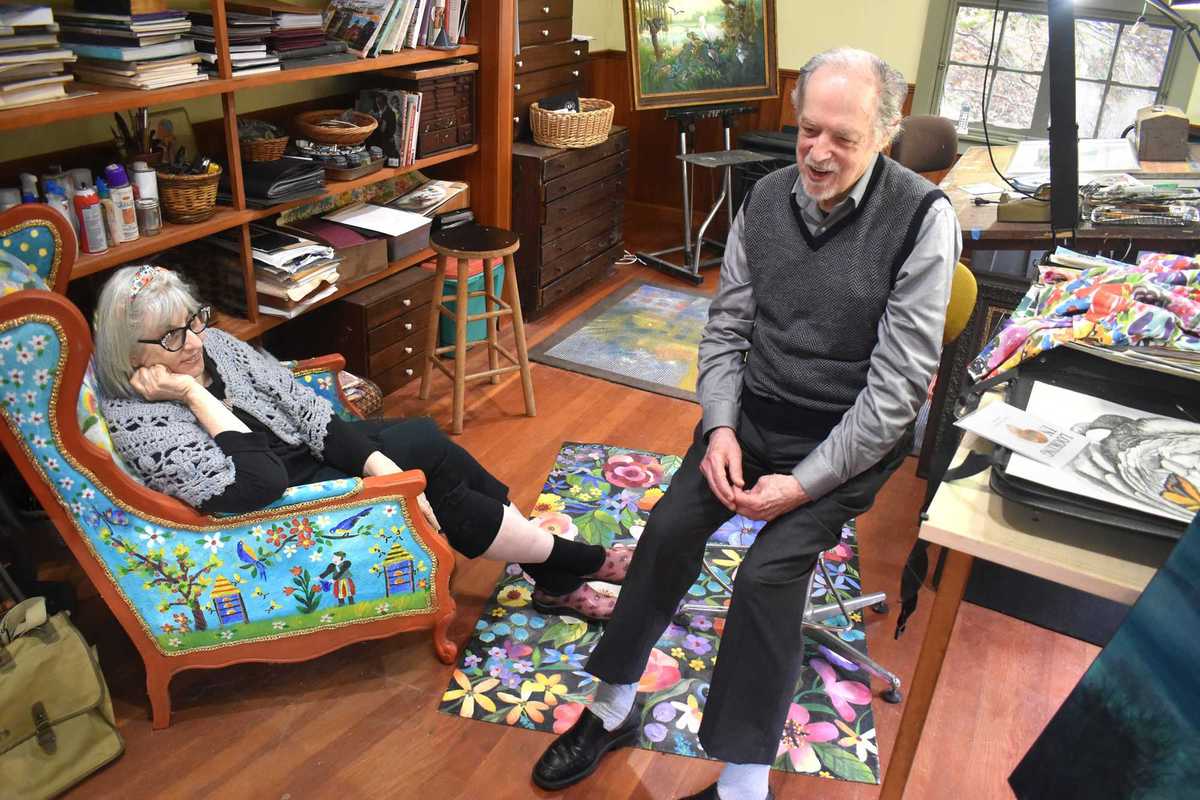
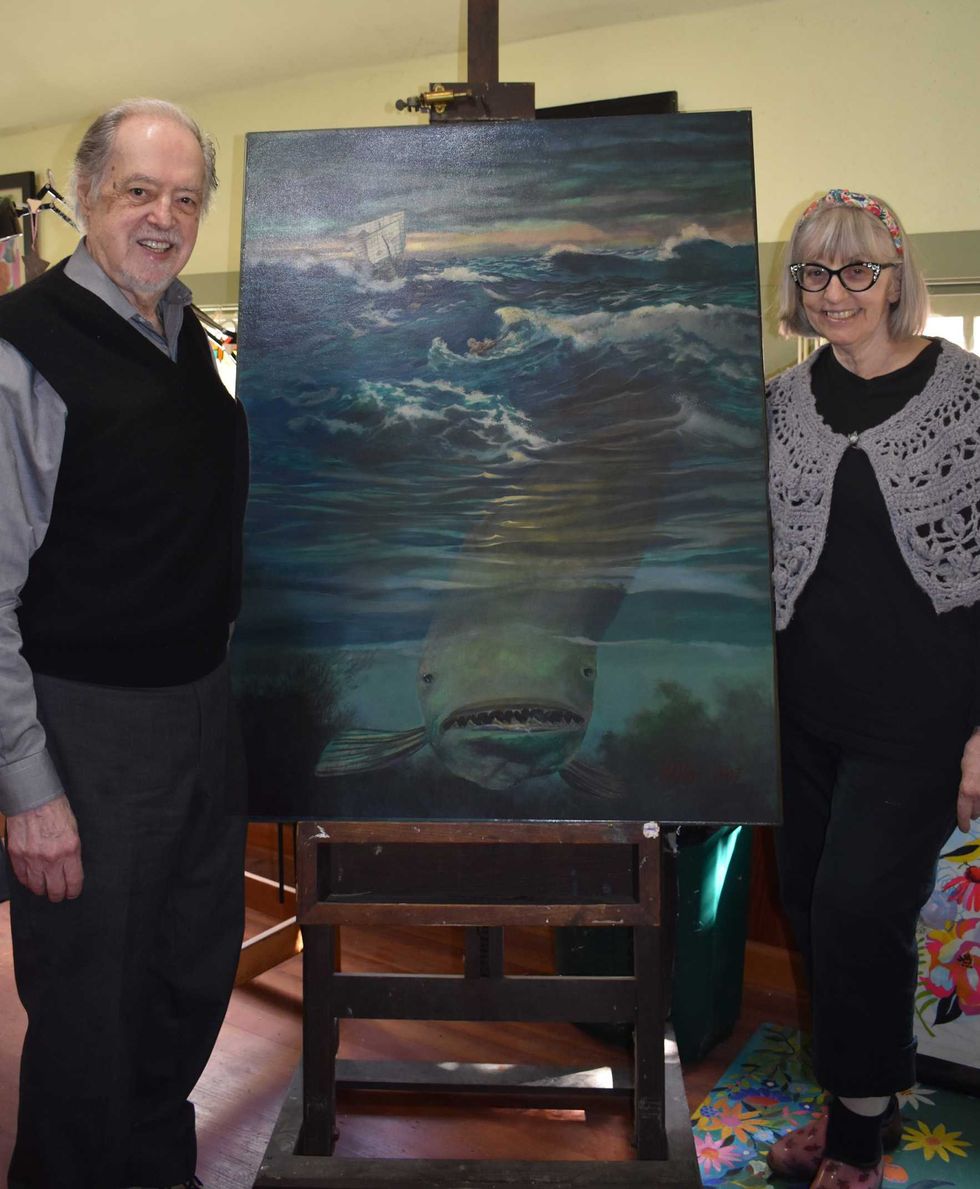 Justine and Victor Valla in their studio with a painting of Victor’s,”Jonah and the Whale.” Robin Roraback



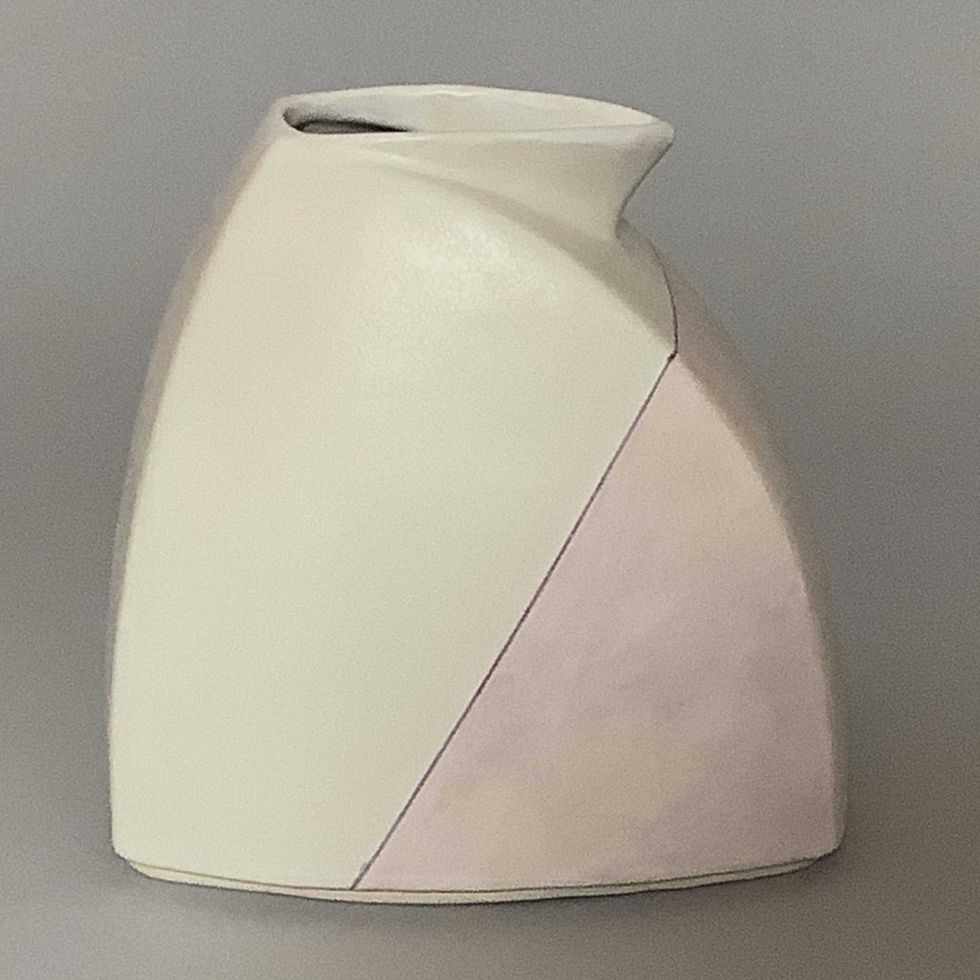 A ceramic vase by Kathleen Heidemann.Provided
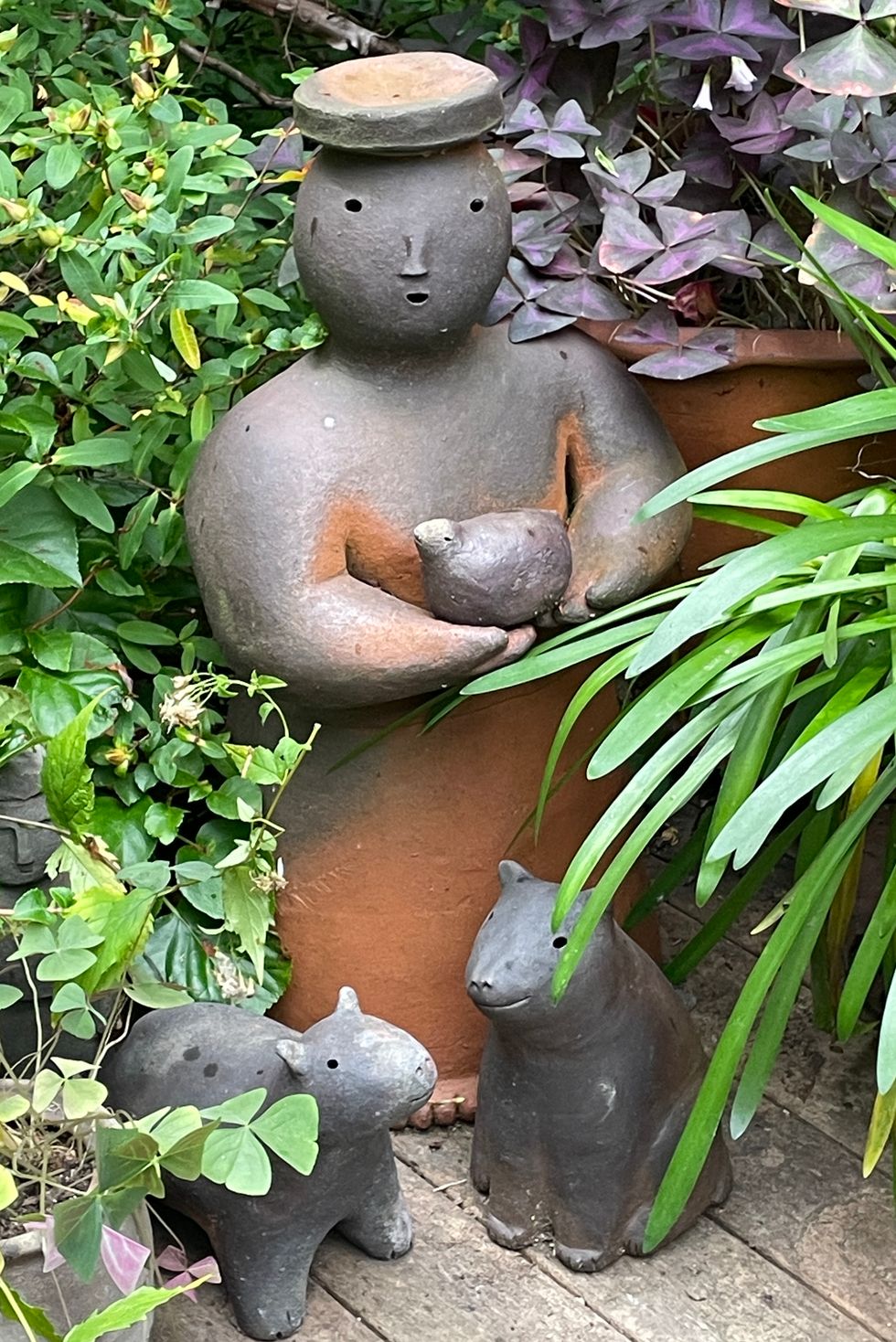 Joy Brown’s delightful ceramic sculptures.Provided

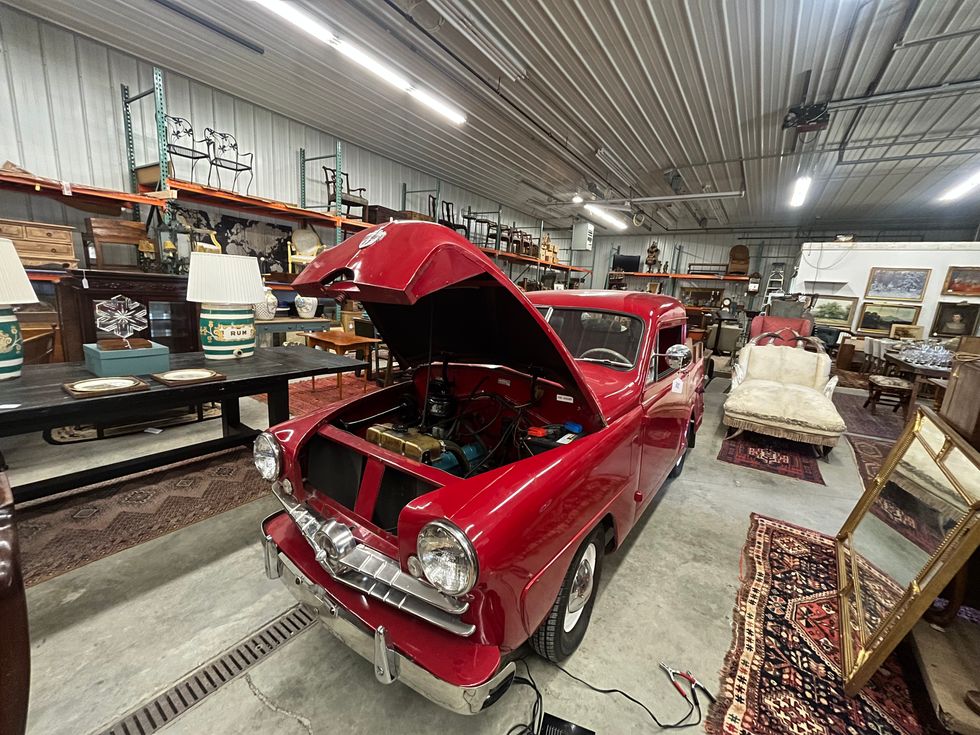 Hundreds of items at Stateline Auctions, including a candy-apple-red Crosley pickup truck.D.H. Callahan