NORTH CANAAN —Florence (Bowen) Mahoney, 96, died peacefully on Feb. 21, 2012, at Geer. Born Feb. 13, 1916, in Rockland, Mass., she was the daughter of Nellie (Lyons) and Michael Bowen. She graduated from Rockland High School in 1933. Florence married John Frances Mahoney on May 2, 1936, and they enjoyed 56 years together until his death in 1992. Florence worked in retail and was a homemaker. During World War II, she covered John’s mail route while he was serving his country, so that he would still have a job on his return. When John retired after more than 30 years with the U.S. Postal Service, they bought an Airstream camper and traveled extensively throughout the United States. Decades later, she would still share memories of these trips with her great-grandchildren.Florence had a kind and gentle disposition — with an occasional flare of feistiness — and a great sense of humor. She enjoyed bird watching, poker, butterflies, shuffleboard, Scotch, Jeopardy, and, especially, family gatherings. At these events it was not uncommon for her to sit back, observe, and revel in the idea that, “John Frances and I started all this!”She was predeceased by her son, John “Jack” Mahoney, and will be interred with her husband in Lake Helen, Fla. In addition to her daughter, Mary Ellen Mahoney of North Canaan, Florence is survived by six grandchildren, Sheila Mahoney Hayward and her husband, Michael, of Scarborough, Maine, David Leonowicz and his wife, Kim, of Loveland, Colo., Michael Mahoney and his wife, Kim, of Columbus, Ohio, Danny Leonowicz and his wife, Jean, of East Bridgewater, Mass., Kathleen Mahoney and her husband, Mark LaPlaca, of Storrs, Conn., and Nancy Mahoney Soper and her husband, David, of North Canaan; 11 great-grandchildren, Molly and Colin Hayward, Brendan, Jessica and Chelsea Leonowicz, Kevin and Sean Leonowicz, Drew and Bailey LaPlaca and Katie and Ben Soper; one great-great-grandchild, Jake; and several nieces and nephews, including Michael Groom of Jensen Beach, Fla., and his wife, Donna.The family will hold a private tribute at a date to be determined. In lieu of flowers, donations may be made to the HVRHS Science and Technology Center, c/o 21st Century Fund, PO Box 132, Falls Village, CT 06031.
Latest News
Cornwall Historical Society celebrates Connecticut’s Black patriots
D.H. Callahan
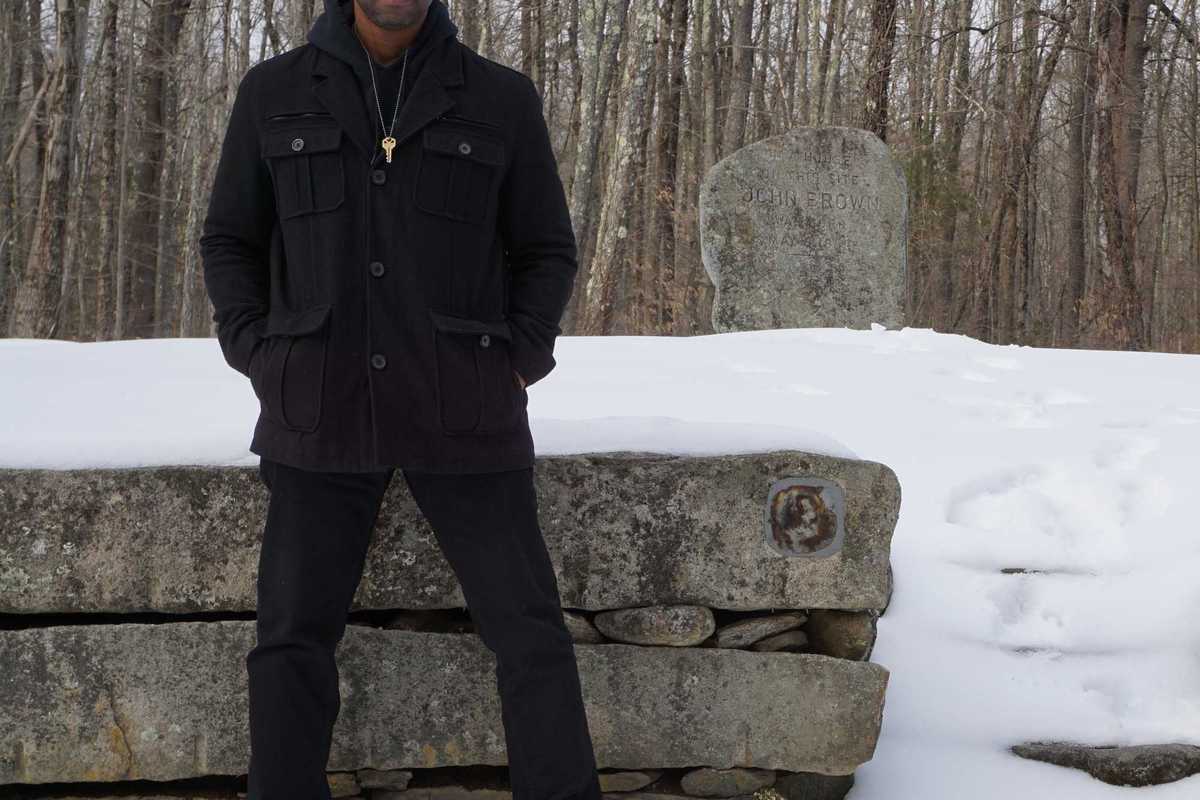
John Mills at the birthplace of Connecticut abolitionist John Brown.
On Saturday, Oct. 24, at the Cornwall Historical Society, author and genealogist John Mills will breathe new life into the stories of some of Connecticut’s more underappreciated patriots. The reason these heroes were forgotten? They were Black.
At a time when white colonists were fighting for their own liberty and political independence, many Black men who fought alongside them remained enslaved. Some risked their lives only to return to bondage. Though enslaved people were promised freedom from both sides of the Revolutionary War in exchange for their service, Great Britain, too, was still deeply dependent on slavery. For Black people in America, the war presented both extraordinary risks and uncertain paths to the freedom that white colonists were demanding for themselves.
One systemic consequence of slavery is the loss and obscuring of the histories of those who were enslaved. Records were often not kept about where Africans had been stolen from or who they were related to. Families were torn apart, leaving nothing but the faintest traces of the past. The delineation point, where genealogists can no longer trace histories back, is refered to this as the “document wall.”
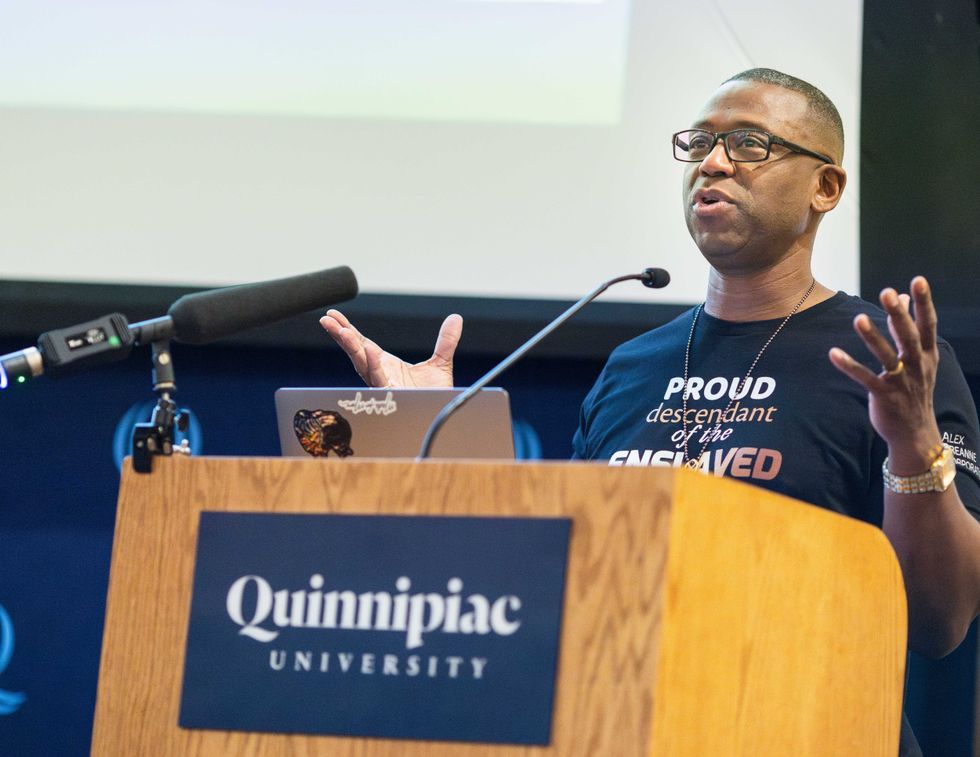
Today, 250 years after the signing of the Declaration of Independence and more than 160 years since the Emancipation Proclamation, there is a growing effort to restore some of the history stripped from enslaved people and their descendants. Among the leaders of these efforts is Mills, president of the Alex Breanne Corporation, a nonprofit organization that works to identify previously anonymous Black Americans from history and connect them with their living relatives.
The work began with Mills’ sister, who started digging into their family’s past in the 1990’s and introduced him to this emerging world of genealogy. Through that process, the Mills family discovered their great-great-grandfather, Ned Mills, who had been enslaved in Texas. His last name came from his final enslaver and remains the family surname. Through their research, they found that the document wall directly affected their ancestor, who learned of his liberation on June 19, 1865, now commemorated as Juneteenth.
“For the first time,” Mills writes on his website, “American slavery wasn’t something that had happened to anonymous people in a history book. It had happened to my family.”
The discovery gave Mills a familial pride he had been missing for years. That pride fueled his desire to help others find their own history. In 2023, Mills received his certificate in genealogical research from Boston University. He has used his expertise to help descendants of enslaved people uncover histories they never dreamed of learning.
To do this, he uses a process called “reverse genealogy,” identifying a person from the past and working forward to discover their descendants. Along the way, Mills has found some remarkable people who fought for freedom on American soil, some of whom were never freed.
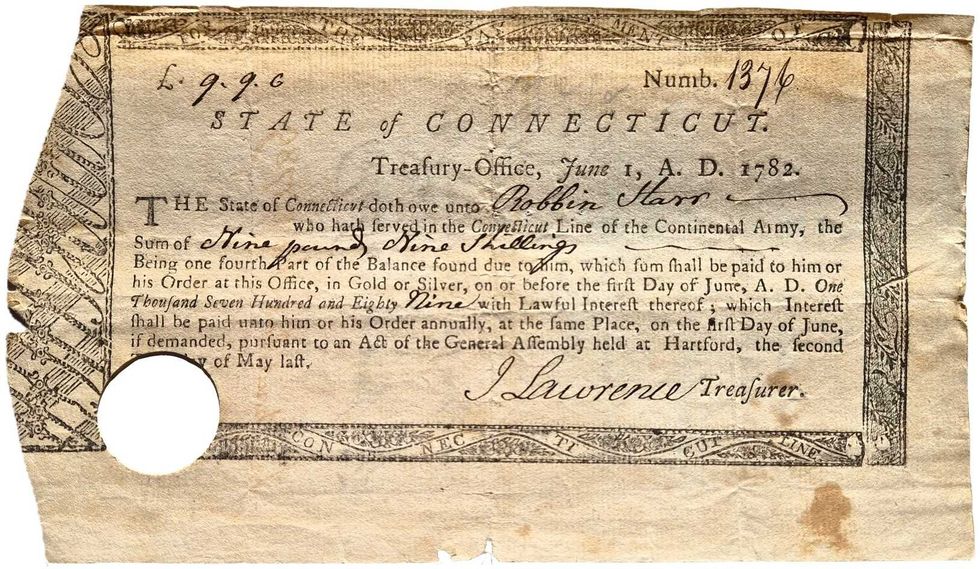
At the Cornwall Historical Society event, Mills will present the stories of four Connecticut families: Job Lathrop of Norwich, the son of Pirmus Armes, about whom Mills has published a book; Prince Mortimer of Middletown, also the subject of a book by Mills;, the three sons of London Wallace of Simsbury; and Robert “Robin” Starr of Danbury, who later lived in Cornwall and Sharon.
A few years ago, Cornwall Consolidated School social studies teacher Will Vincent reached out to Mills for research guidance on a local history project his students were undertaking. Together, they learned about Naomi Freeman of Cornwall. After purchasing an acre of land on Great Hollow Road in 1828, Naomi Freeman became the first Black female landowner in Cornwall.
The students petitioned the town to rename a road after the historic Cornwall resident In April 2025, Great Hollow Road was officially renamed Naomi Freeman Historic Road. U.S. Rep. Jahana Hayes joined Mills and the Cornwall Consildated School students for a presentation of their research.
Since then, Mills has guided the students in their quest to learn more about Starr’s story. Starr was a Revolutionary War soldier who joined the Continental Army to earn enough money to buy his own freedom, receiving the Badge of Merit in the process. The stories of his descendents’ services are equally worthy of their own books.
In recognition of Mills and the students’ work, First Selectman Gordon Ridgway proclaimed Feb. 8 as Robin Starr Day.
Preregistration is required for the event at the Cornwall Historical Society. To learn more about Mills’ work, visit
alexbreanne.org.
A sanctuary for second chances
Madi Long
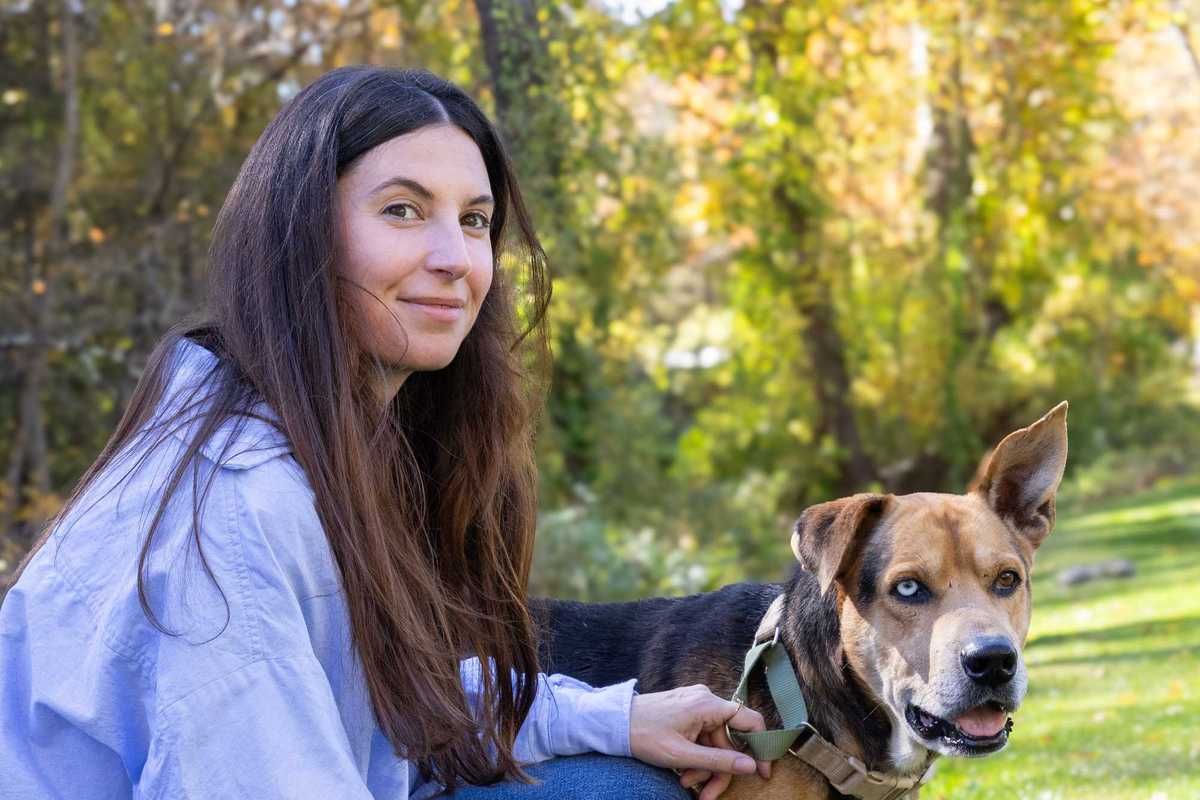
Stephanie Saetta runs Charlie Chicken Bones, a sanctuary in Salisbury.
You only get one or two of these soul connection dogs, so I do this in his honor.
— Stephanie Saetta
Stephanie Saetta has spent much of her life caring for others. A physician at White Plains Hospital, she has another calling at home in Salisbury — one that has four legs and a wagging tail. She runs Charlie Chicken Bone Sanctuary, a nonprofit dog rescue that brings dogs from overcrowded pounds and the streets of Texas to foster homes in northwestern Connecticut, where they can begin again.
The sanctuary is named for Charlie, the dog who taught her how special a bond between a person and rescue animal can be.
Dogs have been at the center of Saetta’s life since childhood. She remembers going to the library to research different breeds and trying to convince her parents the family needed a dog. She had her heart set on an Irish Wolfhound, but she was more than happy when her mom brought home a West Highland terrier.
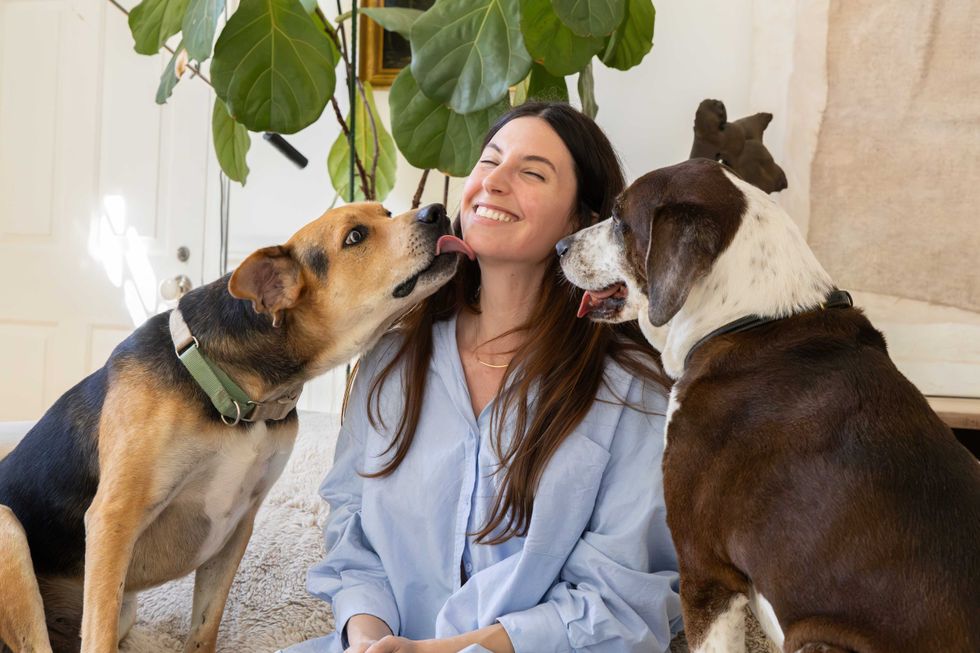
After college, she adopted Charlie as a puppy from a rescue on Long Island. He was a hound-shepherd-Rottweiler mix who suffered from intense seizures. Some veterinarians recommended euthanasia, but Saetta wasn’t ready to give up on him.
When Charlie would have an episode, she would sit with him, nose to nose, talking him through it. She learned to look for the moment he began to come around — when he could smell her again and his tail started to wag.
“You only get one or two of these soul connection dogs, so I do this in his honor,” Saetta said. “I like to think that all the dogs that come through are going to have that person that they connect with just the same.”
Through a network of women working to rescue animals in Texas, she learned about the desperate situations facing many dogs.
With limited space, some public pounds euthanize even healthy animals to make room. Limited access to veterinary care leaves sick dogs or unvaccinated puppies especially vulnerable.
Saetta saw that reality firsthand with a puppy named Gus, a Labrador mix she fostered who has since been adopted. Gus and his sisters had been dumped beside a road, where they were living under an abandoned car. People would leave food for them, but no one would take them to the pound.
“Even the people who rescue animals down there were like, ‘sadly, the best place for them to be is on the side of the road,’” she said. “That’s safer. Someone might actually help them that way.”
Saetta knows that there are far more dogs than any one person can save, but she also knows that helping one dog means one fewer on the street.
Charlie Chicken Bone Sanctuary operates entirely through foster homes, a model that Saetta believes is best for the dogs and the humans hoping to adopt them.
Rather than moving directly from a difficult environment into a permanent home, the dogs have a chance to settle into a quieter setting. They can learn what it’s like to live with a family, sleep somewhere comfortable and receive affection without fighting for attention. Fostering also allows the rescue to really get to know each dog.
“As fosters, we’re honest,” said Saetta. We’ll tell you everything that’s been bad, everything that’s been good. What their temperament is and how they’ve responded to all the things they’ve experienced.”
A successful adoption is not just about finding a dog a home; it’s about finding the right home where the dog and family can thrive together.
Saetta is looking for more people willing to open their homes to foster dogs. She understands that the thought of growing attached and eventually saying goodbye can feel daunting. But she sees that goodbye a little differently.
Fostering means being part of a dog’s journey, even if only for a short time. It gives dogs a safe place to rest, the chance to trust again and the love they have gone without for much of their lives. And when the time comes for them to leave, it is not really a loss. It is the reward of knowing they are moving on to a forever home.
Blue, Saetta’s current foster, is hoping to find his perfect home.
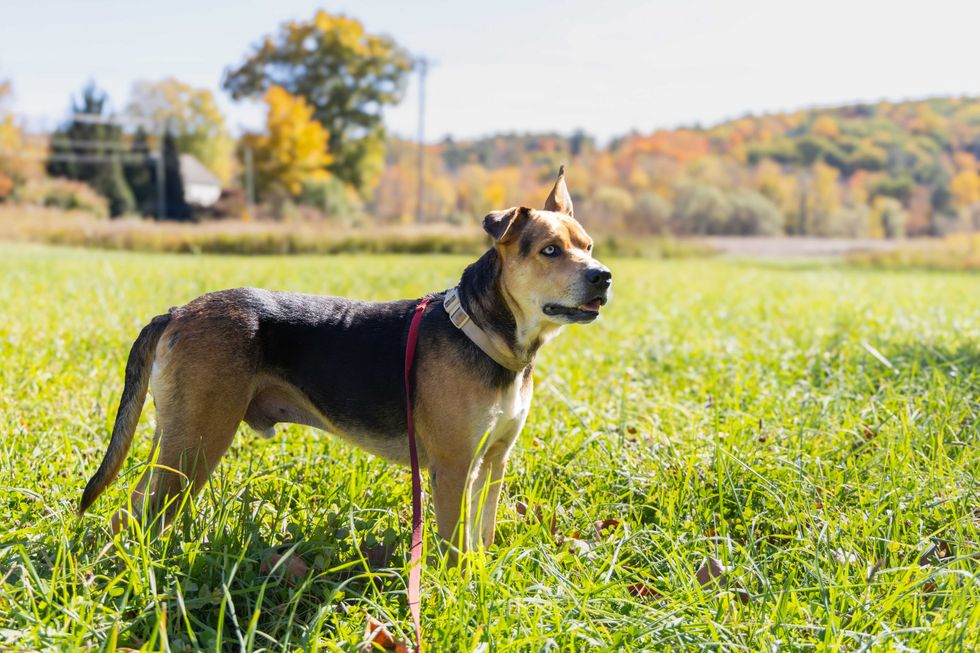
Now around 7 years old, Blue spent most of his life wandering the streets of Texas. People sometimes left food out for him, but his mangy, dirty coat kept them from stopping to pet him. Today, he has a chance to experience something different.
Blue is still waiting for his forever home. Saetta believes he would do best as the only dog in a household or alongside another senior dog. He will need someone willing to continue working with him on his training and understand that a dog with his history needs patience.
But what he gives in return is a whole lot of love.
“He’s so enthusiastic, he’s so excited for life, he’s so friendly, and he’s got such a good heart, and he loves to cuddle,” Saetta said. “He’s a good, good, good dog.”
For more information on adopting Blue or how to foster, visit ccbsanctuary.org.
Big ideas come to Lenox for inaugural field festival
Natalia Zukerman
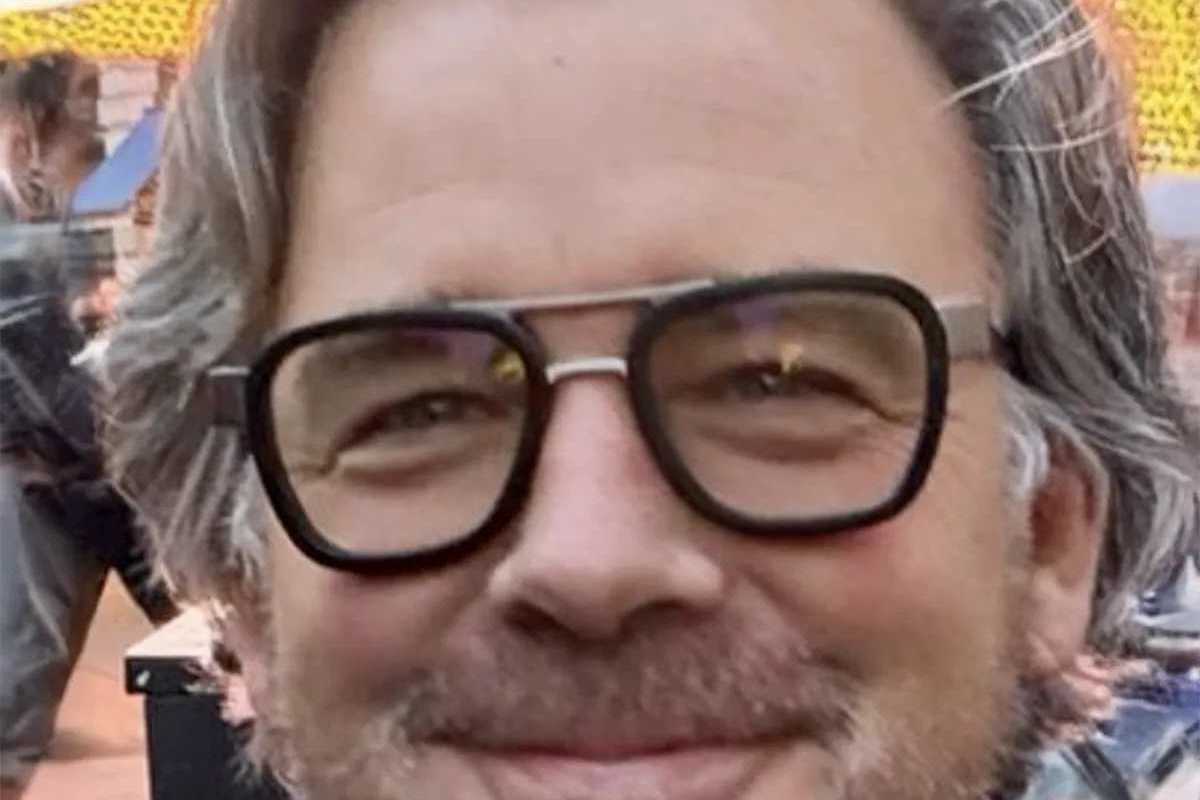
Hunter Runnette, founder and board chair of field, has spent years fostering arts and cultural programming in the Berkshires.
What do joy, gardening, artificial intelligence, the American experiment and the creative process have in common? Quite a lot, as it turns out, at least when some of the world’s most compelling thinkers get together to talk about them.
From Friday, Oct. 23, through Sunday, Oct. 25, Lenox, Massachusetts, will host the inaugural field festival, a three-day gathering of writers, artists, scholars and cultural figures at Shakespeare & Company. Billed as a festival of ideas, entertainment, learning and discovery, field brings together an impressive roster of voices to explore everything from the deeply personal to the profoundly political.
The premise is both simple and increasingly radical: Bring people together, encourage curiosity and make room for thoughtful disagreement. The festival’s guiding principles are to respect other voices, hear opposing perspectives and remain engaged in conversation, even when the subject matter becomes uncomfortable.
Opening the festival Friday evening is celebrated artist and author Maira Kalman, whose whimsical illustrations and paintings have appeared on numerous New Yorker covers. Kalman will discuss her new collection, “Joy,” which explores the small, often overlooked moments of beauty that persist even during difficult times.
Saturday’s programming moves across disciplines and generations. Pioneering psychologist Carol Gilligan, whose groundbreaking 1982 book “In a Different Voice” transformed conversations about gender and moral development, will join psychologist Niobe Way to discuss care, connection and the emotional lives of young people.
Historian Annette Gordon-Reed will sit down with Pulitzer Prize-winning journalist Brent Staples to examine the contradictions between America’s founding ideals and its history of slavery and racial inequality, a particularly resonant subject as the nation marks its 250th anniversary.
In another conversation, acclaimed writers Jamaica Kincaid and Saidiya Hartman will explore gardening as a practice that connects memory, history, beauty and belonging. Moderated by scholar Farah Jasmine Griffin, the discussion promises to reveal how something as seemingly ordinary as tending a garden can become an act of cultural and personal discovery.
The creative process will take center stage when novelist Colm Tóibín joins former New York magazine editor Adam Moss for a live conversation inspired by Moss’ book “The Work of Art: How Something Comes from Nothing.” Together, they’ll examine how artists turn an initial idea into a finished work, including the uncertainty, revision and occasional loss of faith along the way.
The weekend also ventures into medicine and technology, with bioethicists and health care leaders discussing the intersection of artificial intelligence, scientific innovation and equitable care. Other sessions explore grief, spirituality and the ways people make meaning of loss.
On Sunday, British painter and printmaker Tom Hammick will offer an illustrated look at his creative practice, incorporating music, poetry and images of his work to explore art’s capacity to express love, loss and the experience of being alive.
The full festival schedule also includes Pulitzer Prize-winning biographer Kai Bird and Susan Goldmark discussing their new book about Roy Cohn; political analyst Jonathan Alter examining the midterm elections; and trauma researcher Bessel van der Kolk discussing psychedelic-assisted treatment with psychiatrist Ronald D. Siegel.
Field takes place Oct. 23–25 at Shakespeare & Company in Lenox. Weekend passes and individual event tickets are available at fieldlenox.org.

Want more of our stories on Google? Click here to make us a Preferred Source.
The Pink House AM is serving up community
D.H. Callahan
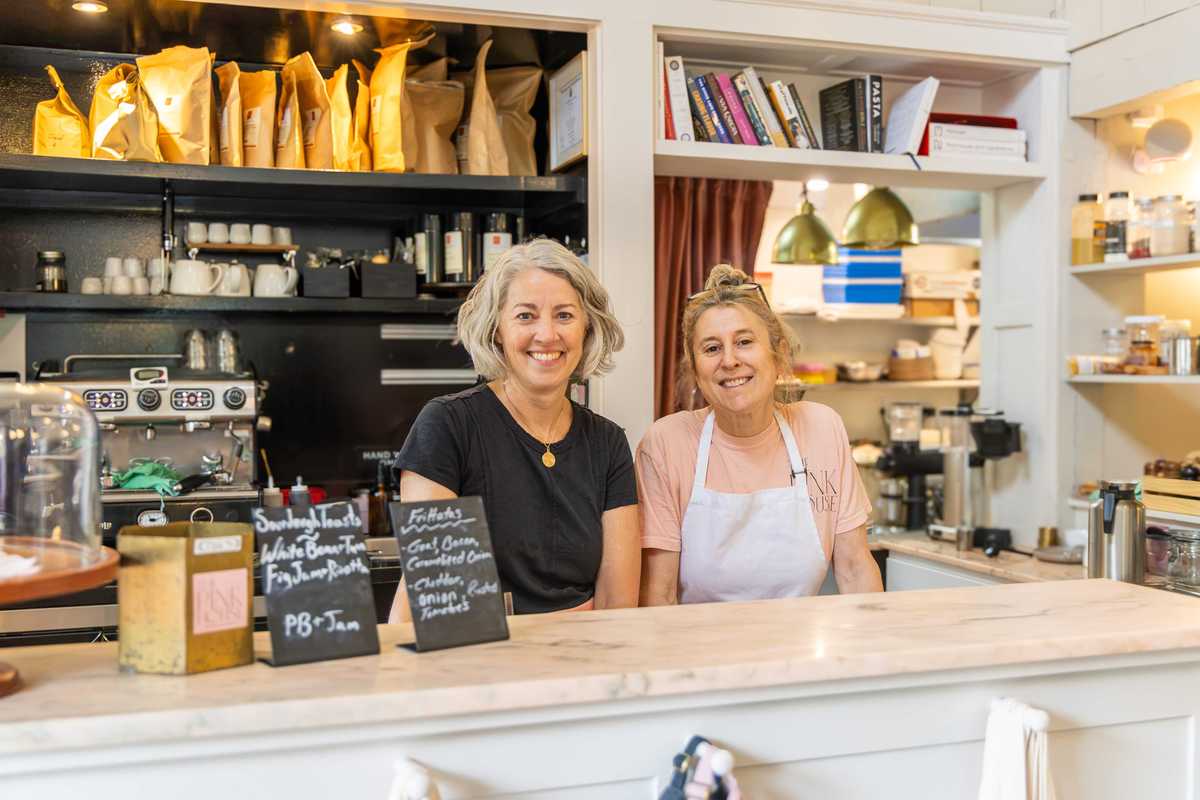
Mare Rubin and Maggie Levine of the Pink House AM.
It all started with a yoga class. Mare Rubin was working on her second act after leaving the Upper West Side, where she’d raised a family and worked in corporate marketing. Newly empty nesters, she and her husband decided to move to the wilds of northwestern Connecticut, where they had spent 15 years as weekenders, to see what life in the woods had in store for them.
Rubin started teaching yoga classes at the Union in West Cornwall, a space designated by the town of Cornwall as a community hub with couches, Wi-Fi, occasional events and a growing yoga class schedule. She was adjusting well but missed one important thing about city life: a casual coffee shop.
She decided to talk to David Ellen, principal owner of the Pink House, West Cornwall’s trendy eatery, which was hitting its stride with a new paint job and some rave reviews. Serving dinner only Thursday through Monday and brunch on weekends, the stylish restaurant sat empty much of the time. The idea was simple. Rubin would use the space to serve coffee and, with a little luck, find somebody who could bake.
Rubin turned to her yoga community to ask if somebody was interested in joining this crazy, if not entirely illogical, idea. That’s when Maggie Levine chimed in. After 25 years as a teacher in Brooklyn Heights, Levine was also looking for life’s next challenge. Though some time had passed since her days working in the pastry world, including a stint in a Wolfgang Puck kitchen, she’d never lost her love for baking. Just like that, a team was born.
Ellen had been interested in making better use of the space for some time and was patient enough with the cafe newcomers to let Rubin take some time to become a barista. Not many people take to the espresso machine for the first time in their 50s, but Rubin was determined to do it right. She knew a good cafe requires a skilled barista, so she spent days driving to No. 6 Roastery in West Stockbridge. There, she learned about the intricacies of the beans, how best to brew them and even took a couple of lessons in latte art, all while giving Levine the chance to refine her baking skills. By the time they opened those morning doors, their tools were sharp and the frittata recipe was perfect.
Though Rubin and Levine might disagree on how crisp they like their toast, the biggest challenges have been practical. The Pink House AM is part of the Pink House business, but the dinner and brunch restaurant has priority for the kitchen and coffee space. That means setting up and breaking down the entire cafe operation every day.
Much of the team’s goal is to provide a space for community. It’s not uncommon to find groups of longtime locals who meet morning after morning to chew the fat and enjoy coffee and pastries. A few enthusiastic customers have become such regular fixtures that they’ve had drinks named after them, including a flat white named after West Cornwall-based photographer Martin Chalk.
The team is also hosting Cedric Gairard of local arts publication Fieldwork to play vinyl records outdoors on Thursdays or Fridays, depending on the weather.
For now, full service is available Monday through Friday until noon, and coffee is available before the Pink House brunch service starts at 11 a.m. on weekends. Though not ready to disclose their future plans, the team has additional offerings in the works. For now, the space is open and ready for the casual laptop user, groups of old friends or even a curious couple to sit, enjoy their coffee and read a copy of The Lakeville Journal.
Follow the Pink House AM on Instagram at @pink
house.am.
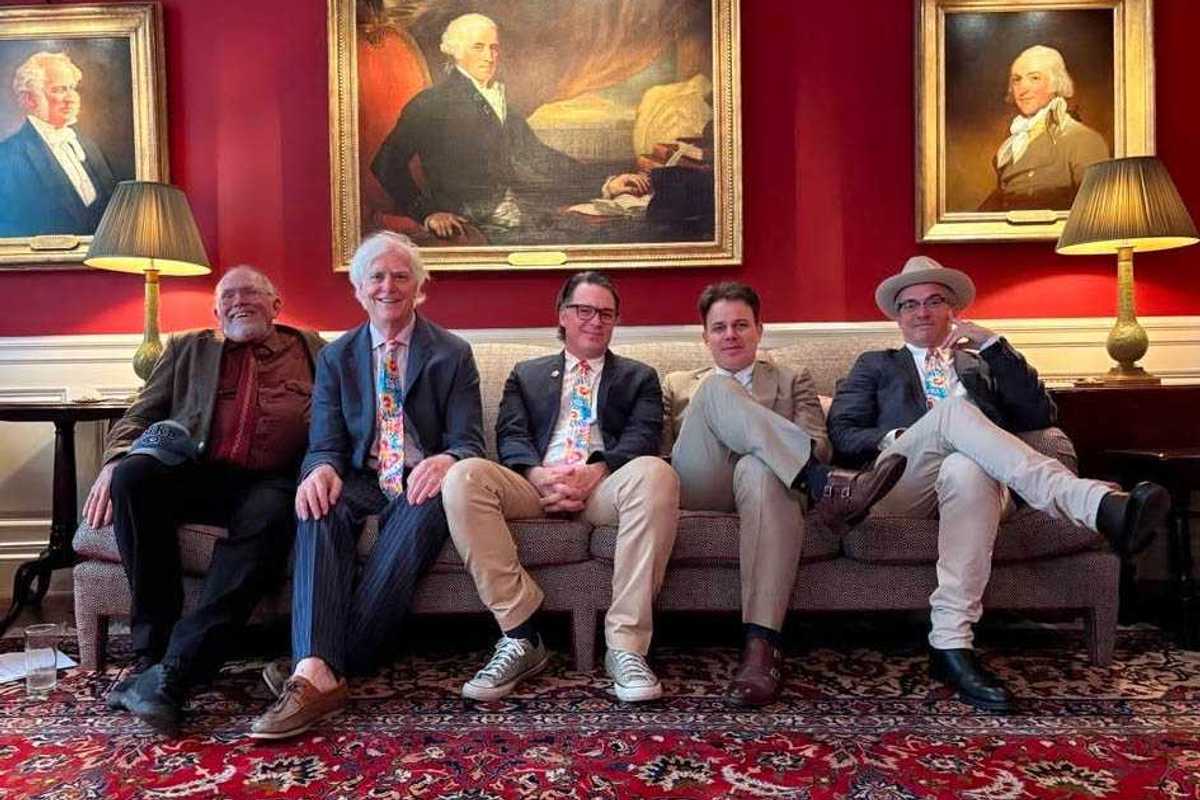
Sons of Astro are musicians, friends and bandmates — in that order
D.H. Callahan
The Sons of Astro will be at the Common Pub in Housatonic on Oct. 24 and the 2nd Home Lounge in Winsted on Nov. 14.
No matter where they are in the world, musicians seem to find other musicians. There’s a shared language, a shared experience of being on stage and performing, and a shared enthusiasm for making those melodies by themselves or together. Such is the case with Norfolk and Brooklyn-based cosmic Americana band Sons of Astro.
That magnetic musicians’ bond drew Brooklyn-based singer-songwriter and multi-instrumentalist Mike Cobb into the orbit of singer-songwriter and multi-instrumentalist Matt Statler. The two neighbors took to each other right away and were soon playing open mics together. As an ethics professor at NYU’s Stern School of Business, Statler made the case that if he sat in for Cobb’s set and Cobb sat in for Statler’s, they could play together and double their stage time. Clearly, these men wanted to make as much music as possible. That became a little harder when Cobb and his family moved up to Norfolk, Connecticut.
All the while, Cobb had also been talking to architect, musician and amateur luthier Ben Herzog. Herzog spent his pandemic downtime teaching himself to build guitar- and bass-like instruments for fun. He also hosted a bluegrass jam session at his architecture office in Brooklyn. Cobb mentioned he had moved to a small town in Connecticut. It turned out, Herzog had a place in Norfolk, too.
Things were starting to come together, but what would really solidify them as a band was a drummer. Cobb called Brooklyn-based drummer Charlie Shaw, who has a collapsible drum kit that he can fold down to suitcase size. For that special X factor, they brought in Rip Westmoorland from Herzog’s jam sessions. Westmoorland has an enviable instrument collection featuring several vintage guitars he was happy to lend to the group, which was now officially a band.
The name Sons of Astro comes from a chance encounter with a couple of cloned dogs, but their music is far from a cold scientific copy. In fact, in a time when AI threatens all forms of art, their music feels remarkably human, and uniquely familiar.
Their debut EP., “Another Day Above the Dirt,” hits Bandcamp and other streaming services Nov. 6. It pulls from influences like the Grateful Dead, Tom Petty and the Byrds, and features timely lyrical themes and hooks you’ll want to sing along to.
You can catch Sons of Astro at the Common Pub in Housatonic on Oct. 24 and at the 2nd Home Lounge in Winsted on Nov. 14.
One more weekend to get inside the art at ArtEast
Natalia Zukerman
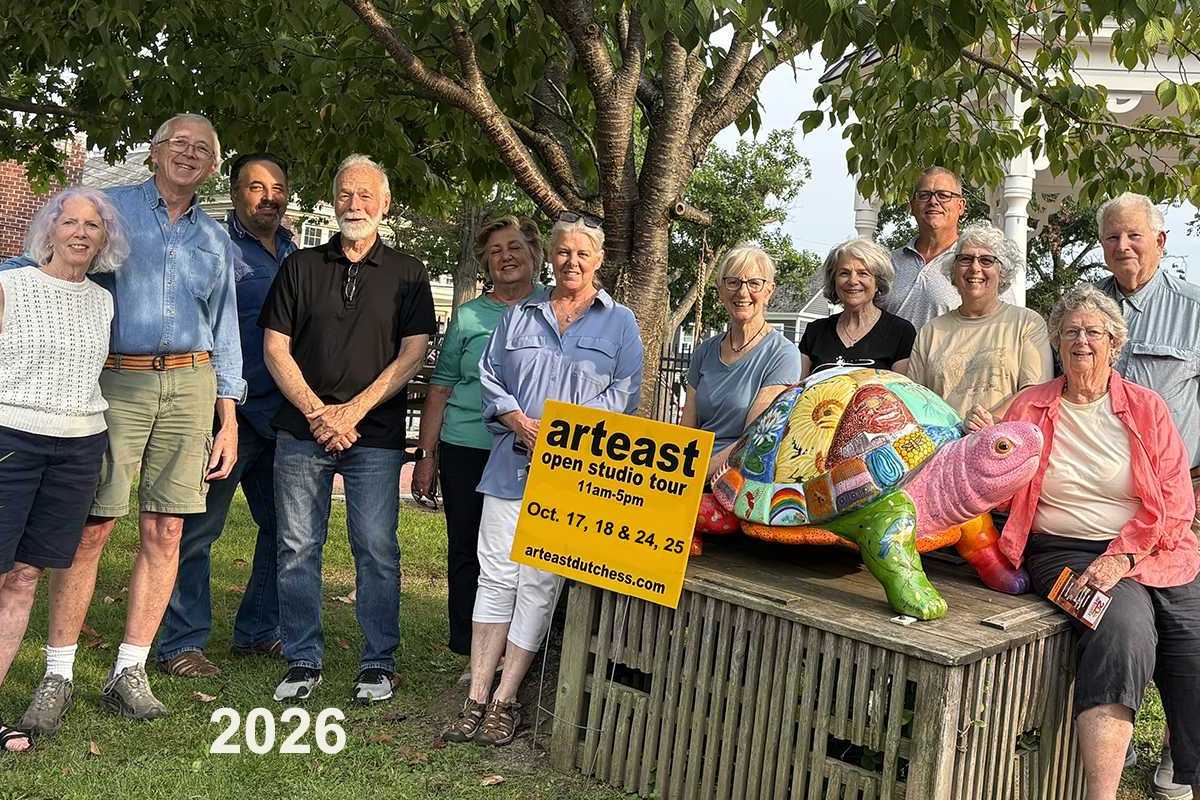
The participating artists in this year’s ArtEast open studios.
ArtEast’s annual October Open Studio Tour is already underway, but there’s still one more weekend to step inside the creative worlds of artists working throughout eastern Dutchess County. On Saturday and Sunday, Oct. 24 and 25, artists will once again open their studio doors, inviting visitors to see where the work happens, meet the people who make it and perhaps discover something worth taking home.
Now in its 21st year, the ArtEast October Open Studio Tour offers a self-guided journey with participating studios in Holmes, LaGrangeville, Hopewell Junction, Pawling, Patterson, Poughquag and Wingdale. Visitors can explore painting, photography, sculpture, mixed media and other artistic practices, and get some leaf-peeping in at the same time.
Unlike a traditional gallery exhibition, the tour offers a chance to see art in the places where it comes to life. There are works in progress, tools of the trade and opportunities to ask artists about their inspirations, techniques and creative processes. It’s an invitation into spaces that are generally private, and a reminder of just how much artistic activity is happening in our own backyard.
Among the participating artists are sculptors Bob and Karen Madden, painter Sharon Nakazato, photographer Lonna Kelly, sculptor Brian Wohrman and mixed-media artist Doreen O’Connor. Their work represents just a portion of the creative talent spread across the region, with studios ranging from intimate home workspaces to larger environments dedicated to making art.
Founded in 2006 to raise awareness of artists working in eastern Dutchess County, ArtEast has grown into a regional arts organization that fosters connections. In addition to its October tour, the organization has expanded its programming to include spring open studios and other opportunities for artists and the public to connect.
The tour is designed to be explored at one’s own pace. Visitors can follow the organization’s online map, choose a handful of studios or make a day of it, traveling between towns and discovering artists along the way.
The final weekend of the ArtEast October Open Studio Tour takes place Saturday and Sunday, Oct. 24 and 25, from 11 a.m. to 5 p.m. Visitors should consult the online map before setting out, as some participating artists were open only during the first weekend, Oct. 17 and 18. For a complete list of artists, studio locations and tour information, visit arteastdutchess.com.

Want more of our stories on Google? Click here to make us a Preferred Source.