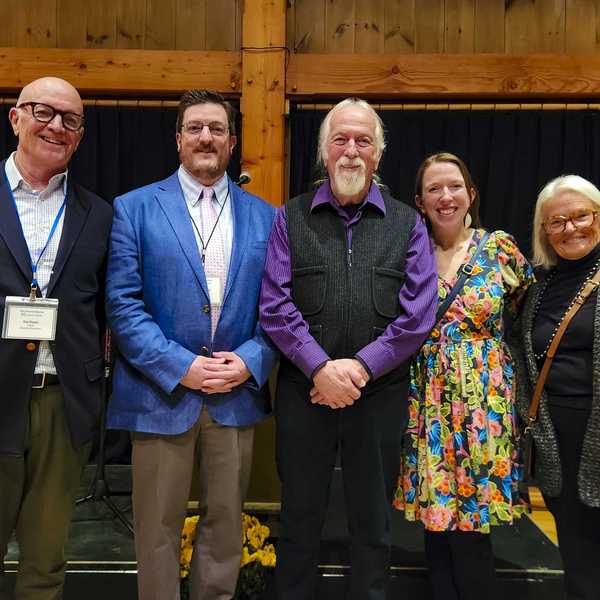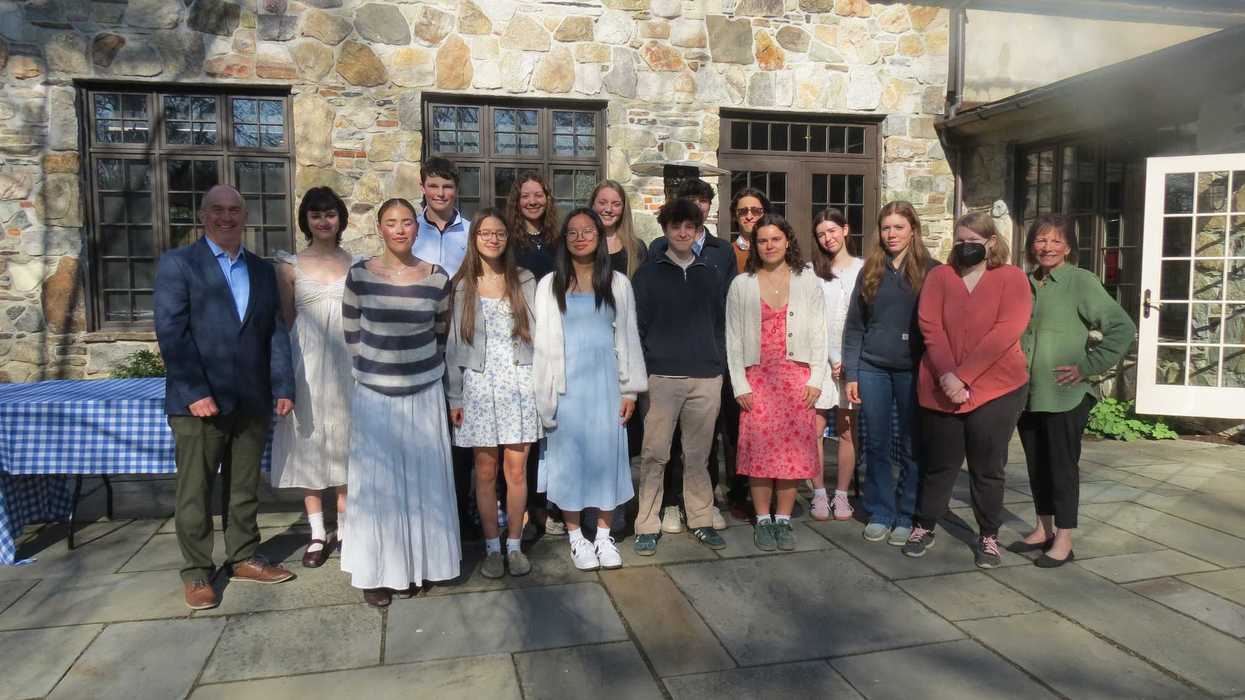
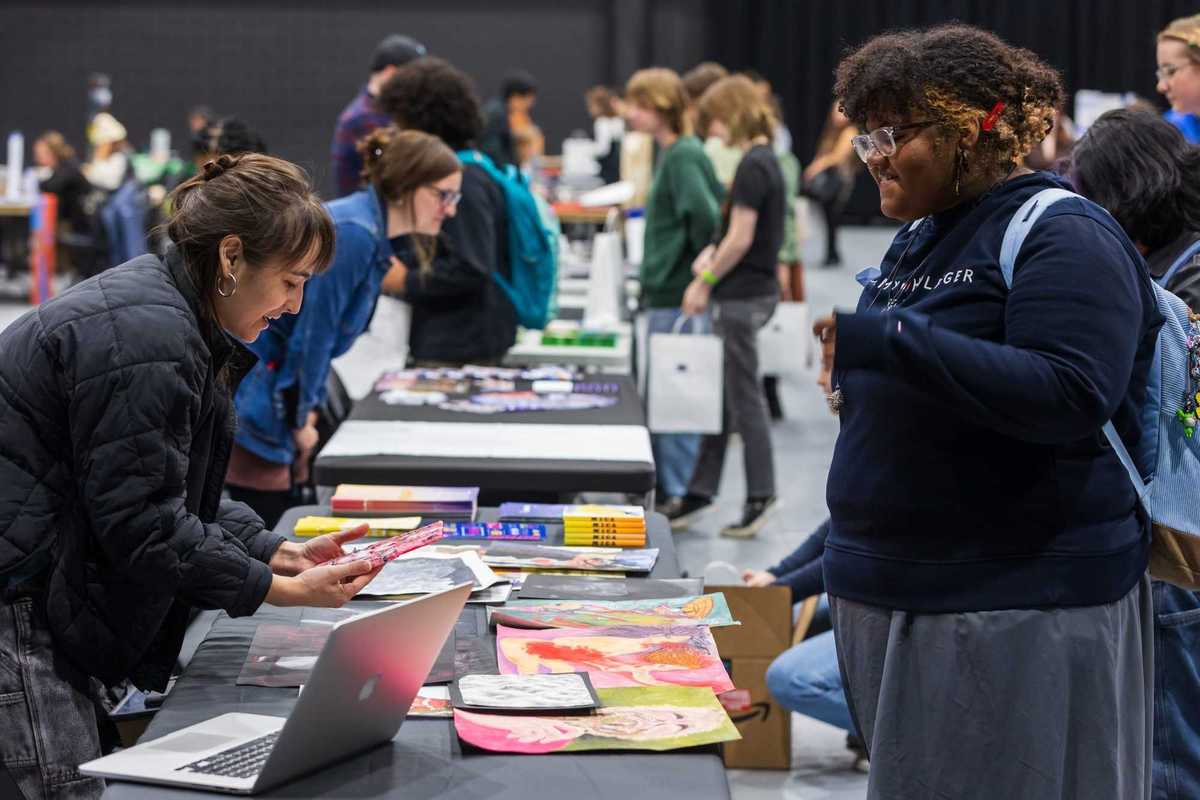
AMENIA – History came alive during the fifth annual Troutbeck Symposium on Thursday, April 23, as local middle and high school students showcased original projects, many highlighting Indigenous and Black history rooted in their communities. The event drew a large audience and participants from the Northwest Corner and neighboring New York.
Robin Starr, a Black Revolutionary War veteran with roots in the Northwest Corner, was the focus of several projects. Students from Housatonic Valley Regional High School (HVRHS) presented a video about Starr titled “The Cost of Liberty,” while seventh graders from Cornwall Consolidated School (CCS) presented findings from their study, “Who We Choose to Remember.”
Yarosh Semenov, a student from CCS, said, “We choose to remember Robin Starr and his family because their contributions were essential to securing the freedom we hold so dear.”
CCS students believe Starr is buried in Cornwall’s Calhoun Cemetery in an unmarked grave alongside his son Abel and grandson Josiah, both of whom have aging gravestones. Starr’s wife and son Jack are also buried there, but without stone markers, students said. Students have been working with several adults to make three additional stones a reality.
Students also approached Cornwall town officials about designating Feb. 8 as Robin Starr Day to commemorate the day of his death and legacy. They will share their story at the Memorial Day celebration , and a board depicting their work will be displayed at the Cornwall Historical Society.
While Starr’s legacy anchored several presentations, students also examined a wider range of topics linking local history to broader themes of race, identity and education.
Among several entries from Hotchkiss School students was one exploring the connection between the private preparatory school and Hampton University, one of the nation’s historically Black colleges and universities in Virginia. Hotchkiss students have donated money to the college to support its work examining Black education.
A Berkshire School student spoke about a controversial issue in her hometown of Great Barrington, Mass., where residents held differing views about a street named Squaw Peak Road. In 2022, the town voted to rename it Woodland Hill Road after concerns that the original name was a racist and sexist slur against Indigenous people.
A long-held belief was challenged in a video produced by HVRHS students titled “Searching for Chief Waramaug,” which examines local Native American legends, including that of Princess Lillinonah.
The story recounts the legend of Princess Lillinonah, who in the 1700s fell in love with a white man. He stayed with her in New Milford until winter, then left, promising to return. When he did not, her father arranged for her to marry within the tribe. Before the wedding, Lillinonah set out in a canoe toward the Great Falls to take her own life. At the last moment, her lover returned and leapt into the water so they would perish together.
“It never happened,” declared Darlene Kascak, education director at the American Institute of American Indian Studies. “It was fabricated. It was a Romeo and Juliet story; a way white colonizers depicted Native Americans. They romanticized Indigenous people who endured racism in order to impose Western standards.”
HVRHS students also shared a video about the two summers Martin Luther King Jr. spent in Simsbury working on a tobacco farm. He was there in 1944 and 1947 and later credited that time with planting the seed for a career in divinity. He was invited to sing in a church choir and was amazed that he, as a Black person, was welcomed into a white congregation.
Salisbury School students submitted a video on midwifery and one about Austin Reed, a Black indentured servant who spent most of his life in prison. Reed wrote a memoir in the 1850s that is considered to be the earliest known prison memoir by an African-American writer.
An expert panel of educators – including Hasan Kwame Jeffries, associate professor of history at The Ohio State University and brother of Hakeem Jeffries; Christina Proenza-Cole, lecturer for American Studies at the University of Virginia; and Wunneanatsu Lamb-Cason, assistant director of Native American and Indigenous Studies Initiative at Brown University – discussed the highlights of each presentation.
Troutbeck is historic in its own right – a 45-acre estate and hotel built in 1765. Originally a private home, it became a retreat for literary figures such as Emerson and Thoreau. Under Col. Joel Spingarn, it evolved into a gathering space for civil rights activists including W. E.B. Du Bois, Sinclair Lewis and Langston Hughes.

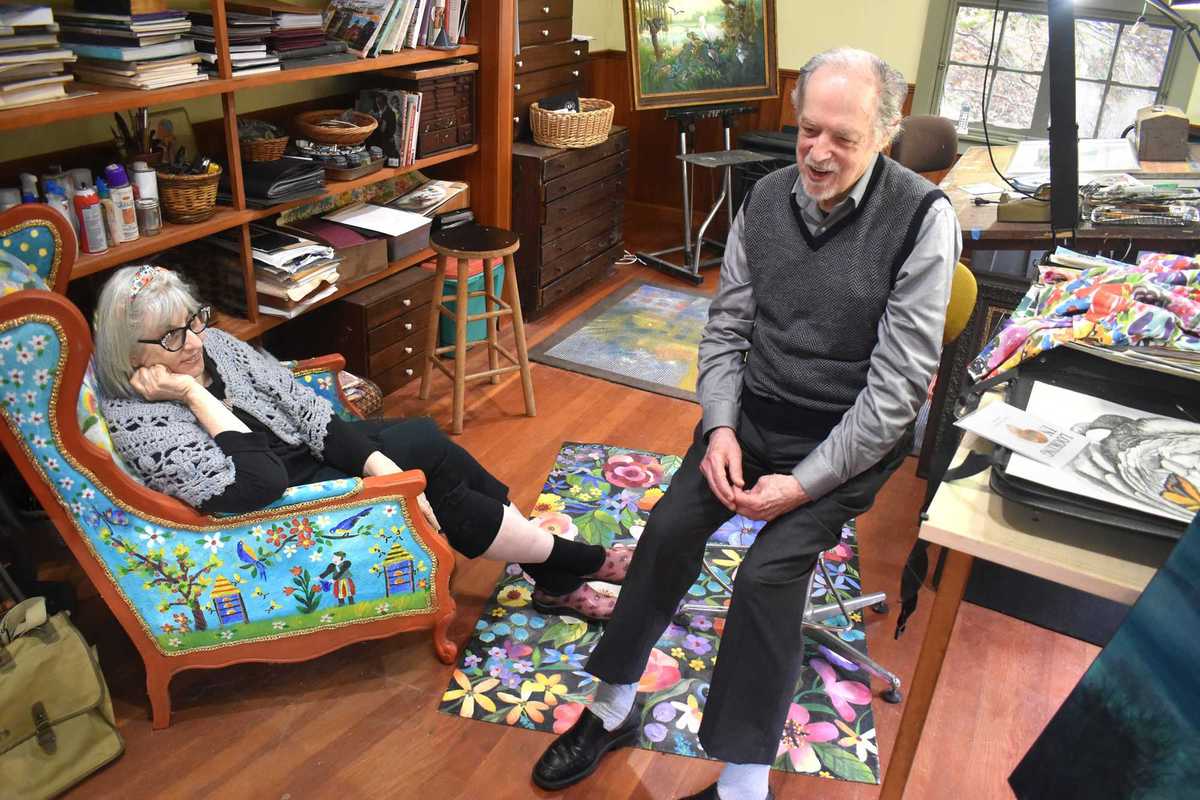
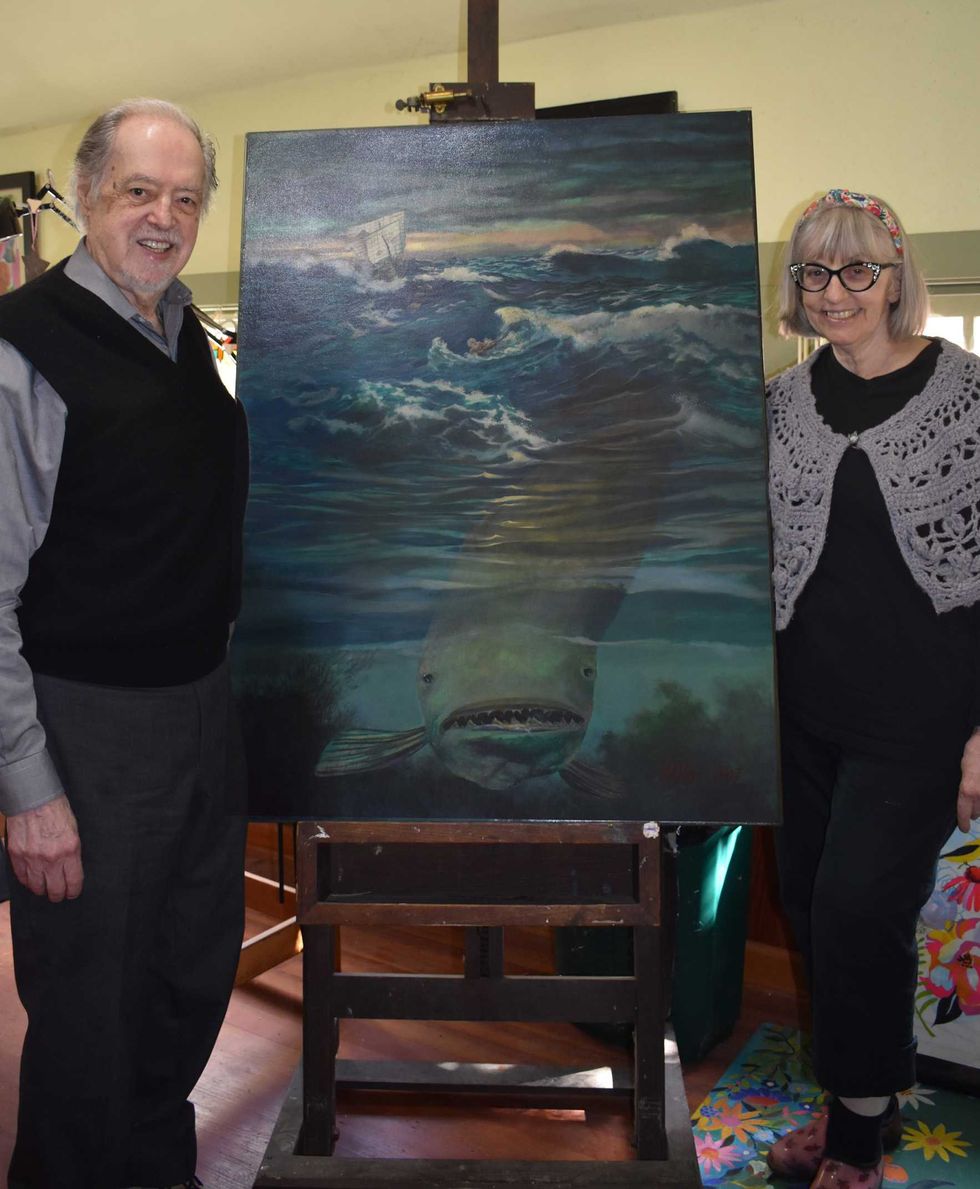 Justine and Victor Valla in their studio with a painting of Victor’s,”Jonah and the Whale.” Robin Roraback


 A ceramic vase by Kathleen Heidemann.Provided
 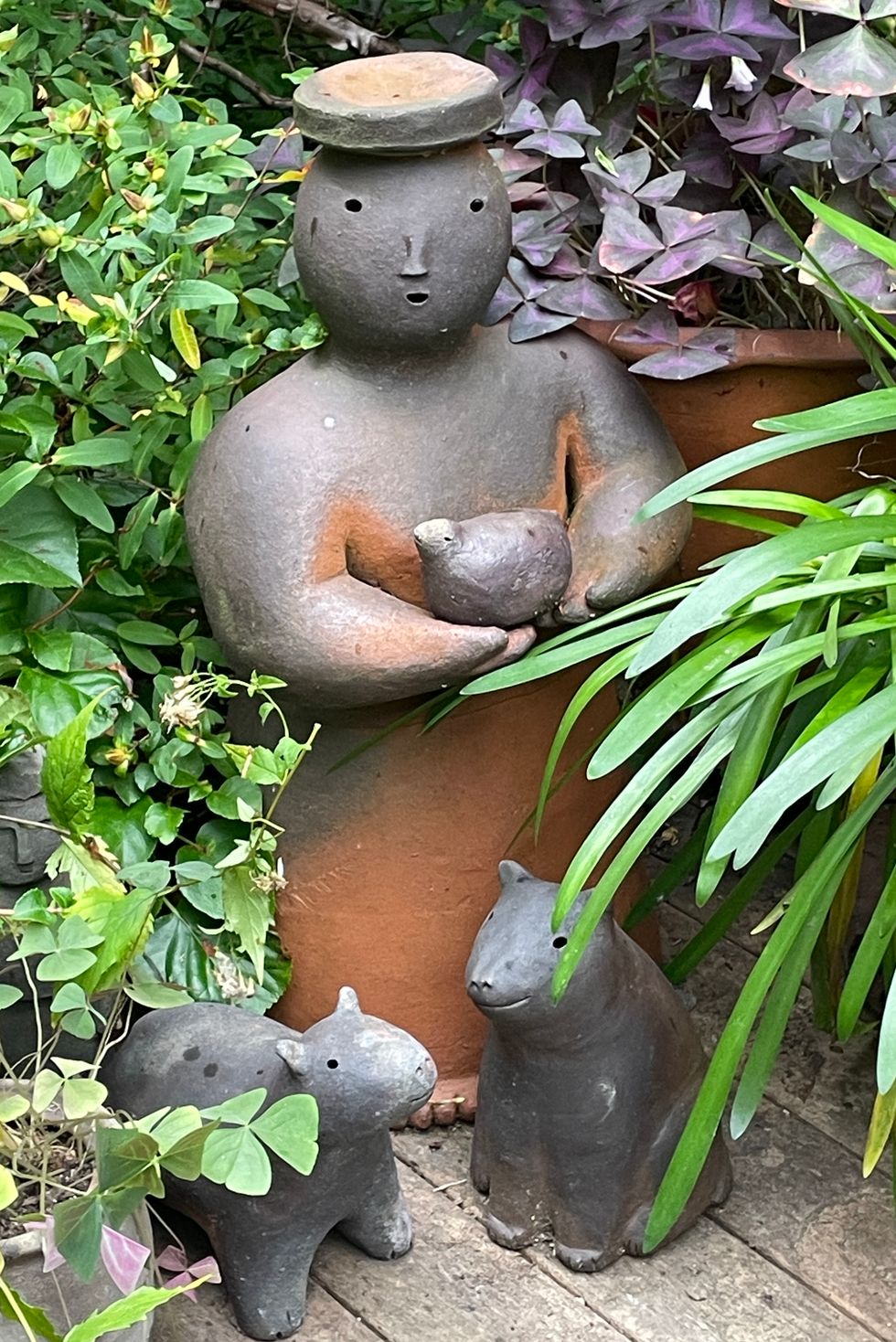 Joy Brown’s delightful ceramic sculptures.Provided