At Sharon Historical Society talk, Edith Wharton’s library comes to life

Sheila Liming gives a talk on ‘Edith Wharton and the Value of Books’ at Saturday’s annual meeting of the Sharon Historical Society.
Ruth Epstein

Sheila Liming gives a talk on ‘Edith Wharton and the Value of Books’ at Saturday’s annual meeting of the Sharon Historical Society.
SHARON – The story of Edith Wharton’s personal library is nearly as compelling as the plots of the books themselves.
Sheila Liming, an author and professor of literature and writing at Champlain College in Burlington, Vt., explored Wharton’s relationship with books during a talk Saturday, April 18, at the Sharon Historical Society’s annual meeting.
Liming said she became interested in Wharton while writing her doctoral thesis on “The Environment of Women Writers Engaged in Evolutionary Biology” at Carnegie Mellon University.
That research led her to spend five consecutive summers at Wharton’s home, The Mount, in nearby Lenox, Mass., familiarizing herself with – and digitizing – the collection. While a majority of the collection had book plates, there is still a lot to learn, she said.
Liming divided Saturday’s talk into two sections: one she called the value of books to Edith Wharton and the other, the value of Edith Wharton’s books.
Born Edith Newbold Jones, Wharton, who lived from 1863 to 1937, was the author of such classics as “Ethan Frome” and “The Age of Innocence.” She was the owner of 5,000 books upon her death, 2,700 of which survive today at The Mount.
Wharton delighted in describing the family library of her childhood. Her father, a book lover, was a member of the New York Society of Library, which invoked restrictions for women, such as prohibiting them from browsing or taking out books. When Wharton’s father died, his books were left to her brothers.
“Books carried expectations of ownership,” Liming said, “so she became compelled to do so. It translated into her lifelong ambition to own books.”
Liming described Wharton’s pursuit to collect literary works, saying the author would seek out a range of rare editions and other works. She enjoyed having many of them custom-bound using leather or silk, while others she left in less expensive forms.
Wharton had books stored in three of her houses: in Newport, R.I., in the Paris suburbs and in the south of France. When she died with no heirs, Wharton split her collection between two children: Colin Clark and William Royal Tyler, Jr. Liming surmised they were chosen because their fathers were prominent in the arts and would care for the books.
That wasn’t the case.
Half of Wharton’s collection was stored in a castle in England, where they were exposed to the elements, such as moisture and worms, and deteriorated. Some were damaged by fire.
The other set was placed in a warehouse in London owned by Clark. When he died, his brother wasn’t interested in the collection and sold it for $80,000 to a man named George Ramsden, whose only purpose for the purchase was to woo a girl, who, to his chagrin, married someone else.
Ramsden tried selling the collection to The Mount for $3 million, but was rejected, since an appraisal at that time showed its worth at $1.5 million. In 2006, negotiations were successful and the price received was around $3 million.
“But Ramsden held back part of the library in the basement of his bookstore in England,” said Liming. “He died a bit later and we don’t know what happened to them.”
Having the books at The Mount has been very successful, Liming said. It brings not just curious visitors, but many scholars. It’s been said that the purchase of Wharton’s collection is the most important the site has made. Visitors can view the collection, but there are also many stored in the attic not available to the general public.
Liming’s time at the Mount proved to be very interesting. She talked about finding intriguing items in the books, including notes penned by Wharton herself.
“She would talk to her books, fight with them,” Liming said.
While her collection was reported to be highbrow, she read everything. Liming smiled when she revealed Wharton was obsessed with the Lizzie Andrew Borden case – a Massachusetts woman charged with and acquitted of the axe murders of her father and stepmother – and read everything she could about it.
Liming holds a bachelor’s degree from the College of Wooster and a Ph.D. from Carnegie Mellon University. She is the author of several books, including “What a Library Means to a Woman” and “Hanging Out.”
Madi Long

The Royal Flush won the bed race in 2025.
NORTH CANAAN — The Annual Bed Race will return to Summer Nights of Canaan on Saturday July 18, following the Fireman’s Parade at 6 p.m.
Now a Summer Nights tradition, and before that, a staple of Railroad days since the early 1990s — the Bed Race is back after being revived in recent years by Will and Samantha Perotti. After the event lay dormant for several years, the couple volunteered to take it over and have been working to grow participation.
The lighthearted competition invites teams of five, with four people pushing and one riding atop the “bed.” The term is used loosely as any creative contraption with four wheels qualifies. Past entries have included a toilet bolted to a cart, a trash can on wheels, and a kayak mounted on wheels.
Participants must be 18 years or older to compete.
Teams race one at a time and will be timed pushing their “bed” down the street, around a cone, and back. Participants must be 18 years old.
The race was previously held at North Canaan Elementary School, but will be held on Main Street and will start by the St. Martin of Tours Church of St. Joseph.
“The road will be closed,” said Will Perotti. “There will be a ton of people right there, so it will be a spectacle.”
Will Perotti is encouraging people to just show up if they're interested in competing. Preparedness is not a worry at the Bed Race. When asked about his team on Friday, Will said, “I don't really have our team locked down together. I usually wait till the last minute and then I guilt trip somebody.”
The race is for bragging rights.
“I believe there will be a very, very expensive, really high-end piece of plastic trophy and bragging rights for the next year. That's really what's valuable.”
To sign-up, fill out the form at tinyurl.com/bedrace2026.
Christian Murray

Cole Bushnell appears in Berkshire Superior Court on Thursday after a grand jury indicted him on charges of murder and evidence tampering.
An Ashley Falls man whose arrest drew attention on both sides of the Massachusetts-Connecticut border has been indicted on charges of murder and evidence tampering in connection with the June 1 killing of Michael A. Moore, a former Falls Village resident.
A Berkshire County grand jury has indicted Cole Bushnell, 41, on charges of murder and evidence tampering in the death of Moore, 40, of Winsted. The evidence tampering count is a new felony charge, with prosecutors alleging that Bushnell attempted to destroy his cellphone following the killing to conceal evidence.
Bushnell, who owned a painting business, was indicted Thursday morning in Berkshire Superior Court, where he entered the courtroom in handcuffs. He showed little visible emotion, kept his eyes on the floor throughout the brief hearing and remained silent. The courtroom was largely empty.
According to a spokesperson for the Berkshire District Attorney's Office, Bushnell pleaded not guilty to both charges.
The indictment alleges that on or about June 1, Bushnell assaulted and beat Moore "by means of a dangerous weapon, to wit: a knife and a sledgehammer," causing his death.
A second count charges Bushnell with evidence tampering. Prosecutors allege Bushnell attempted to impair evidence "in an official proceeding, by attempting to destroy his cellphone, either by his own actions or by directing another person to do so."
According to prosecutors, Moore, who also worked as a painting contractor, went to Bushnell's Ashley Falls property on June 1. Prosecutors allege the two argued over money before Bushnell killed Moore inside a greenhouse on the property.
Moore was killed after suffering blunt-force trauma to the head and lacerations to his back, according to prosecutors. His body was allegedly concealed beneath a mattress until one of Bushnell's workers discovered it after Bushnell led him into the greenhouse. The worker then alerted Connecticut State Police at the Troop B barracks in North Canaan.
Bushnell was ordered held without the right to bail pending further proceedings.
During the hearing, prosecutors also sought a no-contact order prohibiting Bushnell from communicating with witnesses in the case, arguing there had been efforts to contact at least one witness. Bushnell's court-appointed defense attorney, Jeffrey Brown, objected, arguing the court lacked authority to impose such a condition while Bushnell remained held without bail.
Brown, a private criminal defense attorney and partner at Brown & Brown, declined to comment on the case.
The case has gained widespread attention throughout the Northwest Corner because both men are well known in the region.
Bushnell, who attended North Canaan Elementary School, and Moore, who attended Lee H. Kellogg School in Falls Village, both attended Housatonic Valley Regional High School. The two became friends and remained close into adulthood, working together as painters on homes throughout the region before the alleged killing.
Alec Linden

Officials closed the Sharon town beach at Mudge Pond on Wednesday, July 15, after a fallen tree limb exposed a large beehive. The beach is expected to reopen Thursday.
SHARON – The town beach on Mudge Pond closed on Wednesday, July 15, but the cause wasn’t the smoky haze drifting in from Canadian wildfires – it was angry bees.
According to Sharon’s Parks and Recreation Director Bryan Failla, a large limb fell from an old tree near the lifeguard stand overnight, exposing a hole that houses a large beehive. He said the town made the decision to close the beach Wednesday morning “out of an abundance of caution.”
He said that when he went to the beach in the morning, the bees were understandably riled up. “If your home got destroyed you’d be a little agitated as well,” he said.
The town has been aware of the hive in the tree for a long time, Failla said, but it hasn’t caused any concern for safety previously. With it now exposed, he said the time has come for a relocation for the sake of the bees and beachgoers alike.
Mike’s Beehives, an apiary and beekeeping supply store in Goshen, will be handling the operation “first thing tomorrow,” Failla said, with the aim being to safely relocate the hive with as little disturbance to the bees as possible.
Failla said he’s hopeful that the beach will be able to reopen Thursday by 10 a.m., its normal opening time, but noted that delays are possible based on how long the extraction takes.
Ed Bahr, who owns the business, said he frequently performs similar relocations across the state. He said the first step is to remove the bees safely, then take care of the comb, which contains the larva, eggs and honey stores. “It’s basically the furniture of their house,” he said.
He said he will take the bees and their comb back to the Goshen apiary, where he has about 60 other hives. He said it’s important to keep the bees fed and cared for throughout the relocation process, because “you do not want to kill honeybees – that’s not good.”
He promised the bees will be happy in their new home. “We’ll just bring them to a new neighborhood, take care of them and keep them good and happy,” he said.

Want more of our stories on Google? Click here to make us a Preferred Source.
Aly Morrissey
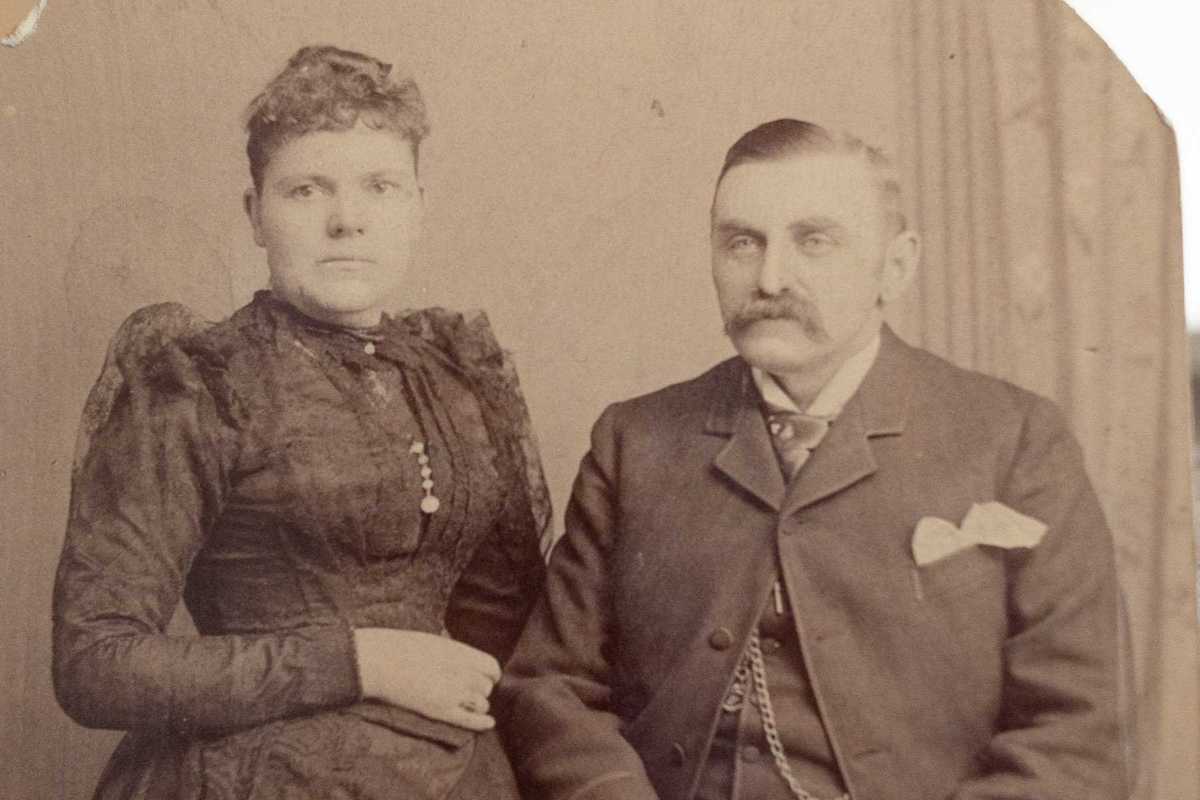
If you’ve driven down Main Street in Millerton, you’ve passed the former home and shop of one of the village’s earliest female entrepreneurs. At a time when most businesses were owned by men, Mary Kisselbrack made a name for herself in the late 1800s as a well-respected milliner and dressmaker.
On April 11, 1891, train conductor George Kisselbrack purchased a 124-by-232-foot vacant lot at 54 Main St. and hired locally renowned builders Beers and Trafford to design what would become their home and Mary’s business.
In a historical document, “A Beckon Call to a Village,” the house was referred to as “one of the handsomest, architecturally, in the village.” With gables, pointed roof lines and delicate shades of colors on its exterior ornamentation, the document noted that “no stranger passes it without an admiring glance.”
Today, the home still stands, and recently operated as a restaurant called Manna Dew Cafe, which closed its doors in 2023.
Mary Kisselbrack operated her business out of the west side of her home and developed a reputation for her skill, style, and business acumen.
“Mrs. Kisselbrack spares no pains in satisfying her patrons,” an 1890s Telegram article, the village’s newspaper at the time, said.
Kisselbrack’s reputation earned her customers from different parts of the country — some as far away as Florida — in addition to regular clients from Salisbury, Lakeville, Sharon, Amenia, Pine Plains, Copake and Hillsdale.
“With a woman of the long experience and exquisite taste of Mrs. Kisselbrack at the head of the millinery and dressmaking business, we may be sure that our wives and daughters will be reasonably supplied with the most stylish bonnets and dresses,” the article said.
In her 1905 obituary, Kisselbrack was described as a “self-made woman” who possessed “more than ordinary ability.”
On Oct. 5, 1905 — just over two months shy of her 56th birthday — Kisselbrack died following a severe, three-week illness. According to an obituary that appeared in the Millerton Telegram, she suffered a fibrous tumor and peritonitis.
“While she was not afraid to die, she lamented leaving home and loved ones,” the obituary said. “She talked of dying and of her funeral arrangements as calmly as if going away on a visit.”
Nathan Miller
Millerton’s business community will soon see the completion of a public wastewater system, addressing what local officials and business owners have called a major constraint on commercial development in the community for decades.
The $13.8 million project, which is expected to serve the core of the Village of Millerton and a commercial stretch of the Town of North East along U.S. Route 44, represents one of the largest infrastructure investments in the community in decades, and brings an end to calls for a sewer system that stretch back to World War II. Officials say the system will safeguard local waterways while creating a foundation for long-term economic stability.
Millerton trustee Matt Soleau, who has been working closely on the wastewater project and also operates a local full-service custom building firm, said in February that both residents and businesses are constrained by outdated septic systems, particularly on smaller lots where upgrades cannot meet modern health standards.
The proposed wastewater district aims to serve the core of the village, including its business district, as well as the commercial section of the Town of North East along Route 44 extending from Cumberland Farms to the New York-Connecticut border. Properties within the proposed service area currently rely on individual septic systems, including tanks with leach fields, and outdated systems like seepage pits, cesspools and holding tanks.
Village officials said many properties are limited not by zoning alone, but by septic constraints.
“As a result, many homes cannot legally add bedrooms, create accessory dwelling units or convert existing structures,” Soleau said.
Under the proposed system, most properties would retain their existing septic tanks if they are code-compliant and in good working condition. If a tank does not meet current standards, a new one would be installed as part of the project.
The existing tanks will still be used to collect solid waste, but liquid waste will travel through the municipal system to a treatment center. Treated wastewater will then be returned to Webatuck Creek.
Existing leach fields would be taken out of service and left in place, allowing property owners to reclaim that land for landscaping, driveways or ADUs.
For businesses, many commercial properties rely on old septic systems that are already maxed out, which makes it difficult or impossible to open water-heavy businesses like restaurants, cafes, salons or fitness studios.
Officials also emphasize the environmental benefits. A modern, up-to-date wastewater system will protect the natural environment, including the Webatuck Creek that flows right through the village.
Village officials say the construction phase will aim to limit disruption throughout the village and town, proceeding in targeted segments, with defined areas opened for installation, restored, and then closed before crews move on. The goal, Soleau said, is to allow normal activity to continue as much as possible throughout the process.
“Protecting the safety of our residents and visitors, preserving continuity of local businesses, maintaining access, and retaining residents’ quality of life throughout construction are non-negotiable priorities,” Soleau added.
The project hit major milestones this year, with village officials securing needed funding from a congressionally-directed spending grant of just under $4 million announced in February. That additional federal funding represented the last chunk of money needed to move the project forward.
Officials expect to begin construction on the system next year, with a tentative completion date targeting 2028.
Additional reporting provided by Aly Morrissey.
Graham Corrigan

Wooden beams made from tree trunks comprise the load-bearing structure under Millerton’s Moviehouse.
There are a handful of buildings that have stood the test of time over Millerton’s 175-year history. But if there’s one that stands out as a singular representation of the town, it’s the Millerton Moviehouse and its iconic clock tower.
Built in 1903 as a grange hall, it was soon converted into a movie theater with a second-floor ballroom. It was one of a handful of buildings that came to define the town in the following decades, standing tall across the street from the Episcopal Church and Millerton Inn, next to Terni’s, and up the hill from Millerton’s train station.
When a fire destroyed the local department store and other storefronts on the north side of Main Street in 1955, the Moviehouse became a landmark that represented the village’s early history.
It fell into disrepair in the 1970s and was briefly run as an adult theater. Marian and Carr Ferguson bought the theater in 1974, hoping to revive its status as a first-run theater and remove the pornographic element. Their four teenage daughters ran the theater for two years before the Fergusons sold the Moviehouse to Carol and Robert Sadlon in 1978.
“It was a single theater with 300 seats. There was no heat, no air conditioning,” said Carol Sadlon when asked about the state of the theater when she and her husband purchased it.
The Sadlons worked hard to improve the facilities over their nearly 50-year tenure. They added heat, air conditioning, and a second screening room. In 2012, they replaced the 35mm projection systems with a digital system.
But when COVID hit in 2020, the Moviehouse was an early casualty. By November 2020, the property was on the market, and the whole concept of movie theaters was in question.
Vaccines arrived in early 2021 — and a buyer for the Moviehouse followed soon after. The new co-chairs, David Maltby and Chelsea Altman, made the purchase in February 2021 and reopened the theater as a non-profit.
Its new non-profit status allowed the Moviehouse’s operators to seek grant funding. They initiated a massive renovation campaign that included redesigning both floors and adding an elevator. They also replaced the signage, and upgraded the seating this past April.
This past month, the Moviehouse received $99,000 as part of a grant provided by the New York State Council on the Arts that will pay to renovate and stabilize the 120-year-old building.
Looking forward, general manager Jeremy Boviard has big plans for the Moviehouse’s future. “What excites me about the possibilities looking forward is that we continue our positive trajectory as a regional arts center,” Boviard said. “We want to reach a wide variety of demographics, and continue to grow in lockstep with the needs of our community.”
Want more of our stories on Google? Click here to make us a Preferred Source.
Want more of our stories on Google? Click here to make us a Preferred Source.