FALLS VILLAGE — Russian president Vladimir Putin may have “astounded everybody with his audacity” in recent weeks, but Thomas Graham thinks Putin’s overall strategy is problematic.Graham, a veteran of the State Department, the Foreign Service, the National Security Council and Kissinger Associates, where he is managing director, spoke on Russia’s Strategic Challenges at the Salisbury Forum at Housatonic Valley Regional High School Friday, March 21.Graham said that in Putin’s world, “Russia is destined to be a country of consequence.”And it was, until the collapse of the Soviet Union in 1991.Since the 1700s, Russia played a major role in Europe and was considered one of the Great Powers, along with Great Britain, France and Germany.Twice Russian troops drove deep into the heart of Europe — once to vanquish Napoleon, and again to destroy Hitler.Even after the 1917 Bolshevik revolution and the collapse of the old Russian empire, Russia maintained a world-wide influence, promoting and supporting revolutionary movements.Graham said the decade between 1991 and 2001 was a bad one for Russia.“Putin believes it is time to put an end to this period of national humiliation.”Graham said that Putin is insistent that Russia matters again.“Is he right?”Graham was skeptical. He said that Russia is respected and feared, but some observers see the recent aggressive behavior as a blip in a long-term decline.Graham pointed out that a key Russian asset — its nuclear arsenal — is not as powerful a deterrent in the age of cyberwarfare.The shale gas revolution is having a negative effect on Russia’s oil and gas exports; the Russian language is fading as a lingua franca in the territory of the former USSR; hard science education is in decline, as is the Russian population in general.“So Russia faces an uncertain future.”Graham said the strategic challenges for Russia are:• Reasserting Russian primacy in the former USSR• Striking a balance between Europe and Asia• Dealing with unrest in the Muslim south• Dealing with the United States, which Putin still regards as Russia’s greatest adversary.Graham said that Putin is from the realist or Great Power school of foreign policy. “Hard power remains the coin of the realm.”Only Great Powers can have a truly independent foreign policy, and Putin has spent 14 years in office seeking to restore Russia’s power.Putin must have an economy that can compete internationally — and the Russian economy needs to modernize, make better use of technology and revamp public health and education.Graham said that Putin and the Russian leadership “understand this, but have not been able to decide on a specific course.”“To modernize, Russia needs to open up the political system,” he said. But thus far Putin has been unable or unwilling to take on the oligarchs who benefit from the current system and provide much of his support.“I suggest that authoritarian turn is not the road to success,” Graham said.Graham said Putin needs the liberal professional class — the Western-oriented, tech savvy, well-educated crowd. The trick will be how to give them a stake in the system.Putin needs to deal with socio-economic unrest in the provinces, which are stagnating economically. Graham said the current policy, of buying off discontent to maintain an apathetic population, “is not a good long-term strategy.”Threats from all sidesAnd Putin needs to deal with ethnic and nationalistic trends. “I find it surprising to see Putin take on this bold Russian nationalism,” said Graham. “He’s playing with fire.”In the territory of the old USSR, China is threatening, with increased commercial activity in central Asia that bypasses the Russians. And radical Islamic movements in the Caucasus and central Asia add an element of instability to an already fragile political system.“So it isn’t surprising that Putin is reasserting Russia’s role.”Putin’s proposed Eurasian Union — to include all the former Soviet republics, is clearly meant to be dominated by Russia, Graham said.But key players Ukraine and Uzbekistan are not playing along. “Without them a Eurasian Union makes no sense. Ukraine is Russia’s gateway to Europe; Uzbekistan is the biggest country in central Asia. And neither wants to be part of a Russian-dominated economic entity.”The successful annexation of Crimea may be a short-term, tactical victory for Putin, but in the long run Putin could well lose the rest of Ukraine, Graham said.Meanwhile,the Uzbeks are playing Russia, China and the U.S. against each other.Graham said that to Russia at the moment, Europe is more important than Asia. “Ever since Peter the Great, Russia has measured itself by European standards.”But Russia can’t afford to ignore Asia, he continued. And Russia can’t afford to allow markets east of Lake Baikal to become dominated by China. So they need to develop the Russian Far East and Siberia — in cooperation with Japan, South Korea and the U.S.Graham said that Russia and China serve as a counterweight to the U.S. in the United Nations, and Russia needs a counterweight to China, in the form of a unified Europe —but Putin doesn’t see it that way.“Russia still feels more comfortable dealing with individual states, not with entities like the European Union.”To that end, Putin has sought closer relations with Germany; has tried to drive wedges in the North Atlantic Treaty Organization; and has been aggressive in Georgia and now Ukraine.“It doesn’t make sense — because the world isn’t centered on European politics,” Graham said.Dangers of a radical IslamIn the Muslim south, radical movements could endanger stability of Russian provinces. If the “corrupt central government” of Afghanistan collapses and the Taliban take over, and if nothing is done about the drug trade, Russia will need to work with regional powers to contain the situation.“Radical Islam will become a more potent political force,” said Graham. “Russia will need cooperation from the other players.”Graham said that Putin’s belief that the U.S. wants a unipolar world and that American policy in the last 20 years has been designed to weaken Russia “no longer makes any sense. ““The U.S. is trying to deal with the vulnerabilities exposed by the financial crisis. The U.S. doesn’t have the sway it had 14 years ago, when Putin first came to power.“We are retrenching. The U.S. is no longer expanding into the power vacuum of the old USSR.“This should create a solid foundation for cooperation. From Moscow’s standpoint the U.S. is the only country that can help with these challenges.“The problem is that Putin is on a different path.”Russia vs. United StatesGraham said the next decade won’t be dull. “We will likely see the most consequential changes, see the emergence of a new global equilibrium. The success Russia has in meeting its strategic challenges will determine if Russia is in fact a Great Power and can challenge the U.S.”As for the challenge to American policymakers, Graham offered this:“After 20 years experience in the U.S. government, I can safely say that Russia is one of the most prickly powers.“The only thing I am confident of is it will not get any easier.”
Latest News
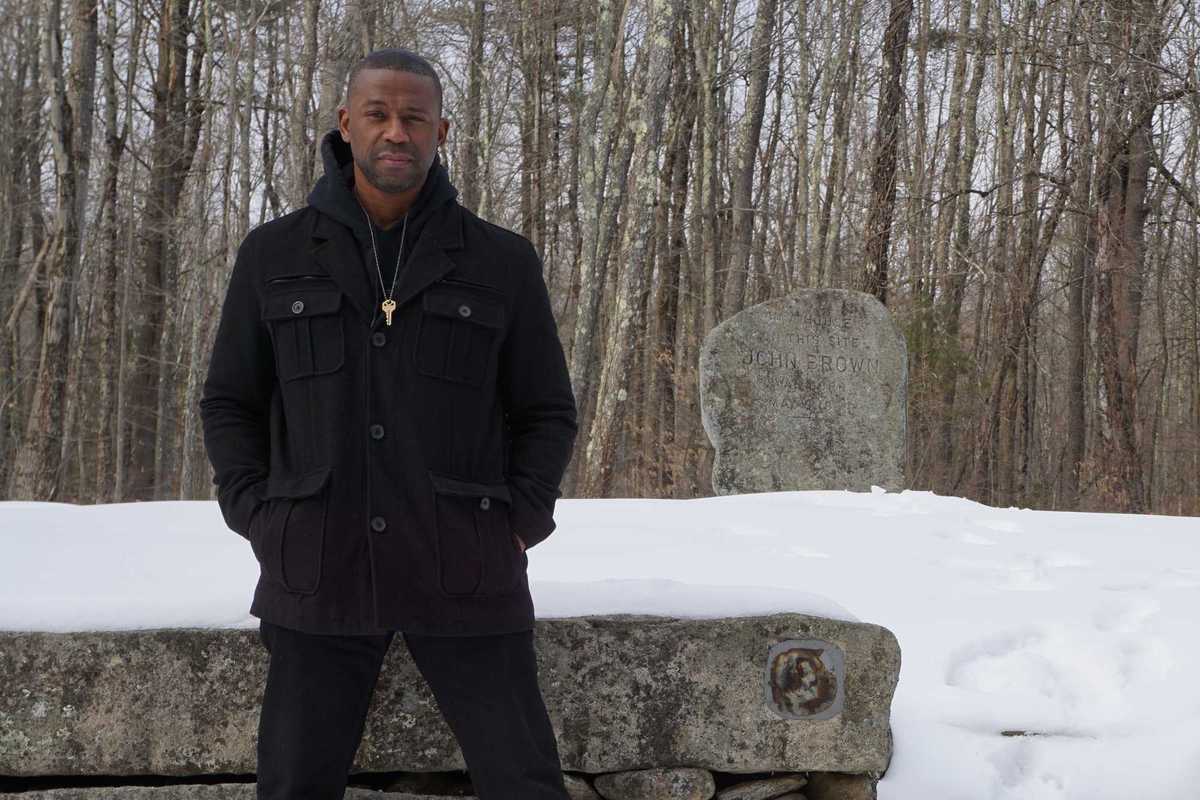
One systemic consequence of slavery is the loss and obscuring of the histories of those who were enslaved. Records were often not kept about where Africans had been stolen from or who they were related to. Families were torn apart, leaving nothing but the faintest traces of the past. The delineation point, where genealogists can no longer trace histories back, is refered to this as the “document wall.”
Today, 250 years after the signing of the Declaration of Independence and more than 160 years since the Emancipation Proclamation, there is a growing effort to restore some of the history stripped from enslaved people and their descendants. Among the leaders of these efforts is Mills, president of the Alex Breanne Corporation, a nonprofit organization that works to identify previously anonymous Black Americans from history and connect them with their living relatives.
The work began with Mills’ sister, who started digging into their family’s past in the 1990’s and introduced him to this emerging world of genealogy. Through that process, the Mills family discovered their great-great-grandfather, Ned Mills, who had been enslaved in Texas. His last name came from his final enslaver and remains the family surname. Through their research, they found that the document wall directly affected their ancestor, who learned of his liberation on June 19, 1865, now commemorated as Juneteenth.
“For the first time,” Mills writes on his website, “American slavery wasn’t something that had happened to anonymous people in a history book. It had happened to my family.”
The discovery gave Mills a familial pride he had been missing for years. That pride fueled his desire to help others find their own history. In 2023, Mills received his certificate in genealogical research from Boston University. He has used his expertise to help descendants of enslaved people uncover histories they never dreamed of learning.
To do this, he uses a process called “reverse genealogy,” identifying a person from the past and working forward to discover their descendants. Along the way, Mills has found some remarkable people who fought for freedom on American soil, some of whom were never freed.
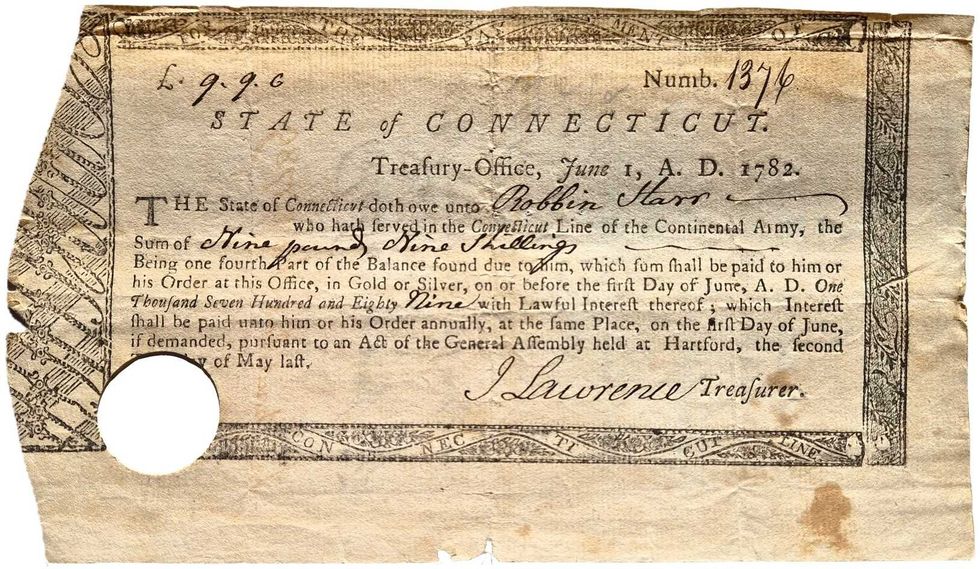 Pay Bill for Robin Starr’s service in the Continental Army.Courtesy the Alex Breanne Corporation
At the Cornwall Historical Society event, Mills will present the stories of four Connecticut families: Job Lathrop of Norwich, the son of Pirmus Armes, about whom Mills has published a book; Prince Mortimer of Middletown, also the subject of a book by Mills;, the three sons of London Wallace of Simsbury; and Robert “Robin” Starr of Danbury, who later lived in Cornwall and Sharon.
A few years ago, Cornwall Consolidated School social studies teacher Will Vincent reached out to Mills for research guidance on a local history project his students were undertaking. Together, they learned about Naomi Freeman of Cornwall. After purchasing an acre of land on Great Hollow Road in 1828, Naomi Freeman became the first Black female landowner in Cornwall.
The students petitioned the town to rename a road after the historic Cornwall resident In April 2025, Great Hollow Road was officially renamed Naomi Freeman Historic Road. U.S. Rep. Jahana Hayes joined Mills and the Cornwall Consildated School students for a presentation of their research.
Since then, Mills has guided the students in their quest to learn more about Starr’s story. Starr was a Revolutionary War soldier who joined the Continental Army to earn enough money to buy his own freedom, receiving the Badge of Merit in the process. The stories of his descendents’ services are equally worthy of their own books.
In recognition of Mills and the students’ work, First Selectman Gordon Ridgway proclaimed Feb. 8 as Robin Starr Day.
Preregistration is required for the event at the Cornwall Historical Society. To learn more about Mills’ work, visit
alexbreanne.org.
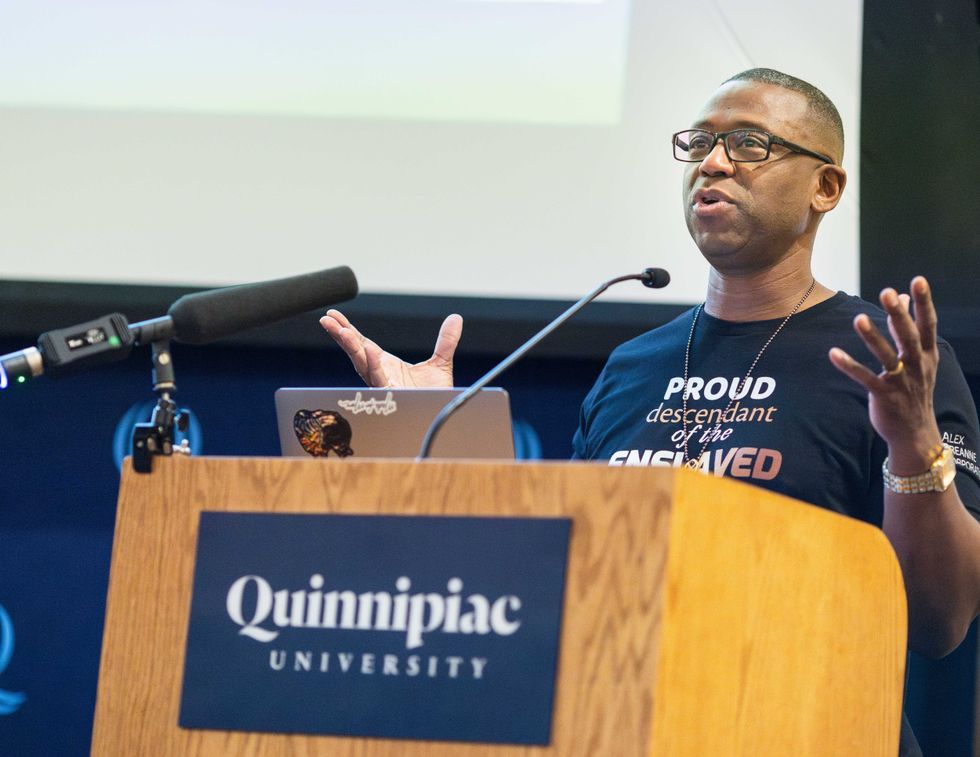 John Mills speaking at Quinnipiac University.Courtesy the Alex Breanne Corporation
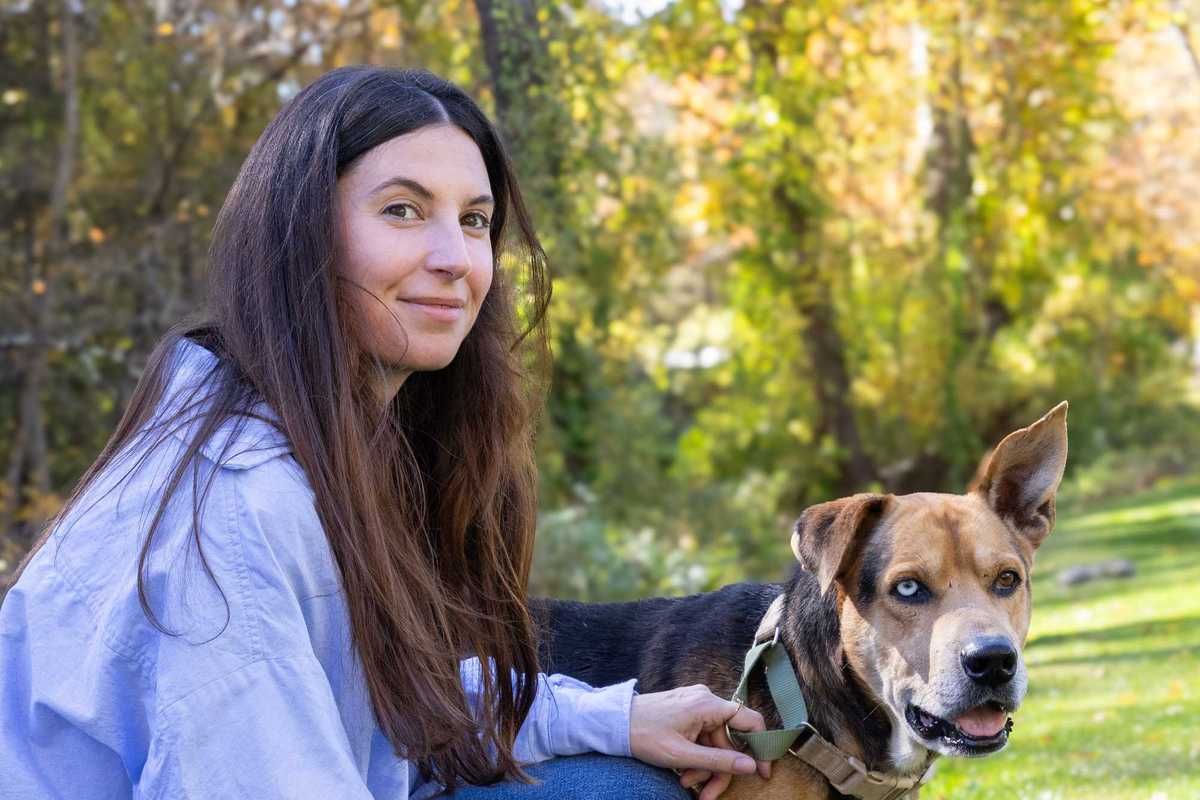
Stephanie Saetta runs Charlie Chicken Bones, a sanctuary in Salisbury.
Dogs have been at the center of Saetta’s life since childhood. She remembers going to the library to research different breeds and trying to convince her parents the family needed a dog. She had her heart set on an Irish Wolfhound, but she was more than happy when her mom brought home a West Highland terrier.
After college, she adopted Charlie as a puppy from a rescue on Long Island. He was a hound-shepherd-Rottweiler mix who suffered from intense seizures. Some veterinarians recommended euthanasia, but Saetta wasn’t ready to give up on him.
When Charlie would have an episode, she would sit with him, nose to nose, talking him through it. She learned to look for the moment he began to come around — when he could smell her again and his tail started to wag.
“You only get one or two of these soul connection dogs, so I do this in his honor,” Saetta said. “I like to think that all the dogs that come through are going to have that person that they connect with just the same.”
Through a network of women working to rescue animals in Texas, she learned about the desperate situations facing many dogs.
With limited space, some public pounds euthanize even healthy animals to make room. Limited access to veterinary care leaves sick dogs or unvaccinated puppies especially vulnerable.
Saetta saw that reality firsthand with a puppy named Gus, a Labrador mix she fostered who has since been adopted. Gus and his sisters had been dumped beside a road, where they were living under an abandoned car. People would leave food for them, but no one would take them to the pound.
“Even the people who rescue animals down there were like, ‘sadly, the best place for them to be is on the side of the road,’” she said. “That’s safer. Someone might actually help them that way.”
Saetta knows that there are far more dogs than any one person can save, but she also knows that helping one dog means one fewer on the street.
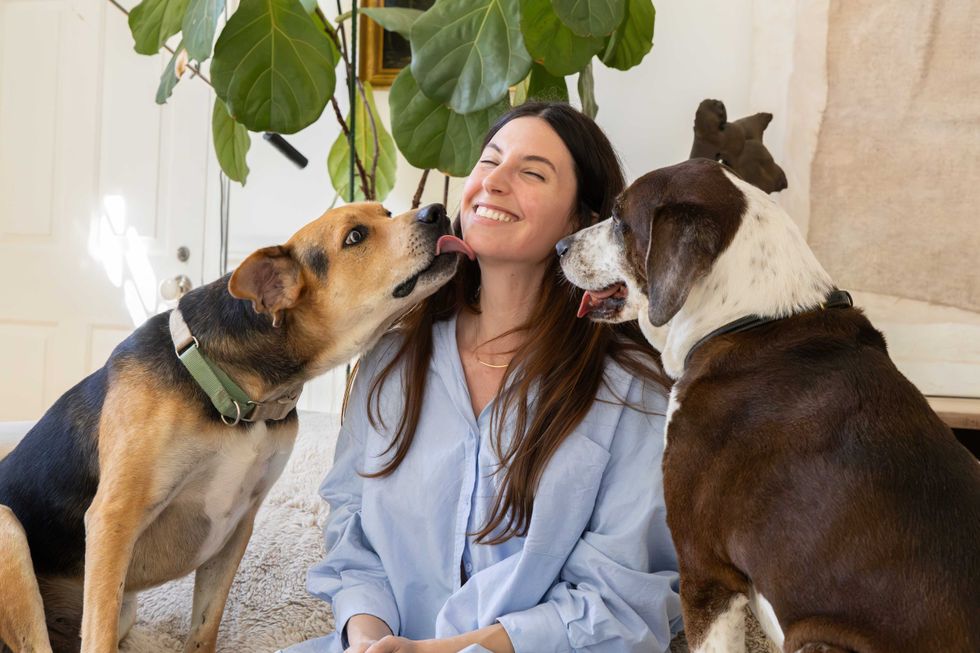 Stephanie Saetta,with her rescue dog George and Blue (left), a shepherd mix awaiting his forever home.Madi Long
Charlie Chicken Bone Sanctuary operates entirely through foster homes, a model that Saetta believes is best for the dogs and the humans hoping to adopt them.
Rather than moving directly from a difficult environment into a permanent home, the dogs have a chance to settle into a quieter setting. They can learn what it’s like to live with a family, sleep somewhere comfortable and receive affection without fighting for attention. Fostering also allows the rescue to really get to know each dog.
“As fosters, we’re honest,” said Saetta. We’ll tell you everything that’s been bad, everything that’s been good. What their temperament is and how they’ve responded to all the things they’ve experienced.”
A successful adoption is not just about finding a dog a home; it’s about finding the right home where the dog and family can thrive together.
Saetta is looking for more people willing to open their homes to foster dogs. She understands that the thought of growing attached and eventually saying goodbye can feel daunting. But she sees that goodbye a little differently.
Fostering means being part of a dog’s journey, even if only for a short time. It gives dogs a safe place to rest, the chance to trust again and the love they have gone without for much of their lives. And when the time comes for them to leave, it is not really a loss. It is the reward of knowing they are moving on to a forever home.
Blue, Saetta’s current foster, is hoping to find his perfect home.
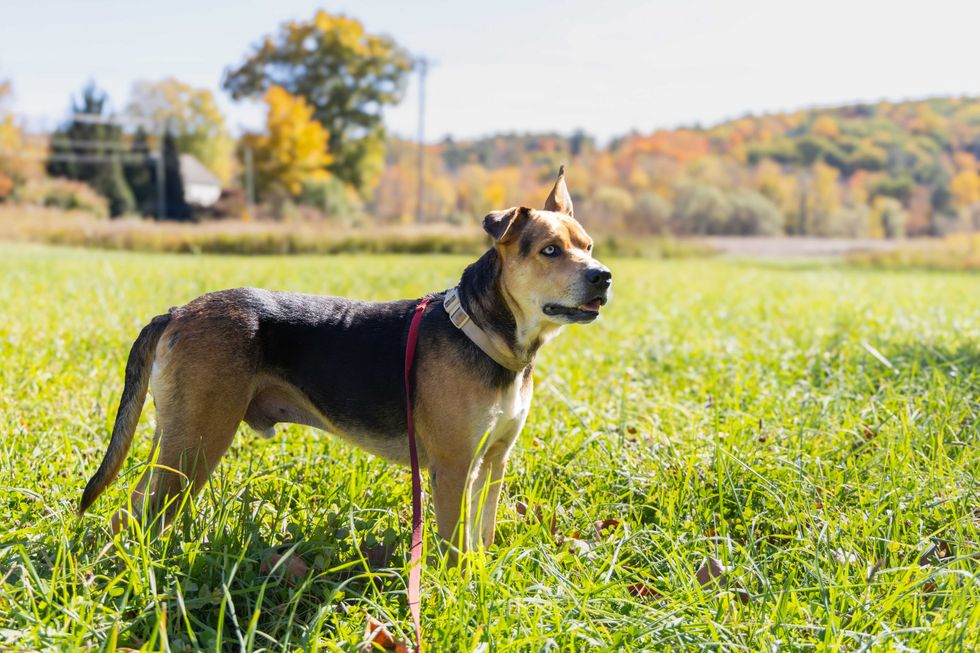 Blue, a 7 year-old Shepard mix, is waiting for his forever home. Madi Long
Now around 7 years old, Blue spent most of his life wandering the streets of Texas. People sometimes left food out for him, but his mangy, dirty coat kept them from stopping to pet him. Today, he has a chance to experience something different.
Blue is still waiting for his forever home. Saetta believes he would do best as the only dog in a household or alongside another senior dog. He will need someone willing to continue working with him on his training and understand that a dog with his history needs patience.
But what he gives in return is a whole lot of love.
“He’s so enthusiastic, he’s so excited for life, he’s so friendly, and he’s got such a good heart, and he loves to cuddle,” Saetta said. “He’s a good, good, good dog.”
For more information on adopting Blue or how to foster, visit ccbsanctuary.org.

Want more of our stories on Google? Click here to make us a Preferred Source.