Latest News

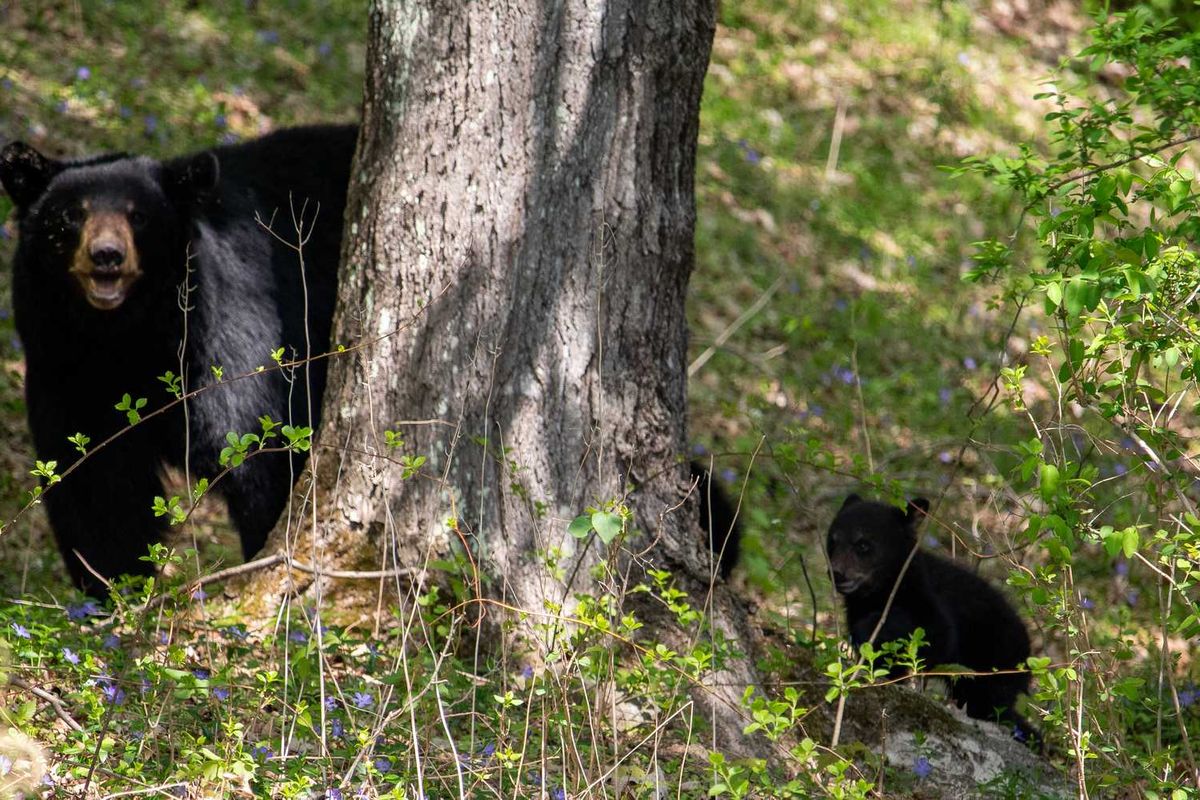
A mother bear and her cubs move through a backyard in northwest Connecticut, where residents told DEEP that bear litters are now appearing more frequently.
By James H. Clark
“We really want to hear from you,” said Justin Davis, DEEP’s bureau chief for natural resources, at the meeting. He said that DEEP is preparing a bear management report in early 2026 that evaluates the challenges the state is facing and the strategies going forward dealing with them. He said the report will include feedback from the public generated at the listening sessions. He urged attendees, however, not to turn the meeting into a discussion about whether there should be a hunt or not.
Davis called the return of black bears to Connecticut a “conservation success story,” but one that now comes with challenges. "They're large animals, they're powerful and they can become comfortable being around people--and they're opportunistic, and they love to eat."
DEEP shared data showing that black bears have been reported in nearly every Connecticut town and that conflicts involving trash, bird feeders, livestock and home entries have increased sharply in recent years. The state’s bear population was last estimated at roughly 1,100 to 1,200 animals, a number that DEEP recognizes has grown since the study was conducted in 2012.
Eric Hammering, the office director of Environmental Review & Strategic Initiatives at DEEP, told the attendees that since 2020 there have been 264 reported home entries in 38 municipalities in northwest Connecticut, citing data from the state's State of the Bears report released in March.
A home entry, he said, is defined as an event when a bear actually goes inside a resident's living space.
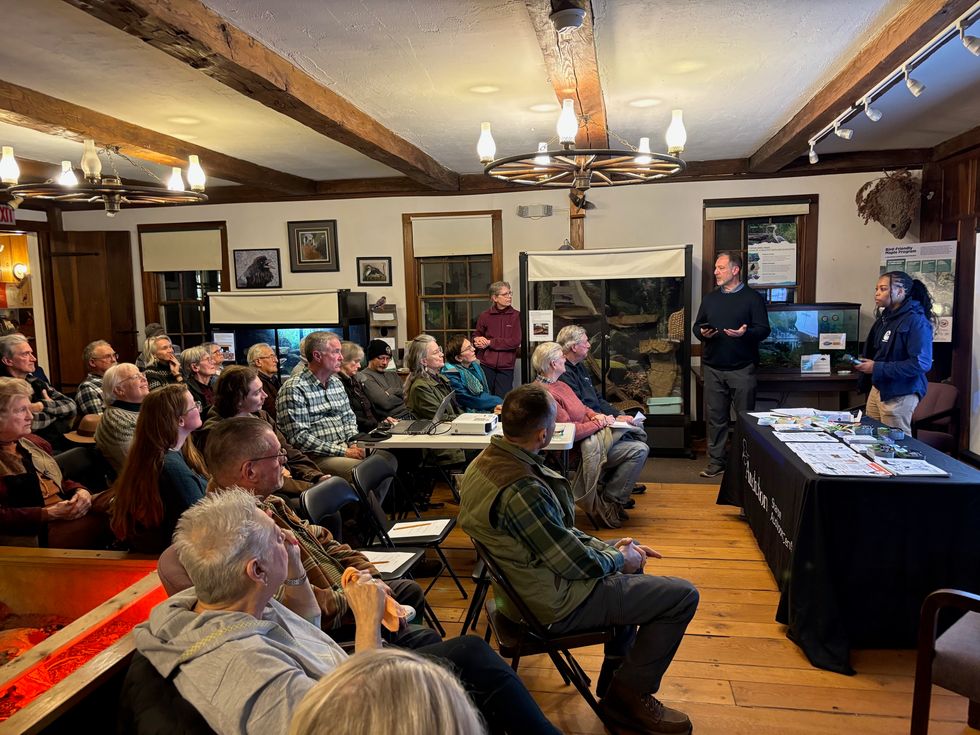 Attendees at the DEEP meeting in Sharon on Dec. 3By Christian Murray
DEEP officials stressed that bird feeders and unsecured household trash are the two biggest drivers of bear conflicts. They advise residents to remove feeders entirely and keep their garbage inside or in bear-resistant containers. DEEP representatives noted that once a bear discovers food, it is likely to develop habits and return.
Many attendees said they see widespread noncompliance in their neighborhoods — particularly among part-time residents and short-term rental guests who leave trash out for days. Several said they were frustrated that the people causing the problem are often not the ones who attend sessions like this.
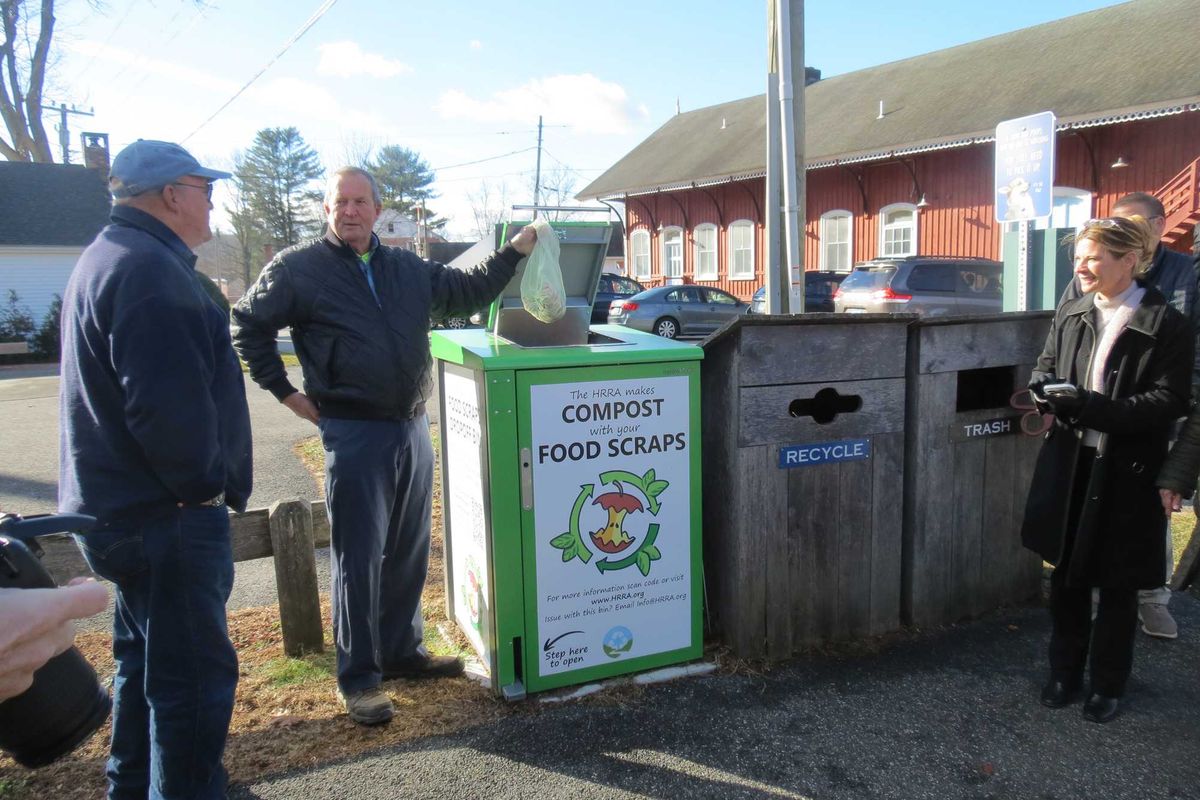
As a result, a number of residents called for stronger statewide enforcement, including fines for leaving trash unsecured and penalties for repeated violations. Without consequences, they said, the same households will continue to attract bears and put neighbors at risk. Others described practical steps to reduce bear activity--including the use of secure dumpsters, food composting stations, and the placement of electric fencing around livestock and beehives.
Again and again, residents emphasized that the underlying issue is human behavior. One attendee summarized it succinctly: “There are 3.6 million people in Connecticut and far fewer bears. Human behavior is the problem.”
Lynn Levine, a Litchfield resident who enjoys seeing bears, said common sense steps are the answer. She said that when she first moved to the area, she mistakenly left her garage down open with a 15-pound bag of shelled peanuts inside. "A bear dragged the bag around the side of the garage, sat down and had a teddy bear picnic." She said she learned not to leave the garage door open, especially with food inside.
Not all the stories were lighthearted. An 82-year-old Sharon woman recounted repeated break-ins that left her shaken and facing thousands of dollars in repairs, including a bear walking into her kitchen while she was washing dishes. A veterinarian described livestock attacks, including an alpaca that was mauled and dragged. A farmer said bears caused about $160,000 in crop losses in one year and that cornfields across the region face similar damage.
Several speakers added that DEEP’s limited staffing means local police often end up responding when bears are struck by cars or behaving aggressively.
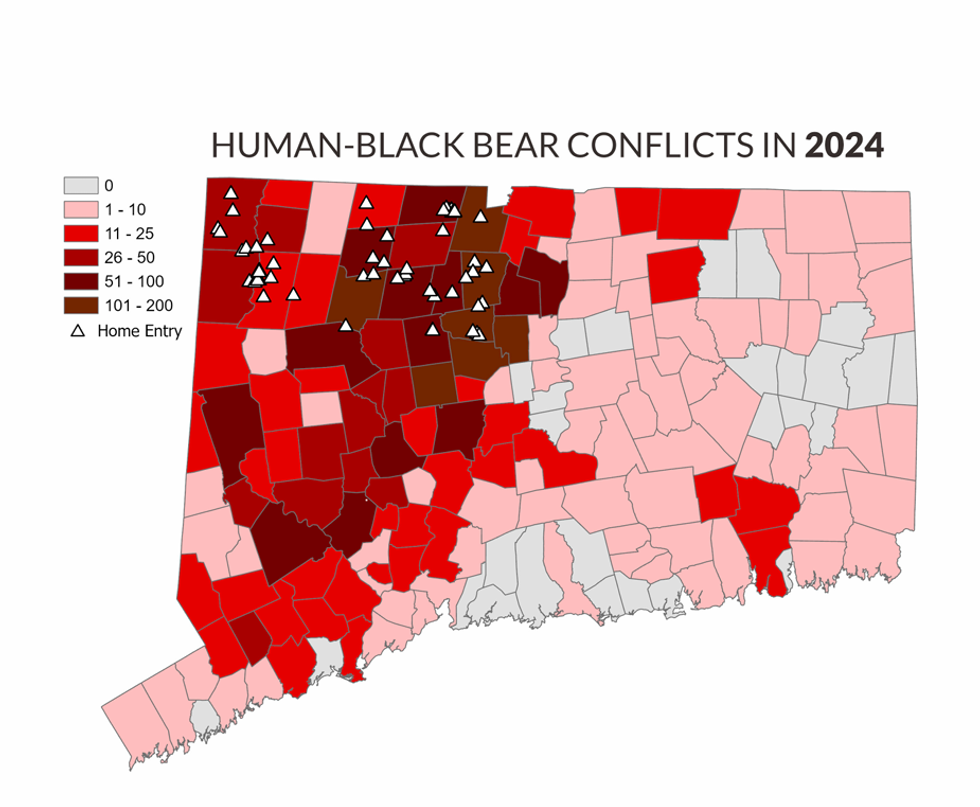 From the State of the Bears Report released March 2025CT DEEP
People are frightened
Cornwall First Selectman Gordon Ridgway, who attended the session, said afterward that he was troubled by how outdated the state’s population data is.
“My biggest personal take-away was surprise — that DEEP doesn’t have a handle on how many bears are here,” he said. “They said they haven’t surveyed them since 2012. How do you make a plan or policy without doing a survey?”
Ridgway said Cornwall has received about 40 bear-related reports this year, including home and vehicle entries and injuries to pets. “People are frightened by intrusions onto their property,” he said. “These are not happy stories.”
He noted that in 2012 -- when the state said it last did its population count -- “a bear was a novelty,” but sightings today are very common. “Today, most people see a bear every week. It’s no longer a novelty — it’s a real issue.”
Ridgway said he supports developing a statewide management plan and wants Connecticut to examine approaches used in other states, including reducing their numbers.
While most attendees at the Dec. 3 session indicated they opposed a hunt, Ridgway said that is not a true reflection of how his constituents in Cornwall view the issue. “If we had a vote, it would be close as to whether there should be a hunting season.”
Only one resident called for a hunt
Only one attendee — a longtime hunter from West Cornwall — advocated for a controlled bear hunt. He argued that the population is “exploding” and that education and bear-proof containers are “a band-aid.” In keeping with DEEP’s rules, other residents did not respond, and the session took place without conflict.
Much of the remaining discussion centered on unsecured trash, short-term rentals, and outdated dumpsters at state parks that residents say train bears to expect human food. Some questioned why the listening session was not better publicized, and Ridgway echoed that concern, saying it should have also been held at the high school to allow more residents to attend.
DEEP collected comment cards at the end of the session. Staff said all feedback will be reviewed as the agency drafts its statewide bear management report.