Thank you!
Your support is sustaining the future of local news in our communities.

Got one phone call...

Last Wednesday at about 8 p.m. I received a phone call from a retired state trooper who investigated one of the most notorious crimes ever committed in the Northwest Corner: the grisly 1973 murder of Barbara Gibbons in her Falls Village home.

The trooper had seen the official Lakeville Journal chronology of the Gibbons murder and its aftermath on my blog at tcextra.com. Politely and calmly, the trooper informed me in no uncertain terms that the timeline had “numerous errors of fact†and that it was extraordinarily biased. And, notwithstanding overwhelming evidence to the contrary, the trooper insisted that Gibbons’ son, Peter Reilly, was guilty as charged of the heinous crime.

u      u      u

For the uninitiated, after Reilly, then 18, discovered his mother on the floor of their home, state police viewed him as the only suspect almost immediately. The subsequent rush to judgment resulted in a shameful saga of forced confession, shoddy police procedure and prosecutorial excess. Few events in state history have done more to harm the reputation of the Connecticut State Police and the Litchfield County state’s attorney’s office.

Reilly, who was eventually exonerated, was initially convicted based on little more than the statements he had made to police. Despite the savage nature of the crime and the short time-frame between his arrival home and the subsequent arrival of police, there was no blood evidence on Reilly. Witnesses say he was wearing the same clothing at his arrest as he was wearing earlier that evening at a youth center in North Canaan. I continue to be amazed that there are still people, like this trooper, who think Reilly is guilty and that they feel compelled to complain about media coverage of this travesty 36 years later. Sadly, the case remains unsolved.

u      u      u

An article in last Thursday’s Hartford Courant got me thinking. Two civil liberties organizations are demanding that the town of Enfield move its public high school graduations from a church to a “secular location.â€

School officials say the ceremonies are held in a Bloomfield cathedral more out of convenience than anything else. There simply aren’t many affordable venues that can accommodate the throngs that show up for these events.

But the American Civil Liberties Union, Americans United for Separation of Church and State and a handful of residents think some families in religious minorities “essentially feel uncomfortable and unwelcome at the graduations.â€

And both the ACLU and AUSCS are seeking information about graduation sites from four other Hartford-area school districts that use the cathedral. Could more “demands†be in the offing?

u      u      u

Let’s try this the other way around. I’m trying to picture myself in a mosque attending my son’s high school graduation. As an agnostic (or perhaps, a Christian-lite), would I feel uncomfortable? Absolutely not — unless there was a jihadist lurking. So I really don’t have a problem with the practice of holding occasional government functions in a church, as long as the transaction is conducted at arm’s length.

My question is: When is the ACLU going to come marching into the Northwest Corner to investigate Salisbury’s practice of holding its largest town meetings in the venerable Congregational Church across Main Street from Town Hall?

After all, someone might feel uncomfortable or intimidated by Christian symbols while voting on such hot-button issues as a new firehouse or transfer station.

Lakeville resident Terry Cowgill is a former editor and senior writer at The Lakeville Journal Company. He can be reached at terrycowgill@gmail.com.

Latest News

‘So Little to Do,’ so much to discover at James Barron Art

Curator Deborah Goodman Davis reads the Emily Dickinson poem “The Grass So Little Has to Do.” Spencer Finch’s “Following Three Bees (Zinnias)” buzzes in the background.

Photo by Natalia Zukerman

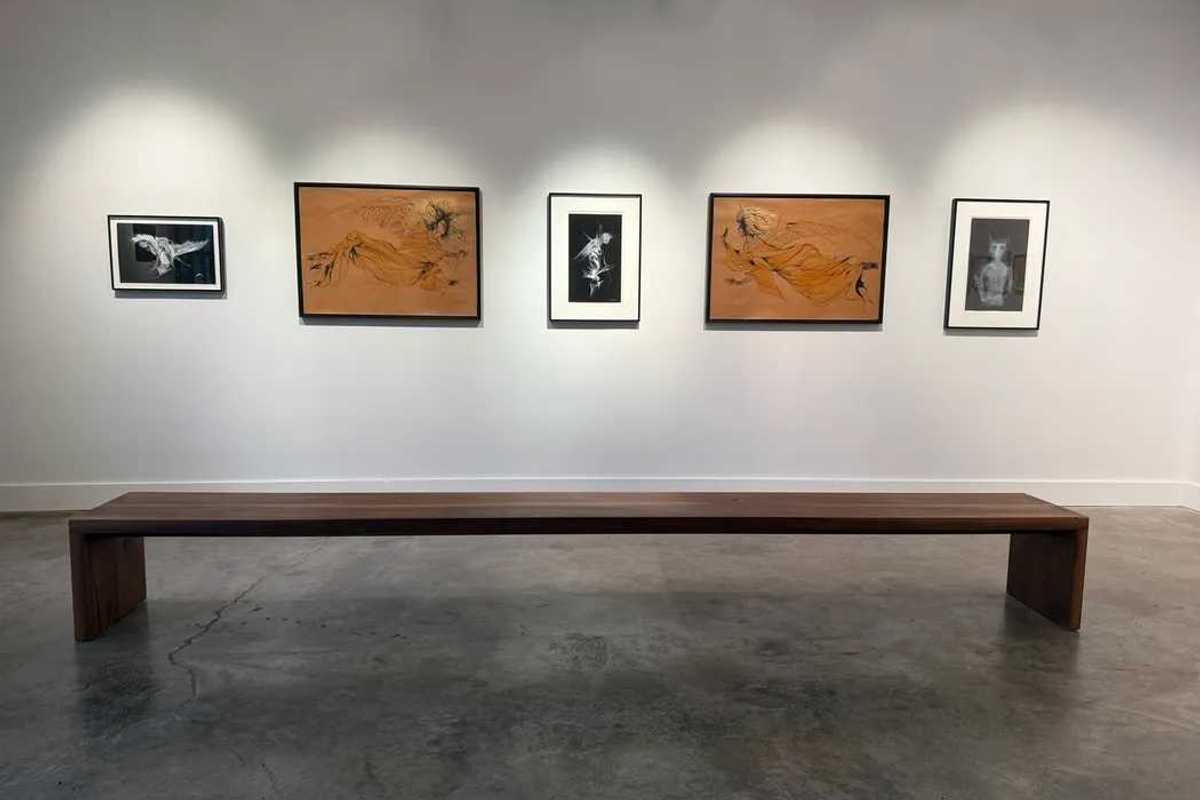
“The Grass Has So Little to Do,” on view at James Barron Art in Kent, takes its title from Emily Dickinson’s poem “The Grass So Little Has to Do,” written in 1862:

“The Grass so little has to do—
A Sphere of simple Green—
With only Butterflies to brood
And Bees to entertain—”

Keep ReadingShow less

Marina Kotchoubey is not a woodworker

Marina Kotchoubey is not a woodworker

Marina Kotchoubey at the Ian Ingersoll Cabinetmakers showroom in West Cornwall.

Photo by D.H. Callahan

After 40-something years navigating the world of custom fine furniture, Ian Ingersoll was getting ready to retire. Starting off with a little dovetail stool that he sold at a shop in West Cornwall in the 1970s, he’d grown his skill and his business into something he — and the whole town — could be proud of. Shutting down that business was not an option.

Ingersoll built Ian Ingersoll Cabinetmakers, which produced mainly classical Shaker furniture, on passion: the passion he had to make a living through creative challenges and the passion of his employees, who all seem deeply in love with their craft.

Keep ReadingShow less
A legacy of giving at Norfolk Chamber Music Festival

One hundred and twenty years ago, Carl and Ellen Stoeckel commissioned New York architect E.K. Rossiter to design The Music Shed in Norfolk, Connecticut. After nearly a decade of entertaining their friends and neighbors with the finest music of the day, they built a permanent home for their beloved Litchfield County Choral Union.

The commission and full funding of the construction was not unheard of in an era when great fortunes led to public enrichment. Railroad tycoon John D. Rockefeller was instrumental in funding institutes of higher education. Steel baron Andrew Carnegie was building libraries all over the country, and famously said that a man who dies rich is a disgrace, challenging his peers to give their fortunes back to the people.

Keep ReadingShow less
google preferred source

Want more of our stories on Google? Click here to make us a Preferred Source.

Two unique exhibitions at Geary Gallery

Henry Klimowicz with his sculpture, “Partial Pillar 1”

Photo by D.H. Callahan

On Saturday, Aug. 1, Geary Gallery opened its doors in Salisbury for two unique shows in its first- and second-floor gallery spaces. Art lovers flooded both floors over the course of the afternoon, giving the events a vibrant feeling that enhanced the importance of the art.

On the first floor is a show by Chicago-born, Colorado-based photographer Summers Moore, titled “Lobitos: Pueblo Fantasma,” or “Lobitos: Ghost Town.” The work centers around her daughter’s current hometown in Peru. Moore herself found a home away from home in Colorado in the mid-1980s and encouraged her children to seek out new places outside of their comfort zones.

Keep ReadingShow less

Writer’s retreat in the woods

Writer’s retreat in the woods

Participants in a 2024 Great Mountain Forest Woodland Academy workshop at Yale Camp.

Photo by Mike Zarfos

Great Mountain Forest (GMF) will host its first Nature Writing Retreat at the historic Yale Camp in Falls Village from Aug. 7-9, 2026. Writers of all levels are invited to draw inspiration from one of New England’s most notable forest landscapes. GMF envisions the retreat becoming an annual event celebrating writing, conservation and the relationship between people and forests.

This immersive three-day retreat reflects on the legacy of Hal Borland, the American writer and New York Times nature columnist whose work was deeply connected to this landscape. The retreat explores how wilderness shapes language, strengthens close observation and fosters environmental consciousness.

Keep ReadingShow less
From Cornwall to Rome, Adam Van Doren at Berkshire Botanical Garden

Artist Adam Van Doren and curator Donna Hassler talk to a group of visitors at the Berkshire Botanical Garden. A Stephen Proctor vessel sits to their left.

Photo by Natalia Zukerman

This summer, the Berkshire Botanical Garden in Stockbridge has hosted “Grounded in Nature: Paintings by Adam Van Doren,” an exhibition exploring the intimate relationship between architecture and the natural world.

On view for only a few more weeks in the Leonhardt Galleries, the exhibition features more than 35 watercolor and oil paintings by the New York-based artist, architect, author and Yale professor, curated by art historian Donna Hassler, director emerita of Chesterwood. The works span three distinct places that have shaped Van Doren’s artistic practice: New York City, Cornwall, Connecticut, and his travels throughout Europe.

Keep ReadingShow less
google preferred source

Want more of our stories on Google? Click here to make us a Preferred Source.

google preferred source

Want more of our stories on Google? Click here to make us a Preferred Source.