Latest News
At ‘The Falls,’ accessibility meets architecture in a landmark Kent home
Debra A. Aleksinas
Jul 08, 2026
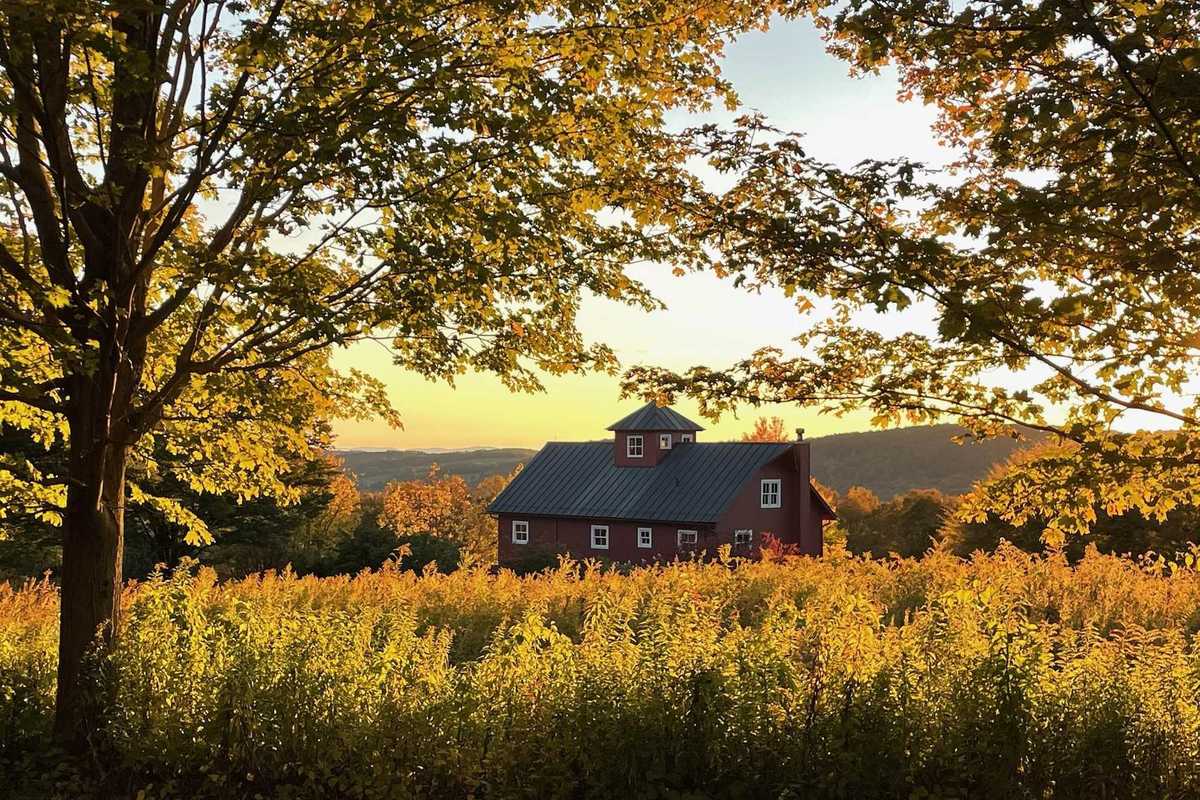
Donna and Ben Rosen spent more than two decades as stewards of The Falls, a nationally significant modernist residence in Kent designed by architect Charles Gwathmey. The 40-acre estate, now listed for sale for $6.5 million, was adapted for aging in place while preserving its architectural integrity.
Michael Bowman
“We always felt that we were stewards of the home.”
—Donna Rosen, Co-owner of The Falls since 2002
KENT — More than two decades ago, Benjamin and Donna Rosen had not even stepped inside the house when they knew they had found their future home.
Driving up to a striking modernist home tucked deep within the woods of Kent, the couple took one look at the dramatic setting and made their decision.
“As soon as we saw it, we said, ‘This is it,’” Donna Rosen recalled. “We hadn’t even gone inside.”
Today, after more than two decades as caretakers of one of Connecticut’s most architecturally significant modernist homes, the Rosens have listed the property for sale and are preparing to pass that stewardship to a new owner.
Known as “The Falls,” the 40-plus-acre estate at 23 Mauwee Brook Road has been on the market for about a year and is currently listed for $6.5 million through William Pitt Sotheby’s International Realty. But the story behind the planned sale extends far beyond a real estate transaction.
Designed in 1981 by acclaimed modernist architect Charles Gwathmey, the residence is considered an important example of the architect’s sculptural approach to design, integrating dramatic geometric forms with the surrounding landscape.
Gwathmey, whose notable projects included the renovation and expansion of New York City’s Guggenheim Museum, also designed homes for prominent clients including filmmaker Steven Spielberg and comedian Jerry Seinfeld.
For the Rosens, however, the property was never simply a house.
“We always felt like we were stewards of the home,” Donna Rosen said.
That philosophy shaped everything they did during their ownership, from preserving Gwathmey’s architectural vision while improving accessibility to allow for aging in place, creating expansive gardens, trails and outdoor gathering spaces that transformed the property into what family and friends affectionately came to call “Camp Rosen.”
The estate sits amid protected Litchfield Hills views and includes a natural waterfall, stream, walking trails, tennis court, pool, spa and an eight-acre landscape designed by noted landscape architect Deborah Nevins. A sculpture by acclaimed artist Elyn Zimmerman overlooks the falls and will remain with the property.

A house unlike any other
When the Rosens purchased the home from its original owners in 2002, modernist architecture was not widely sought after in Litchfield County.
“People were more interested in Colonial-style houses than a modernist house,” Rosen recalled.
Over time, their appreciation for the design only deepened.
“The more we lived there, the more we got to appreciate the brilliance of the architecture,” said Rosen, a former art gallery owner and trustee for the New Orleans Museum of Art and the Whitney Museum of American Art.“It was sharp. It was tight. It was crisp.”
She described the experience of living in the house as being “like we lived in a birdcage,” surrounded by views of the landscape through expansive walls of glass.
Designing
for the future
As the couple grew older and faced their own health challenges, they also began thinking about how the house might evolve to meet future needs.
They turned to architect Michael Arad, internationally known for designing the National September 11 Memorial at the World Trade Center site in New York City.
According to Donna Rosen, Arad quickly recognized that inserting an elevator would compromise the original design.
“You can’t without destroying this atrium,” she recalled him saying.
Instead, Arad designed an accessible first-floor addition and circulation plan that allowed the couple to remain in the home without sacrificing the essence of Gwathmey’s vision.
Kathryn Clair, senior global real estate advisor with William Pitt Sotheby’s International Realty in Washington, Connecticut, described the result as exceptionally successful.
She called the property “a rare example” of how a significant architectural work can be adapted for aging in place without compromising its character.
“It really is a one-off,” Clair said. “You don’t find houses like this one very often.”
The same care that guided the architectural additions also shaped the grounds.
When working with landscape architect Deborah Nevins, Rosen said she rejected the idea of formal European gardens.
“I wanted Connecticut gardens,” said Rosen.
The couple transformed former pastureland and overgrown areas into sweeping wildflower meadows, walking trails and outdoor gathering spaces.
“What came up was one of the most magnificent wildflower meadows,” Rosen said.
From Camp Rosen
to KentPresents
The extensive estate eventually became a gathering place for family, friends and community members, earning the nickname “Camp Rosen.”
At the same time, the Rosens became deeply involved in Kent civic life and philanthropic endeavors. Among their most visible contributions was KentPresents, a four-year ideas festival that brought nationally recognized figures in diplomacy, science, journalism, politics and the arts to the Northwest Corner while raising money for local nonprofits.
“It was an incredible experience,” Rosen recalled of the weekend-long presentations that drew renowned guest speakers.
Unlike many conferences, KentPresents encouraged speakers to mingle with attendees throughout the event.
“People would come up to me and say, ‘I sat with Henry Kissinger,’ or ‘I sat with Bill Burns,’” Rosen recalled.
The interactions transformed what might have been a traditional speaker series into something far more personal.
“It was one of the most memorable experiences,” Rosen said. “It was a wonderful swath of talented, wonderful people, and I loved being a part of it.”
Although the festival continued to gain momentum, the demands of organizing it became increasingly difficult for the Rosens.
“Even though we were gaining momentum, it just became too much for Ben and me due to health issues,” Rosen said. “Then COVID hit, and we knew we had made the right decisions about how we wanted to live.”
Ben Rosen, who is Chair Emeritus of the board of Trustees at the California Institute of Technology, later suffered a major stroke, reinforcing the value of the accessibility improvements the couple had thoughtfully planned years earlier.
Passing the torch
The Rosens’ affection for Kent remains undiminished. “We love that village,” Rosen said, noting that it will be missed.
Rosen recalled that the move north from New York actually came at the suggestion of a friend, the late composer and lyricist Stephen Sondheim.
“It was a miserable experience in the Hamptons,” she said with a laugh. “Stephen said, ‘Come to Connecticut. You don’t need to be in the Hamptons.’”
Rosen reflected on the many people over the decades who helped preserve and care for The Falls. Some are descendants of craftspeople who worked on the original construction and who remained connected to the property across generations.
“The pride they have is so great,” she said. “They became our friends.”
Her hope for the future is simple.
“My hope is that whoever buys The Falls will treasure it and become the new stewards of the property,” Rosen said.
“It’s a totally magical place,” Rosen said.
Keep ReadingShow less
Filmmaker screens film, leads ‘mail art’ workshop at Center on Main
Patrick L. Sullivan
Jul 08, 2026
Filmmaker Imogen Pranger screens her documentary and leads a ‘mail art’ workshop at the Hunt Library July 2.
Patrick L. Sullivan
FALLS VILLAGE – Filmmaker Imogen Pranger introduced Falls Village residents to the world of mail art during a presentation and hands-on workshop at the Center on Main Thursday, July 2. She screened her 16-minute film, “Mail Myself to You,” before leading the workshop, which was attended by about a dozen adults and children.
“Mail art” has been around for decades, but defining it is a little tricky, Pranger said before doing her best to describe the medium.
“It’s a system of shared art works using the postal system,” she explained. No two pieces of mail art look the same, which makes defining it difficult. It can appear as decorated postcards, envelopes and small pieces of cardstock. The postal markings and stamps are considered part of the art.
Pranger, who graduated with a film degree from Oberlin College in 2024, said she was introduced to mail art as a freshman while working at the Clarence Ward Art Library at the college.
As a student employee, Pranger said then-librarian Barbara Prior asked her to create an organizational system for the library’s donated mail art collection, primarily works by artists Reid Wood and Harley Francis.
Both artists had donated or sold their collections to the library, which included thousands of individual pieces, each small enough to to be sent through the mail.

There is no typical piece of mail art. The pieces must be small and flat enough to go through the postal system, and there must be room for stamps. The only real commonality is the highly idiosyncratic and individualized nature of the pieces.
Pranger said mail art emerged in the 1960s and had its heyday in the 1980s. The rise of the internet in the 1990s saw a decrease as artists shifted to digital formats that could be shared with a single mouse click.
But mail art has rebounded in recent years. Pranger said it’s part of a more general interest among visual artists in using older technology, such as film cameras, typewriters and mimeograph machines.
The fun of mail art, she said, is joining “an international network of mail art. If you send stuff out, you’ll get stuff back.”
Pranger said she developed a friendship with the mail carrier whose route covered her home in Oberlin.
“He’d say ‘What is this crazy stuff you keep getting?’ and I explained it.”
“Mail Myself to You” is available for viewing at the David M. Hunt Library as part of the video collection overseen by Falls Village filmmaker Yonah Sadeh, who met Pranger in film school in Prague.
Keep ReadingShow less
Retired lawyer discusses satirical legal novel at Scoville Library
Patrick L. Sullivan
Jul 08, 2026
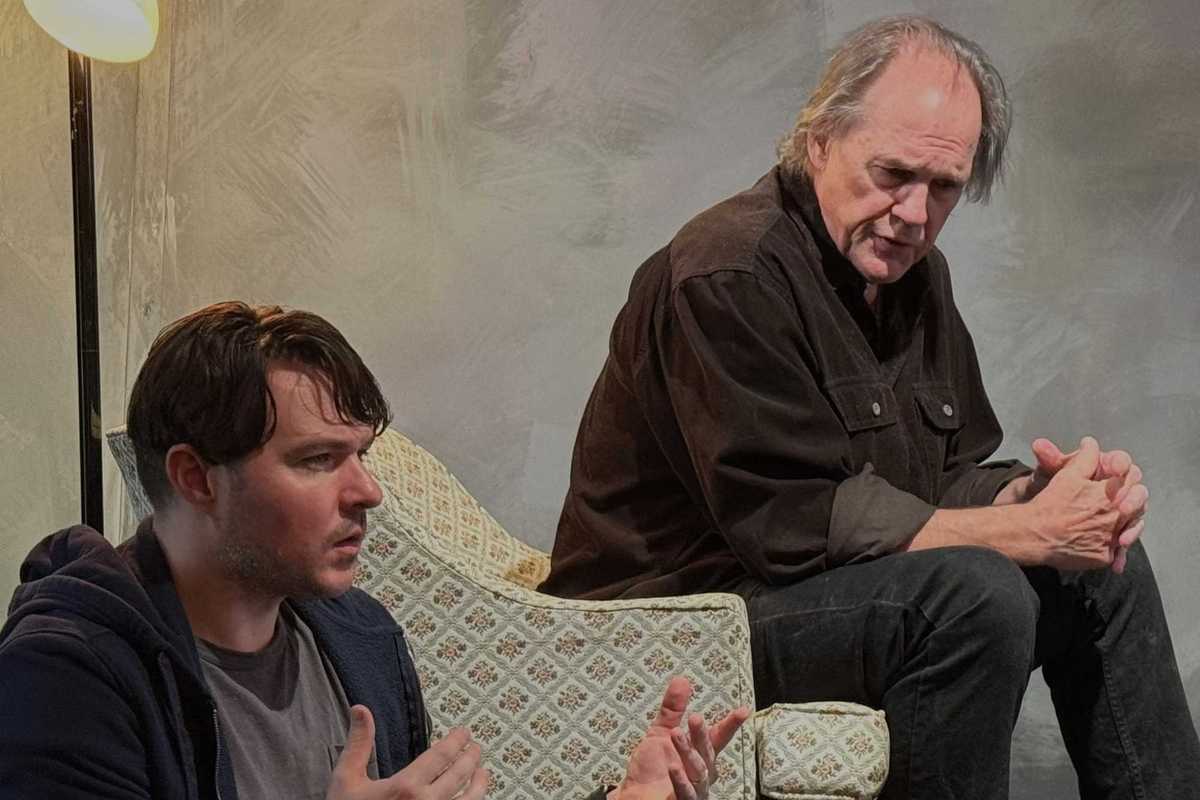
Former Lakeville Journal Executive Editor Cynthia Hochswender moderates a conversation with lawyer-turned-novelist Tom Morrison in Salisbury June 30.
Patrick L. Sullivan
SALISBURY – Retired lawyer and fiction writer Tom Morrisson said he spent decades watching fellow attorneys take themselves too seriously. In retirement, he turned that observation into a series of comic legal novels and discussed the latest with former Lakeville Journal Executive Editor Cynthia Hochswender at the Scoville Memorial Library on Tuesday, June 30.
Morrison told the audience he has often thought that his colleagues take themselves too seriously, a sentiment that has been the basis of his series of comic novels, including the new “Close Encounters with Tort$.”
Hochswender asked Morrison how he got started writing fiction.
Although Morrison only started the “Tort$” series at age 74, he said he attempted to write a spy thriller when he was in the Air Force as a young man.
“I knew nothing about spies or writing a novel,” Morrison said. “Luckily, it was never published.”
But in retirement, he revisited the idea.
“This time I’d write about something I do know,” Morrison said.
His series chronicles the legal adventures of twin brothers and tort lawyers Patrick A. “Pap” Peters and Prescott U. “Pup” Peters.
The first novel, “Torts ‘R’ Us,” was published in 2020.
This time around, the story involves UFOs, the Espionage Act, the Disney song “Some Day My Prince Will Come,” featured in Snow White, and the legal question: “Can anybody just sue Russia?”
Morrison said the first three novels focused on “the abuse of the class action lawsuit, to the extent there was a serious message.”
The fourth installment, about artificial intelligence, and the new one “are much more current.”
Asked about his writing regimen, Morrison said he still drafts everything by hand.
“I have a huge supply of No. 2 pencils and white legal pads,” Morrison said. “The first draft might take 35 pads. Then I go to the computer.”
Morrison said he relies on newspapers for raw material, including the Wall Street Journal and, particularly, the New York Post.
“The Post has a knack for covering crazy things that happen around the country,” he said. “I’d be lost without it.”
As a litigator, Morrison said he enjoyed writing briefs, and he took the word “brief” seriously, focusing on concise writing.
His colleagues wrote “as if they were still in law school,” he said.Morrison said he’d make his briefs shorter. “Tell the story I wanted to tell and stop,” he said.
One of his bosses didn’t think much of his style.
“He called it ‘Newsweek style.’ I took that as a compliment.”
Hochswender closed by asking if “Close Encounters with Tort$” would be the final book in the series.
“I think five books about wacky class action lawsuits is enough,” Morrison replied.
Keep ReadingShow less

Want more of our stories on Google? Click here to make us a Preferred Source.
Former private school employee avoids prison for computer crimes
Alec Linden
Jul 08, 2026
WATERBURY – A former Kent School employee convicted of accessing the private photos of 81 students and staff while working as an IT technician will avoid jail time after being sentenced on June 29.
The outcome was already determined in March when Daniel Clery, 49, of Brookfield, Connecticut entered into a plea deal when he pleaded no contest to two counts of first degree computer crimes, for which he was found guilty. While the deal was already established, Clery was formally sentenced at state Superior Court on June 29.
Under the terms of the agreement, Clery will face a 10-year suspended prison sentence that places him on probation for five years and requires him to register as a sex offender for 10 years.
Clery worked for the private school from 2000 to 2023, when he was fired after a staff member reported twice that he had accessed her personal information. A forensic report commissioned by the school and a police investigation yielded thousands of images taken from students’ and staff’s devices, and he was subsequently arrested in 2024.
A separate class-action lawsuit was allowed to partially proceed in March after a judge found the Kent School may be held liable for negligence in allowing for the data breach to occur. The court denied other aspects of the suit that claimed invasion of privacy, computer crimes and negligent infliction of emotional distress against the school.
The plaintiffs, represented by 17 female students who were minors during Clery’s employment at the school, filed an amended suit in April alleging the school should be held accountable for negligence, invasion of privacy, computer privacy violations, statutory computer privacy violations, recklessness and negligent infliction of emotional distress.
The School responded in May with a motion to strike all but the claims of negligence and negligent infliction of emotional distress. The dispute is currently under legal review. The next deadline is July 15, when the plaintiffs are due to respond to the school’s motion.
At the same time, the two sides dispute whether the class named in the suit should be all Kent School students enrolled between 2017 and Clery’s termination in 2023 or the 70 students identified as victims of the Kent School’s commissioned investigation.
Jennifer Sclar of Silver, Golub & Teitell LLP, an attorney representing the plaintiffs, said that the school’s investigation likely does not represent the full scope of those affected by Clery’s crimes. “There is no reason to believe that the universe of victims is limited to the 70 [students] plus 11 [staff],” she said.
“We believe that the notice should go to all students because all students could be victims.”
Keep ReadingShow less
Sharon Audubon Center Director retires
Alec Linden
Jul 08, 2026
Eileen Fielding, who retired from the Sharon Audubon Center after eight years as director, poses with Paloma the white dove. Boomer, the mourning dove in the enclosure behind, looks on.
Alec Linden
SHARON – After eight years at the helm of the Sharon Audubon Center, Eileen Fielding retired from her role as Executive Director on Thursday, July 2.
“It was time,” she said from behind her desk in the 1925 converted residence on a rainy day in late June, but she said that the role has been the perfect culmination of a long career in conservation.
“I mean, how many people get the opportunity to run something that was their happy place when they were 20 years old?”
Fielding took the position in 2018. For many years before that, since 2009, she had volunteered as a wildlife rehabilitator and caregiver for the resident raptors at the Sharon Center while she maintained a role as director of the Farmington River Watershed Association. Eventually, she was invited to join the Board of Directors, from where she eventually was tapped for the director’s role.
Fielding’s exposure to the Sharon Audubon Center began much earlier, though, when she visited the facility for its festivals as a student and early career naturalist. Even before that, she was volunteering at an Audubon Center in Massachusetts at 13-years-old.
“That was the transformative experience,” she said, in directing her career goals as a young person. “There were mentors there that were happy to give me a good grounding in natural history,” she said, “and it put me in touch with other young people that had similar interests to mine and really set the course for what I chose to study in college.”
She went on to have a long and varied career in the conservation and environmental science sphere, directing a wildlife sanctuary in Indiana and multiple watershed protection organizations in upstate New York and Connecticut among other roles. She also gained a doctorate degree in ecology and served as an adjunct professor at several higher education institutions.
Closing out her career at Audubon made sense, Fielding said. “As much as it was meaningful to look after rivers and watersheds, my first love was always birds and mammals.”
Fielding said her time with Audubon was especially rewarding as it’s the only major conservation organization in the U.S. with local chapters that provide community-focused conservation resources and programming. “And it wants to make the most of that asset,” she said.
“As a center director,” she said, “I have tried to make that work for the benefit of the community, as in bringing the resources of National Audubon to the community level.”
One of the highlights of her career at the Center was the installation of a Motus Tower several years ago, which is a research tool that tracks tagged birds as they migrate seasonally. She especially loved that the tower provides an interactive tool, free and open to the public, for both laypeople and experts to track bird movements. It also links the Center to other Motus Towers across the world where similar conservation is being conducted.
She pointed to a recent Sharon Audubon Center-supported project where students at North Canaan Elementary School and a school in Colombia connected over Motus Towers in each location pinging the same bird species.
“That’s broadening the horizons of the kids,” she said, “as well as getting the conservation message out. So that’s what I mean by taking bird conservation as practiced by Audubon and turning it into a benefit for the community.”
Fielding said the Center’s rehabilitation programs also forge a vital community connection. “People will bring us birds in distress,” she said, “and it becomes a wonderful opportunity to build a connection with that person about how to make the world a better place for birds, starting with your own front yard – or chimney,” she said, referring to the Center’s highly successful chimney swift rehabilitation program, which has become the “clearing house” for the acrobatic species.
Reflecting on why she devoted eight years, day and night, to bird conservation, Fielding offered a quote from famed ecologist Tom Lovejoy: “If you take care of birds, you take care of most of the big problems of the world.”
Fielding said she’ll miss working with her team at the Center, but that it remains in good hands with her departure, where she intends to stay involved with the Northwest Corner conservation sphere. “One of the hardest things to walk away from is the people you get to work with,” she said.
As the center searches for a replacement, Fielding said her role will be filled in by other directors and operations officers from Audubon’s Connecticut and New York district. She assured the team is well poised to succeed as the Center expands and faces many exciting projects, including a major renovation of the campus on Cornwall Bridge Road.
“The folks here are all veterans,” she said with a smile. “There will be days that people haven’t even noticed I’m gone.”
Keep ReadingShow less
Sharon Audubon Center eyes major redesign
Alec Linden
Jul 08, 2026
Renderings from Wisconsin-based firm The Kubala Washatko Architects show an entirely redesigned Sharon Audubon Center, built with environmental consciousness and community engagement in mind.
Provided
SHARON – After operating for 65 years from a converted 1920s home, the Sharon Audubon Center is closer than ever to a long-planned major renovation of its facilities on Cornwall Bridge Road.
The project, which has been in the works for well over a decade, will completely replace the 80 year old residence that has housed Northwest Connecticut’s chapter of the national bird conservation organization since 1961 with a modern, energy-efficient design that features a designated exhibit hall, classrooms for school programs and flexible meeting spaces.
The redesign will also move around some key facilities such as the wildlife rehabilitation clinic, which provides critical care for injured, sick and orphaned birds as well as its own resident birds.
A statement from the Audubon communications team said the project represents a necessary update: “Our aging, century-old buildings can no longer meet the needs of our growing programs or the birds we are called to protect.”
The revitalization effort, as the organization is referring to the project, was a key feature of Eileen Fielding’s eight-year tenure as executive director of the Center before she retired last Thursday, July 2.
“I’ve known this building for decades,” Fielding said a few days before she left the Center, “and it’s hard to think of it going away, but it’s time. It is really time.”
The idea began percolating in 2011 under the leadership of former director Scott Heth, to whom Fielding credits essential early momentum for the project. Now, with new renderings from Wisconsin-based firm The Kubala Washatko Architects and a healthy amount of the planning phase out of the way, Fielding said she is confidently passing the reins of the project to her team at Sharon Audubon Center to finish what she spent nearly a decade preparing for.
“If I’m not going to stay all the way to ribbon cutting,” Fielding said, “this would be a good time to go.”
Fielding said the motivation behind the rebuild was to prioritize environmentally sound design and a collaborative work environment in parallel with both Audubon’s central mission and the Center’s expanding programming and activities.
“It’ll certainly be a better space for the staff to work with young people,” Fielding said, explaining that the new Center will be able to host educational programs while keeping the exhibits open to the public, which the current space doesn’t allow for.
“It will also enable the volunteers to work in closer proximity to the staff,” she said. Workplace connectivity will be key to the open floorplan, which is intended to be easy to navigate for both staff and visitors alike.
“The building is so big and rambling,” she said of the current early 20th century design, “and our offices are at literally opposite ends of the building… it makes interaction and collaboration just a little more cumbersome.”
Plus, “it’s rather porous,” she said. Leaks are common, and the structure is far from energy efficient. The new building will follow green construction practices, Fielding said, with bird-safe glass, rain gardens and natural filtration systems for storm water runoff and native plants to support native insect populations.
Overall, Fielding said the redesign is meant to make the space more welcoming, functional and environmentally sound with more “visibility” within the community.
“And I do mean visibility literally,” she said. “We want people to see more of it from the road,” she said, “and to not feel so much like they’re invading someone’s house.”
An old residence on the property will also be converted to a raptor care center for the Center’s resident birds of prey and a rehabilitation clinic. The new location is much closer to the raptors’ home in the aviaries, Fielding said, and keeps the clinic, which will specialize in songbirds, separate from the main building where it is currently housed.
“It’s a very specialized activity,” she said, “and it really needs to be in a separate space.”
Fielding said the next steps are submitting applications to the town’s Inland Wetlands Commission and Planning and Zoning Commission, but she won’t be in charge when those hearings are held.
While she said it’s hard to walk away, she’s eager to see the staff carry the project through to its long-awaited fruition.
“I really look forward to coming back when it’s done,” she said, “and knowing I laid the groundwork for it.”
Keep ReadingShow less

Want more of our stories on Google? Click here to make us a Preferred Source.
loading