NORTH CANAAN — The Main Street law office of the late Catherine G. Roraback is deceptively tiny-looking from the outside, despite a false facade that makes it seem taller than its single story. The building’s interior is a step back in time, having changed little since Roraback’s grandfather began his law practice there in 1873.
A proposal to turn the building into a town historian’s office, with space for storing historic records, could be the perfect future use of the building.
At a meeting Oct. 13, the Board of Finance unanimously voted to recommend to the selectmen that they accept an offer to buy the building from the Canaan Foundation for $150,000. The matter will ultimately need approval by town residents at a town meeting.
Roraback died Oct. 17, 2007. She left the building to The Canaan Foundation, a group she helped establish in 2000. She helped write its elegant mission statement: To enhance the quality of life in North Canaan. Since then, the nonprofit has awarded more than $120,000 in grants to local groups seeking to do that through education, sports, affordable housing, emergency services and more.
The Canaan Foundation’s Board of Directors recently decided it was not in the group’s best interest to retain the building. They determined they needed to keep their focus on issuing grants, and didn’t want to risk their ability to continue to support local organizations.
The Board of Selectmen, on Oct. 4, informally endorsed the plan for the town to purchase the building.
Foundation President Robert Segalla and Vice President Perry Gardner spoke with The Journal. They both seemed hesitant, for sentimental reasons, to give up the building.
“At first, we were gung-ho about owning the building. Then reality set in,� Gardner said. “There are expenses and we would have to have a revenue stream to pay for them.�
Roraback’s will stated she expected the building to be used to benefit the foundation, whether it was kept or sold. Knowing what a practical person she was, they know she meant just that, and trusted them to make the right decision.
The directors even looked into changing the charter to allow it to also become an historical society, but quickly heard Roraback’s “voice,� advising against complicating their mission.
Still, giving up the building is difficult for them.
“We don’t want to sell it to just anyone, especially since there is a good possibility it would be torn down. The history of that building is an important asset,� Segalla said.
The selectmen are proposing town history records be moved from the cramped Connecticut Room on the second floor of the Douglas Library to the Roraback building. There, they can be made more easily accessible for genealogy and other research.
They also suggested an area be set aside to showcase Roraback’s work, which included notable cases for women’s health rights and civil rights (including defending members of the Black Panthers).
North Canaan became an inconvenient place for her home base as her work took her far and wide, but she remained devoted to her hometown.
“She chose to stay here, living most of her life in a little house on the corner of West Main and Prospect streets,� First Selectman Douglas Humes said.
The foundation’s decision included the realities of the building. It is structurally sound and the roof doesn’t leak. But it doesn’t comply with current zoning and building codes. There is no handicapped access.
While it has several large rooms, it was built without plumbing. A small bathroom was retrofitted into a closet at some point over the years.
“It was well-maintained,� Segalla said, “but Catherine never paid attention to things like decorating and upgrading. For instance, it has the original wood floors.�
Finance board members and selectmen have inspected the building, deeming it to be sound.
The lot is undersized, and the directors fear most prospective buyers would want the commercially zoned land, and would tear the building down to rebuild.
“It’s not a big grand building anyone would miss,� Gardner said. “But what happened there is a big part of history.�
The property was recently appraised as having a market value of $178,000.
The finance board proposed a 15-year mortgage on the $150,000 asking price, with $10,000 paid annually on the principal, the first two years interest free and the remaining years at 4 percent.

 Models walk the organic runway at HVSFW. Ilan Harel
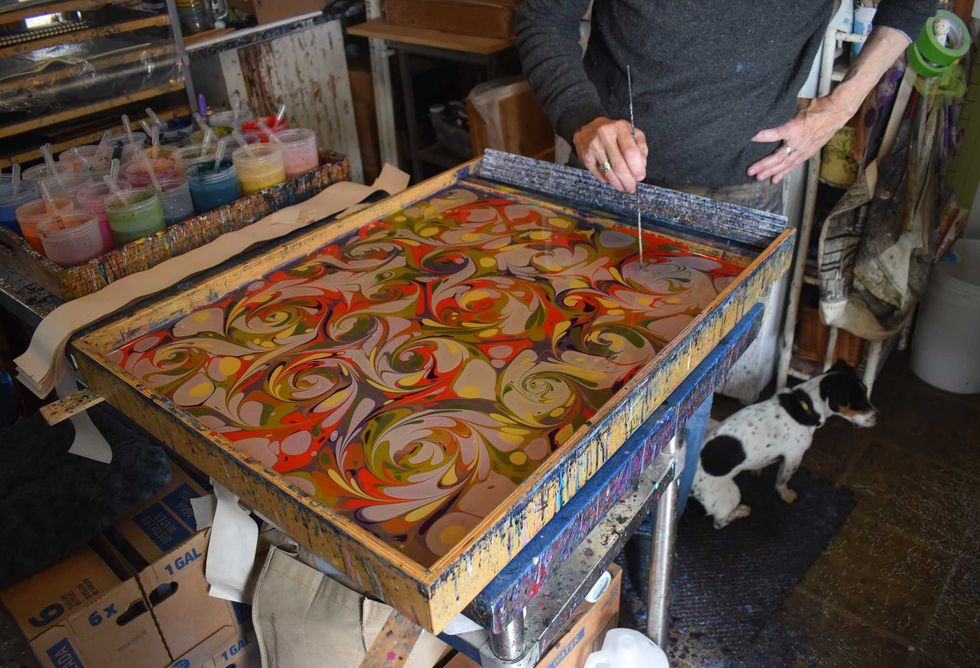 Susan Schneider, owner of Shandell’s, creates a variety of products with marbleized surfaces in her Ashley Falls studio.L. Tomaino



 Roger McKee naming the winners with the first place entry over his left shoulder. Patrick L. Sullivan
 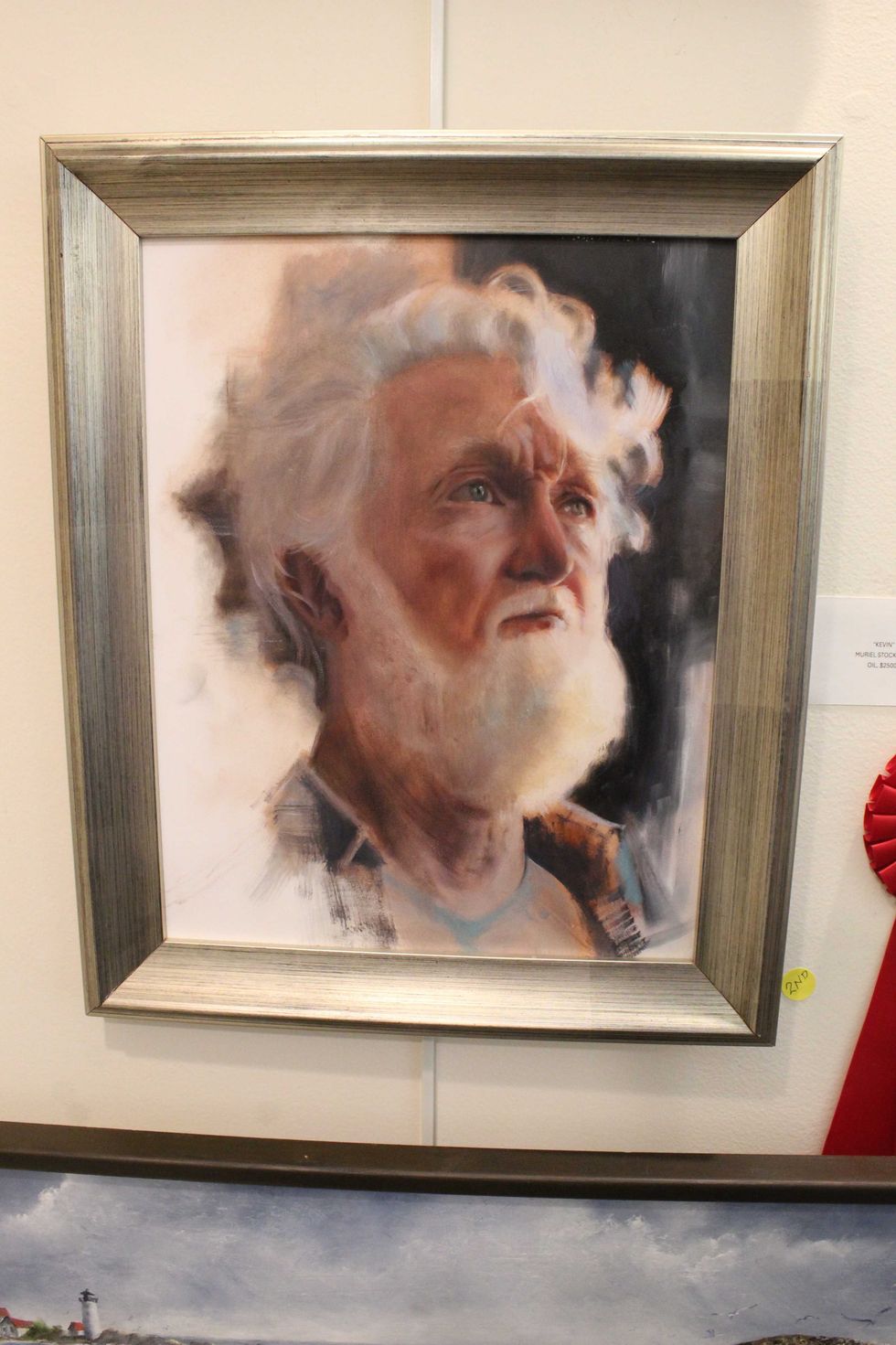 Muriel Stockdale’s “Kevin” took second place in the juried art show at Trinity Episcopal Church.Patrick L. Sullivan