Kent Center School theater program shines

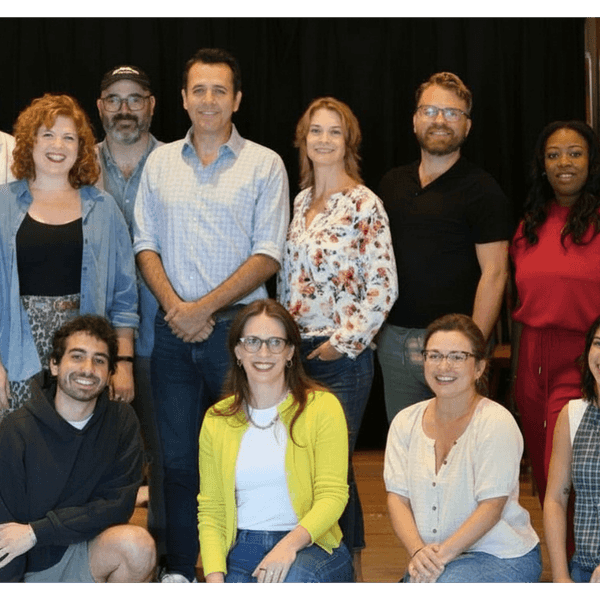
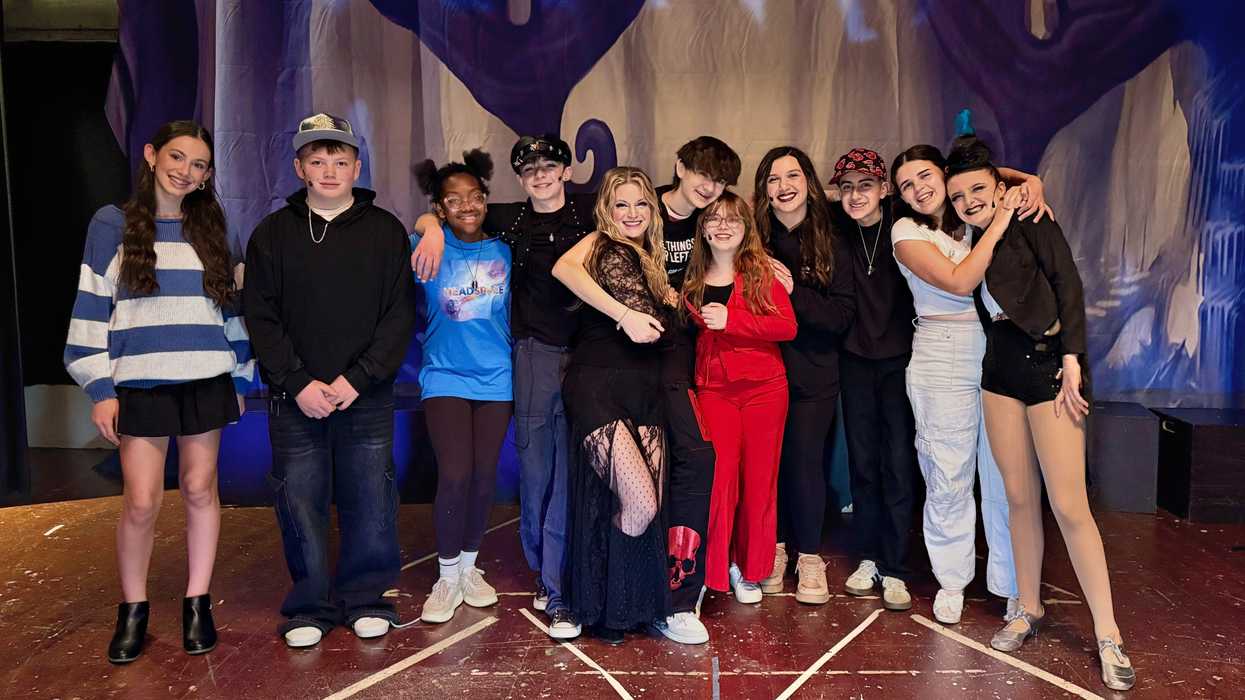
Drama teacher and playwright Kimberly Compton (center) poses with students following an originalmiddle school prodcution at Kent Center School.
Provided


Drama teacher and playwright Kimberly Compton (center) poses with students following an originalmiddle school prodcution at Kent Center School.
KENT – What began as a parent volunteer role has grown into one of Kent Center School’s most anticipated traditions.
Kimberly Compton, who oversees the school’s theater program, has transformed middle school productions into original, large-scale performances that students eagerly await years before they are eligible to audition.
“I wanted to elevate the theater experience,” Compton said.
Rather than spending money on licensing pre-written productions, Compton proposed writing original scripts herself and redirecting those funds toward costumes, lighting, sets and other production elements. The approach has allowed the school to stage unique shows tailored specifically to its students and cast sizes.
“A lot of these junior shows are made for really large ensemble casts,” she said. “It doesn’t always fit the mold of a smaller school.”
The result has been productions that students can truly call their own. Cast members become the first to bring characters to life, with no previous performances to imitate.
Maeve Dietrich, a fifth grader at KCS, said it’s exciting to perform in an original play.
“You have to give it your all because you’re setting the example for anyone who does the play in the future,” Dietrich said. “Miss KC also inspires everybody to think that maybe they could write a play one day, too.”
“My goal is to help them learn to make choices as actors and as people,” Compton said.
She encourages students to develop their own interpretations of characters rather than simply reciting lines. One instance that makes Compton particularly proud is when a student cast as a villain transformed what could have been a stock character into someone “sassy and memorable” through her own creative choices.
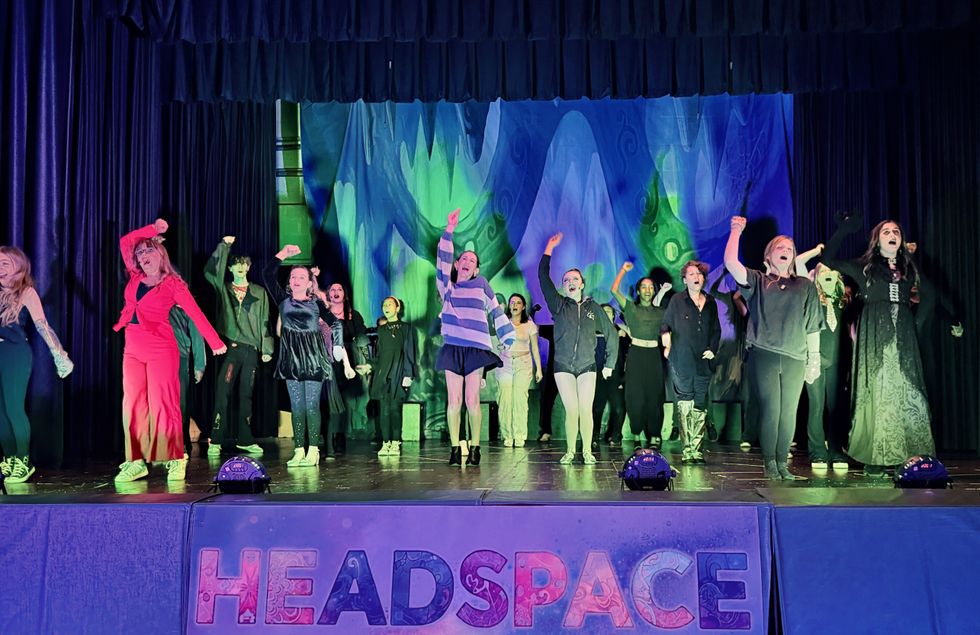
Students say the productions have helped build confidence while teaching them to work together. Compton intentionally runs rehearsals like a professional theater company, introducing students to industry terminology and expectations while creating a nurturing environment.
“They rise to the occasion and surprise themselves with what they can do,” she said.
Kent Center School Principal Michelle Mott said that authenticity has had a big impact.
“I think the students are more engaged because she’s making it real for them,” Mott said. “It’s a real theater experience.”
The sense of belonging is at the heart of the program, Compton said.
“Theater was always a safe space for me,” she said. “It was always, ‘Come as you are, and we will love you and accept you no matter what.’”
She works to create that same atmosphere for students today.
The productions have steadily grown in popularity.
“I eventually want this to be a can’t-miss event,” she said.
Alec Linden
The Spirit Ballooning crew and passengers on a flight from Great Barrington to Salisbury on July 25 of last year.
While some moonlighters may dread their weekend shifts, local NBT banker Darrel Long looks forward to his early morning side gig, since it involves flying high above the Northwest Corner hills glowing in the sunrise.
Perhaps better referred to as his “dawnlighting” operation, Darrel is the president and founder of North Canaan-based hot air balloon outfit Spirit Ballooning, which has been taking intrepid denizens of the region on daybreak flights across the southern Berkshires since 2009.
Darrel has been a licensed balloon pilot since 1994 when he flew his first solo voyage in a self-built balloon he called Spirit, now the company’s namesake. “I was not only a brand new student,” he said, “I was a test pilot in my own balloon!”
Luckily, the design was sturdy, proven by its place in the company’s three balloon fleet today, three decades later.
Darrel said once the balloon was built, he realized he needed a crew, so he got to building the next element in the process: a family. “We’ve got two sons and two daughters, and they’ve all been involved since they were born,” he said, explaining that the motivation behind Spirit Ballooning was partially to sustain the family’s passion as the kids developed their own interest in flying.
The real purpose, though, is to share the joy of floating above the verdant morning landscape with others, Darrel explained: “We don’t really do it to make a lot of money, we mainly do it to share the experience.”

His daughter Madi, who is the Audience Development Editor for The Lakeville Journal and The Millerton News, agrees. During a recent conversation, she recalled a young couple the family met at a balloon festival in Vermont over a decade ago.
“When we first started flying them, they were just boyfriend and girlfriend,” she said, but after a few years of taking them up, “we eventually got invited to their wedding.”
“They were our passengers, but then it became so much more than that,” she said, noting that similar experiences of building relationships came to define her upbringing around hot air balloons. She said that when she was growing up in North Canaan, she made many of her friends after having landed on their parents’ lawn in a balloon.
Madi put her pilot training on pause in high school and college to focus on other things, but recently she’s considering a renewed push for a license. After all, it’s in the Long family DNA – “People learn their ABCs, and we just, like, learned to fly balloons,” she said with a laugh.
Her older brother Jordan was the first of the Long children to get licensed when he was 19, and had built his first balloon by 20 – Foxtrot, which also is featured in the Spirit fleet.

Ryan, the eldest, is also licensed, and currently flies balloons in California but is soon to move back to the Northeast where he may help out with the family business, Jordan said.
Now 30, Jordan is a commercial airline pilot for JetBlue by day and globe-trotting balloon flyer by morning, having soared over the Alps, the lush fields of Ireland, and most recently Northeastern Spain, amongst other destinations.
When he thinks about the differences in the two types of flight, he likes to remember a metaphor his friend, who also pilots both, once offered that likened airplane flying to the structure and order of marching band music.
“With hot air ballooning,” on the other hand, “it’s pure jazz.”
“You can have a destination in mind, you can start off in a known location,” Jordan said, “but in the meantime, you can improvise and float around, go on little tangents with different wind patterns and over different natural features.”
Jordan explained that the farms, industries, towns, estates and landscape features of the Northwest Corner and broader region can make it feel like floating above history. “It just brings your hometown to life in a way you otherwise wouldn’t know about,” he said.
Despite having flown balloons in faraway places, Jordan maintained that “there’s no place like home.”
To find out more and to book a flight, visit spiritballooning.com

D.H. Callahan
Max Ocean at the Subversive Taproom in Catskill.
On the western banks of the Hudson River, the town of Catskill is becoming a beacon of ethnic, religious and generational diversity. Partially fueled by the increased popularity of towns like Hudson and the gentrification that comes with it, residents of all stripes are making their homes in the once underappreciated town.
Among those putting down roots are Max Ocean and Zane Coffey, the founders and brewers at Subversive Malting and Brewing. In 2020, after a few years of searching for a place where they could craft their beers and build community, they landed on a modest lot with an old auto-shop big enough to house their equipment.
As their business grew, fueled in no small part by their fast and flawless menu of elevated tavern fare, so did the number of customers who called themselves regulars. Among those regulars was David Quituisaca, donor organizer and volunteer coordinator at Columbia County Sanctuary Movement, or CCSM.
Founded in response to the political rhetoric of the 2016 presidential campaign, CCSM provides support for immigrant communities while advocating for policy changes at the county, state, regional and national levels. They’ve partnered with many local businesses in a symbiotic fashion, receiving funds and donations while helping to educate employees and patrons about their rights, and what non-targeted citizens can do to help protect their neighbors. In addition to their work in Columbia County, CCSM also teams up with other immigrant support groups in places like Millerton and Salisbury to educate vulnerable residents and community members alike.
After seeing reports and footage of the increasingly violent tactics used by the federal government in its efforts to arrest and deport Spanish-speaking residents, Subversive wanted to do something to help. Around the National Day of Protest against ICE’s tactics in January, Ocean reached out to Quituisaca and asked what they could do. It was quickly determined that a limited run beer and community launch party was the way forward. But what kind of beer would it be?
Subversive is known for their carefully crafted brews, which, while adored by their customers, aren’t always the most accessible to the casual sipper. For this run, they wanted something unique enough to talk about, but easy enough for non-craft beer fans.
What they decided on was creating a more accessible light beer using the yeast from Modelo’s internationally popular Mexican-style cerveza. They call it “Chinga la Migra.” Subversive committed to donating 15% of all sales to CCSM, a pledge they anticipate will net thousands of dollars when all the beer is sold out.

While the beer and the event will undoubtedly help CCSM’s efforts in raising awareness and garnering funds, Quituisaca notes that their efforts are nonstop. He notes that recent high-profile immigration enforcement tactics have underscored an ongoing need for support, including financial donations and access to larger spaces for classes and seminars on how to navigate an increasingly aggressive federal enforcement environment.
Though the fight may persist, with partners like Subversive, the migrant community and their supporters can kick back with a cold beer every once in a while to celebrate this vibrant community, and all they have to offer.
Subversive Brewing is located at 96 W. Bridge St., Catskill. More info at drinksubversive.com
Patrick L. Sullivan
Successful fly-fishing involves research and development.
A few weeks ago, on a chilly, raw morning on a somewhat swollen Beaverkill River in New York, Gary Dodson and I rolled up expecting to have the area to ourselves.
We did not.
There were four anglers clumped together right under the covered bridge where famed angler and fly-tier Theodore Gordon did a lot of his research and development. Gordon did his in the late 19th century, when R&D was a little easier in the sense that getting to the river meant walking or catching a ride from a passing horse and buggy. It would have been unusual to see four anglers anywhere, never mind in a bunch.
We bypassed these researching developers and made our way downstream. The river was high enough to make wading tricky and cold enough, at 48 degrees, to make the trout sluggish and uninterested in participating in R&D.
I managed a couple of bumps on small, heavy nymphs, and Gary caught a handful of dinker browns who, he said, had trouble getting their little mouths around a size 12 soft-hackle wet.
The important thing here was that my new right hip didn’t give me any trouble.
“Let pain be your guide,” said the doctor, Yoda-like, when he took me off the injured reserve list.
And by golly, he was right.
It is traditional to complain about the weather. It is also boring, so I won’t do it, except to say that in the last few weeks sometimes it was cold and sometimes it was unusually hot, and none of it helped.
But it was good R&D.
Example: I was wet-wading the Housatonic and environs by the third week of May. This is the earliest I can recall doing this.
The Hous water temp was at or near 70 on May 20, which made me think it was time to deploy the Woolly Buggers in search of smallmouth bass. Since I had the wrong rod for the job, this was a sloppy and cumbersome maneuver. It resulted in one rainbow trout of modest size, no doubt a recent arrival from the hatchery, and precisely what I was trying to avoid.

But it was momentarily satisfying to have some development to go along with the research.
My friend Dave Edgerly came up, and we took a whack at the Blackberry, where the water temps hadn’t reached the danger level, and we plucked a few from the foamiest, most aerated water we could find.
Years of R&D have taught me that, given the choice between breathing and any other activity, trout opt for the former.
So if things are slow in the long, slow, deep pools, find the white water and watch for a few minutes. Chances are you’ll see trout sticking their heads up, grabbing whatever bugs are coming down the pike.
In a situation like this, I take it straight to them, with a couple of heavy nymphs — one drab, one gaudy — launched straight into the foam.
How big and how heavy?
“Let pain be your guide.” Or, in this case, “let getting hung up on a rock and having to rerig be your guide.”
Start with the big ones. If you’re getting snagged, switch out to the smaller ones. Eventually, through careful application of research and development, you will find the answer.
Or not.
Failure is a big part of R&D. If it starts to get on your nerves, just remember this:
In most endeavors, if you fail 70% of the time, someone will suggest a new line of work.
In baseball, a hitter who fails 70% of the time over a 20-year career goes in the Hall of Fame.
Fly-fishing is like baseball in this sense.
So relax and get on with the R&D, en route to the HoF.

Want more of our stories on Google? Click here to make us a Preferred Source.
Kerri-Lee Mayland
Modern farmhouse designed by Tina Anastasia.
The best farmhouse spaces feel rooted in warmth and history, even when they’re newly built.
— Tina Anastasia
They dot the landscape, standing beside winding country roads and rolling fields, their silhouettes as recognizable as church steeples and old stone walls. For hundreds of years, the American farmhouse has held an important place in the country’s architectural history, especially in New England, where these homes feel deeply connected to the land itself.
Their enduring appeal may have less to do with the trends farmhouse style inspired and more to do with the comfort these homes create. Farmhouses offer a sense of warmth and authenticity, along with a design style that feels approachable rather than forced.
Maybe it is the worn stone paths leading to the back door, the creaky screen doors or the perennial gardens that grow a little wilder every year. Or perhaps it is the everyday, useful objects gathered naturally over time — mismatched chairs, weathered tables and open shelving lined with practical pieces never intended to be decorative.
Whatever the reason, authentic farmhouse style continues to resonate even as the mass-produced version of the trend fades from design circles, chain stores and Pinterest boards.
Classic farmhouse design has endured for hundreds of years because it was never rooted in excess or perfection. Authentic farmhouse homes were built around practicality, comfort and resourcefulness — qualities that naturally made the style budget-friendly long before DIY projects and “the collected look” became part of the design conversation. Furniture was repaired instead of replaced, family pieces were reused for decades, and simple materials like wood, stone and iron aged beautifully over time.
The more recent mass-market version of farmhouse style often turned those authentic elements into a formula. Barn doors, overly distressed furniture, word signs like “Fresh Eggs,” and factory-made “rustic” decor flooded stores and social media feeds. What once felt collected and organic eventually became overly themed and predictable.
Now, many homeowners seem to be gravitating back toward spaces with more individuality and character — homes that feel layered, lived-in and connected to real life rather than carefully staged.

Historically, New England farmhouses were designed around utility and survival. Large kitchens served as gathering places and workspaces. Mudrooms handled snowy boots and muddy shoes after chores. Wide porches offered a place to gather after long days outdoors, while barns, sheds and stone walls became extensions of daily life on the land.
That practicality still resonates today.
Some of the most timeless farmhouse details are the ones that cannot be replicated overnight: a scratched pine table handed down through generations; vintage crocks discovered in an old barn; worn baskets from the town dump swap shop; iron hooks, enamelware and garden furniture softened by years of New England weather.
Interior designer Tina Anastasia offers ways to create a more classic farmhouse design.
“The best farmhouse spaces feel rooted in warmth and history, even when they’re newly built,” Anastasia said.
For a farmhouse project she designed in Kent, Connecticut, Anastasia layered weathered stone, antique barnboard and touches of plaid and metal to make the home feel connected to its surroundings.
“It’s all about bringing in materials that contrast with the newness of a space and give it depth and character,” she said.
According to Anastasia, farmhouse style works best when homeowners steer away from trends and focus instead on unique finds with texture, age and practicality.
“These are the pieces that will give the home soul,” she said. “Not everything should look brand new.”
Farmhouses were never created to follow trends or become one; they evolved gradually over generations, building layers of history along the way.
Elena Spellman
Taiga is located at 119 Warren St. in Hudson.
We never wanted Taiga to feel like a traditional restaurant. We wanted it to feel emotional, immersive and deeply personal — almost like stepping into another world for a few hours.
— Vlad Larvin
Walking into Taiga in Hudson for the first time did not feel like walking into a restaurant — it felt like stepping into a memory. As a Russian immigrant who grew up between cultures, I did not expect to find a place that evokes such a specific emotional response, both familiar and cinematic. Candlelight flickered against dark wood and vintage wallpaper while old Soviet-era music played softly in the background. The scent of herbs, smoke, tea and fresh blini filled the air — at once unfamiliar and deeply nostalgic. It became clear almost immediately why people speak about Taiga as more than simply a place to eat.
What makes Taiga unusual is that the food is only part of the experience. The restaurant was created by Vlad Larvin and his partner, Waldemar Sirko. Larvin, originally from Biysk, a small town in Siberia’s Altai region, worked in photography and fashion design before opening Taiga — fields that continue to shape every part of the restaurant today. Every detail — the lighting, photography, textures, music, pacing of the evening and even the scent in the air — feels intentionally designed to create emotion and atmosphere, not just visual style.
“We never wanted Taiga to feel like a traditional restaurant,” Larvin said. “We wanted it to feel emotional, immersive and deeply personal — almost like stepping into another world for a few hours.” That philosophy becomes immediately apparent the moment dinner begins.
Nearly everything at Taiga is made from scratch by Larvin, from delicate handmade dumplings to traditional blini and seasonal dishes inspired by Russian, Slavic and Central Asian influences. The menu changes frequently and reflects Larvin’s Siberian upbringing near Kazakhstan and Mongolia, where food culture naturally blended European and Asian traditions. Many ingredients are sourced locally from Hudson Valley farms, while certain teas, herbs, honey and spices come directly from the Altai region of Siberia — creating a menu that feels simultaneously rooted in two different worlds.
As someone who grew up around Russian food, I expected familiarity. What surprised me was the emotional accuracy of the experience. The dishes had the warmth and intimacy of home cooking while still feeling refined and modern. Larvin credits his grandmother, who taught him to cook from a young age, with instilling an emotional foundation around food. “In our culture, food was never just food,” he said. “It was love, care, generosity, conversation and connection.” That idea seems to define the entire atmosphere of Taiga.

Unlike many restaurants designed for quick turnover, Taiga encourages people to slow down. Tables glow under candlelight while guests linger for hours over wine, conversation and shared dishes. The restaurant’s Thursday movie nights further deepen that atmosphere, transforming the dining room into what Larvin describes as a “candlelit cinema,” where carefully selected American, European and Russian films play softly in the background. The effect is surprisingly transporting.
At one point during my visit, I looked around the room and realized almost nobody was looking at their phones. People were talking slowly, laughing, sharing plates and leaning into conversations. That sense of emotional presence is precisely what Larvin hoped to create.
“We want people to slow down, disconnect from the outside world and feel warmth, comfort, curiosity and connection,” he said. “Ideally, dinner at Taiga feels less like going to a restaurant and more like being invited into someone’s home late at night.”
Much of the restaurant itself was restored and designed personally by Larvin and Sirko. Vintage furniture, antique objects and much of the photography throughout the space were collected over years of travel or created by Larvin himself.
For many Americans unfamiliar with Russian or Eastern European culture, Taiga offers an introduction that feels intimate rather than stereotypical. But for Russian-speaking visitors, the experience can feel unexpectedly emotional.
There is something moving about hearing familiar music while eating handmade dumplings in a candlelit room in the Hudson Valley. Something about it collapses distance. For a few hours, Hudson felt connected to another world entirely — one built around hospitality, memory and gathering around a table. And perhaps that is what makes Taiga so compelling. It is not simply serving food. It is creating atmosphere, emotion and human connection in a time when many people seem desperately hungry for exactly that.
Taiga is located at 119 Warren St., Hudson. For menus and reservations, visit
taigarestaurant.com
Natalia Zukerman
The ribbon-cutting ceremony for the opening of The Annex at Ancram Center of the Arts. From left, Dan Sternberg, Ancram Center board member; Stephen Futrell, Ancram Center board member; Mary Barthelme, HCR; Kit White, APG; Andrea Barnet, APG; Crystal Loffler, HCR; Assemblymember Didi Barrett; Paul Ricciardi, Ancram Center Co-Director; Cathy Redlich, Ancram Center board president; Jeff Mousseau, Ancram Center Co-Director; Colleen Lutz, Ancram Town Supervisor; Jane Plasman, Ancram Center board member; Ivy Epstein, Ancram Center board member; Sheryl Boris-Schacter, Ancram Center board member; Lindsay Turley, NYSCA
The Ancram Center for the Arts marked a major milestone May 22 with a ribbon-cutting ceremony celebrating the opening of The Annex, a restored 1780s building adjacent to the organization’s original Opera House theater in Ancram’s Historic Hamlet District.
Founded in 2016, Ancram Center for the Arts has built a reputation for presenting adventurous contemporary theater and community-centered programming in an intimate setting.
The newly renovated building expands the arts center’s footprint with housing for visiting artists and interns, along with additional classroom and gathering space for community programming and educational workshops. Upgrades to the overall complex also include ADA-accessible entrances and restrooms, reserved parking for patrons with limited mobility and a new outdoor seating area.
More than 60 people attended the celebration, held inside the theater against a backdrop of projected images documenting the restoration process, from demolition and foundation work to the final stages of construction.
Board Chair Cathy Redlich described the opening as a “pivotal moment” in the organization’s 10-year history and credited co-directors Paul Ricciardi and Jeffrey Mousseau with helping shape a vision that connects art and community.
Among those attending the ceremony were representatives from the New York State Council on the Arts, New York State Homes and Community Renewal and the Ancram Preservation Group, all of which helped support the project through funding and preservation efforts.
In a statement, New York State Assemblymember Didi Barrett praised the project’s impact on the wider community, noting that the Annex will provide housing, classroom space and expanded opportunities for residents and visitors alike.
The restoration project received support through the New York Main Street program, administered by New York State Homes and Community Renewal, along with additional funding from NYSCA, the Dormitory Authority of the State of New York and the Ancram Preservation Group.
The opening comes as Ancram Center launches its 2026 season, which includes performances of “Letters from Max” by Sarah Ruhl in July, Todd Almond’s musical memoir “I’m Almost There” in August and Caryl Churchill’s psychological drama “A Number” this fall. The center will also continue its popular “Real People Real Stories” storytelling series this summer.
“As Ancram Center enters its second decade, we are more than ever embracing our commitment to produce powerful works of theater that speak to this moment,” said Mousseau.
“The times we are in call for questioning conventions and creative courage,” added Ricciardi. “We also lean in on the unique shared experience that theater offers to take stock and reflect on what keeps us open and humane while living in uncertain times.”
For more information and tickets to upcoming performances and workshops, visit ancramcenter.org

Want more of our stories on Google? Click here to make us a Preferred Source.

Want more of our stories on Google? Click here to make us a Preferred Source.