For Richard Barlow, one of eleven exhibiting artists at the Wassaic Project’s newly opened show No Misery Can Tell, No Word of Farewell—an important step in installing his work was getting to know the walls.
“Some walls have lots of texture, they have lumpy bits. And then some are relatively smooth, are new wall. Almost every one of the wall panels in there was an entirely different experience.”
How did Barlow come into this knowledge? His chosen medium is chalk, and the walls are his canvas. Sequana, which he considers to be a singular work, covers every wall in the Maxon Mills’ entry-room. This means two things—first, that creating it took a week’s worth of eight-hour days. Second, is that after the exhibition ends, Barlow’s drawings will disappear with it.
This kind of ephemerality is a unifying concept in Barlow’s work, one that he hopes evokes the climate crisis.
“The environmental concern of these landscapes was central for me. That by our presence in the gallery, these hopefully beautiful drawings we want to consume are threatened, and will go away.
“And then, maybe it makes you think about whether the landscapes they depict will go away.”
In this fashion, and as is typical of the Wassaic Project, No Misery Can Tell makes great use of the ample, and odd layout of the Maxon Mills. To access the rest of the exhibit, gallery-goers must literally walk through Barlow’s drawing, after which they are greeted by the bright, neon landscape of Clint Baclawski’s photography.
From there, it’s up seven flights, where on each floor a wide array of fascinating and sweeping work is on display. From Kate Johnson’s towering, handwoven linen artworks, to Farwah Rizvi’s vibrant oil paintings.
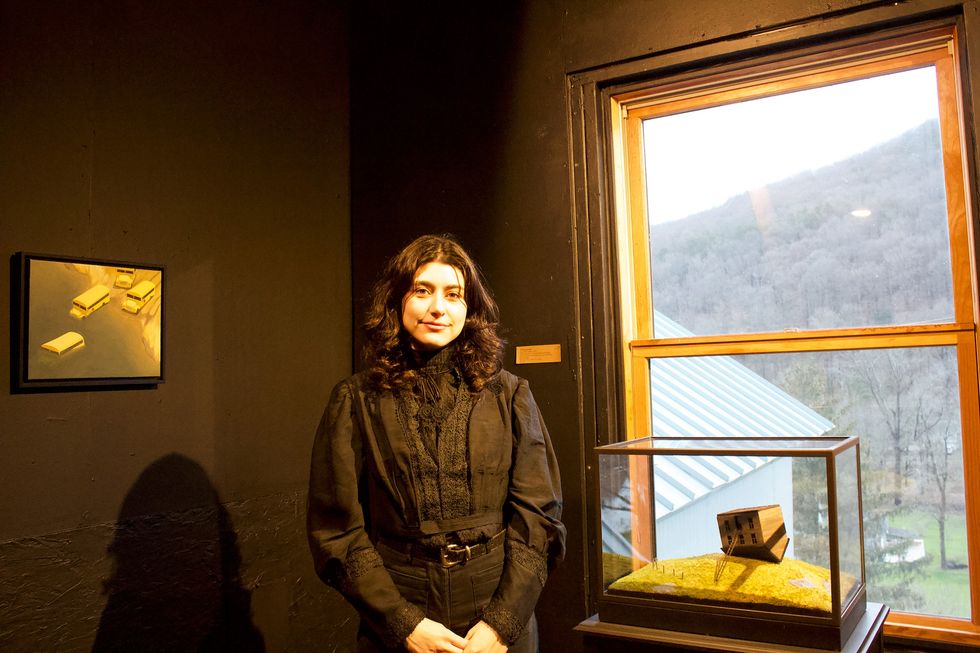
Juxtaposed with these larger-scale works were the miniature, cloche sculptures of Cate Pasquarelli. A church flipped onto its side as if by magic, a fleet of school buses driving into the water. To Pasquarelli, exhibiting in the Mill offered the chance to explore perspective, isolation, and the distance that a rural setting puts between people.
“I spent the majority of the pandemic in Bantam, Connecticut and that spurred a whole series about isolation. I’m a classic New Yorker who doesn’t know how to drive, so I would go on runs and, like, peer into people’s property. And so I felt like an onlooker and a visitor.”
To fill that distance, Pasquarelli let her imagination weave narratives. The Milton Congregational Church was lassoed and pulled down by mini-congregants, who fled the scene, leaving behind a flipped building on a grassy hill. Such stories, however, remain subliminal—a dynamic Pasquarelli enjoys.
“When people see the work, it reads as narrative, but they don’t know what the story is. Which I like, because then people bring their own imagination into it.”
This sort of whimsical, and sometimes darker distortion of reality connected much of the work on display at No Misery Can Tell, and to walk through it felt often like a tour through wonderland.
Curating this sense of flow through the Mills’ physical space is a skill that Co-Director Jeff Barnett-Winsby says the Wassaic Project has grown into—realizing over time that floors, staircases, and windows could be made available to artists to heighten the immersion. Rizvi’s piece Wrapped Around My Finger, for example, extends onto the floor, and Baclawski’s Pink Church is visible from far-away hills through a newly cleaned window.
Later in the evening, as the public flowed through, an attendee leaned against the wall for a photo, prompting Barlow to rush over to protect his freshly smudged drawings. Long before, the chalk around the door-handle had smudged—to Barlow, a predictable yet stubbornly anxiety-provoking reality of his site-specific work.
“I always say there’s a sort of existential concern, as well. I mean, everything gonna go away. We all have to make peace with that.”
No Misery Can Tell, No Word of Farewell, which opened Saturday, Dec. 3, is open to the public until March 18 at the Maxon Mills in Wassaic on Saturdays only, from noon to 5 p.m.
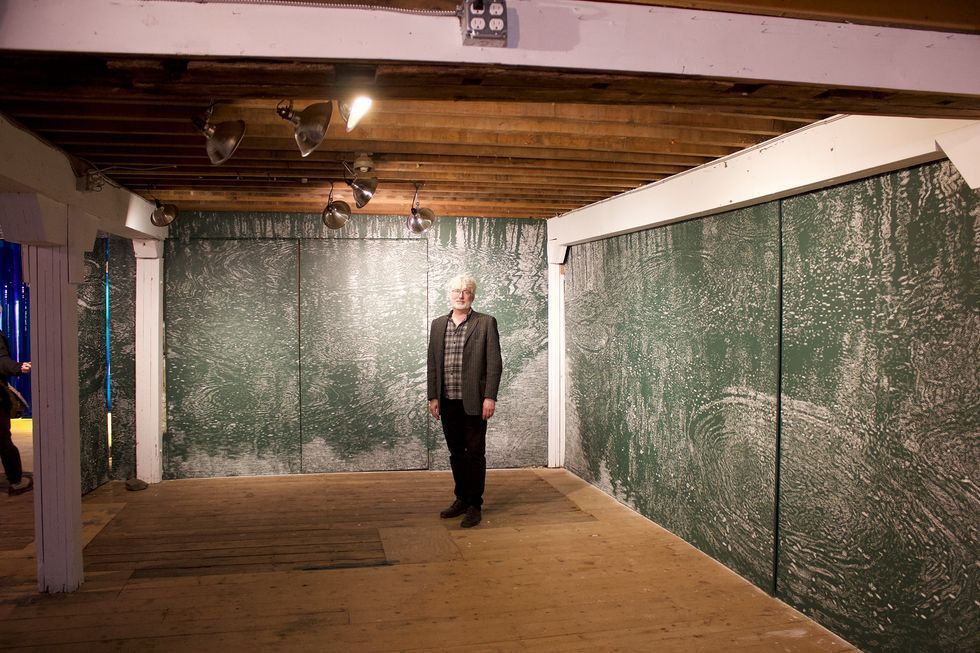
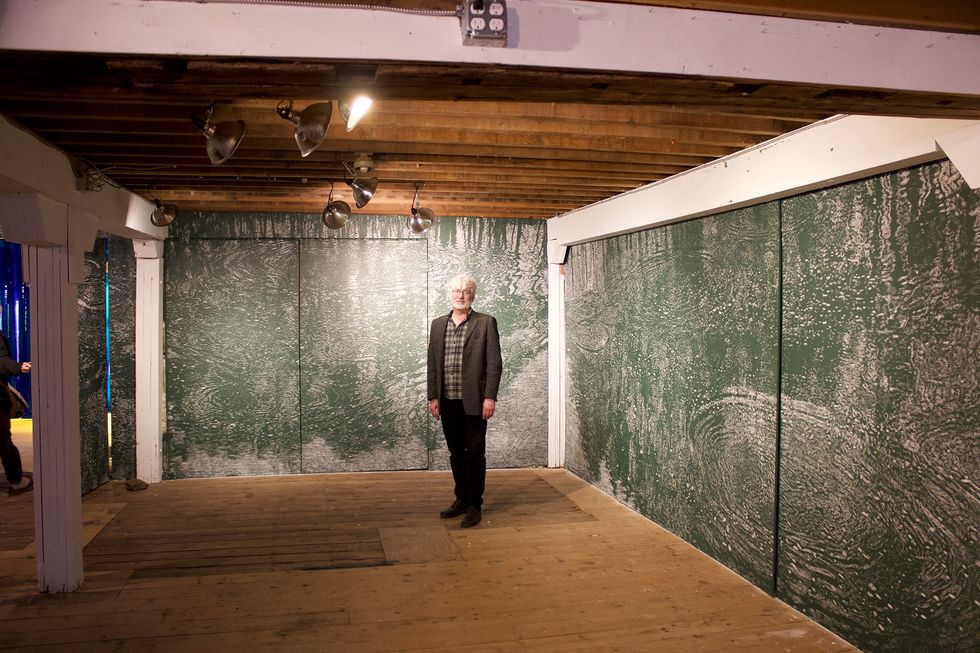
Richard Barlow with a segment of his installation chalk drawing, Sequana. Photo by Elias Sorich
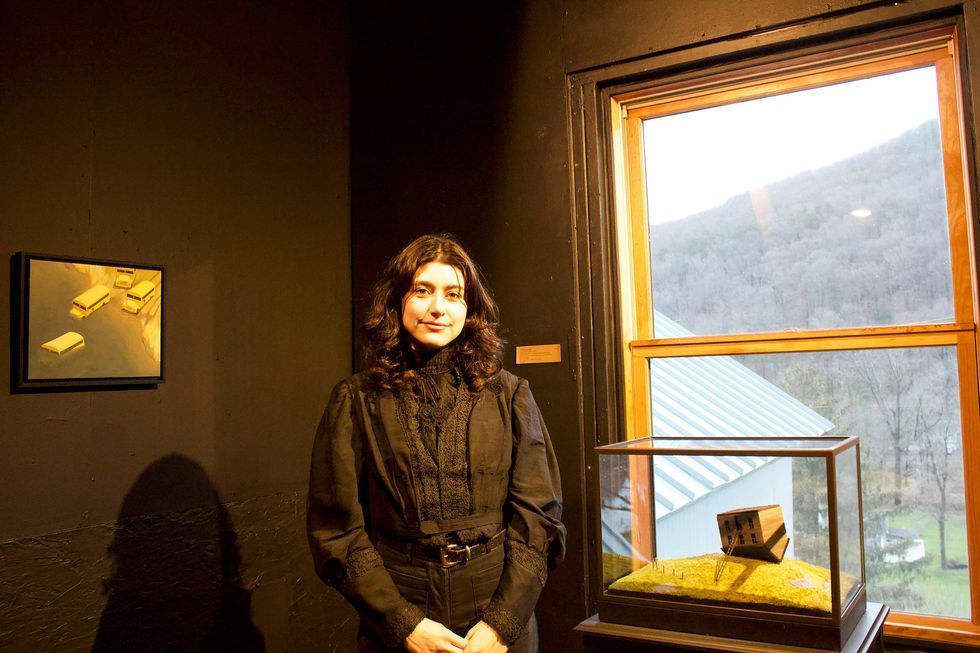
Cate Pasquarelli with her cloche sculpture House with Ladder and oil painting Lake. Photo by Elias Sorich
 Meg Sher, executive director of the David M. Hunt Library in Falls Village.L. Tomaino



 Samir LanGusProvided