

Dear EarthTalk: What are the best choices out there nowadays in terms of up-front cost and fuel efficiency?
—J. Wilson, Summertown, TN
Now is a great time to make the jump into an electric vehicle (EV)—those futuristic new cars that run solely on electricity instead of gasoline. Of course, EVs are still more expensive than their gas-powered counterparts, and re-charging facilities can be few and far between. But those gaps are shrinking, and if you can live with a few trade-offs, you’ll be saving money down the line by avoiding the gas station altogether while helping wean humanity off of fossil fuels.
Thirteen different automakers now offer American consumers 19 different flavors of an all-EV drivetrain. Tesla remains king of the hill, currently offering three different models that get at least 300 miles per charge. While Teslas aren’t the cheapest of the EV lot, ranging in price from $40k all the way up to $120k, the savings in gas money if you drive a lot may more than make up for the premium pricing.
According to the website Zutobi.com, Teslas are also the cheapest to drive, racking up about $3 in electricity costs on average for every 100 miles driven—meaning that your total fuel expense for a cross country trip of 3,000 miles would be about $100.
Tesla is far from the only EV game in town. Audi, BMW, Ford, Jaguar, Mini Cooper, Nissan, Polestar, Porsche, Volvo, Kia, Hyundai and Chevrolet all have horses in the race. If range is your thing and you don’t want a Tesla, try Ford’s Mustang Mach-E California Route 1, a two-seater that can go 305 miles on a charge, and signals the classic American car company’s newly announced commitment to a future full of EV drivetrains. Other good choices with range in mind are Chevrolet’s Bolt EV, which tops out at 259 miles per charge, and Hyundai’s Kona Electric at 258 miles per charge.
If saving money up-front is your primary concern, the Mini Cooper Electric Hardtop 2 Door, Nissan’s Leaf, Hyundai’s Ioniq and Chevy’s Bolt EV all go for a suggested retail price of around $30k. The downside to several of these EVs is shorter range: the Mini Cooper can only make it 110 miles before it needs a recharge. But if you use it for short to medium length daily commute, especially to a place where it can recharge all day, then the money saved up front can go straight into the piggy bank.
EarthTalk® is produced by Roddy Scheer & Doug Moss for the 501(c)3 nonprofit EarthTalk. See more at www.emagazine.com.

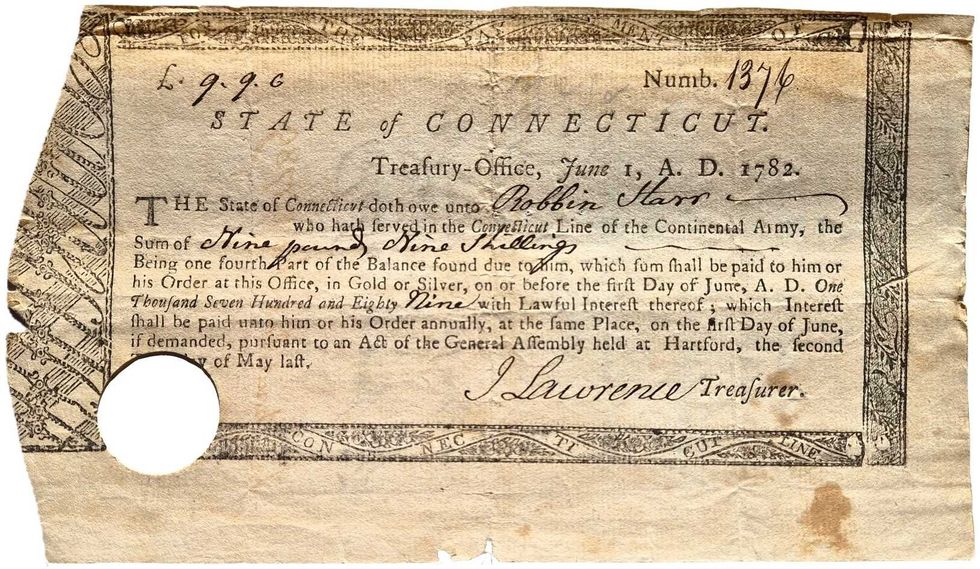 Pay Bill for Robin Starr’s service in the Continental Army.Courtesy the Alex Breanne Corporation
 John Mills speaking at Quinnipiac University.Courtesy the Alex Breanne Corporation
 Stephanie Saetta,with her rescue dog George and Blue (left), a shepherd mix awaiting his forever home.Madi Long
 Blue, a 7 year-old Shepard mix, is waiting for his forever home. Madi Long










The age of the EV: Which one would you get?