Thank you!
Your support is sustaining the future of local news in our communities.

Children, or guns?

When we in Connecticut hear of a tragedy like the one in Uvalde, Texas, where an elementary school full of young children and teachers was decimated by an 18-year-old shooter with an AR-15-style rifle on May 24, our minds immediately go back to the shooting at Sandy Hook Elementary School in Newtown in 2012. Then, the shooter killed 20 children and six adult administrators and teachers. As of this writing, it was determined that 19 children and two teachers were murdered in Uvalde.

For those who live through such devastation, the ways to process it are too few. Knowing there are prayers and thoughts with them is not enough to make their lives whole again. It is tragic in its own way that such mass shootings happen often enough that there was an active shooter recovery guide put out by the U.S. Cybersecurity & Infrastructure Security Agency in 2017, found here, www.cisa.gov/publication/active-shooter-recovery-guide, available to help communities come through the aftermath of mass shootings.

While the government can organize disaster plans to deal with such events (though in Texas it seems the police couldn’t follow any plan), it doesn’t seem to be able to find a way to act in order to prevent them from happening. Sen. Chris Murphy made it clear on the floor of the U.S. Senate on May 24 that it is time for those serving in that body to take action so there is federal legislation in place to protect Americans nationwide from the ability of violent people to purchase deadly weapons, especially assault rifles. Murphy and Sen. Richard Blumenthal, as well as our U.S. Rep. Jahana Hayes, are in the forefront of advocacy for gun reform, including passing legislation to ban assault weapons and high-capacity magazines nationally, and instituting strong background checks, as has been done in Connecticut.

But of course the Second Amendment, the NRA and those who vote to keep all guns available to those who shouldn’t have them are obstacles to passing it. Voters who agree that such change has to happen to move our country along a better path must let their representatives know that.

Americans who value gun ownership more than the lives of children will be judged by history, whether such violence occurs on the streets in urban neighborhoods where most gun deaths of young people occur, or in classrooms in suburban and rural ones. If the United States cannot find a way to overcome its love for guns, it will continue to pay too high a price in the loss of innocent lives. Gun deaths have decreased in Connecticut since reform measures have been put in place. But if there is no national action, is state action not in some ways futile?

What will it take to have those representatives in Washington who receive contributions from the NRA be willing to work with those who support gun reform and mental health funding and come up with some solutions? Will every county, every congressional district, in every state have to endure a mass shooting in order for a national set of reforms to be passed in Congress? Is that when the pressure will be enough for the American love for guns to be overshadowed by a universal agreement on a commitment to making our schools, public places and even our homes, safe?

If so, it will be too late. It would be the worst of ironies if the guns we cherish so and continue to buy in such large numbers completely destroy the stability of our society. A much larger portion of the money spent on the U.S. Department of Defense, then, meant to protect us from invaders, might have been better spent on addressing every aspect of gun violence and the social unraveling inside our own borders.
Latest News

A life reshaped by clay in “Matin”

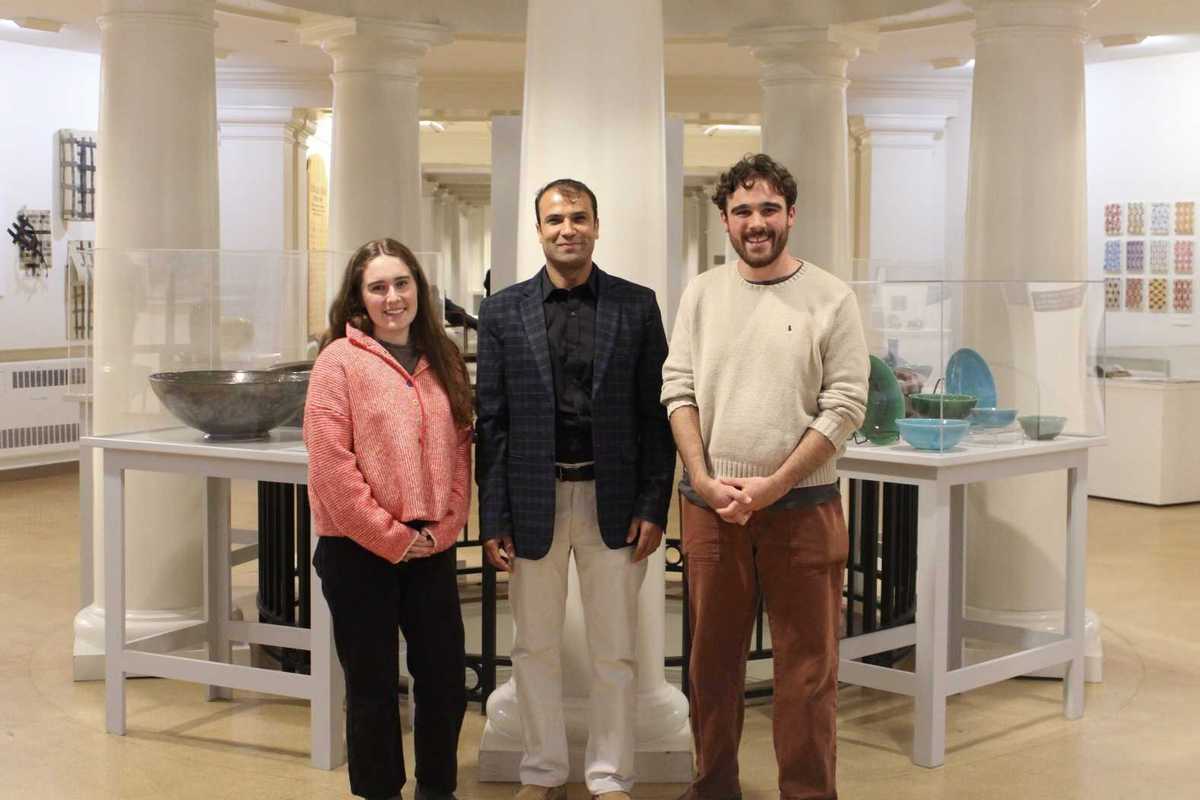
Left to right: Hannah Wheeler, Matin Malikzada and Yonah Sadeh.

D.H. Callahan

On Monday, Oct. 26, a group of students, teachers and local residents gathered at the Hotchkiss School in Lakeville for a screening of the new short documentary “Matin.” The film tells the story of Matin Malikzada, a seventh-generation Afghani potter making a new life in New Milford, Connecticut. The film was made by local filmmaker Yonah Sadeh, creator of the Video Wall at the David M. Hunt Library, and Berkshires-based potter Hannah Wheeler, who were both present for the screening, along with Malikzada himself.

As a member of the seventh generation of his family to master the art of pottery, Malikzada had done things the way his family had for over a century. Istalif, the village where his family has lived for generations, was known throughout Afghanistan for its pottery, with wares sent across the country for use as everyday cups, bowls, plates and other vessels. The pottery-making families of Istalif gathered clay from the same mountain, about 30 to 45 minutes away by donkey. Every July, they would head north toward the Uzbekistan border to gather ishkar, a plant they processed by hand to make their signature glazes.

Keep ReadingShow less
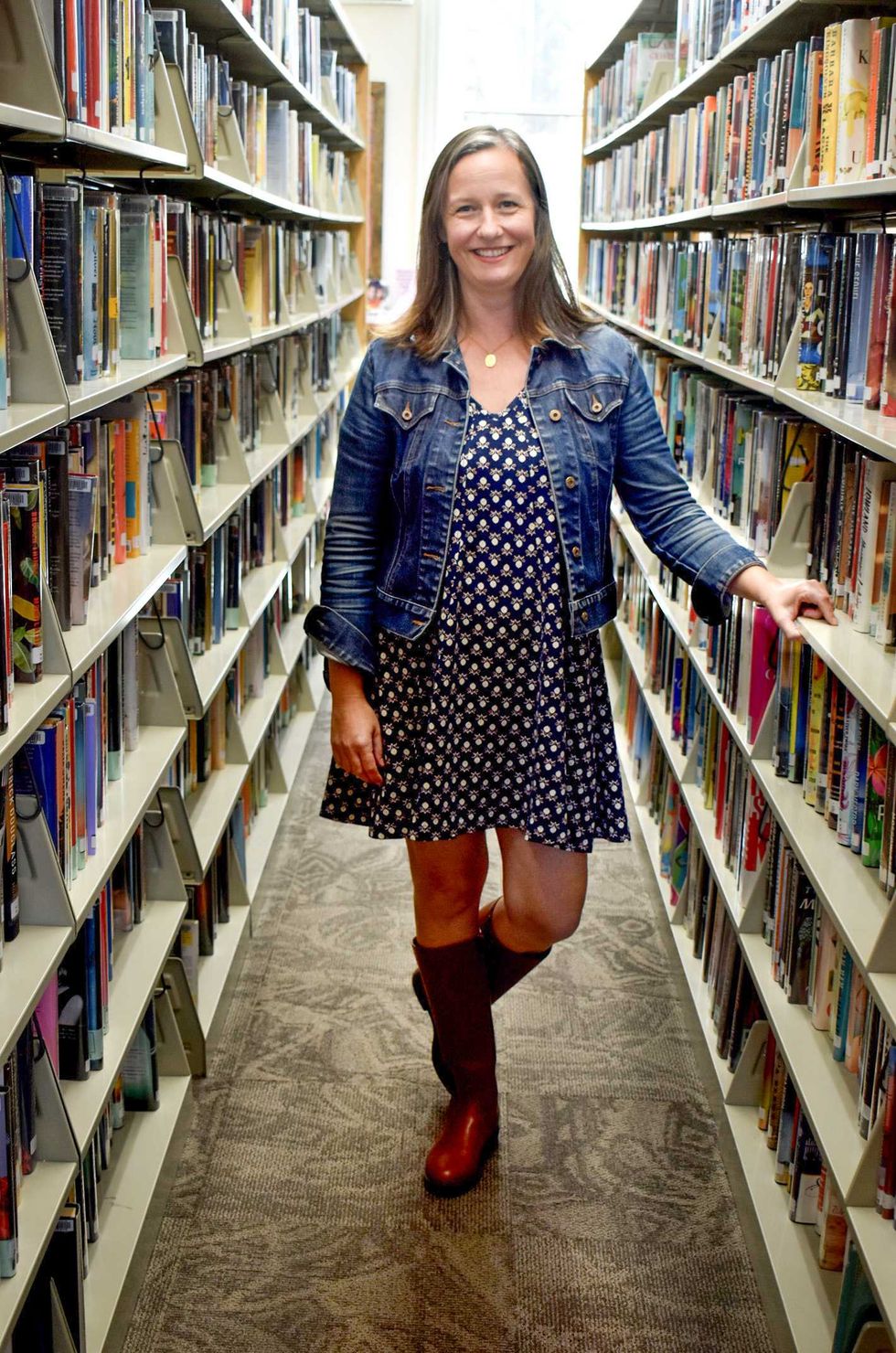
Meg Sher finds her calling among the stacks

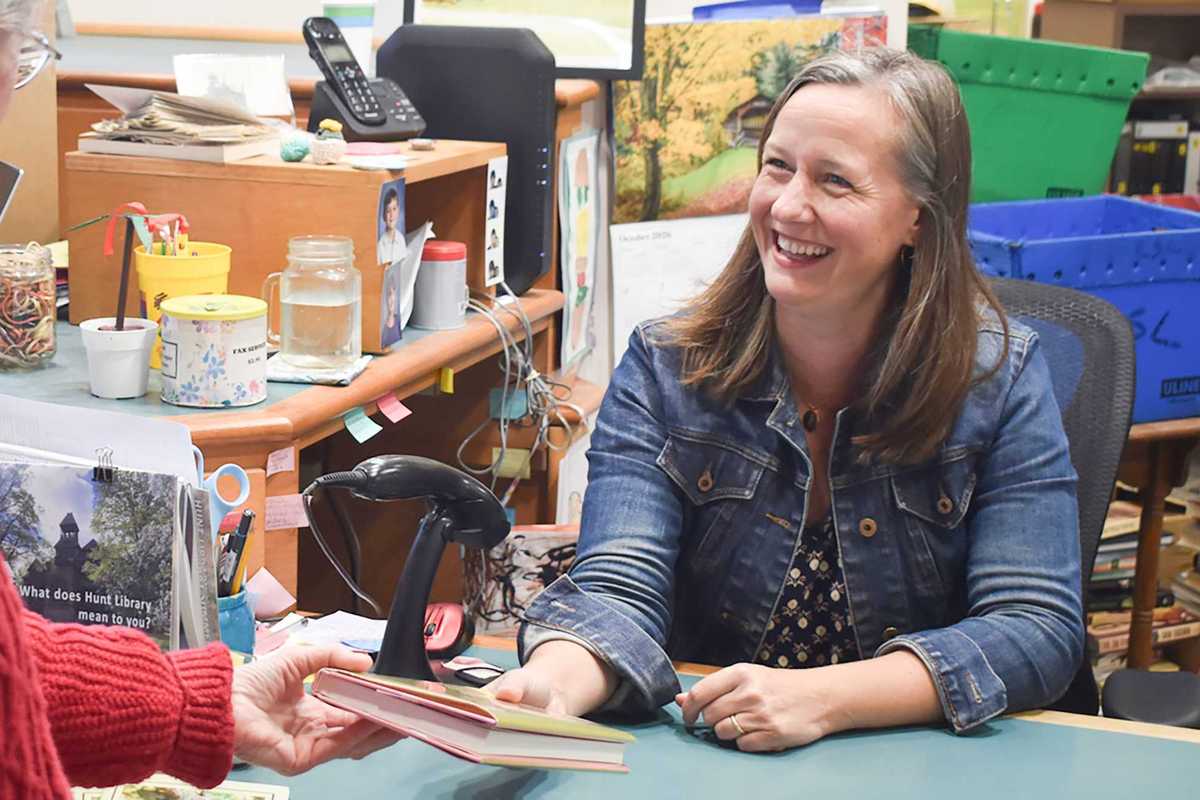
Meg Sher, executive director of the David M. Hunt Library in Falls Village.

L. Tomaino

When Meg Sher came to Falls Village in 2006 from Old Lyme, Connecticut, where she grew up, she never imagined she’d someday be the executive director of the David M. Hunt Library.

Although, in hindsight, perhaps it makes sense.

Keep ReadingShow less
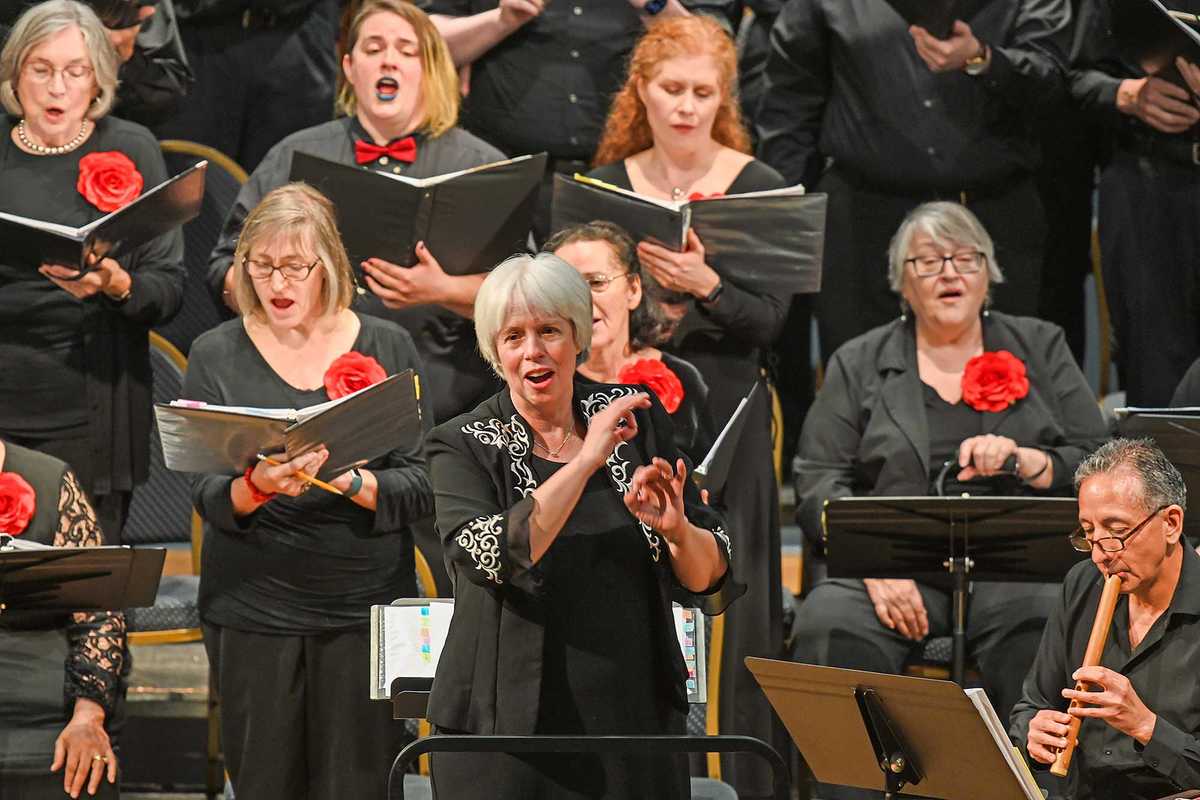
Crescendo’s 23rd season speaks to the heart and mind

Christine Gevert, founding artistic director of Crescendo, conducts the audience at a performance.

Steve Potter

For Christine Gevert, founding artistic director of Crescendo, music from centuries past is anything but a relic. It is a living, breathing art form, full of drama, emotional complexity and, occasionally, surprises. As the regional choral and period-instrument ensemble launches its 23rd season, Gevert is once again bringing forgotten masterpieces into the present.

“Early Music has been my lifelong passion and the focus of my specialization in Europe and South America,” Gevert said. “Bringing this repertoire to our audiences in a nuanced way that does justice to its incredible depth, intensity, and beauty is deeply important to me.”

Keep ReadingShow less
google preferred source

Want more of our stories on Google? Click here to make us a Preferred Source.

Close Encounters with Music celebrates 35 years of musical discovery

Close Encounters with Music’s 35th season opens with “Saluting the Clarinet” featuring clarinetist Alexander Fiterstein.

Provided

For 35 years, cellist Yehuda Hanani has been inviting audiences to experience classical music in unexpected ways. As founder and artistic director of Close Encounters with Music, Hanani has built a concert series that goes beyond the music itself, exploring connections to literature, history, politics and the human experience.

This year, Close Encounters celebrates its 35th season with “Celebration & Discovery,” a seven-concert series that opens Sunday, Nov. 1, at the Mahaiwe Performing Arts Center in Great Barrington.

Keep ReadingShow less
Shinbone Alley brings spooky songs to Spencertown

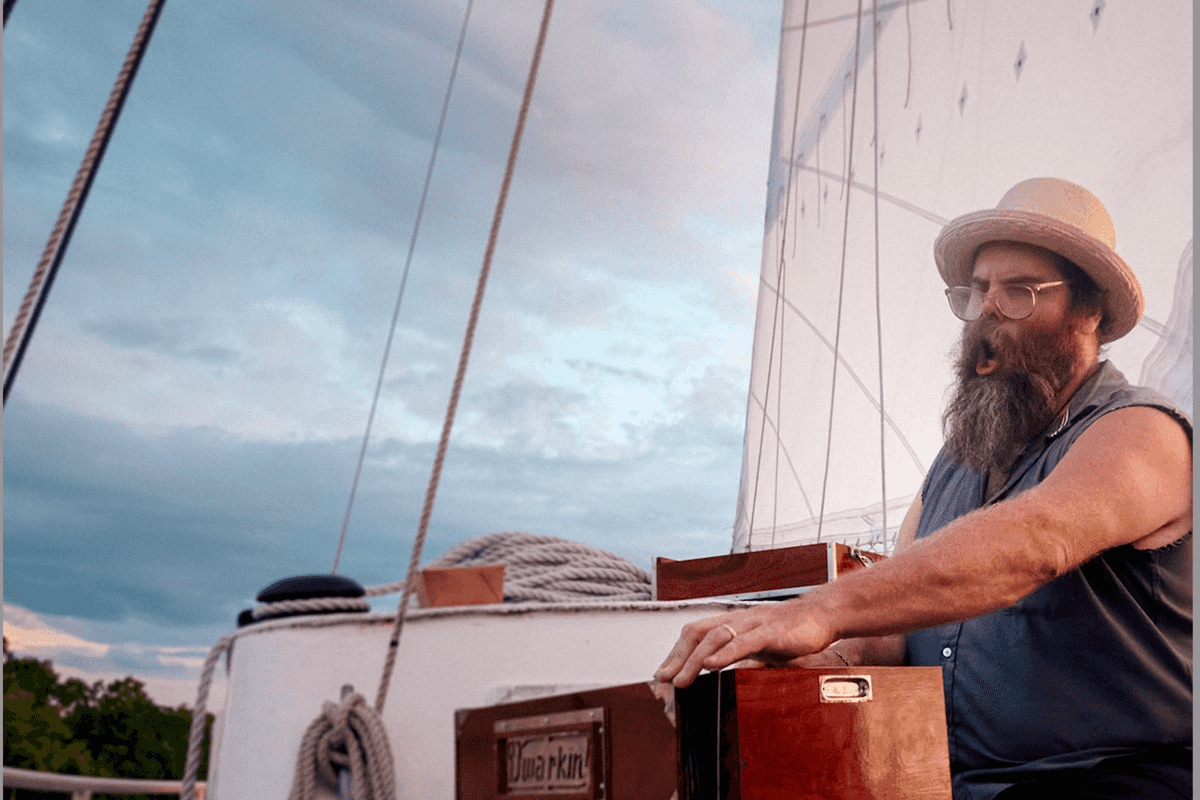
Seeing isn’t always believing. Sometimes it’s the lack of a defined picture that can be the most compelling. And when Alex Harvey of Shinbone Alley sings his supernaturally charged sea shanties and street ballads, the unseen will be downright scary. On Oct. 30, the historically inclined storyteller and performer will create a spooky evening of forbidden tales and yarns through a carefully chosen series of songs at Spencertown Academy of Arts.

The repertoire for the performance is a bit fraught. Over the years, Shinbone Alley has explored the world of folklore through music. Though the group usually features two musicians, Harvey, a multi-instrumentalist and singer, will be performing solo. That is, of course, unless you include the spirits.

Keep ReadingShow less
Malian blues and Moroccan Gnawa meet in Sheffield
Vieux Farka Touré
Proivded

Desert winds rarely blow into the Berkshires, but on Nov. 5, they will carry the Malian blues and Moroccan Gnawa music to Race Brook Lodge.

That evening, Malian guitarist Vieux Farka Touré, often called “the Hendrix of the Sahara,” and Moroccan musician Samir LanGus will play at the lodge’s Event Barn in Sheffield, Massachusetts, at a benefit for the foundation Touré directs.

Keep ReadingShow less
google preferred source

Want more of our stories on Google? Click here to make us a Preferred Source.

google preferred source

Want more of our stories on Google? Click here to make us a Preferred Source.