Editor’s note: This is the second of a series focusing on how land trusts are working in concert to tackle conservation challenges.
The vast forests and cold-water streams of rural Northwest Connecticut — centrally located in a multi-state habitat corridor known as the Berkshire Wildlife Linkage — are among the most climate-resilient and complex in Southern New England.
The region comprises the most intact forest ecosystem in Southern New England, with an estimated 75 percent forest cover, including 6,042 acres of contiguous forestlands in the towns of Norfolk and Falls Village owned and managed by the nonprofit Great Mountain Forest Corp.
“When we conserve land in this corridor,” said Catherine Rawson, executive director of the Northwest Connecticut Land Conservancy (NCLC), “we are bridging gaps” in wildlife and avian migration.
As a result, conservation and protection of these natural resources, which provide critical habitat for more than 320 rare species, falls heavily on the region’s land trusts and conservation groups, according to a new report, The Pace and Scale of Conservation in Northwest Connecticut, published by the Kent-based NCLC with input from 22 local land trusts.
Significant challenges
to meeting state’s goal
On the whole, Connecticut has a goal of protecting 21% of its lands and waters by 2023 with the state aiming to protect 10% and it is asking land trusts and other partners to protect 11%. However, Connecticut faces “significant challenges to meeting this goal since, based on its current pace of land acquisition, it will take at least 65 more years meet its 10% goal,” according to the NCLC report.
The research further reveals that Connecticut ranks at or near the bottom for conservation funding in New England, and its land values are among the most expensive in the country.
“Clearly these towns in the Northwest Corner have the most available conservation land compared to, for example, Fairfield County,” placing a greater burden on them, said Bart Jones, who retired in 2012 from a 40-year legal career in private practice in New York City and now serves as president of the Cornwall Conservation Trust (CCT), and is a board member of the Housatonic Valley Association (HVA), Great Mountain Forest and serves as an alternate on the Housatonic River Commission.
On the flip side, said Jones, development pressure has not yet become as severe an issue in Litchfield County as it has in some areas of the state, like Fairfield County, where a quarter of an acre of land can fetch as much as $750,000.
“The price of land up here really hasn’t gotten so expensive that a land trust in Litchfield County can’t save it. We’ve been lucky in that regard, but we shouldn’t become complacent,” Jones said.
33 partners comprise the Greenprint Collaborative
Connie Manes, director of the Litchfield Hills Greenprint Collaborative, touted the work being done by small land trusts in conjunction with the larger regional or state conservation groups.
“We participate in networks and initiatives outside of our immediate area but impacting our work, like the Berkshire Taconic and Hudson to Highands RCP’s (Regional Conservation Partnerships),” Manes explained.
The Greenprint is a network of aligned conservation organizations working together in Northwest Connecticut since 2008. There are currently 33 partners, according to Manes.
“The purpose of the Greenprint has always been to support each other and amplify each partner’s capacity, and to protect more land, with coordination, efficiency and the greatest environmental impacts,” Manes said.
Manes also noted that in addition to collaborating with each other, Northwest Connecticut’s land trusts work closely with their municipal leaders, serving on various town commissions like Inland Wetlands, Conservation Commissions and Planning and Zoning, and contributing open space and Follow the Forest connectivity priorities to municipal Plans of Conservation and Development (POCDs).
Community outreach and education is also a vital mission among conservationists, said Manes.
“We engage our local schools, churches, scout troops, volunteer organizations, senior centers and more in exploring and using the lands we’ve protected, and in learning about the management needs of the region through community science programs,”
In late October, numerous community partners joined the Washington, Conn.-based Steep Rock Association in co-presenting an episode of “Can This Planet (Still) Be Saved,” on the PBS public affairs program, Common Ground with Jane Whitney.
Whitney, a veteran journalist, and her husband, Lindsey Gruson, a former correspondent for the New York Times who is the show’s producer, have lived in the Litchfield County since 2005 and produce the program from their home.
Reconnecting, conserving region’s forests
The Follow the Forest regional initiative seeks to protect and connect forests and promote the safe passage of wildlife throughout the Northeast, from the Hudson Valley to the forests of Canada.
Sharon Land Trust, said its executive director Maria Grace, is a proud partner of this regional initiative, which aims to protect at least 50% of each core forest habitat that will anchor this key wildlife corridor, focusing on areas of greater than 250 acres.
This amount of forest patches is a scientifically recognized minimum need to sustain important woodland species such as bobcat, black bear, fisher and moose as they adapt to climate changes and find new habitats.
Sharon plays a needed role in this initiative because large patches of core forest still exist in our area, and they serve as refuges for wildlife, according to Grace.
“We still have a lot of land to protect,” she said.
Manes referred to a recent report from the Redding-based Highstead Foundation, “New England’s Climate Imperative: Our forests as a Natural Climate Solution,” which asserts that New England’s forests are “an underrated asset in the fight against climate change,” already sequestering the equivalent of 14 percent of carbon emissions across the six states.
“Through implementing five complementary strategies, we can expect forests to sequester 21 percent of carbon emissions while also enhancing critical co-benefits such as cleaner air and water, greater recreational opportunities, and jobs,” Manes noted.
Not all land created equal
Tim Abbott, director of HVA’s Greenprint Collaborative, explained that when it comes to conserving land, quality takes precedence over quantity.
“An isolated piece of land might not be a wildlife habitat or might not be connected to anything,” noted the long-time conservationist.
“It’s not just about accepting any old piece of land. We are being increasingly strategic rather than opportunistic. It means we are having important conversations. We have to be not only open to that but see it as part of our work,” said Abbott.
He said there are many considerations, or conservation values, that land trusts weigh before purchasing property, including whether it is farmland, wetlands, serves as a wildlife habitat, is part of a regional flyway initiative or can be linked to neighboring parcels.
“You can’t have a laundry basket of things you want on a property with equal weight,” he noted.
Conservation and the property tax quandary
In addition to its ecological and social benefits including recreational opportunities, land protection offers value to communities in the form of clean air and water, climate resiliency and preservation of cultural heritage
However, a common concern among individual taxpayers is that conserved land will increase their tax burden once that property is taken off the tax rolls.
“Every time we conserve land we are, in effect, taking a paycheck away from the town. That’s another pressure,” said Cornwall Conservation Trust’s Jones. That burden, he predicted, “is going to be a drag” on future conservation goals.
Jones further noted that that another issue on the property tax side involves state forest land, and the fact that the state has reduced payments to towns in lieu of taxes.
“The state should at least keep up with inflation,” he noted.
A January 2022 report by Harvard University, Amherst College and Highstead Foundation researchers, “Does Land Conservation Raise Property Taxes? Evidence From New England Cities and Towns,” found that “The changes in the rates attributed to new land protection were small.”
Specifically, a 1% increase in the percentage of town land protected was estimated to cause a 0.024% increase the tax rate, according to the report, which used data from more than 1,400 towns and cities in New England from 1990 to 2015.
Researchers noted, however, that tax-rate increases were somewhat higher when land protection occurred through municipal purchases or private easement protection, and that “more substantial” tax rate increases were found when towns were “growing slowly, had lower median incomes, fewer second homes and less land enrolled in current use programs.”
The size of these impacts ranged from $5 to at most $30 in additional taxes paid for each $100,000 in property value, according to the report.
Conservation and
affordable housing
Another pressure on conservation, said Jones, is the fear that conservation of land takes it away from development, including affordable housing.
“But the point is,” said the CCT president, “Cornwall, for example, is a huge town of 46 square miles, although many people don’t realize that” because its low population rate gives the impression that it is smaller.
“Even if we saved 38 percent, we would still have 18,000 acres left, which is larger than Darien, New Canaan and Hartford, yet people are saying we don’t have enough land for affordable housing.”
Jones said there is no reason conservation and affordable housing cannot peacefully co-exist. “It’s not an either/or” choice, he noted.
Thinking globally,
acting locally
A Kent farm is contributing to the town’s economy as well as to residents facing food insecurity.
In the last decade, 10% of Litchfield County’s population was designated as food insecure, and during the COVID-19 pandemic that percentage rose to 38.4 percent with as many as 25,000 Litchfield County residents experiencing food insecurity, according to the Kent Land Trust.
The number and frequency of visits to Kent’s food bank has doubled. In response, Kent Land Trust has partnered with Marble Valley Farm to offer fresh-picked produce each week to families using the Kent Food Bank.
“So many organizations are doing amazing things like this, said Manes. “What we are finding is that each hyper-local organization is able to be more nimble in responding to their community’s needs.”
The bottom line, she said, is that working together is the best, “and really the only, way,” for Northwest Corner land trusts to accomplish their visions and overcome the future challenges.
By the numbers
Land Conservation in Northwest Connecticut
— From 2010 to 2020, 9,772 acres in 253 transactions were protected by participating land trusts.
—The average transaction is 39 acres.
—During 2010 to 2020, land trusts averaged 23 transactions per year. However, in the last five years, the average number increased to 28 per year.
—A total of 1,406 acres were permanently protected by land trusts in Northwest Connecticut in 2020.
Source: Northwest Connecticut Land Conservancy
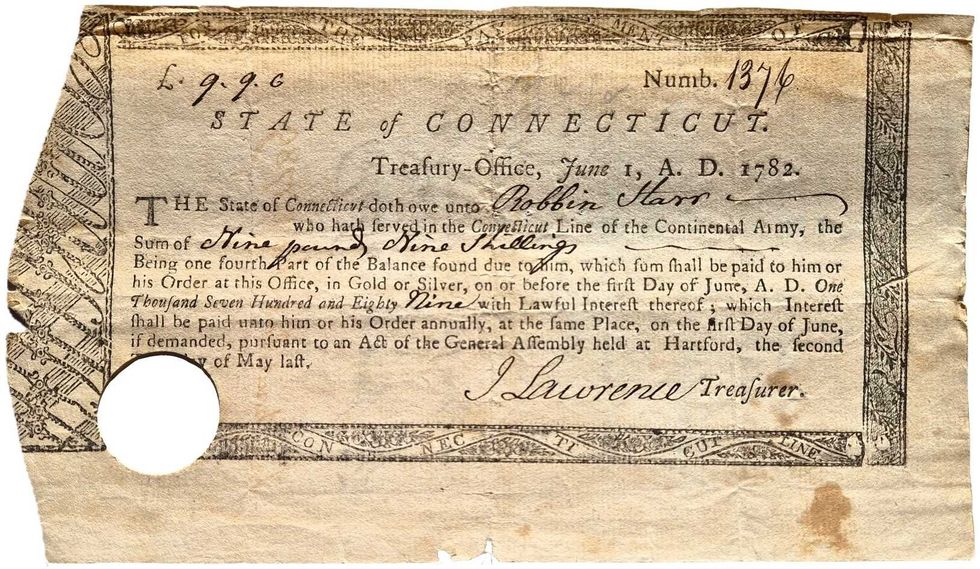 Pay Bill for Robin Starr’s service in the Continental Army.Courtesy the Alex Breanne Corporation
 John Mills speaking at Quinnipiac University.Courtesy the Alex Breanne Corporation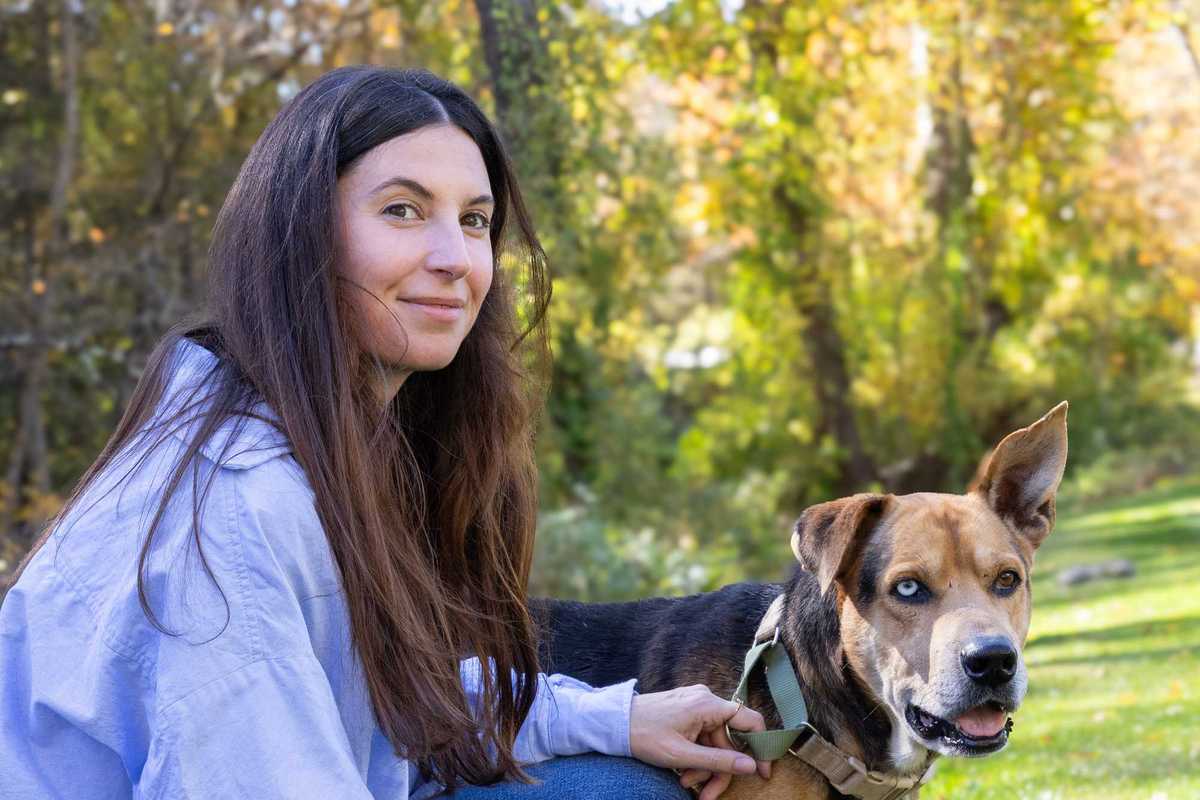
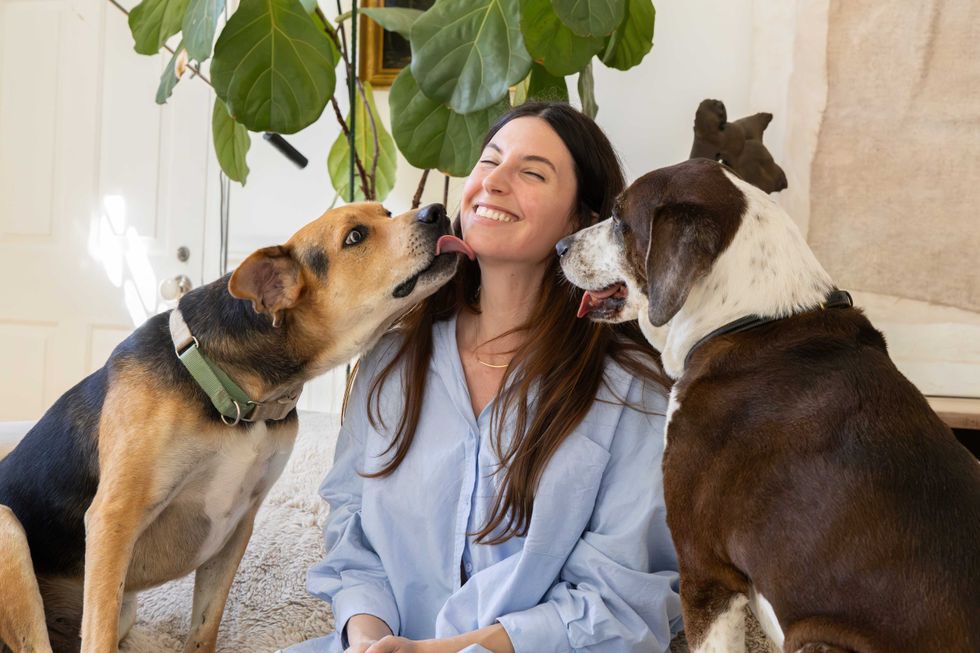 Stephanie Saetta,with her rescue dog George and Blue (left), a shepherd mix awaiting his forever home.Madi Long
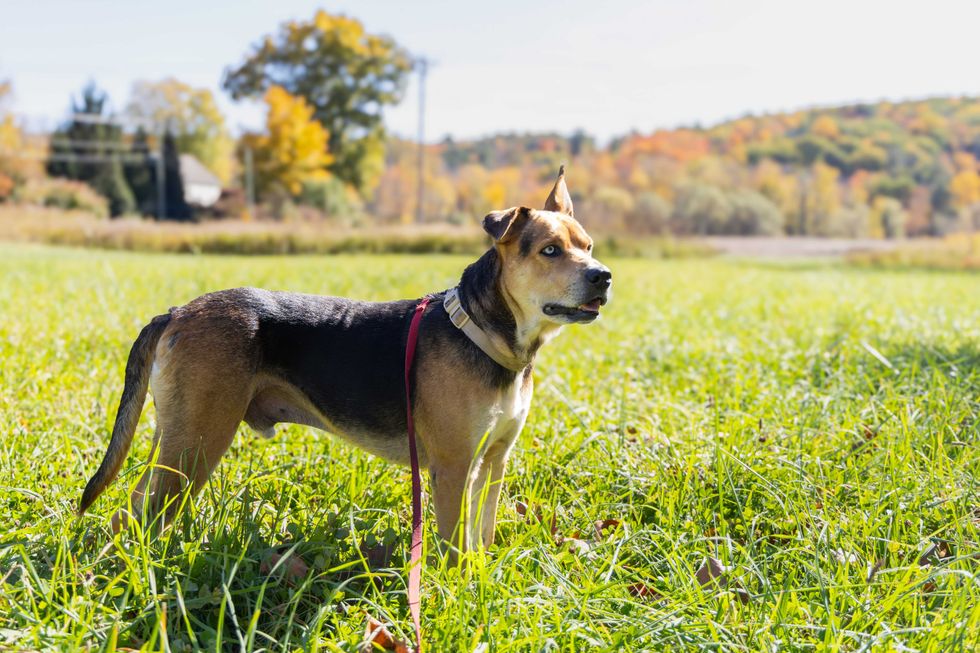 Blue, a 7 year-old Shepard mix, is waiting for his forever home. Madi Long