HARTFORD — With comic antecedents ranging from Chaucer to Monty Python, rollicking on Hartford Stage is the raucous, bawdy, irreverent new musical KISS MY AZTEC!. Part farce, part satire, it’s more than a revisionist spoof on Latin American history. It’s the most unwoke, woke theater around, both confronting all kinds of cultural tropes and, at the same time, with self-deprecating rawness, lampooning every social identity; no one gets spared. What’s more, the show celebrates the best of Broadway musical comedy tradition, recalling the giddiest elements of the likes of “A Funny Thing Happened on the Way to the Forum,” “Spamalot” and “Something Rotten.”
KISS MY AZTEC! is the brainchild of actor and comedian John Leguizamo, famous for his comedic work on Latin American culture, with a book by him and Tony Taccone, former artistic director of Berkeley Rep, who also directs. It’s 1540 in Central America. For almost 20 years, the Spaniards have been suppressing the once-dominant Aztec people, who had developed the most sophisticated civilization in Mesoamerica; the opening musical number, “White People on Boats,” skewering the Conquistadors, sets the tone for the whole show.
Aztec rebel leader El Jaguar Negro (Eddie Cooper) plans to infiltrate the citadel where Spanish Viceroy Rodrigo (Matt Salvidar) holds court. El Jaguar’s daughter, feminist Colombina (Krystina Alabado) wants to join the men. Her father tells her to stay home and do the laundry; she sneaks off on her own to fight anyway. Colombina’s admirer, a clownish, conscientious objector, puppeteer Pepe (Joel Perez) unenthusiastically joins the rebel warriors. Pepe’s sock puppets are called Machu and Picchu, which says it all about Leguizamo’s signature humor.
The Shakespearian plot twists, mistaken identities, family intrigues and coincidences that follow would get eye-rolls from the Bard himself. (The “white” dialogue in the show is in a sort of modern-day Shakespearian-speak; the “brown” in a sort of multi-ethnic rap.) One scenario involves the closeted affair between the Viceroy’s son, the fey Fernando (scheming to unseat his father) and the Inquisitor Catholic bishop uproariously played out in a number called “Tango in the Closet.” (The number concludes with the lyric, “God must be gay.”)
Another subplot involves a foppish, coked-up, French flim-flam artist aptly named Pierre Pierrot, with a glittering codpiece whose identity gets assumed by Pepe. Pilar, the Viceroy’s nympho daughter, trying to avoid a marriage arranged by Pierrot, immediately tries to seduce Pepe when he shows up in Pierre’s revealing costume. Pilar’s intended betrothed, from Old World royalty, ecstatically proclaims in a Las Vegas-style, disco-inspired number “New Girl, New World” that for once he doesn’t have to marry a cousin. And then there’s a musical number, “Make the Impossible Possible,” about human sacrifice, replete with Pythonesque entrails. (As I noted nothing is sacred in KISS MY AZTEC!) Irony informs it all: The Aztecs gave us pyramids; the Spanish, tapas, which are the subject of the number “No One Compareth to the Spanish.”
Indeed, the plot is busy — very busy. Amazingly, director Taccone holds it together, even while incorporating 22 musical numbers. The lyrics by David Kamp (See story, Page A1), Benjamin Velez and Leguizamo come as fast as the plot, filled with sassy wit, play-on-words, pop-culture references, double-entendres and much that is not double-entendre at all. The score by Velez is a wide range of pop and Latinx idioms: hip-hop, rap, boogaloo, salsa, merengue, gospel, funk, and some R&B. The highpoints are “Happy Amigos” that closes Act 1, as upbeat as any ensemble number to any good musical should be. My favorite number was “Spooneth Me,” a lovely, bossa nova melody about, well, spooning (but with some kinks). Appropriately, Mayte Natalio’s choreography is as versatile as Velez’s score.
In the real world, European colonization dismantled civilizations of indigenous cultures in the Americas. KISS MY AZTEC! provocatively imagines a different “what if” history. The show premiered at Berkeley Rep and then had a run at LaJolla Playhouse in 2019 before it got sidetracked by the pandemic. With its Hartford run, KISS MY AZTEC! gets ever closer to Broadway, where, with some streamlining here and there, it belongs, slapping history upside the head with a “kick-az” musical comedy fable.
KISS MY AZTEC! runs about 2 ½ hours, with one intermission at the Hartford Stage. It closes June 26.
Dan Dwyer is a member of the board of The Lakeville Journal Foundation.



 Tiffany Lemelin, shelter manager, brushing Marsala upon arrival.Provided
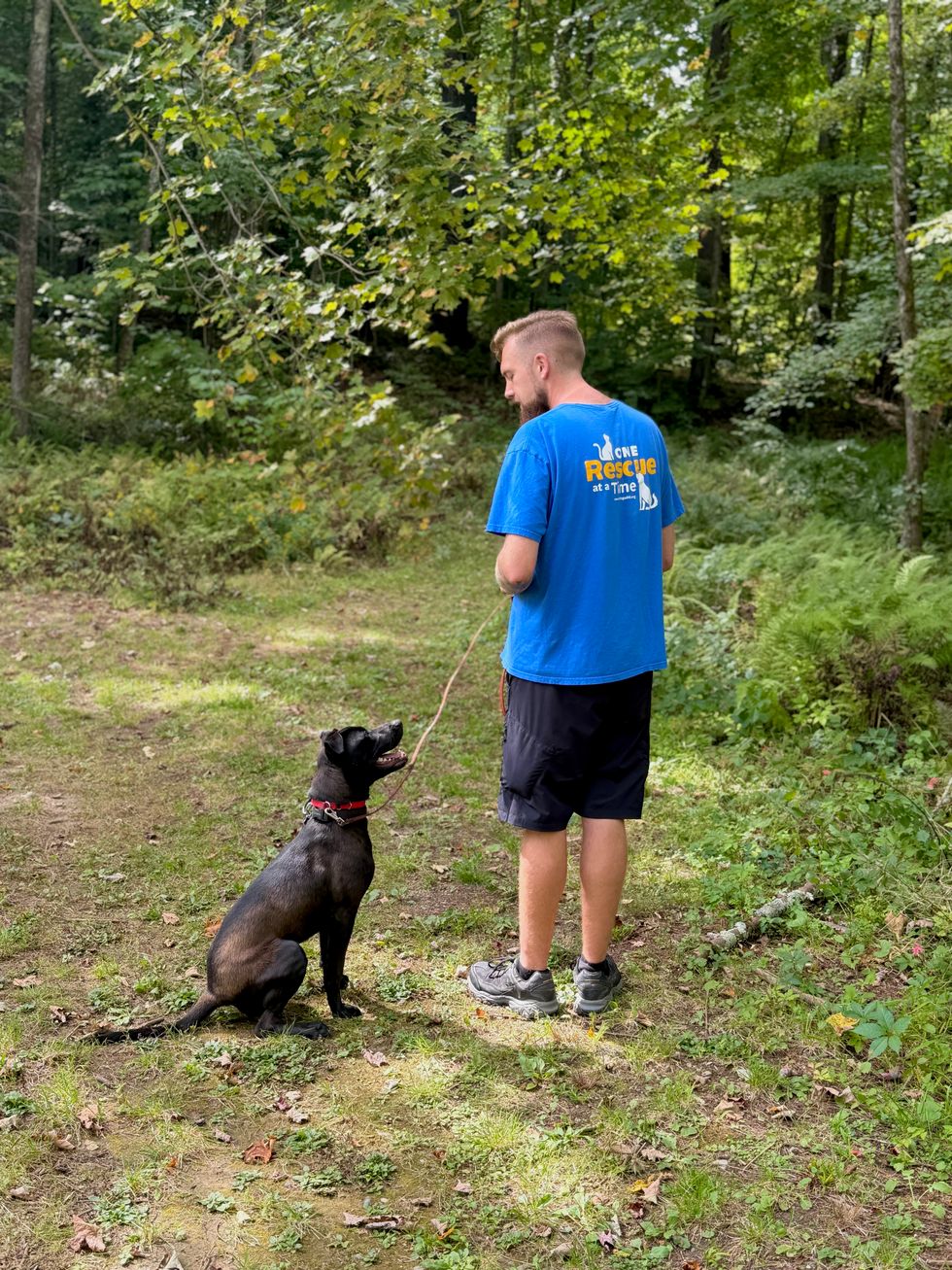 Michael DeBarba, certified dog trainer working with Marsala.Jennifer Almquist
 Marsala wins a heart.Jennifer Almquist

 Sadie, center, a Carolina dog, plays with her friend Negra, a terrier mix. Bella Linda, the small poodle, has since been adopted.L. Tomaino
 Wesley, a young, exuberant mix, is looking for an active home.L. Tomaino
 Bonnie and Clyde, an affectionate terrier pair.L. Tomaino

 Provided