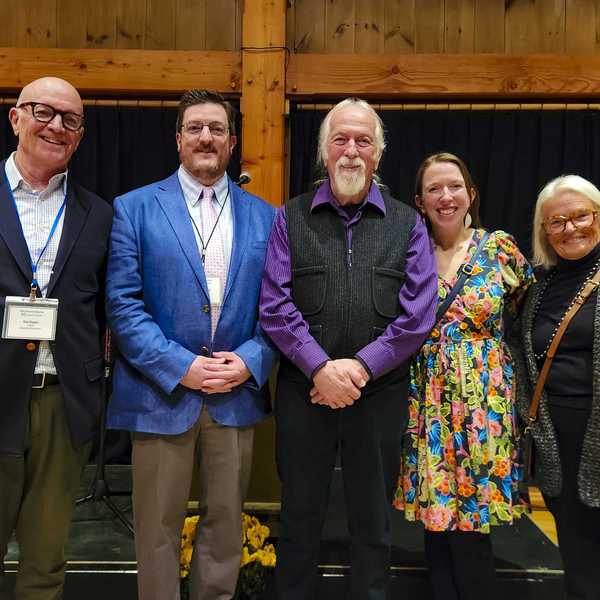
NORFOLK — An overflow crowd packed into the Norfolk Library Saturday, Jan. 14, for Stephen DeStefano’s talk on “The Life and Habits of the North American Beaver,” the first lecture in the Great Mountain Forest’s Forest Lyceum series of lectures this winter and spring.The subtitle of the lecture is “The most interesting animal to-day extant” — a phrase taken from the introduction to A. Radclyffe Dugmore’s 1914 book, “The Romance of the Beaver.”DeStefano is the leader of the U.S. Geological Survey’s Massachusetts Cooperative Fish and Wildlife Research Unit and a research professor at the University of Massachusetts in Amherst.DeStefano proceeded methodically, noting that the North American beaver (Castor canadensis) is a rodent and is found all over North America. It has also been introduced successfully in Europe and Patagonia.He then took a quick detour into prehistory — most notably, a description of the giant beaver that got to be as big as 8 feet tall and 200 pounds, and existed from about 1.4 million years ago and died out about 10,000 years ago (something to consider when a beaver dam is causing inconvenience.)Castor canadensis is “a real specialist” in the art of gnawing and taking down trees, DeStefano said admiringly.“Their teeth are always growing, so if they don’t gnaw, the teeth will grow right into the head.” Beaver factsThe North American beaver, while industrious, is considerably smaller than its ancient relative — 2 to 3 feet long, with a tail of half a foot to one and a half feet, and tipping the scales at between 30 and 70 pounds. The highly prized fur ranges in color from chestnut to almost black, with a light gray underfur.The babies (“kits”) are between 9 and 15 pounds, and can see and swim almost immediately.The first year of a beaver’s existence is idyllic. They spend the bulk of their time in the water, DeStefano said. “They don’t need to get a summer job.”Beavers have poor eyesight, but their senses of smell and hearing are excellent. They typically live between 5 and 10 years.The North American beaver has a fusiform body — wide in the middle and tapered at either end. The ears and nostrils have valves, which allow the animal to submerge without water coming in. A beaver can stay under water for 15 minutes, as any fisherman who has worked a beaver pond can confirm.The big, flat tail serves as a rudder while swimming, as support while on land and as a warning when slapped on the water — as the above-mentioned angler can also confirm.(Personal note: I once fished a high mountain stream in northern New Mexico with a friend. We found a beaver pond and gingerly began casting our flies. My friend got bored and moved on, but I was more patient. Just as I hooked into a decent fish, there was a huge “FWAAP” noise behind me, and just a few yards away was a large beaver sporting lots of teeth and an irritated expression. He started toward me, or so I believed, and I scrambled out, losing the trout and my dignity in the process. My friend was sitting against a tree, laughing helplessly and making comparisons to President Jimmy Carter’s 1979 encounter with a killer rabbit.)The front feet are well-equipped for construction and grooming. Yes, grooming — with the oils from the castor and anal glands.Castor canadensis mate at three years, and do so annually, in January and February. “So there are beavers out there up to something right now,” said DeStefano. They are monogamous.The gestation period is 100 to 110 days. Litters typically have three or four kits, and the young beavers stay with the parents for two years, usually.The beaver is a strict herbivore, which explains why they get along with fish. They are particularly fond of alders, aspens and willows. DeStefano said that distribution of those species often coincide with beaver populations.They also eat blueberry, dogwood, cattails and water lilies.A good sign that a particular habitat is nearing the end of its usefulness to the beavers is when they start gnawing on oak or pine.Information on damsWhy do they build dams? To create habitat. The beaver lodge entrance is under water, which keeps predators out.The dams, which can get up to 10 feet tall and can be found in all sorts of watercourses, require constant maintenance.Beavers are nothing if not diligent. “The sound of running water gets them going,” said DeStefano, “Poke a hole in a dam and watch.”The lodge is the focal point of the beaver’s life. A typical lodge is 20 feet wide and 7 feet high, with multiple chambers, entrances and areas where the building materials are arranged loosely to allow ventilation.Beavers can build a dam in two nights.They do not hibernate (see mating). One linear mile of suitable habitat can support one or two colonies of four to eight animals apiece.When wolves were prevalent in North America, they were a major predator. (Coyotes fill a similar role today.) Black bears and big cats will also go after a beaver if the opportutunity presents itself.Young beavers, leaving the home lodge and seeking their own turf, are the most vulnerable to predators.Humans and beavers have a lengthy history, DeStefano continued. Fur trapping was of enormous, even pivotal importance to the developing economy of the North American colonies.Fur (for hats) and meat were of primary importance, but beavers were also used for perfume and medicine. DeStefano said that before the establishment of the fur trade there were an estimated 100 to 200 million beavers in North America. Today there are between 10 and 15 million.In modern times, trapping, like all hunting, is highly regulated. Connecticut had two winter trapping seasons in 2011, with mandatory participation in a pelt-tagging program.Beaver dams, where they are not wanted, can cause angst. DeStefano said in Massachusetts landowners are required to seek the assistance of state animal control agents to remove beavers and dams. In Connecticut, regulations note that licensed trappers often assist landowners with removing beavers during trapping season and that “special authorizations to trap beaver outside of the regulated season may be issued by the DEEP Wildlife Division when beaver activity threatens public health and safety or causes damage to agricultural crops.”But Connecticut frowns on live-trapping and relocating beavers, as simply moving the problem from one place to another.If a Connecticut landowner wishes to do something about a beaver dam, be aware of this Department of Energy and Environmental Protection regulation: “The installation of any water level control device at a culvert or modification of a beaver dam in any way, including breaching or removal, are considered regulated wetland activities and must be approved by the local inland wetlands commission.”DeStefano extolled the beaver and its importance to the overall environment. The cycle that begins with the creation of a beaver dam, the years of use, and its ultimate abandonment lead then to a deep wetland, followed by a shallow wetland, then a grassy meadow and, eventually, forest again.The economic importance of the North American beaver naturally led to scarcity, DeStefano said, adding that by 1750 beavers were pretty much gone from Massachusetts.They made a comeback beginning in 1928 in western Massachusetts, and by 1995 there was a relatively stable population of about 20,000. A 1996 ballot initiative restricted trapping methods, and beaver-related complaints went up.DeStefano offered some suggestions: aim for an increased tolerance for the beaver, and understanding of its role in the overall environment; avoid building in beaver habitat; wrap or otherwise protect valued trees; engage in dam removal, or install flow devices, as per regulations.Moving the beavers is “not an option,” he said. Doing so simply transports the problem, increases the risk of spreading disease and disrupts the highly structured social life of the animals.And it’s illegal, he concluded.Upcoming eventsComing up in the Great Mountain Forest’s Forest Lyceum series:Feb. 11 — Paul Barten of the Great Mountain Forest and University of Massachusetts, Amherst, on “The Shakers: Forest Conservation, Green Design, Sustainable Agriculture...200 Years Ago” (at the Douglas Library in North Canaan).March 10 — Todd Fuller of the University of Massachusetts, Amherst, on “Wolves? In New England?” (at the Norfolk Library).April 21 — Scott Heth of Connecticut Audubon in Sharon on “Forests for the Birds: Habitat Needs and Management Options for Migratory Songbirds” (at the D.M. Hunt Library in Falls Village).May 12 — Robert Thorson of the University of Connecticut with “Stone by Stone: The Magnificent History in New England’s Stone Walls” with books available for purchase (at the Norfolk Library).June 9 — A film, “Green Fire: Aldo Leopold and a Land Ethic for Our Time” (at the Norfolk Library).For more information, call 860-542-5422 or visit www.greatmountainforest.org.The Connecticut DEEP Wildlife Division provides technical assistance to individuals experiencing problems associated with beaver activity. For more information, contact the Wildlife Division’s Beaver Management Program at 860-424-3011.
Latest News

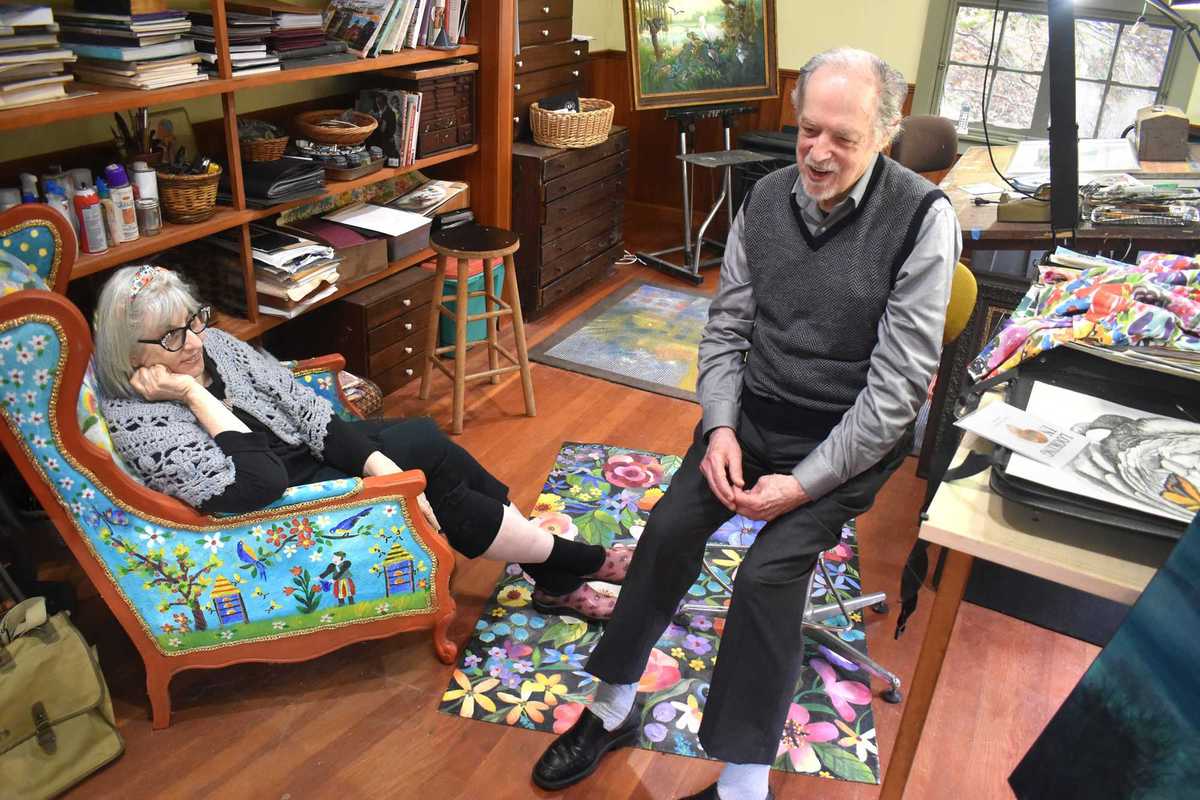
Textile designer Justine Valla sits in her father’s chair, which she painted, alongside her husband, illustrator and muralist Victor Valla, in their Atelier Valla studio.
“I was always drawing as a child,” Justine recalled. Victor dreamed of illustrating magazine covers like those of the “Saturday Evening Post.”
Victor studied design and illustration at Rochester Institute of Technology, then received a fellowship to study painting and printmaking at the University of Illinois at Urbana-Champaigne. He graduated in 1967. The following year, he received a grant from the Tiffany Foundation to study printmaking in Paris at Atelier 17, an experimental graphic arts workshop founded in 1927.
“What a great experience that was!” he recalled.
Returning home after the Paris uprisings of 1968, he discovered that the magazine covers he’d hoped to paint had largely given way to photography. His agent suggested trying record covers, which he pursued along with illustration and graphic design.
He also began teaching at Kean University in New Jersey.
“Kean had a wonderful graphic design and illustration department. I loved teaching Graphic Design, even though I never thought I would.”
He later taught at Syracuse University and Pennsylvania College of Art and Design.
In the late 1980s, he decided to stop teaching and concentrate on his own art. He moved to Falls Village, to a house on the corner of Minor and Prospect Streets.
“I used to call the studio ‘Minor Prospects Atelier,’” he said.
He continued working in illustration and graphic design, creating book covers for stories by H.P. Lovecraft and other authors, along with magazine covers, logos, advertising and murals.
 Justine and Victor Valla in their studio with a painting of Victor’s,”Jonah and the Whale.” Robin Roraback
His local commissions include the green and gold Noble Horizons signage and wall murals for the Stockbridge Inn, the Spa at Norwich Inn, Orchards Hotel in Williamstown and the David M. Hunt Library’s children’s section.
Justine grew up in the Bronx and studied at the Fashion Institute of Technology. After graduating, she took on whatever work she could find, including designing toys and novelty items for Russ Berrie. But her true calling was textile design.
She moved to Los Angeles to pursue that calling, where she learned silkscreen printing from 1960s design icon Corita Kent.
“I was in her program at Immaculate Heart College. All fabric design at that time was silk screen. My first job in textile design was in L.A., creating wallpaper for Bob Mitchell Design.”
Justine returned to New York City, where the advent of computers required her to learn new design techniques. She enrolled at Parsons School of Design, studying Photoshop, Illustrator, Lectra U4ia and Kaledo.
Around this time, she met Victor online and moved to Falls Village.
A recruiter found her a job in Arkansas at Dillard’s, a department store chain operating in 30 states and known for its exclusive designer collections.
“They had the best equipment I’d ever seen,” she said.
She became a senior computer-aided design designer there, designing fabric and preparing purchased designs for production.
The Vallas left Falls Village for Little Rock.
“It was a big move,” she said. “It was a different culture, but Little Rock was very progressive.”
The originally planned to stay in Arkansas for five years but ended up remaining for nearly 10.
Then Justine was hit by a car. She suffered injuries to her leg and head and required four years of rehabilitation.
“I lost the ability to paint after the accident. I struggled to paint again.”
The Vallas returned to Connecticut, this time settling in Salisbury, where they’ve lived since 2013.
After leaving Dillard’s, Justine had planned to sell her work through Printsource in New York City, an international showcase for surface and textile design. But after the accident, she no longer had the mobility or energy to travel back and forth to the city.
Instead, she began selling her work locally at craft shows, including clothing, hand-printed tea towels and floorcloths.
She is currently working on selling her collection of textile designs.
In December, Justine will have a show of her tea-themed watercolors at the NorthEast-Millerton Library.
Victor recently exhibited “The American West: A Pictural History” at the NorthEast-Millerton Library. The series, created in the early 1990s, was part of a commission from the Postal Commemorative Society for which he completed 100 paintings in two years.
He hopes to place the series in a museum and has created books from its images, complete with text. Over the years, he has designed many other books that are ready for publication, including “Looking In, Looking Out,” a cosmic view of the universe.
Reflecting on his career, Victor said, “It’s about doing what you love”.
Justine agreed.
To see, purchase or commission work, contact Justine at justinevalla@gmail.com or Victor at victorvalla@comcast.net, or call 860-596-4282.


Want more of our stories on Google? Click here to make us a Preferred Source.

Jane Herold’s beautifully simple dinnerware.
Cornwall ceramicist Jane Herold explained that there’s quite a lot of enthusiasm for Clay Way among the region’s ceramic artists.
“We all need work space, which is hard to find or afford in urban areas. The wood-fire crowd needs lots of wood and outdoor space. This area is great because it’s rural enough for us, but has a wonderfully enthusiastic and supportive population of pottery [patrons].”
While many of the artists are returning from previous years, the loose collection of unofficial organizers likes to keep the event manageable for the public, limiting the number of artists and studios each year. A direct drive from the southernmost point at Ann Heywood’s studio in Wingdale to Herold’s big barn in Cornwall is under 40 minutes. But if you want to catch it all, plan for a full day’s worth of art exploration along some of the most beautiful roads in New England.
Starting at its northernmost point, Herold’s studio will host Matin Malikzada of Afghanistan, whose polished, modern interpretations of traditional forms are instantly recognizable. They’ll be joined by wood-fired ceramicists Steve Johnson, with his raw, organic forms, and Harry Levenstein, whose works relate closely to Johnson’s while making even more direct references to nature.
Herold herself creates work that is both beautiful and utilitarian. Her prolific output of objects is intended to be used by everyday people as part of their daily lives.
Moving south is Todd Piker of Cornwall Bridge Pottery. Piker has been making pots in his giant wood-fired kiln since 1971. The kiln looks more like an ancient blast furnace than something designed to transform clay into ceramics, but over the years, he’s mastered its intricacies and produces an impressive amount of fine work.
 A ceramic vase by Kathleen Heidemann.Provided
Piker will host Sanah Peterson, who works at Cornwall Bridge Pottery and draws inspiration from both her time with Piker and her time traveling the globe as a child. They’ll be joined by Stephanie Haines, whose vibrant, eye-catching work features underglaze illustrations of birds, fruit and the bounty of nature.
Further along in Warren, Jessica Dubin’s pieces will be on display at the studio of Christine Owen. Both artists seem to appreciate the chaos and unpredictable nature of clay but find ways to refine it all using their own unique methods.
Heading east to Washington, Conn., Will Talbot’s creates intricate work while allowing for the unpredictable nature of clay to play a role. His studio will house Tom Knox and his wide variety of textures and forms, as well as New York City-based Alex Lebedev, who lets music and the nature of improvisation guide his work.
There will be two studios participating in South Kent. Alison Palmner, whose page on the Clay Way website states she “strives to achieve a lighthearted meld of human forms, animals and the vessel.” Her studio will host Ben Eberle, who trained under the guidance of legendary potter Toshiko Takaezu; James Guggina, whose intricate work can appear both deliberate and whimsical; and Paula Shalan, who blends rough, unrefined surfaces with polished precision in individual pieces.
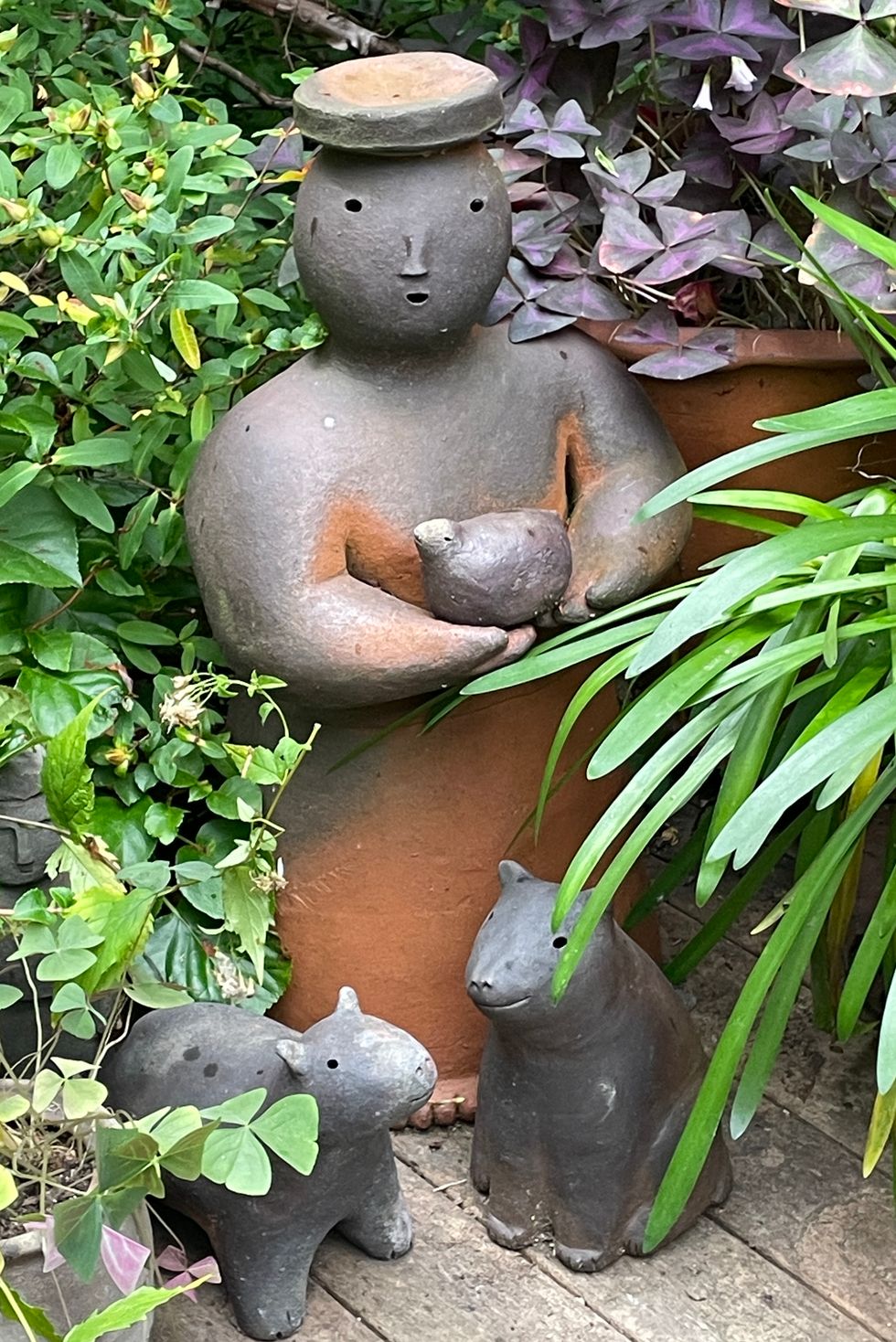 Joy Brown’s delightful ceramic sculptures.Provided
Nearby is Joy Brown, whose work have become a staple of the area, with her figurative sculptures dotting the Northwest Corner. Brown’s studio will also feature Bonnie Levine, who taps into the beauty of chaos and destruction in her work, and Brendan Moore, whose more utilitarian forms are perfect for everyday use.
Finally, the tour crosses the border into Wingdale, New York, where the studios of Drew Montgomery, Ann Heywood and Amy Brenner will host Jackie Sedlock, Lynn Behrendt,and Kathleen Heidemann.
Brenner creates some of the most colorful and vibrant pieces on the tour, while Behrendt’s work is among the most studied and precise. Heywood creates carefully considered, intuitive forms, while Heidemann moves from simple minimalism to intricate textures. Montgomery and Sedlock both find new ways of playing with traditional forms, producing delightfully distinctive pieces.
To learn more about the artists and download a map of participating studios, visit clayway.net
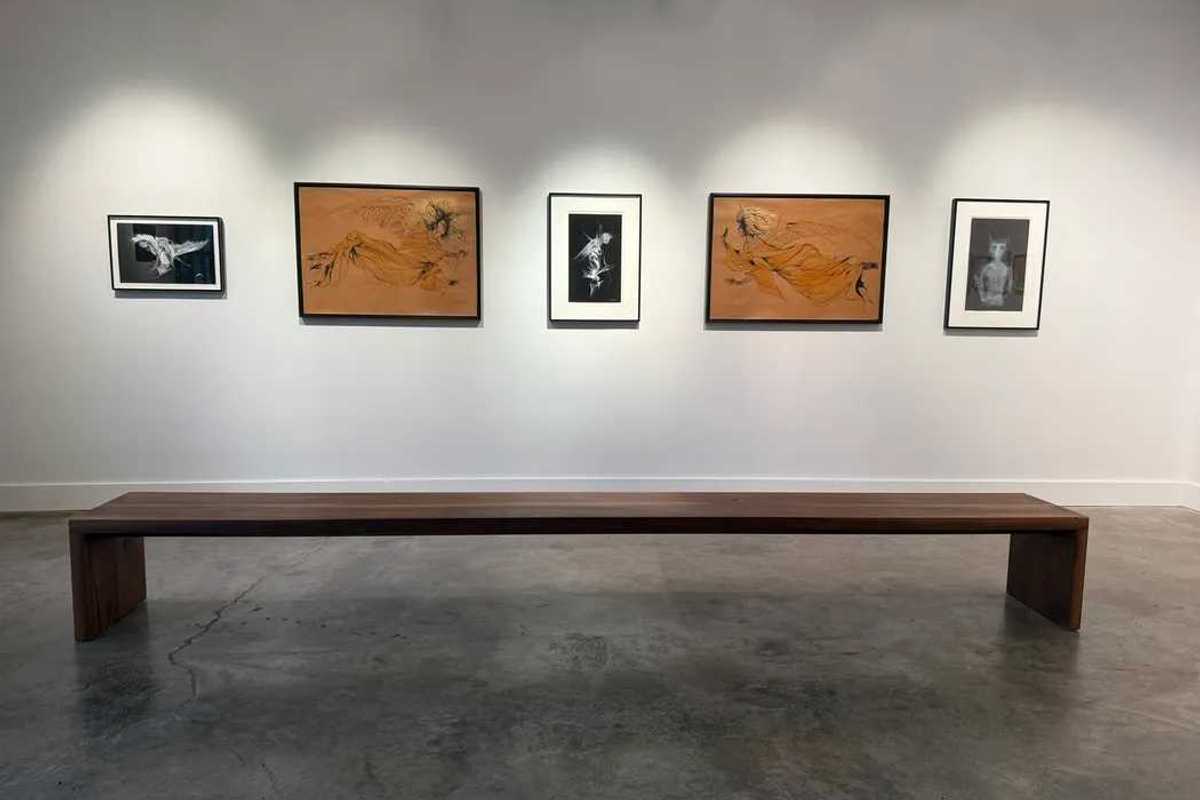
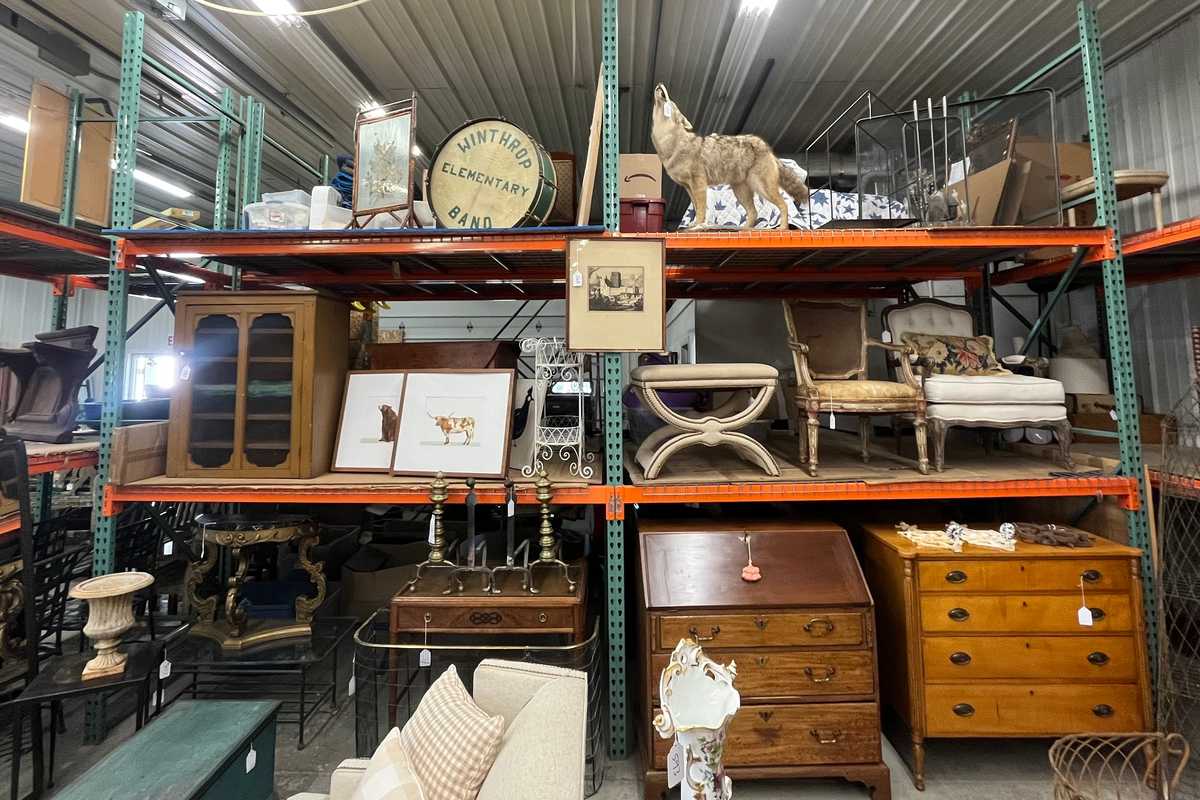
Matteo works as the ever-enthusiastic auctioneer, and he puts on a real show. In just a few hours, he presents and sells hundreds of items, from antique furniture and rugs to art and decorative items, even taxidermy, jewelry and other odds and ends you probably wouldn’t expect. Community is part of the show, with Matteo joking around with regulars. Attendees congratulate each other on their purchases, and even educate each other about the items as matteo keeps the momentum going. If items aren’t moving, Matteo will remind the room that he’s got alimony to pay, and it’s up to everybody in the room to help him raise the funds.
For the past 15 years, this has all happened in that highly visible building at the main intersection in North Canaan. Now, Mattea, Kolbacher and their Stateline Auctions crew have moved off the beaten path. For some frugal bidders, this might seem like a good thing. After all, the fewer people who know about the auction, the fewer people they have to bid against when their lots come up.
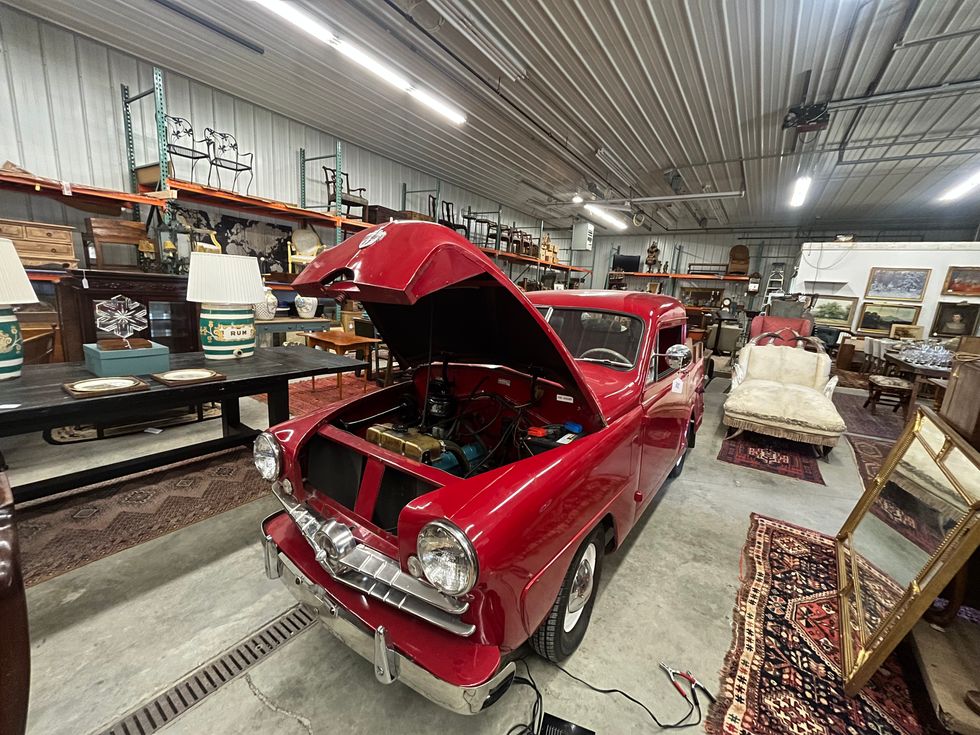 Hundreds of items at Stateline Auctions, including a candy-apple-red Crosley pickup truck.D.H. Callahan
Unfortunately for those who consistently show up, the competition these days is less in the room and more online. Stateline has been running simultaneous auctions through the real-time auction website and app LiveAuctioneers.com, where the entire event is streamed live. Throughout the eight-hour event, the online viewership rarely, if ever, dips below 600 individual users. This technological development creates more potential buyers for Stateline and also allows busy bidders to keep an eye on their lots while out and about.
The new space, still in North Canaan, just barely south of the Massachusetts border, is a sizable warehouse packed to the ceiling with precious finds. It’s bigger, brighter and has ample parking.
The auction on Oct. 11 featured all kinds of lots, including three cars. A candy-apple-red Crosley pickup truck grabbed every eye in the room and even more attention online. Amid all the enthusiasm, it was heartwarming to witness the entire audience erupt in applause as young bidder Molly Seitz burst into tears after winning the truck. The beautiful vintage vehicle had belonged to her grandfather, who had given her driving lessons in it before he died.
Between resellers, collectors and the casually curious, the performance that is a Sunday at Stateline Auctions is a delightful way to breathe new life into old items. There’s rarely a set date for the next auction, but it generally takes about six weeks before they’re ready with their next round of goods. This time, Matteo predicts a sale after Thanksgiving, but if you want to be safe, follow their auction on liveauctioneers.com.
Want more of our stories on Google? Click here to make us a Preferred Source.