Thank you!
Your support is sustaining the future of local news in our communities.

Life On Mars?

Across most of the space scientific community, the realization has solidified that there is life out there, meaning other than just on Earth. Sounds obvious but until the past 10 years there has been no hint of proof, just hypothesis.

All the Moon dust and rocks the Apollo program brought back showed no traces of life. Since then, probes, especially to the southern polar regions of the Moon, have shown the presence of water but no bio signatures.But last summer, NASA’s Mars Perseverance rover drilled into the mudstone and there was a dramatic upturn in probability we’re about to receive actual proof of life existing on another planet. “This finding… is the closest we’ve actually come to discovering ancient life on Mars,” said Nicky Fox, NASA Associate Administrator. He went on “…everything we know about life on Earth, this is the kind of signature we would see that was made by something biological. In this case, it’s kind of the equivalent of seeing leftovers from a meal, and maybe that meal had been excreted by a microbe. That’s what we’re seeing in this sample.”

Are they going to bring back a sample for ground-based testing? The project director for the Perseverance project, Katie Stack Morgan explained, “we’re pretty close to the limits of what the rover can do on the surface… That was by design, since the payload of the Mars Perseverance rover was selected with a sample return in mind.” Then we’ll know, is the goal here, to bring back samples.

But this Administration has just proposed cutting the Mars rover programs by more than 50%, taking a sample return mission off the table for now. It’s an expensive mission, to return samples to Earth. Yes, there’s the technology which we have not proved yet: a robot to land on mars, collect the samples, blast back into Mars orbit, transfer to a waiting spaceship to return in maybe a year to Earth. Or perhaps wait for some humans to land on Mars?

It is worth remembering at this point a medical necessity of the Apollo landings’ programs: Biohazard prevention. Every capsule, piece of clothing, instrument, and the astronauts themselves, on return to Earth from their Moon missions stayed in quarantine for 30 days. During that time, every medical, sterile, procedure was followed while dust, clothing, blood samples, and all bodily fluids were tested every day. The worry then was that a single unknown bacteria or virus – and therefore pathogens for which life on Earth have no resistance – could terminate all or a great deal of life on our planet. And that risk still exists today for all space exploration.

One way missions, like the Mars Perseverance, pose no threat as a portable lab on a distant planet. It is only bringing something alien back here that could pose a threat. This is not a USA-only issue, it is a global, all humanity, issue. And until all of humanity can be 100% sure that all that the international space programs are prepared, budgeted, andscientifically sure, no one, nothing, should be returned to Earth. There is a safe way forward, but no single country’s space program nor any commercial entities should not be allowed to recklessly proceed with ambitious goals devoid of security for this potential risk to everything for everyone.

Peter Riva, a former resident of Amenia Union, New York, now lives in Gila, New Mexico.

The views expressed here are not necessarily those of The Lakeville Journal and The Journal does not support or oppose candidates for public office.

Latest News

A life reshaped by clay in “Matin”

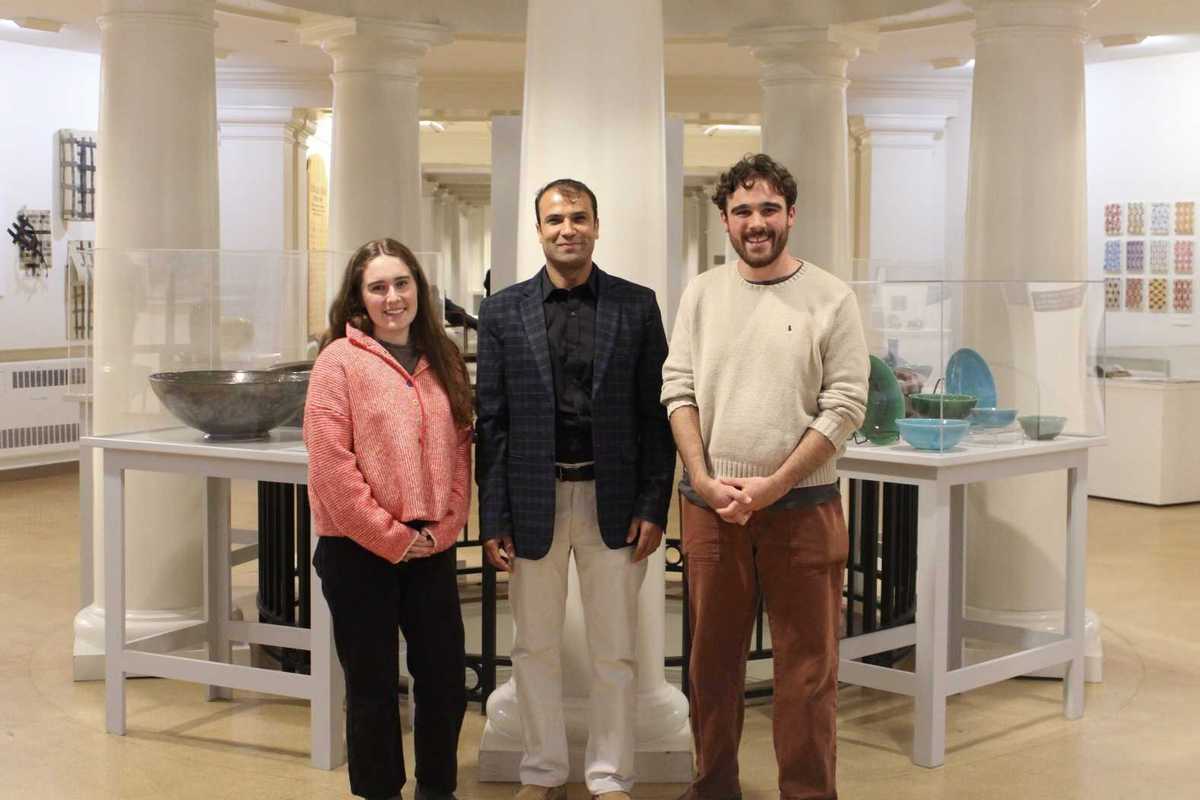
Left to right: Hannah Wheeler, Matin Malikzada and Yonah Sadeh.

D.H. Callahan

On Monday, Oct. 26, a group of students, teachers and local residents gathered at the Hotchkiss School in Lakeville for a screening of the new short documentary “Matin.” The film tells the story of Matin Malikzada, a seventh-generation Afghani potter making a new life in New Milford, Connecticut. The film was made by local filmmaker Yonah Sadeh, creator of the Video Wall at the David M. Hunt Library, and Berkshires-based potter Hannah Wheeler, who were both present for the screening, along with Malikzada himself.

As a member of the seventh generation of his family to master the art of pottery, Malikzada had done things the way his family had for over a century. Istalif, the village where his family has lived for generations, was known throughout Afghanistan for its pottery, with wares sent across the country for use as everyday cups, bowls, plates and other vessels. The pottery-making families of Istalif gathered clay from the same mountain, about 30 to 45 minutes away by donkey. Every July, they would head north toward the Uzbekistan border to gather ishkar, a plant they processed by hand to make their signature glazes.

Keep ReadingShow less
Meg Sher finds her calling among the stacks

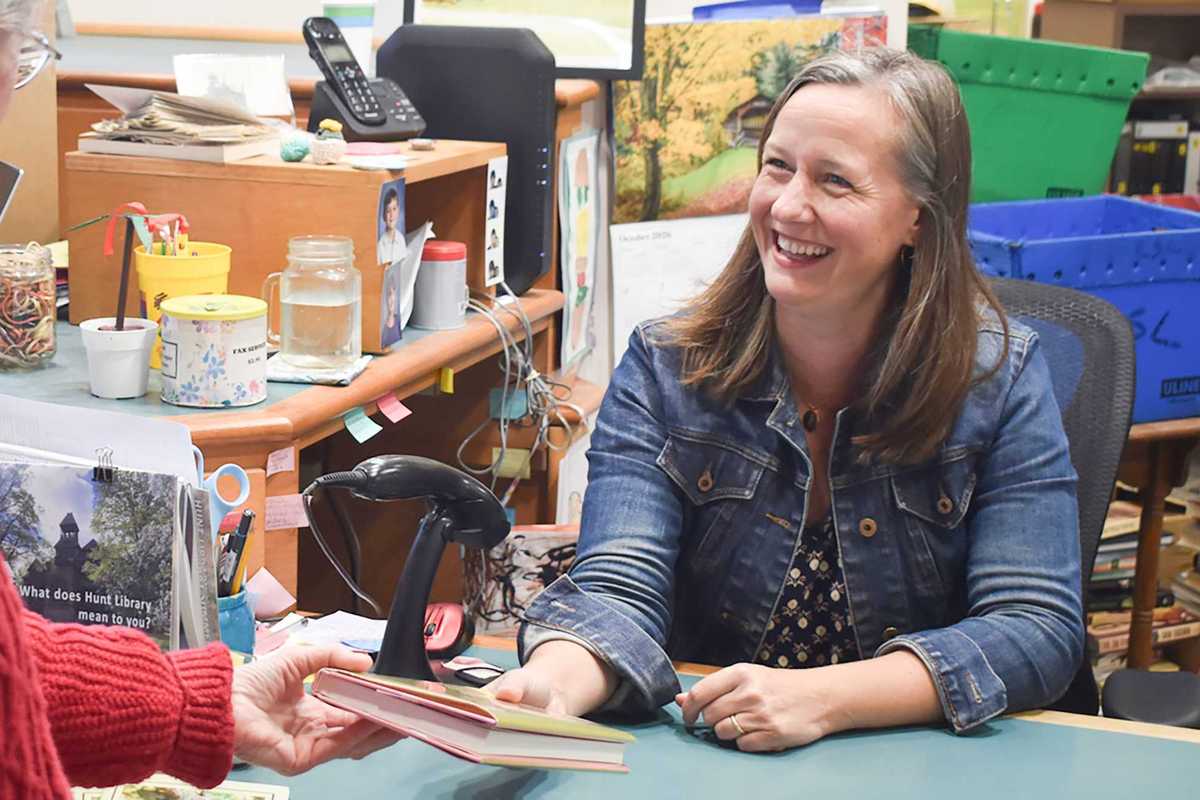
Meg Sher, executive director of the David M. Hunt Library in Falls Village.

L. Tomaino

When Meg Sher came to Falls Village in 2006 from Old Lyme, Connecticut, where she grew up, she never imagined she’d someday be the executive director of the David M. Hunt Library.

Although, in hindsight, perhaps it makes sense.

Keep ReadingShow less
Crescendo’s 23rd season speaks to the heart and mind

Christine Gevert, founding artistic director of Crescendo, conducts the audience at a performance.

Steve Potter

For Christine Gevert, founding artistic director of Crescendo, music from centuries past is anything but a relic. It is a living, breathing art form, full of drama, emotional complexity and, occasionally, surprises. As the regional choral and period-instrument ensemble launches its 23rd season, Gevert is once again bringing forgotten masterpieces into the present.

“Early Music has been my lifelong passion and the focus of my specialization in Europe and South America,” Gevert said. “Bringing this repertoire to our audiences in a nuanced way that does justice to its incredible depth, intensity, and beauty is deeply important to me.”

Keep ReadingShow less
google preferred source

Want more of our stories on Google? Click here to make us a Preferred Source.

Close Encounters with Music celebrates 35 years of musical discovery

Close Encounters with Music’s 35th season opens with “Saluting the Clarinet” featuring clarinetist Alexander Fiterstein.

Provided

For 35 years, cellist Yehuda Hanani has been inviting audiences to experience classical music in unexpected ways. As founder and artistic director of Close Encounters with Music, Hanani has built a concert series that goes beyond the music itself, exploring connections to literature, history, politics and the human experience.

This year, Close Encounters celebrates its 35th season with “Celebration & Discovery,” a seven-concert series that opens Sunday, Nov. 1, at the Mahaiwe Performing Arts Center in Great Barrington.

Keep ReadingShow less
Shinbone Alley brings spooky songs to Spencertown

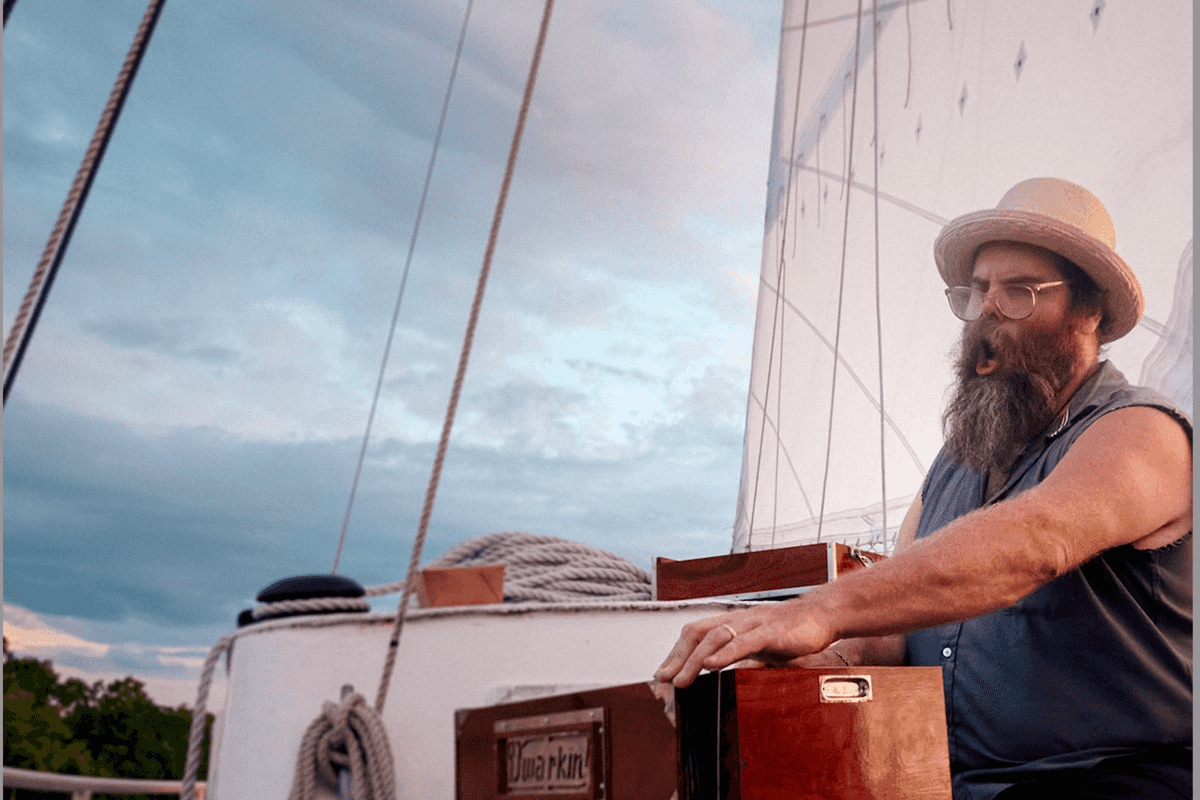
Seeing isn’t always believing. Sometimes it’s the lack of a defined picture that can be the most compelling. And when Alex Harvey of Shinbone Alley sings his supernaturally charged sea shanties and street ballads, the unseen will be downright scary. On Oct. 30, the historically inclined storyteller and performer will create a spooky evening of forbidden tales and yarns through a carefully chosen series of songs at Spencertown Academy of Arts.

The repertoire for the performance is a bit fraught. Over the years, Shinbone Alley has explored the world of folklore through music. Though the group usually features two musicians, Harvey, a multi-instrumentalist and singer, will be performing solo. That is, of course, unless you include the spirits.

Keep ReadingShow less
Malian blues and Moroccan Gnawa meet in Sheffield
Vieux Farka Touré
Proivded

Desert winds rarely blow into the Berkshires, but on Nov. 5, they will carry the Malian blues and Moroccan Gnawa music to Race Brook Lodge.

That evening, Malian guitarist Vieux Farka Touré, often called “the Hendrix of the Sahara,” and Moroccan musician Samir LanGus will play at the lodge’s Event Barn in Sheffield, Massachusetts, at a benefit for the foundation Touré directs.

Keep ReadingShow less
google preferred source

Want more of our stories on Google? Click here to make us a Preferred Source.

google preferred source

Want more of our stories on Google? Click here to make us a Preferred Source.