Lime Rock summer season off to the races, with regulation change under review

Lans Christensen
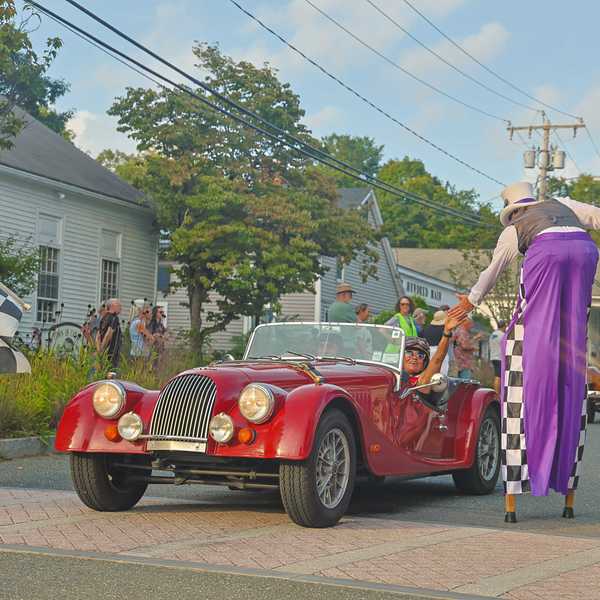
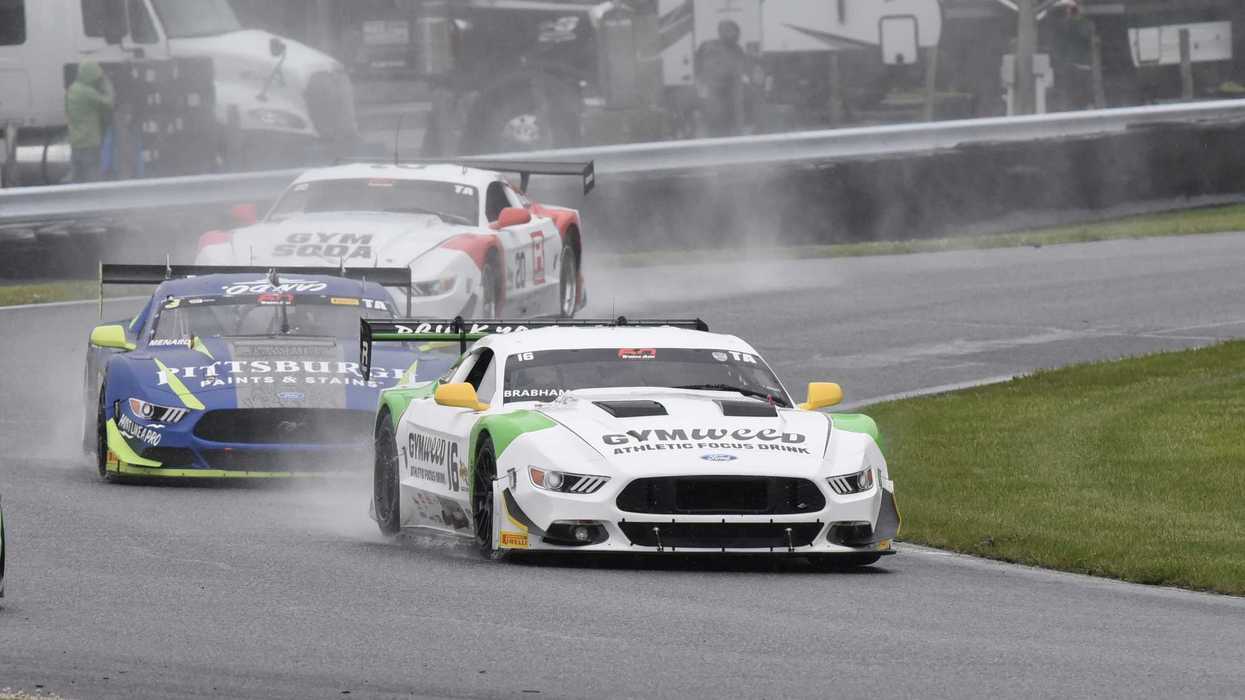
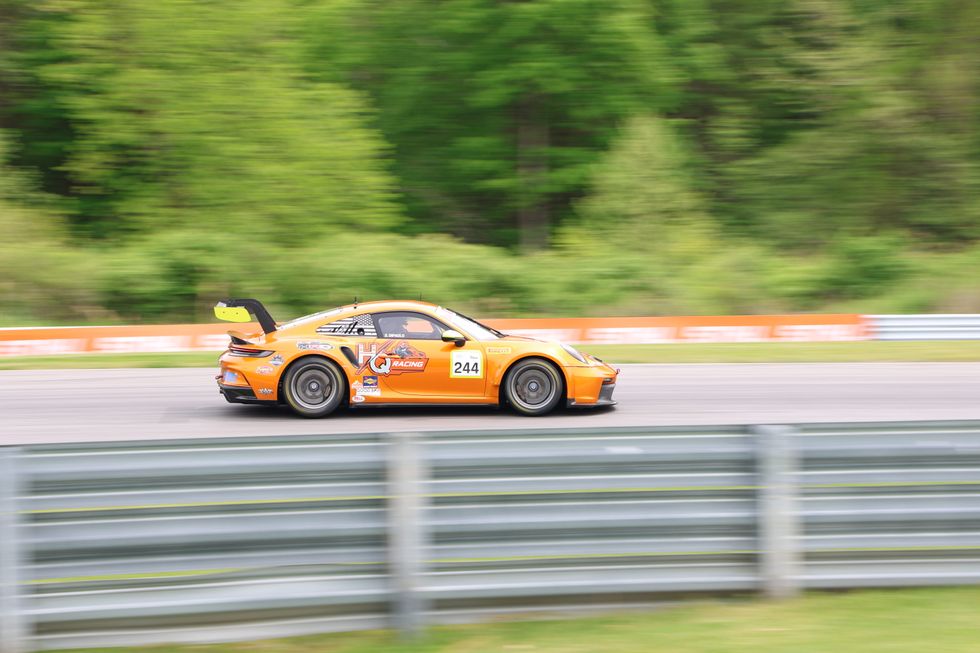
Lime Rock opens season with Trans-Am Memorial Day Classic.


Lans Christensen
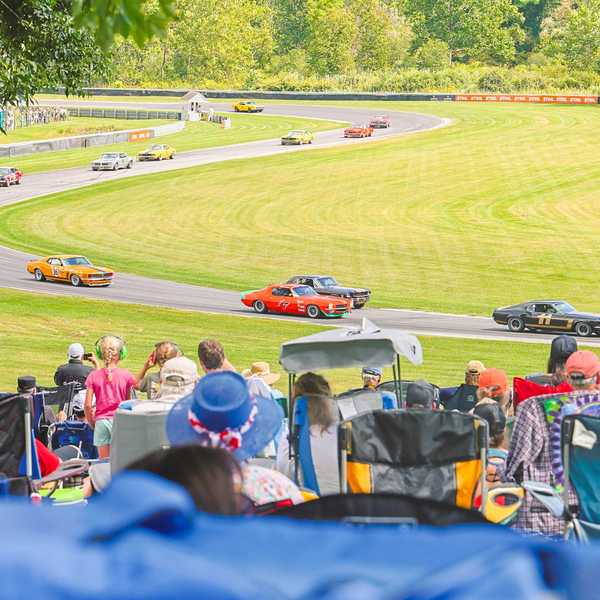
LIME ROCK – Lime Rock Park’s 2026 summer season is underway following a packed Memorial Day weekend that drew large crowds for the Trans Am Memorial Day Classic – three days of car shows and professional road racing.
The season opened as proposed regulatory changes – shaped by longstanding tensions between the track and its neighbors – remain under review while signaling growing cooperation between residents and Lime Rock’s leadership team. For years, neighbors have raised concerns about noise and sought to preserve the track’s longstanding ban on Sunday racing, while Lime Rock officials have pushed to maintain a full season of motorized and non-motorized programming.
The parties reached an agreement earlier this month that calls for updating the decades-old operating rules for Lime Rock Park. The deal features preserving the Sunday ban, while establishing new limits on racing hours, unmuffled events, drifting and overnight activity. The deal allows a limited number of non-racing events on select Sundays.
“This is a win for the Northwest Corner of Connecticut,” said Lime Rock President and CEO Dicky Riegel of the agreement, which was approved by the state Superior Court in Torrington on May 12 as a stipulation to an original 1959 injunction that banned racing on Sundays in the Park. Under the new rules, Sunday racing remains banned, Riegel assured.
Although the agreement has already been approved by Superior Court and is now governing the track’s operations, Salisbury officials are still working to incorporate the new provisions into local zoning regulations. In the meantime, the Planning & Zoning Commission issued Lime Rock a temporary permit for the summer season while the zoning revisions remain under review following a public hearing on Monday, May 18 for the proposed change.
During the hearing, Riegel asserted that the agreement protects property owners’ interests while allowing the park to operate a robust season.
Riegel explained that the requested regulation change, which would codify the agreement’s new rules into town code, was the result of four and a half years of close collaboration between the Park, once he and his partners took over control in 2021, and the Lime Rock Citizens Council, a residents’ group with about 250 members formed to amplify concerns from the neighborhood.
Bill Rueckert, another general partner in the Park, said that he acknowledges the difficult history between the park and the neighbors, which has involved years of court arguments, and that this agreement should be evidence of the new leadership’s commitment to rectifying relationships with the community.
“It took time,” said Doug Howes, a member of the Steering Committee for the Citizens Council, “but I think we came up with a good agreement at the end.”
Riegel said the new rules “should be in place, we hope, for the next 30 years and beyond.”
The last amendment to the stipulation dates to 1988, Riegel said, and the new agreement makes a number of changes to that charter beyond the maintenance of a Sunday racing ban.
Under the agreement, mufflered racing, where engine sounds are suppressed, is now limited to 9 a.m. to 6 p.m. Monday through Saturday, when previously cars could race until 10 pm. Unmufflered races are now limited to 23 Tuesdays each year between noon and 6 p.m., and will also be allowed on 10 Fridays and Saturdays, amounting essentially to “10 unmuffled weekends per year,” Riegel said.
Unmufflered racing will also be allowed on three Thursdays per year to account for three-day weekend events.
Overnight racing, which was allowed five times per year under the 1988 amendment, has been eliminated under the new agreement. Motorcycle racing remains banned.
The stipulation also allows for a small number of non-racing motorized and non-motorized fundraising events on Sundays throughout the year, such as Project Sage’s Trade Secrets, which occurred on May 15 and 16 at the Park.
Traffic control, noise monitoring, and enforcement provisions were also included in the amendment. A full list of the changes is available via P&Z’s “Meeting Documents” webpage.
P&Z commissioners lauded the two groups for working together to find a compromise. Allen Cockerline, who said he remembers reading hundreds of public testimonials in prior applications relating to the Park, said that the hearing on Monday night, which saw zero public comment, was evidence of the agreement’s strength.
One condition in the proposal concerned him, though, as well as other commissioners: drifting. Drifting is a type of vehicle demonstration where a driver intentionally loses rear-wheel traction while maintaining control around a turn, often producing tire smoke. The new change allows for drifting to occur once per year on two consecutive days, with no more than three demonstrations of 15 minutes per day and with a cap of 10 participating cars.
Cockerline said: “The whole goal is to create as much air pollution as you can in a short period.” He added, “Personally, I think it’s offensive.”
Riegel stated that drifting is a fundamental component of the annual Gridlife event that visits the park each August, and that significant control measures, including air quality monitors, have been put in place since complaints arose about drifting three years ago.
Howes said that the group had taken issue several years ago when drifting first came to the park, but that limitations since have been effective in mitigating pollution.
Ultimately, P&Z told Riegel and Rueckert that regulation changes require specific language and procedure, and that legal consultation would be needed to rewrite the proposed amendment in a way that fits zoning code. The Commission recognized the urgency of the matter, though, with the first unmuffled race of the season occurring just days later, and issued the Park a temporary permit for the summer season as the Commission reviews the proposed changes.
The hearing will resume on June 1, where Lime Rock’s representatives will return before P&Z to continue the discussion.
Following Trans Am, the next big weekend for the park is NASCAR’s Liuna 150 on July 10 and 11.
To read about a local youth development program centered around auto racing, see Student-built race cars take the track at Lime Rock.
Patrick L. Sullivan
The Berkshire Resilience Brass Band brought lively brass and jazz-inspired music to the lawn at the David M. Hunt Library on Friday evening, July 24.
FALLS VILLAGE — The Berkshire Resilience Brass Band brought lively brass and jazz-inspired music to the lawn at the David M. Hunt Library on Friday evening, July 24, drawing about 30 people at the start of the outdoor concert and more as the evening progressed.
Led by trumpeter Shamu Sadeh, the band’s lineup shifts from performance to performance. Friday’s group included Charlie Kiel on trombonium, Sam Earnshaw on percussion, Eric Loffswold on baritone saxophone, Dathalinn O’Dea on alto saxophone, David Rogers on tenor saxophone, and Peter Peirce on trombone.
Audience members became part of the performance as well. During one number, the horn players switched to percussion, while a basket of rattles and other handheld instruments was available for audience members to play along. Sadeh and O’Dea encouraged several young children to shake along with the music.
The audience continued to grow throughout the evening, including a family who stopped after hearing the music while driving by.
Although the band’s performances sound spontaneous, they begin with a shared musical framework.
“We start with a tune or arrangement,” Rogers said. “Then we do or don’t follow it.”
Rogers estimated that any given performance is at least half improvisation.
It’s not left entirely to chance. O’Dea said the group rehearses once a week, on Sundays.
D.H. Callahan
Bernie Williams and his Band of Friends at Millbrook Winery in 2025.
Throughout the history of Major League Baseball, precious few greats have been considered five-tool players. New York Yankee Bernie Williams was one of them.
To be considered a five tool player, one must show exceptional proficiency in five categories: hitting for average, hitting for power, running bases, fielding and arm strength. But there’s another tool Williams possesses that didn’t make it to the back of his baseball card: his mastery of jazz guitar.
On Aug. 1 at Millbrook Winery, that elusive sixth tool will take center stage as Williams and his Band of Friends return to the Vineyard for a night of jazz, wine and possibly a baseball reference or two.
Williams is best known for his legendary career with the Yankees. During his 15 years with the Bronx Bombers, he won four World Series championships, four Gold Glove awards and one Silver Slugger award in 1998, the same year he won the American League batting title, making him the first player in history to win a Gold Glove, a batting title and a World Series in the same year. Oh yeah, he was also an MLB All-Star every year between 1997 through 2001.
But while his work on the field is well known to New Yorkers and the broader baseball world, he almost took the musical route through life.
Williams first picked up a guitar when he was just 8 years old and was immediately taken by the magic of music. He was so passionate about it that he attended a performing arts high school in his hometown of San Juan, Puerto Rico. By the time he made it to the big leagues, he was known as the guy with the guitar in the locker room.
That reputation soon reached the Yankees’ fan base, with commentators telling stories of Williams and his outfield teammate Paul O’Neill’s jam sessions. O’Neill set up a drum kit in a paint room at the old Yankee Stadium, and the two would play together through rain delays, sometimes getting visits from New York City’s musical greats while they waited to play ball. MSG Network, which aired Yankees games at the time, even ran a promotional ad featuring the two World Series champions jamming together on a blues riff in their batting practice uniforms.
But unlike O’Neill, whose drumming is a hobby at best, Williams is a serious musician. During an appearance with Paul Simon at a charity event, Simon surprised Williams and his band by playing “Mrs. Robinson,” a song they didn’t know and hadn’t practiced. But just a few lines in, Williams was taking solos and riffing on Simon’s choruses with expert musicianship.
While Williams’ music is the main draw for the event on Saturday, the relationship between the All-Star and the winery goes beyond the performance. The collaboration started in 2021, when Williams visited the vineyards and instantly connected with then-general manager Ian Bearup, bonding over baseball, music and wine. They quickly decided to team up and create a custom variety they call Bernie’s Blend. This year’s bottle, featuring art from Williams’ daughter, Beatriz, is a blend of Cabernet Sauvignon, Merlot and Cabernet Franc and will be released at the performance on Saturday night.
While the VIP ticket levels are all sold out, as of press time, bring-your-own-lawn chair spots are still available. The wine will be available at the vineyard and online throughout the year at millbrookwine.com.
Elena Spellman
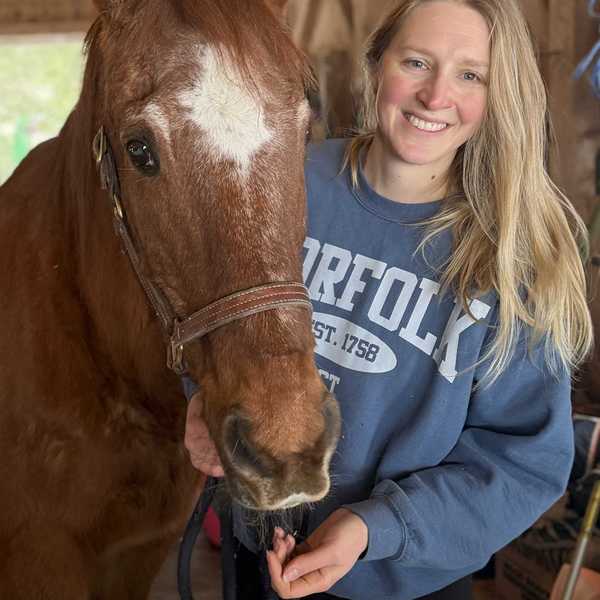
Deanna Hearn opened Lucky Orphans in 2003.
If horses could speak, Hearn believes they would offer just one piece of advice: “They’d tell us to slow down.”
From feeding retired racehorses before sunrise to guiding veterans, grieving parents and troubled teenagers through equine-assisted therapy sessions, Deanna Hearn rarely has a quiet day. As founder of Lucky Orphans Horse Rescue in Dover Plains, she oversees the care of more than 40 sanctuary horses while leading a nonprofit whose mission extends far beyond animal rescue.
What began as a childhood love of horses has evolved into a place where healing runs in both directions — for horses and for people. By the time you leave Lucky Orphans, it becomes clear that this place isn’t really about horses. The horses are simply how it begins. For Hearn, every rescued horse represents something much larger: hope, resilience, healing and second chances. The organization’s mission, she says, is simple: “People helping horses heal people.”
Growing up in the Bronx, Hearn was captivated whenever she saw horses. Her grandfather, a Korean War veteran, had cared for military horses during the war. After returning home, he struggled with addiction, and the invisible wounds of military service. Through every difficult chapter of his life, however, one thing consistently brought him peace.
“Horses bring peace,” he told his granddaughter.
When Hearn was 11, after years apart, Hearn and her grandfather began spending weekends riding together. Less than a year later, he was diagnosed with pancreatic cancer. Before he died, he asked family members to help buy Hearn’s first horse — a stubborn paint horse that bit, kicked and frequently threw her off. She wanted to sell him. Her father refused.
“Every life has value,” he told her.
Looking back, Hearn says that lesson became the foundation of everything she would later build.
What began as a boarding stable in 2003 took a different direction after the Dutchess County SPCA asked Hearn to care for horses seized in cruelty cases. She soon realized that although Dutchess County had one of New York’s largest horse populations, there was no dedicated nonprofit equipped to care for neglected and abused horses. Lucky Orphans officially became a nonprofit in 2008.

Today, Hearn is quick to point out that Lucky Orphans is not simply a rescue.
“We’re a sanctuary,” she said.
Many of the more than 40 horses living there arrive with broken bones, chronic illnesses, heart conditions, missing eyes or other injuries that make them unsuitable for riding or adoption. Rather than rehabilitating and rehoming them, Lucky Orphans makes a lifetime commitment to every horse.
In 2013, Hearn became certified in equine-assisted psychotherapy, combining her lifelong relationship with horses and the lessons she learned from her grandfather to create programs for veterans, trauma survivors, children and families facing emotional challenges. The transformations she witnesses continue to surprise her. She recalls one woman who arrived convinced she would not fit in with a group of strangers. During the session, a horse quietly chose to follow her without a rope or commands. For the first time in years, the woman said she felt truly seen.
Another memory has stayed with Hearn ever since. A teenager in a juvenile probation program, wearing an ankle monitor and struggling with anger, entered a round pen with a horse. As his frustration grew, the horse moved farther away. When he finally calmed himself, the horse walked directly toward him and rested its head against his chest.
“I told him, ‘If you can control your energy, you can control the world around you,’” Hearn said.
Stories like these sustain her through the difficult realities of running a nonprofit. Operating the sanctuary costs roughly $52,000 each month, and Hearn lives on the property, where the work never truly ends. Veterinary bills, staffing, fundraising and the daily care of dozens of horses are constant concerns. Then someone returns years later and tells her that the horses changed their child’s life.
“That’s why I keep going,” she said.
Looking ahead, Hearn hopes more people discover what makes Lucky Orphans unique. The organization is expanding its community programming with educational visits, yoga sessions, horse encounters, volunteer opportunities and family events designed to reconnect people with horses and with one another.
Her vision is simple: to create a place where people slow down, reconnect and remember something modern life often makes us forget. If horses could speak, Hearn believes they would offer just one piece of advice.
“They’d tell us to slow down,” she said.
After spending an afternoon at Lucky Orphans, it’s hard to disagree.
For more information or to plan a visit, go to luckyorphans.org

Want more of our stories on Google? Click here to make us a Preferred Source.
Jennifer Almquist
A brass quintet at the Yale Music Shed at Weekend in Norfolk 2025.
Norfolk bursts with activity in midsummer with Weekend in Norfolk (WIN). An all-volunteer committee transforms the town with free public events for all ages. WIN 2026 begins Thursday, July 30, and runs through Sunday, Aug. 2.
Norfolk sculptor Jon Riedeman, the new head of Norfolk Artists and Friends (NAF), organized the group’s 19th annual art exhibition, featuring paintings, sculpture, photography and jewelry by area artists in the Art Barn on the grounds of the Norfolk Chamber Music Festival. Riedeman expanded the show this year by inviting artists from New Marlborough, Massachusetts, to participate. The exhibit opens with a reception Thursday, July 30, from 5 to 7 p.m.
Music fills the air throughout the weekend. On Thursday night, take in the Emerging Artists Series concert from 7:30 to 8:30 p.m. at the Music Shed, featuring the next generation of professional chamber musicians presented by the Norfolk Chamber Music Festival. Then enjoy Friday Night on the Green, a welcoming party with live performances and free food.
The Bistro at Infinity Music Hall is extending its hours from noon to 9 p.m. throughout Weekend, with live music during the day. Don’t miss the Yale Brass Quintet performing in front of the historic 1833 Opera House. In addition, Norbrook Brewery will host a tap takeover featuring its celebrated local brews.
The Sidewalk Sunday Street Fair fills Station Place and Robertson Plaza with local artists, authors and craftspeople selling directly to visitors. Open Studios invites the public into working galleries and private studios for live demonstrations and artist meet-and-greets. Food trucks will also be available at the street fair.
Guided and self-guided tours showcase Norfolk’s historic estates and Victorian homes, while Tiffany stained-glass tours let visitors view Louis Comfort Tiffany windows in local chapels. The Village Green hosts public weddings and vow renewals as part of the festival.
Choose from five garden tours offered Sunday, Aug. 2, from 11 a.m. to 4 p.m.
Outdoors, guided nature walks explore Barbour Woods, with birding treks for wildlife lovers. Great Mountain Forest opens its 90-year-old weather station to the public, and workshops cover fly-fishing and pollinator gardening.
Food traditions include a Blueberry Betty social and an old-fashioned ice cream social. On Friday, Saturday and Sunday, the IceBox Cafe is offering 50 cents off its signature freshly brewed iced chai. On Saturday, the cafe will serve buttermilk pancakes all day, complete with Great Mountain Forest syrup.
Kids’ programming features movie screenings, yoga on the grass and art workshops.
Visitors can begin their adventure at The Hub, 2 Station Place, where volunteer “WINbassadors” will hand out maps and schedules. Full event details and ticket information are available at weekendinnorfolk.org.
Jack Sheedy
Jen Gleason stood on the stage of The Gary-The Olivia Theater and gestured toward the upstage wall—which wasn’t there. Like the so-called fourth wall separating audience from actors, all walls in this theater are invisible.
“That’s just God’s creation,” Gleason said, pointing to woods and rocks and grass and sky where you might expect a brick wall. “You cannot copy that. That’s the best backdrop you could possibly have.”
Gleason is directing “Babette’s Feast,” the first play to be performed publicly in the covered, open-air theater on the grounds of the Abbey of Regina Laudis in Bethlehem, Connecticut since “Godspell” in 2019. While the curtains closed during the Covid-19 pandemic, theater staff took advantage of the closure to make necessary repairs funded by donations.
Paul Murray, who co-produced “Babette’s Feast” with Sarah Robards, said, “We put up wings on either side, which are more or less permanent, and they allow the openness. From the audience, you see the woods side to side.”
The theater was built not long after famed Hollywood actress Dolores Hart joined the cloistered community of Benedictine nuns in 1963. According to the abbey’s website, “veteran actors James and Dawn Douglas formed a company of actors called the Act Association, which began to offer productions at the Abbey’s summer fair, and continued to do so for decades.”
Patricia Neal and James Douglas drew large crowds in 1999 when they performed A.R. Gurney’s “Love Letters.” Popular musicals have also been produced there, including “Guys and Dolls,” “Fiddler on the Roof” and “West Side Story.”
The idea to mount “Babette’s Feast” came from cast member Maurita Gregor, a lay intern at the abbey who previously performed the title role in her home state of Michigan. The play is based on a story by Isak Dinesen and is set in a Norwegian fishing village in the mid-19th century. Martine (portrayed by Cathy Annulli) and Philippa (Gregor) are sisters who lead a small Christian community. One night, a mysterious woman, fleeing political turmoil in France, knocks on their door and asks for asylum. Her letter of introduction states, “Babette can cook.” Babette will be portrayed by Olivia Wadsworth.
The play was conceived and developed by Abigail Killeen and written by Rose Courtney. It was first produced in Portland, Maine, in 2018. The highlight is a lavish feast Babette serves to the community to celebrate the memory of the sect’s original minister. but this production differs in structure from the 1987 Danish film in that no actual food is seen during the feast, Gleason said. Like the theater’s missing walls, the feast itself is invisible.
“There’s no cups. There’s no plates,” Gleason said. “We really don’t have props.”
The minimalist set aligns with the intentions of the play’s creators, who wanted to show the austerity of the religious sect to which Martine and Philippa belong.
Besides the three principals, “there are six players that are playing up to three different roles. So they’re having to shift their characters too, along with telling the story,” Gleason said.
Murray began working at the abbey in the 1970s and then moved to Idaho and taught theater for several years. Since returning in 2008, he has worked on sets for summer musicals at The Gary-The Olivia Theater. In 2025, he wrote and co-produced an original play, “The Princess and the Goblin,” based on a novel by George MacDonald. It was performed in front of a private audience, with Gleason in the lead. It was the first play to be shown at the abbey in six years.
“The point of having a theater at the abbey is to show a slice of life as it is, with an eye toward showing how it relates to the reality beyond the immediate place and time and characters within God’s creation,” Murray said.
“It’s to have a part of creation that refers to the broader creation,” he said.
Gleason spent several years in New York City with La MaMa Experimental Theatre Club, The American Theatre Wing and ASCAP. She also worked in Los Angeles, evaluating and developing scripts for a film production company, according to a press release.
Gregor said she applied for an internship at the abbey after reading Mother Dolores Hart’s 2013 memoir, “The Ear of the Heart: An Actress’ Journey from Hollywood to Holy Vows.” She said she always loved acting and was attracted as well to the “balanced lifestyle” the cloistered community offers. One of her duties at the abbey is making cheese, a hands-on process that requires patience and a gentle touch.
“I never knew you could learn so much from cheese,” she said.
“Babette’s Feast” will be shown Friday evenings, July 31 and Aug. 7; Saturday evenings, Aug. 1 and 8; and Sunday afternoons, Aug. 2 and 9. Evening performances begin at 7:30 p.m., and matinees begin at 2 p.m. There is no admission charge, but donations are welcome, and reservations are required. The Gary-The Olivia Theater at the Abbey of Regina Laudis is at 249 Flanders Rd., Bethlehem. To reserve seats, call 959-988-6068 or email garyoliviatheater@gmail.com. It is an open-air theater, so dress for the weather.
Richard Feiner And Annette Stover
Multimedia pioneer Laurie Anderson makes Tanglewood debut with a weekend of performances.
Musician, composer, performing artist and multimedia pioneer Laurie Anderson is one of the most influential and controversial figures in American contemporary and avant-garde arts. Her ambitious multimedia projects, encompassing music, film, visual projections, dance, and the spoken and written word, have enjoyed great public visibility, and Anderson has been recognized with many honors, including a Grammy Lifetime Achievement Award, as well as the Gold Medal for Music from the American Academy of Arts and Letters and this year’s Kyoto Prize for Arts and Philosophy in the field of music.
Anderson will make her Tanglewood debut in a series of special events and performances Aug. 13-16, along with longtime collaborators and special guests, giving audiences an opportunity to experience her groundbreaking and challenging work, which has been received with both acclaim and confusion for its wit, innovation and interdisciplinary scope.
A concert on Thursday, Aug. 13 at 8 p.m., part of Tanglewood’s recital series that spotlights chamber music and solo performances curated specifically for the acoustics and atmosphere of Ozawa Hall, features Anderson, guests and members of the BSO in a selection of Anderson’s compositions for string orchestra led by conductor Dennis Russell Davies, principal conductor of the MDR Leipzig Radio Symphony Orchestra and artistic director and chief conductor of the Filharmonie Brno.
A program highlight is “Amelia,”a piece inspired by the pioneering pilot Amelia Earhart, who disappeared over the Pacific Ocean in 1937 while attempting to fly around the world. The piece draws upon text from Earhart’s pilot’s log from her final international trip. In its blending of historical fact with atmospheric electronic music, minimal instrumentation and evocative soundscapes, the piece can be seen as emblematic of Anderson’s focus on transforming a historical event into a meditation on universal human experiences.
On Saturday, Aug. 15, at 2 p.m. in Studio E in Tanglewood’s Linde Center, the renowned opera and theater director and educator Peter Sellars will speak with Anderson as part of the Tanglewood Learning Institute’s Spotlight Series. Sellars is active at Tanglewood as a director and curator of contemporary works, and will guide Anderson in an exploration of her groundbreaking career and creative process. Their discussion will shine a light on their long history of artistic collaboration and their common interest in expanding the boundaries of music, language, technology and storytelling.
On Sunday, Aug. 16, from noon to 6 p.m., Studio E will present the Lou Reed Drone, a drone-based sonic installation curated by Anderson using guitars from her late husband Lou Reed’s collection. The event features performances by Reed’s former guitar tech Stewart Hurwood and a roster of guest artists rotating throughout the afternoon.
Finally, on Sunday, Aug. 16 at 7:30 p.m. in Ozawa Hall, Anderson will present “The Republic of Love,” an evening of music and storytelling reflecting on America’s past and present, featuring the genre-defying jazz ensemble Sexmob in its Tanglewood debut, along with special guests Mazz Swift and vocalist Christina Courtin.
As the title suggests, the piece plays on the classical idea of a republic — a political community governed by shared principles — to imagine what such a community would look like if its organizing principle were love rather than power. According to Anderson, the work isn’t sentimental. Instead, it examines love as a political and ethical force that shapes how people relate to one another and to institutions.
Collectively, these events will celebrate Anderson’s continued explorations of the power of words and language, visual imagery, and cutting-edge technology to challenge perceptions and to help audiences make sense of some of the most compelling questions of our day.
For information and tickets, go to tanglewood.org or call (888) 266-1200.

Want more of our stories on Google? Click here to make us a Preferred Source.

Want more of our stories on Google? Click here to make us a Preferred Source.