
Thank you!
Your support is sustaining the future of local news in our communities.

Literary icon at The White Hart

SALISBURY — Some of those listening to Jay McInerney read from his latest book at The White Hart last Tuesday, Sept. 20, were too young to remember New York City when it was dark, grungy, and alive with creative possibilities. But others nodded in recognition as the 61-year-old author, who burst onto the literary scene in 1984 with “Bright Lights, Big City,” recalled what it was like when he arrived there in late 1979.

 “It was a time when a young man or woman could actually find an affordable apartment, something I’m afraid is not true today,” he said, addressing the full house from his perch behind a podium. “The apartment might be in a bad neighborhood, it might be broken into frequently, you might risk getting mugged when you went outside, but there were still areas around the edges where you could live or open an art gallery or a nightclub.”

 “Bright Lights, Big City” — cited by Time magazine as one of the top generation-defining novels of the 20th century — remains an evocative reflection of New York’s transition “from ‘Taxi Driver’ dilapidation to ‘Wall Street’ opulence,” as one reviewer put it. Like Tom Wolfe’s “The Bonfire of the Vanities,” it’s a classic American story of excess leading to disgrace and redemption, with a narrator, like its author, fired from his fact-checking job at a prestigious magazine after over-indulging in the era’s late-night clubbing and “Bolivian marching powder.” 

An alumnus of Williams College, McInerney was born in Hartford and graduated from high school in Pittsfield, Mass. To date, he’s written 12 books, including nine works of fiction and three nonfiction books on wine; since 1996, he’s been a wine critic for House & Garden, the Wall Street Journal and currently Town & Country. He also wrote the screenplay for the 1988 movie version of “Bright Lights, Big City,” which starred Michael J. Fox, and co-wrote the 1998 movie “Gia.” 

His preferred fictional backdrop remains Manhattan, and his new book, “Bright, Precious Days,” is the third he’s written about quintessential New York “golden couple” Russell and Corrine Calloway — he a literary editor and publisher whose company is on the verge of bankruptcy, she a one-time broker and screenwriter who runs a charitable food kitchen — who are also the protagonists of “Brightness Falls” (1992) and “The Good Life” (2006). 

Set against the financial collapse of 2008, “Bright, Precious Days” explores how these formerly young but still urban professionals deal with the disappointments of middle age, or what the author terms “receding expectations.” An ongoing nostalgia for the more dynamic past prevails throughout: “We didn’t know it was the ’80s,” a character remarks, at a dinner party. “No one told us until about 1987, and by then it was almost over.”

 Said McInerney: “Both Russell and Corrine are trying to come to terms with the fact that they’re no longer young, that their days on earth are at least half over.” While outwardly successful, the Calloways rent rather than own their Tribeca loft, and struggle with the uncomfortable reality that most of their friends play on “Team Power and Money” versus their own “Team Art and Love.”  

In a bid to make their fortune, Russell, whose nickname is Crash, risks everything by bidding on a first-person book by a journalist supposedly kidnapped by the Taliban in Pakistan. “The question of whether or not money can solve life’s big problems is another theme,” said McInerney, noting that his original working title was “Thin City,” which reflected Manhattan’s elongated geography as well as the “needle-like skyscrapers” rising as repositories of global wealth for absentee oligarchs. 

“The city has changed a great deal since 1980, and not all for the good,” he said. But, he added: “It’s still the center of the world, of literature, publishing, fashion, finance, advertising, the arts …and it’s still a place that continues to fascinate me. For all of the scary and depressing things that happen to the characters in this book, I think it still ends up being something of a love letter to New York.”


The White Hart Inn Speaker Series, presented in collaboration with Oblong Books & Music and Scoville Memorial Library, continues in October with appearances by authors Emma Donahue and Craig Nelson and cartoonist Garry Trudeau. For details go to www.oblongbooks.com/events. Tickets are free and can be booked online through Eventbrite.

Latest News

‘So Little to Do,’ so much to discover at James Barron Art

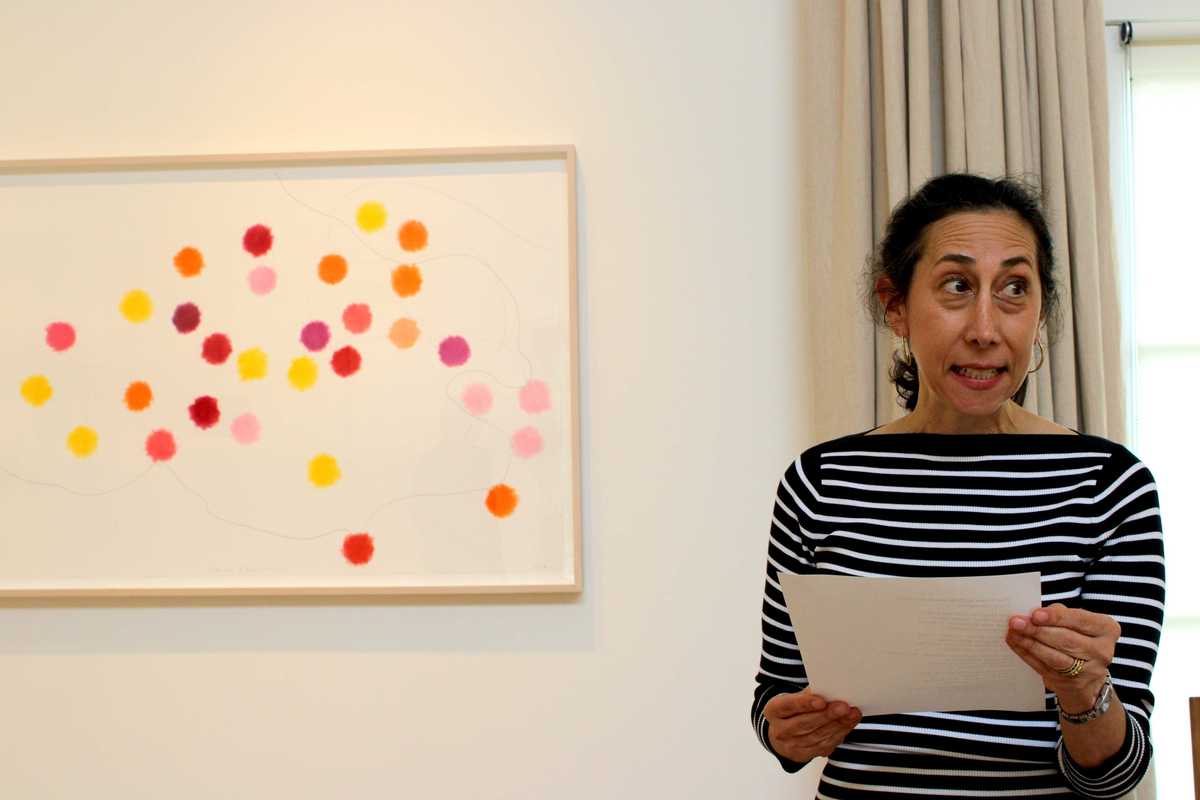
Curator Deborah Goodman Davis reads the Emily Dickinson poem “The Grass So Little Has to Do.” Spencer Finch’s “Following Three Bees (Zinnias)” buzzes in the background.

Photo by Natalia Zukerman

“The Grass Has So Little to Do,” on view at James Barron Art in Kent, takes its title from Emily Dickinson’s poem “The Grass So Little Has to Do,” written in 1862:

“The Grass so little has to do—
A Sphere of simple Green—
With only Butterflies to brood
And Bees to entertain—”

Keep ReadingShow less

Marina Kotchoubey is not a woodworker

Marina Kotchoubey is not a woodworker

Marina Kotchoubey at the Ian Ingersoll Cabinetmakers showroom in West Cornwall.

Photo by D.H. Callahan

After 40-something years navigating the world of custom fine furniture, Ian Ingersoll was getting ready to retire. Starting off with a little dovetail stool that he sold at a shop in West Cornwall in the 1970s, he’d grown his skill and his business into something he — and the whole town — could be proud of. Shutting down that business was not an option.

Ingersoll built Ian Ingersoll Cabinetmakers, which produced mainly classical Shaker furniture, on passion: the passion he had to make a living through creative challenges and the passion of his employees, who all seem deeply in love with their craft.

Keep ReadingShow less
A legacy of giving at Norfolk Chamber Music Festival

One hundred and twenty years ago, Carl and Ellen Stoeckel commissioned New York architect E.K. Rossiter to design The Music Shed in Norfolk, Connecticut. After nearly a decade of entertaining their friends and neighbors with the finest music of the day, they built a permanent home for their beloved Litchfield County Choral Union.

The commission and full funding of the construction was not unheard of in an era when great fortunes led to public enrichment. Railroad tycoon John D. Rockefeller was instrumental in funding institutes of higher education. Steel baron Andrew Carnegie was building libraries all over the country, and famously said that a man who dies rich is a disgrace, challenging his peers to give their fortunes back to the people.

Keep ReadingShow less
google preferred source

Want more of our stories on Google? Click here to make us a Preferred Source.
Two unique exhibitions at Geary Gallery

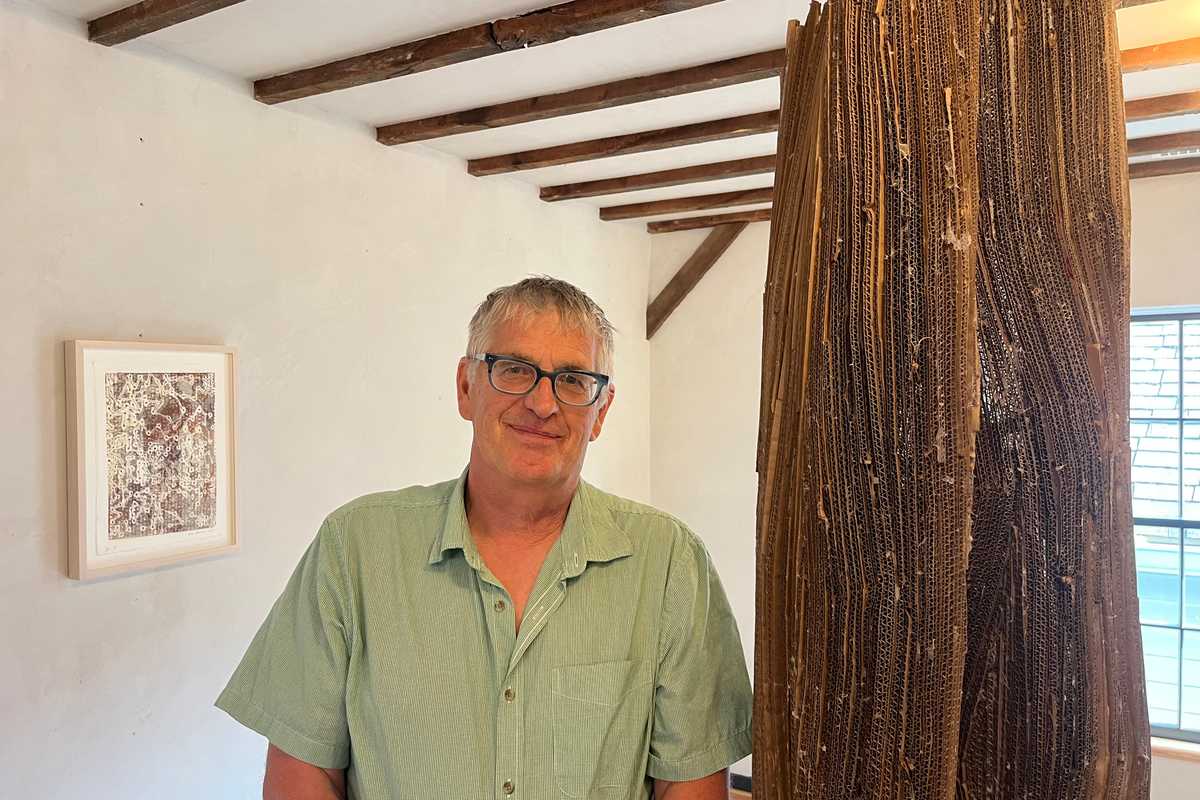
Henry Klimowicz with his sculpture, “Partial Pillar 1”

Photo by D.H. Callahan

On Saturday, Aug. 1, Geary Gallery opened its doors in Salisbury for two unique shows in its first- and second-floor gallery spaces. Art lovers flooded both floors over the course of the afternoon, giving the events a vibrant feeling that enhanced the importance of the art.

On the first floor is a show by Chicago-born, Colorado-based photographer Summers Moore, titled “Lobitos: Pueblo Fantasma,” or “Lobitos: Ghost Town.” The work centers around her daughter’s current hometown in Peru. Moore herself found a home away from home in Colorado in the mid-1980s and encouraged her children to seek out new places outside of their comfort zones.

Keep ReadingShow less

Writer’s retreat in the woods

Writer’s retreat in the woods

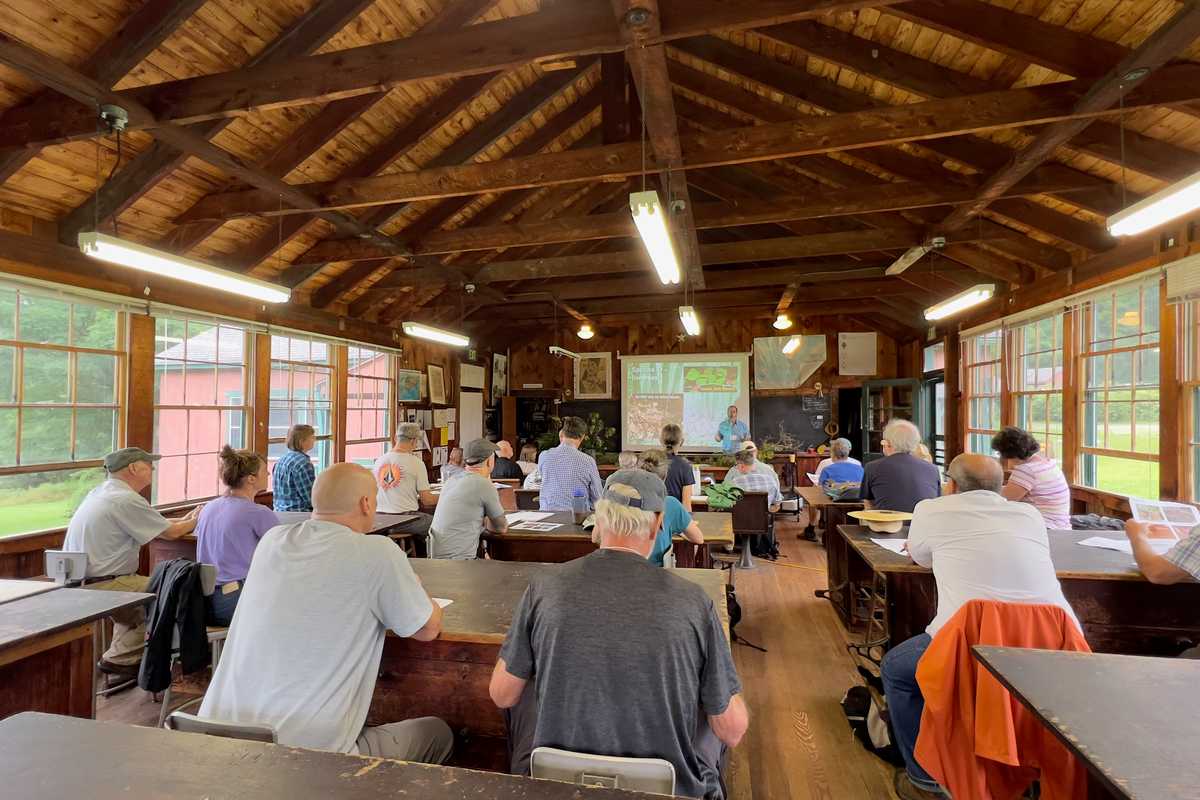
Participants in a 2024 Great Mountain Forest Woodland Academy workshop at Yale Camp.

Photo by Mike Zarfos

Great Mountain Forest (GMF) will host its first Nature Writing Retreat at the historic Yale Camp in Falls Village from Aug. 7-9, 2026. Writers of all levels are invited to draw inspiration from one of New England’s most notable forest landscapes. GMF envisions the retreat becoming an annual event celebrating writing, conservation and the relationship between people and forests.

This immersive three-day retreat reflects on the legacy of Hal Borland, the American writer and New York Times nature columnist whose work was deeply connected to this landscape. The retreat explores how wilderness shapes language, strengthens close observation and fosters environmental consciousness.

Keep ReadingShow less
From Cornwall to Rome, Adam Van Doren at Berkshire Botanical Garden

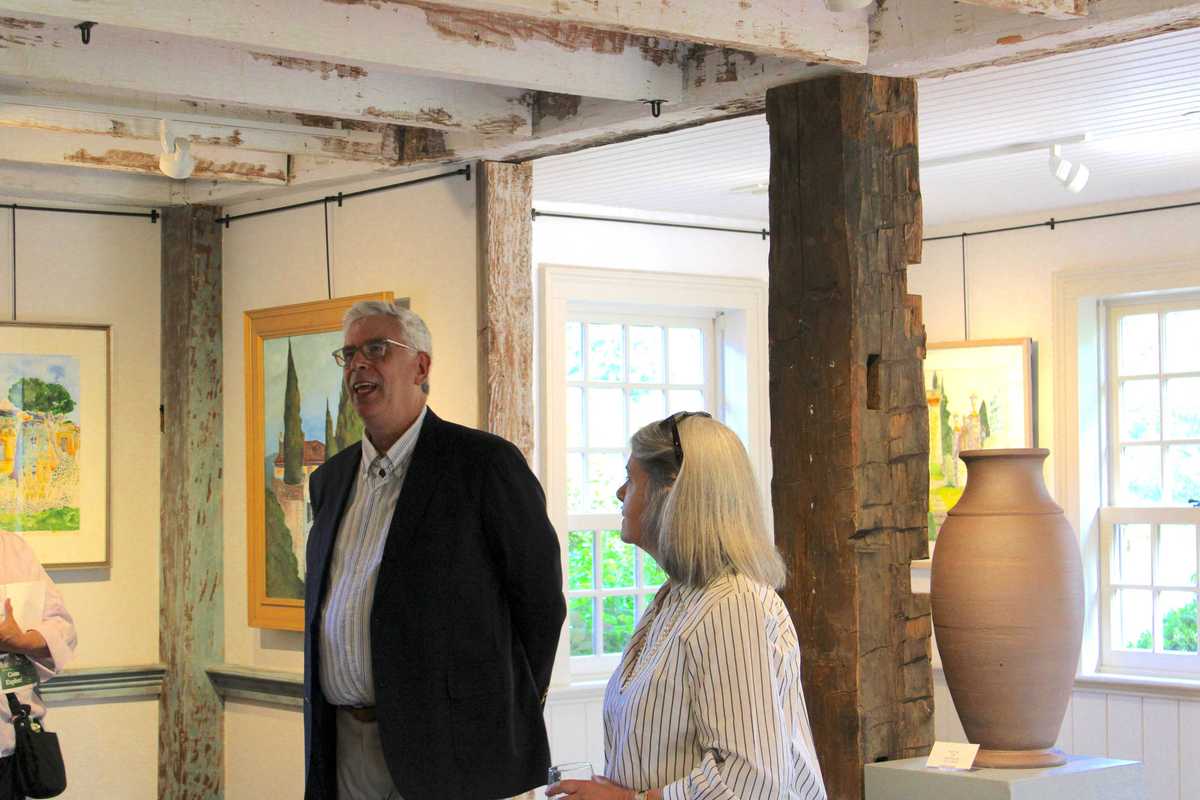
Artist Adam Van Doren and curator Donna Hassler talk to a group of visitors at the Berkshire Botanical Garden. A Stephen Proctor vessel sits to their left.

Photo by Natalia Zukerman

This summer, the Berkshire Botanical Garden in Stockbridge has hosted “Grounded in Nature: Paintings by Adam Van Doren,” an exhibition exploring the intimate relationship between architecture and the natural world.

On view for only a few more weeks in the Leonhardt Galleries, the exhibition features more than 35 watercolor and oil paintings by the New York-based artist, architect, author and Yale professor, curated by art historian Donna Hassler, director emerita of Chesterwood. The works span three distinct places that have shaped Van Doren’s artistic practice: New York City, Cornwall, Connecticut, and his travels throughout Europe.

Keep ReadingShow less
google preferred source

Want more of our stories on Google? Click here to make us a Preferred Source.
google preferred source

Want more of our stories on Google? Click here to make us a Preferred Source.