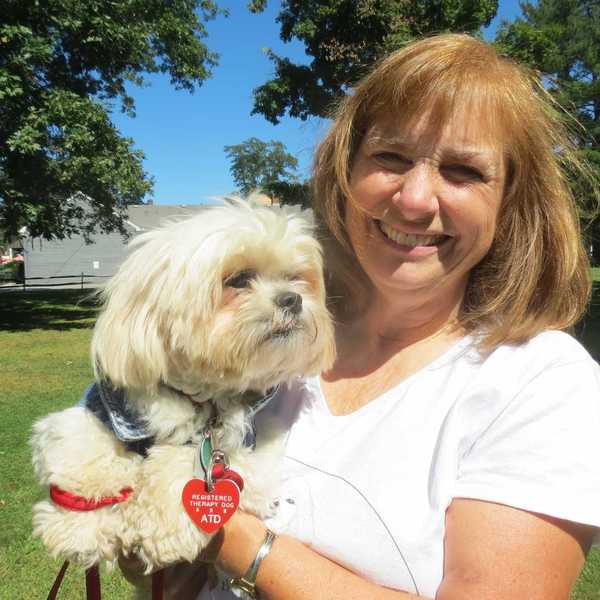
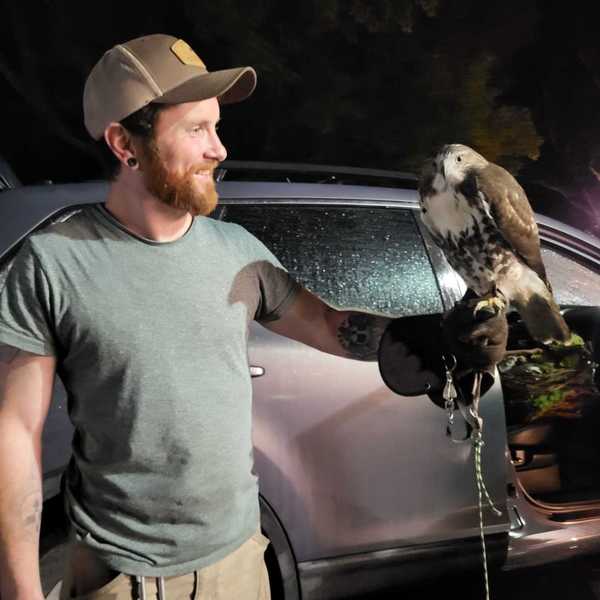
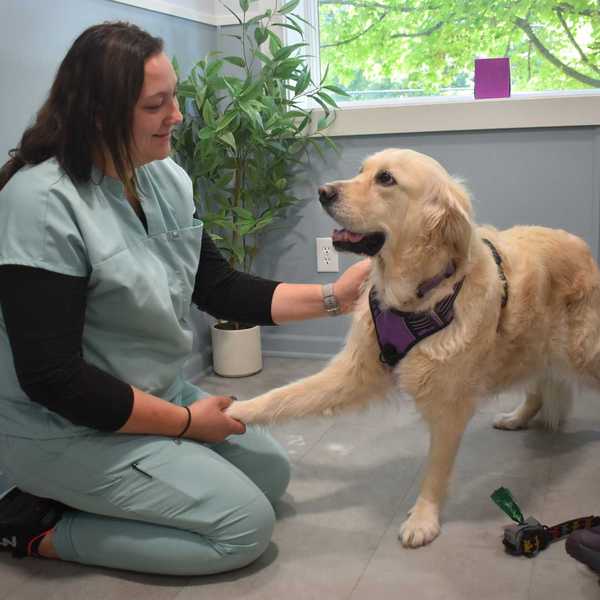
Little Guild opens doors to new West Cornwall animal shelter

The Little Guild opened its new animal shelter Saturday, May 9.
Jennifer Almquist


The Little Guild opened its new animal shelter Saturday, May 9.
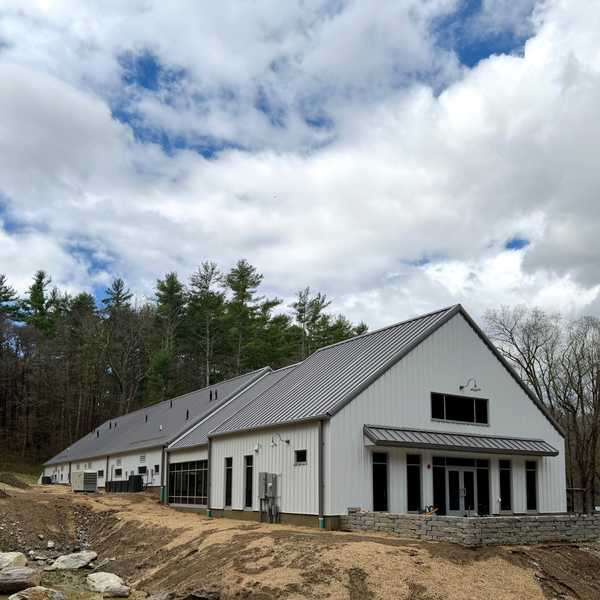
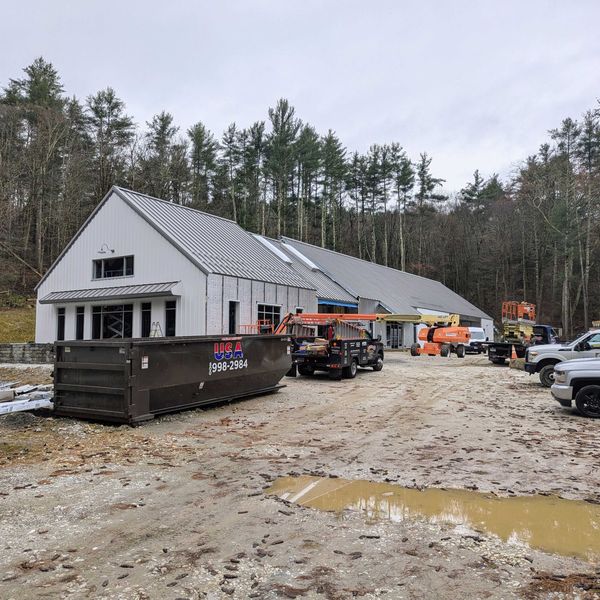
WEST CORNWALL – The Little Guild opened its new animal shelter Saturday, May 9, welcoming hundreds of visitors to the grand opening of its new 8,000-square-foot facility in West Cornwall. The opening comes after eight years of planning and fundraising, and two years of construction.
Community members gathered alongside volunteers, donors and board members to tour the new shelter during the open house, which was held from 11 a.m. to 2 p.m. The completion of construction last week made way for cats, kittens and dogs to move into their new space ahead of the event.
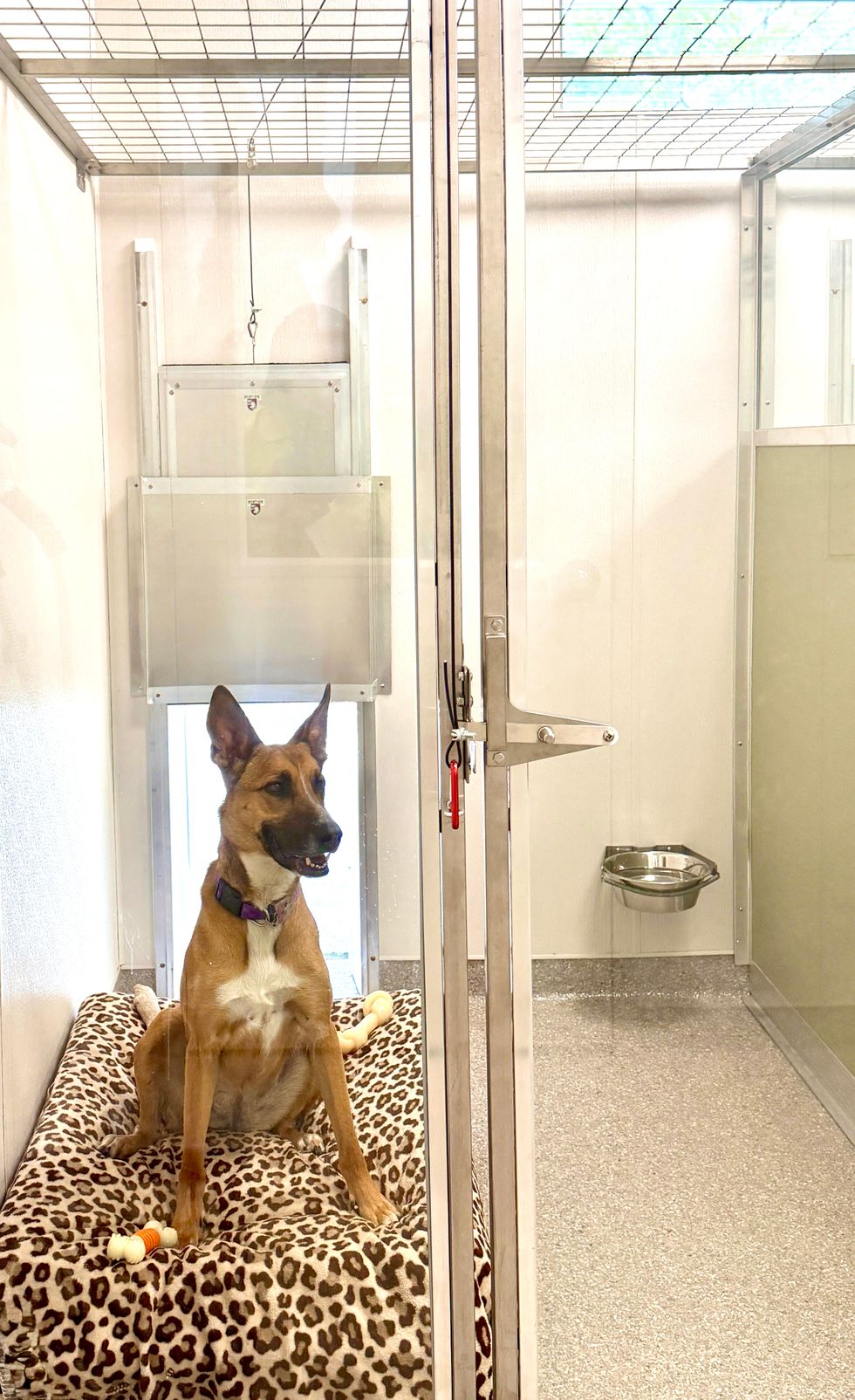
A modern, sleek building for animals
Light-filled and serene, the modern building fits into the wooded landscape with flowering trees and colorful plantings. The facility features a granite patio and four large dog pods.
Animals will benefit from a variety of rooms and features.
A cat care hub is designed for feeding and cleaning cat litter boxes, though the most popular features are the cat pavilion and “Catio,” an outdoor extension of the play area for feline residents intended to help reduce stress levels. Dogs will enjoy living rooms designed for stressed pups and recently surrendered dogs, and a dedicated dog bath has a ramp to the cobalt-blue bathing space.
Kelly Bozzuto, Little Guild board president, expressed joy after seeing years of hard work and planning finally pay off.
“It’s aesthetically beautiful, but the functionality of every detail was planned to make it the best possible scenario for animals in what can be a stressful environment,” Bozzuto said. “We have veterinarians on our board that weighed in on the best decisions for the animals.”
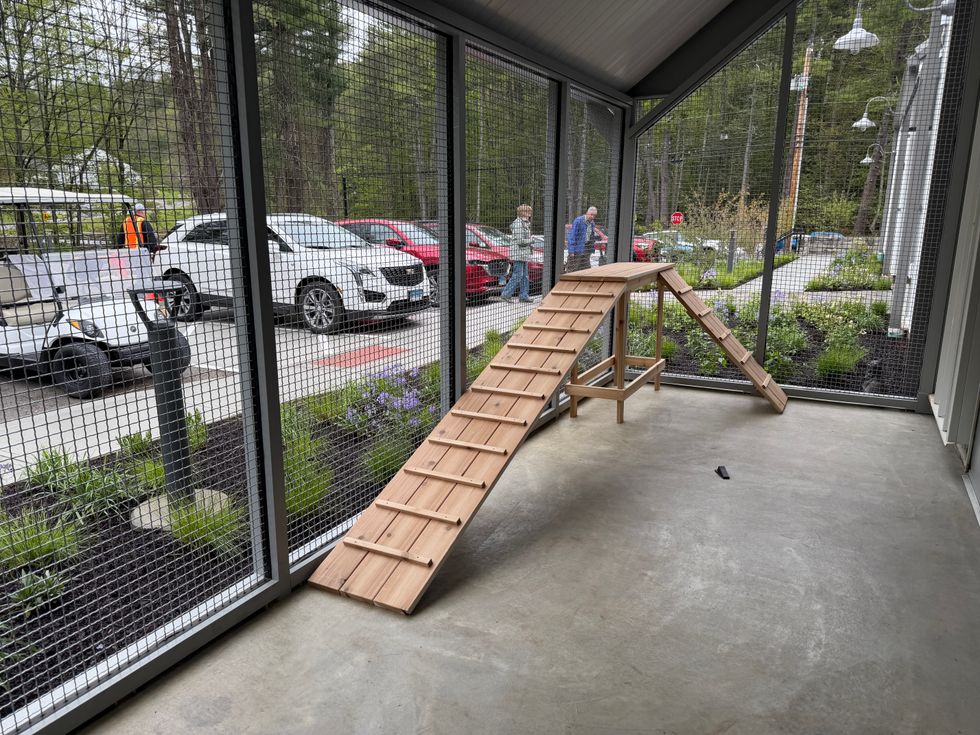
Veterinarians can examine animals in the facility’s full medical center, and the shelter eventually plans to offer dental services.
The facility was designed by chief architect Christopher Nardi, of Silver, Petrucelli & Associates in Hamden, and built by Burlington Construction based in Torrington.
In contrast to the new building, Little Guild’s evolution was documented through a series of photos that ranged from the original 1960 shelter to the trailers in Cornwall Bridge that temporarily housed operations while the former building was razed.
Community reacts to new shelter
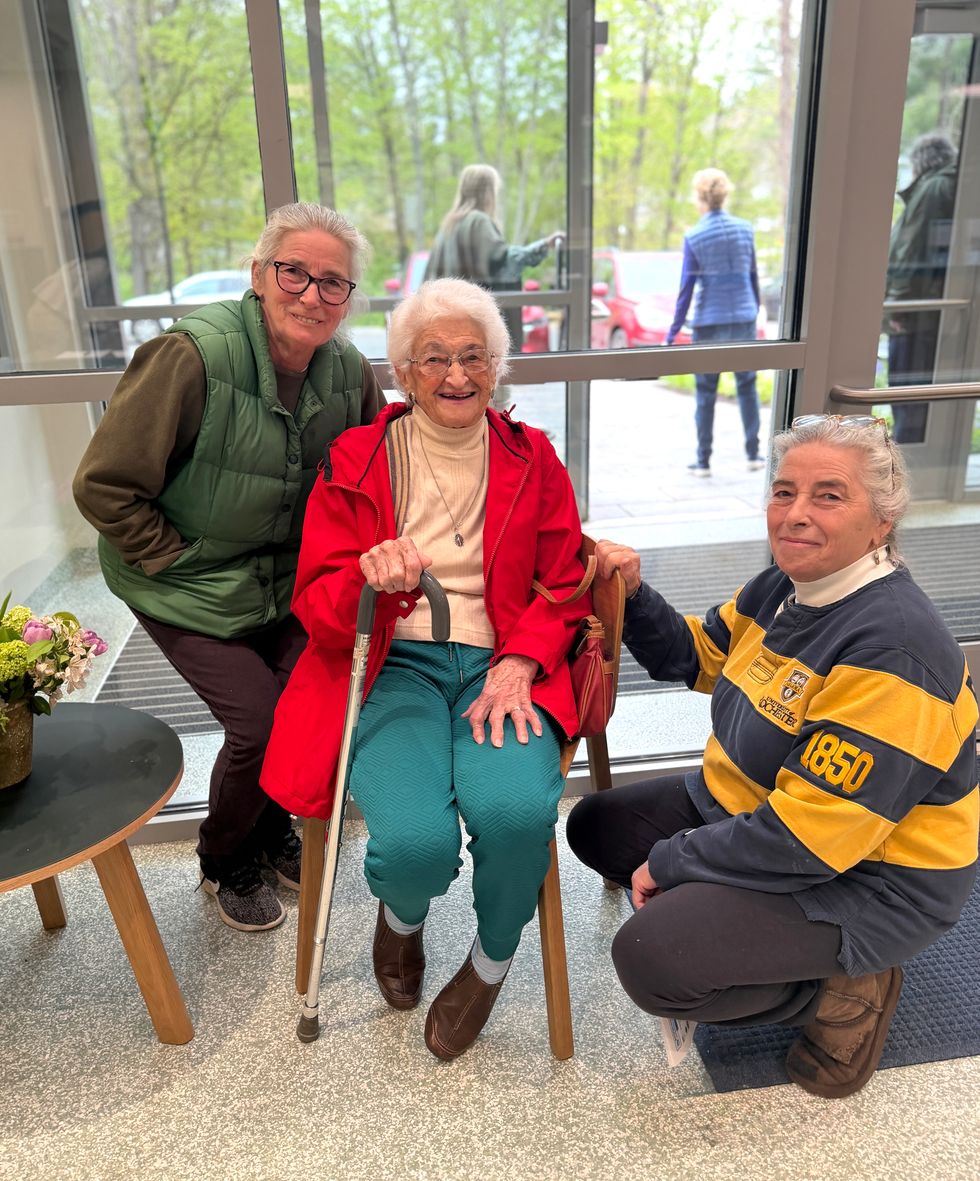
West Cornwall resident Mary Woodman, 99, came to the grand opening with her identical twin daughters Noreen Warner and Nora Sebben. Woodman said she was delighted by the new space and expressed pride in her community.
Board member Priscilla McCord turned at one point, saying, “Well, I am in tears seeing what a huge turnout of support from our friends.”
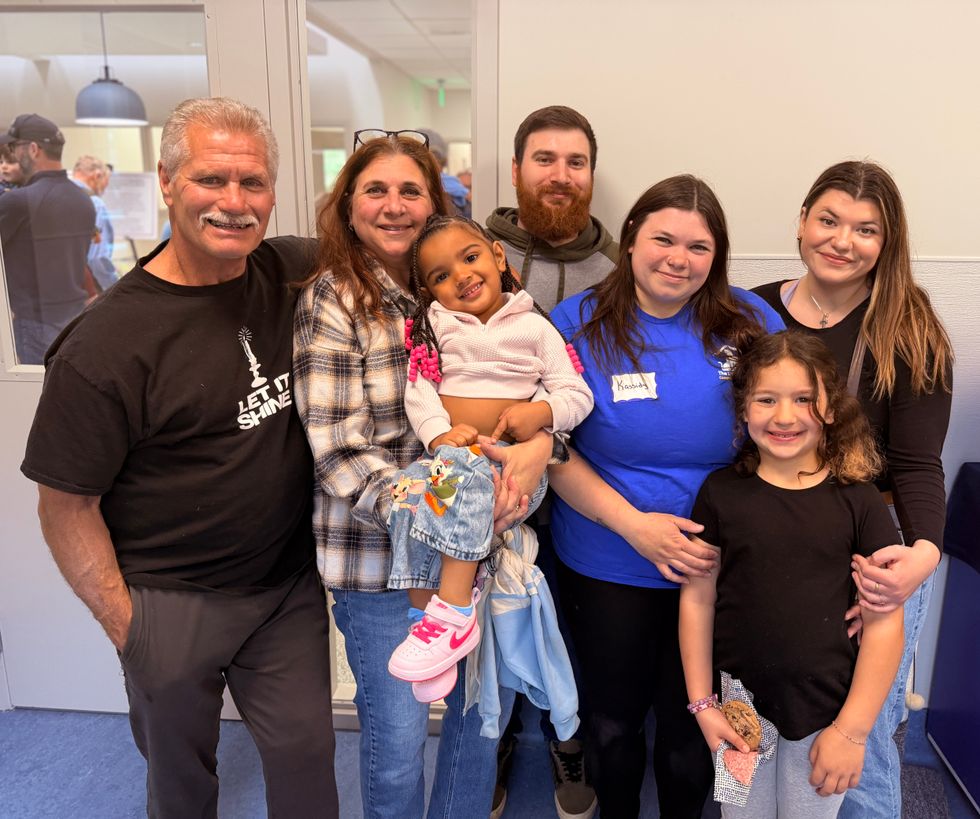
Dr. Matt Nebel, veterinarian and current board member, also brought his family. Nebel has been involved with the project, consulting on the design and functionality of the facilities.
The human staff of 12 said they are happy to finally have their own break room, a place to hang their coats and new bathrooms.
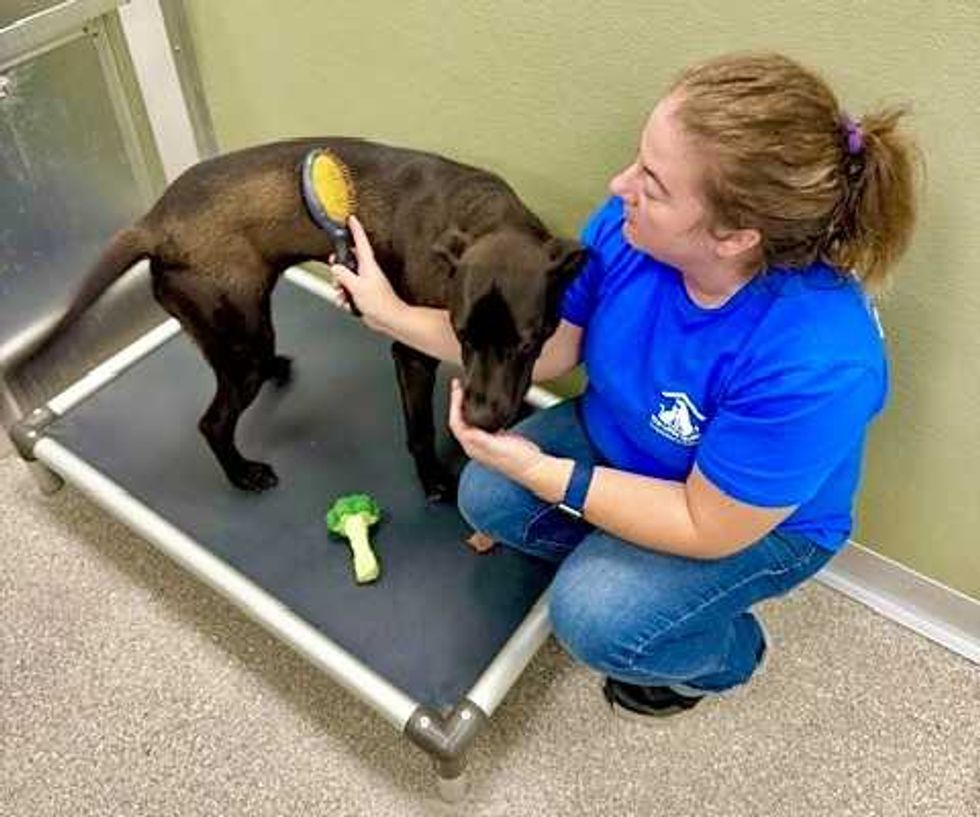
Shelter manager Tiffany Lemelin said she hopes the animals feel at home in the new space. “I hope they feel it – that sense of warmth and comfort, like walking into a place that feels like home.”
Support from donors
The animal shelter is named in honor of Robert R. Rosenheim. Little Guild director Jenny Langendoerfer said that Robert R. Rosenheim Foundation has been the organization’s partner in building the much-needed new animal shelter from day one.
“We could not have gotten here without their abundant support every step of the way,” Langendoerfer said. “We are honored to be a part of Mr. Rosenheim’s legacy of love and dedication to animals.”
Bozzuto credited Karen Doeblin, former board president, plus members of the Little Guild Advisory Council, including Chuck Short, Richard Lanier, and Alice Yoakum with the early planning and funding of this project.
Alice Yoakum, who lives in Lakeville, is a founding member of the Berkshire Taconic Community Foundation, and has been a major supporter and board member of the Little Guild for years. She smiled in approval, pausing to look back at the crowd as she left the celebration, clearly enjoying the success of the project. She once said, “It’s simply what you do. You give back to the community.”
Funding for this project was provided by donations from Little Guild supporters, and community foundations including the Robert R. Rosenheim Foundation, the John T. and Jane A. Wiederhold Foundation, the William and Mary Greve Foundation, the Draper Foundation, the Kathleen Bradford Foundation, the Seherr-Thoss Foundation, the Torrington Savings Bank Foundation, and the Town of Cornwall.
Community donations provided 75% of the funding for the project.
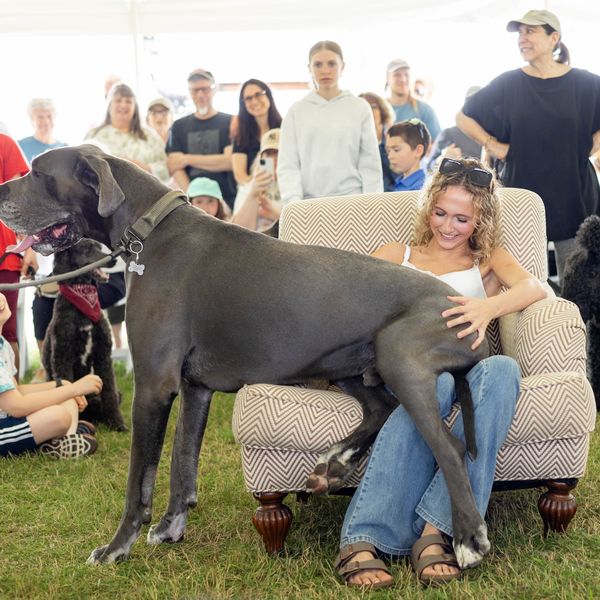
Designer Bunny Williams founded and supports the annual Little Guild fundraiser, “The Great Country Mutt Show,” which is scheduled for Sunday, June 7, 2026, at Lime Rock Park.
Little Guild supports the community with Pet Pantries for families in need, providing free food for pets, support for domestic violence survivors by caring for their pets through Project SAGE, free vaccination clinics, and vouchers for free spay and neuter procedures.
Little Guild’s Lasey Fund provides financial assistance for veterinary care to eligible Litchfield County residents. The Little Guild is a 501(c)(3) nonprofit, originally founded in 1957 by Muriel Alvord Ward and Eleanora Kleinschmidt, and is now the largest no-kill animal shelter in Northwest Connecticut. Its 99% save rate is one of the highest in the nation.
“Every day at the Little Guild animals are healed and loved, pet owners are supported, and families are built. It is a daily lesson in love and resilience,” said Langendoerfer.
The new facility is located at 285 Sharon-Goshen Road in West Cornwall. For more information, visit littleguild.org.
Riley Klein
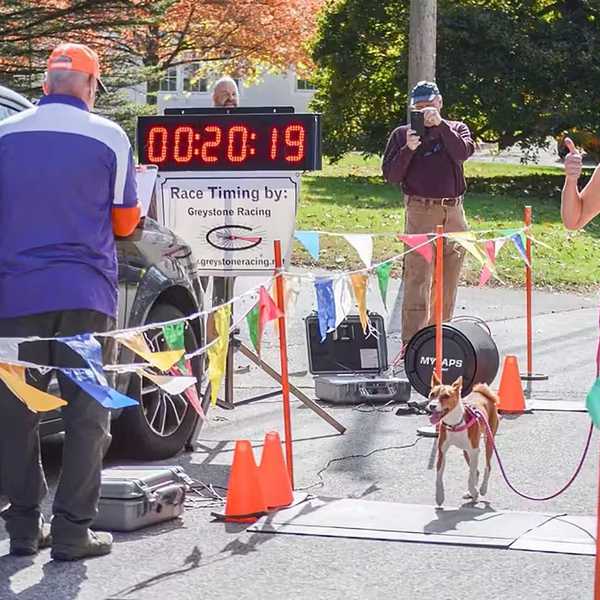
WINSTED – Northwestern Regional High School hosted varsity track teams from Housatonic Valley Regional High School and Terryville High School Tuesday, May 5.
The sunny afternoon of competition featured 18 events for boys and 17 events for girls – there were no female pole vaulters.
The meet was well attended with spectators lining the fence around the track.
In team scores Northwestern won, followed by Housatonic and then Terryville. As for individual winners, Housatonic placed first in 18 events, Northwestern won 14 events and Terryville won three events.
Many competitors set new personal bests and season bests. For full results, visit athletic.net/TrackAndField/meet/663562/results/all
Alec Linden
The swimming pond at Emery Park, which has been out of use for six years, will get an upgrade under the plan.
KENT — The Kent Board of Selectmen accepted a $37,000 proposal for a master project plan for the redesign of Emery Park during a special meeting Tuesday, May 5.
The proposal was brought to the town by the Parks and Recreation Commission, which has been discussing a comprehensive survey of the site with Meriden-based firm Cardinal Engineering since early March. The rehabilitation project for the park has centered around a defunct swimming pond – a stream-fed, man-made basin that has been out of use for six years – but Cardinal’s plan intends to address general accessibility and compliance with the Americans with Disabilities Act, which is requisite for municipal park facilities.
During the May 5 meeting, Parks and Recreation Director Matt Frasher said redesigning the swimming area without accounting for access would be irresponsible for what is intended to be a public resource. “If we’re limiting access, we’re really doing a disservice to the community,” he said.
The plan is meant to address features of the lower section of the park beyond the swimming pond, including a playground, sloping grassy field and proposed future installments such as toilets and showers.
Emery Park features a lower area with a pond, playground and several fields, surrounded by steep wooded hillsides with a growing network of hiking trails.
Late last year, an RFP was put out for just the swimming pond, but was later repealed due to issues with guidelines surrounding funds from the American Rescue Plan Act, $100,000 of which had been granted to the town for the project.
These funds, known by the acronym ARPA, are highly regulated and have to be spent before the end of the year, or they will be retracted by the federal government. Treasurer Barbara Herbst reported on May 5 that she has been in communication with the state as to whether the funds can be used to finance the plan itself.
Cardinal’s Vice President Timothy Cermola and engineer Roy Seelye were confident the funds will be applied to some aspect of the project that could be completed before the year’s end, and will not go to waste.
They anticipate the survey will be complete by the end of summer, which will act as a guideline for more specific construction and design plans down the road.
Alec Linden
The Swift House Investigative Committee recommended the town place a preservation easement over the historic façade of the Swift House facing Route 341.
KENT — After two months of deliberation, the Swift House Investigative Committee presented its recommendations to the Board of Selectmen for the future handling of the historic – and controversial – downtown building: protect it with a preservation easement, build a nonprofit to steward it, and if all else fails, sell it.
The temporary committee was established by the selectmen in February to formulate a plan for the town-owned structure before the May budget vote, which is scheduled for the 29th. The late 18th century building has been owned by the town since 1974, but has been effectively defunct for several years with no clear path forward, sparking disagreement between residents who wish to keep it as a historic town asset and others who view it as a tax burden.
During a special meeting held by the BOS on May 5, James Anderson, chair of the committee and co-owner of Kent-based letterpress card outfit Saturn Press, suggested that the first step is to protect the iconic façade of the building that faces Route 341.
“Recognizing that future ownership is uncertain, there was a desire on the part of the committee to ensure that the exterior façade of the house is preserved as part of the streetscape,” he said, recommending that the town place a preservation easement on that aspect of the structure.
The next move would be to initiate the process of finding the building a placement on the National Register of Historic Places, which Kent Historical Society President Christine Adams, who also sits on the committee,said is a crucial step in applying for external support. “Many won’t look at an application unless it’s registered,” she said of the various grant-writing institutions who may consider funding such a project.
If the town is to retain ownership, outside funding must be the priority, Anderson stated. He noted that there is a large gap between projected renovation costs, estimated at about $2 million in a 2024 report by architecture firm Silver Petrucelli & Associates, and town capital funds available for the project.
Much of that sum would be dedicated towards bringing the building into compliance with the Americans with Disabilities Act, which is “nonoptional” if the building remains under public ownership, Anderson said.
After the Board of Finance voted on April 14 to move $200,000 over the line to 2032 in the Five Year Capital Plan, $225,000 remains in the taxable part of the proposal. With the change, $375,000 sits beyond the five year line for the Swift House, used for planning purposes but not actionable.
Part of the Investigative Committee’s recommendation report was that any capital funds allocated towards the project be should kept, since most grants for this type of project are matched, meaning the town must contribute funds as well: “If we wish to secure these grants, then we’re going to have to show that the town is willing to spend some of its resources to help… if we come in with zero, we’re not going to get a warm reception is my prediction,” Anderson said.
Anderson noted, with Selectman Lynn Harrington’s support, that an additional way to appeal to grant makers is through a nonprofit rather than the municipality itself.
“A 501(c)(3) is a much better place to apply for grant money and go after resources that are external to the town,” he said, explaining that with this approach, ownership could remain public.
He compared the approach of town support, nonprofit management and external funding to a “three-legged stool.”
“That kind of three legged stool,” he said, “is much more powerful than either a two legged stool, or a one legged stool, which is very unpowerful – you fall off it.”
The report stipulates that if the nonprofit model proves dysfunctional after a year, the town should seek to sell the building.
Anderson urged that the town include in its 2026-2027 operating budget $5,000 for a consultant to apply for a position on the Registry, as well as $5,000 to fund a grant writer to kickstart the nonprofit effort.
The 2026-2027 municipal operating budget proposal contains a line of $19,600 for general maintenance and basic repairs of the building, but “nothing that’s going to make a dent in the work that needs to be done to make it usable as a town facility,” Anderson said.
Selectman Lynn Worthington suggested the group should present its case to fund the two initiatives and bring the capital back over the line to the Board of Finance during the annual budget hearing on Friday, May 15.
“We’ll beat the bushes and get as many people there as we can,” said Marge Smith, curator at the Historical Society and a member of the Investigative Committee.
The BOS will review the Committee’s recommendations during its next scheduled regular meeting on May 19.

Want more of our stories on Google? Click here to make us a Preferred Source.
Patrick L. Sullivan
SALISBURY — The Salisbury Handmade group of artists and craftspeople planned to host their spring sale on the lawn of the White Hart Saturday, May 9. Mother Nature had other plans, delivering a chilly and rainy day.
Karin Gerstel of Undermountain Weavers – and one of the event organizers – thanked the White Hart for accommodating the group inside, even though the inn was extra busy hosting a wedding.
One vendor, Leslie O’Neill of Lakeville, showcased her unique jewelry using seed beads, crystals, semiprecious stones and pearls. Some of the pieces on display had clean, geometric lines while others, O’Neill, said, were intentionally more “free form.” She has been making and selling her jewelry since the 2010 Salisbury Fall Festival.
“I believe the urge to adorn is so ancient,” she said. “It’s a primal instinct.”
Gina Amoroso showcased organic, plant-dyed, block-plated accessories for sale from her shop, Hettle. Scarves, wraps, napkins, socks and even scrunchies were made from leftover material. Amoroso, who lives in Becket, Massachusetts, said she has been in business since 2008 and is part of the Railroad Street Collective in Great Barrington.
Laura Hammond of Millbrook presented greeting cards using her encaustic paintings in beeswax of natural settings, such as vernal pools or landscapes in different seasons.
Hammond said she doesn’t have to travel far for inspiration. “And I am very grateful for that,” she said.
The Salisbury Handmade website is www.artisansale.org. The next sale is Saturday, Oct. 10, at the White Hart.
Christian Murray
NORTH CANAAN — North Canaan has postponed its town meeting on the proposed 2026–27 municipal and education budgets until May 18 after officials identified a scheduling conflict with a major high school event expected to draw a large turnout.
During its May 4 session, the Board of Selectmen voted to move the annual town meeting from May 13 after concerns were raised that many residents would be attending the Housatonic Valley Regional High School FFA open house that same evening.
The FFA Open House is an annual event held at the high school that highlights the school’s agricultural education program, including student projects and hands-on learning experiences.
The board voted to reschedule the meeting for May 18 at 7 p.m.
The proposed budgets total about $14.6 million, including a $3.35 million municipal budget and an $11.24 million education budget, the latter reflecting a 7.92% increase over the current year. About $5.1 million is allocated to North Canaan Elementary School, while $6.14 million represents the town’s share of the Region One School District budget, which voters approved last week.
A public hearing on the budgets held April 20 lasted about three minutes and drew little public comment. Officials said the proposed budgets are not expected to face significant opposition.
Patrick L. Sullivan
FALLS VILLAGE – Voters in Region One towns approved the district’s proposed $19.5 million 2026–2027 school budget Tuesday, May 5, by a vote of 333-120.
From noon to 8 p.m., 453 total voters turned out from Cornwall, Falls Village, Kent, North Canaan, Salisbury and Sharon.
The budget passed in every town except Falls Village, where the proposal failed by 12 votes. The vote passed with the highest percentage in Cornwall and Salisbury, with 94% and 91%, respectively.
The budget totals $19,533,640, an increase of $1,048,431, or a 5.67% increase over the current year.
The Region One budget is divided into three components: Housatonic Valley Regional High School (HVRHS), Pupil Services and the Regional Schools Services Center (RSSC), also known as the central office.
Cornwall: 60 yes, 4 no
Falls Village: 33 yes, 45 no
Kent: 69 yes, 11 no
North Canaan: 46 yes, 39 no
Salisbury: 94 yes, 9 no
Sharon: 31 yes, 12 no
Region One town assessments were also approved, and are based on the number of students each town sends to HVRHS, meaning costs can shift as enrollment changes.
Cornwall
$2,168,169
increase of $163,895
Falls Village
$1,752,589
increase of $208,904
Kent
$2,783,359
increase of $171,360
North Canaan
$6,140,112
increase of $519,526
Salisbury
$4,798,928
increase of $17,835
Sharon
$1,890,486
decrease of $33,356

Want more of our stories on Google? Click here to make us a Preferred Source.

Want more of our stories on Google? Click here to make us a Preferred Source.