Baseball’s spring training is here, and fans, armed with statistics and a working knowledge of contract law, are ready to root, root, root for their favorite group of millionaires.
The favorite for silliest baseball story of the spring, outdistancing the field by far, is the "Do A-Rod and Derek Jeter Hang Out?" epic.
Jeter is the All-Star shortstop and captain of the Yankees. He will take his place beside Ruth, Gehrig, DiMaggio, etc., in the Yankee pantheon.
A-Rod, aka Alex Rodriguez, is a moody fellow who just happens to possess the richest contract in baseball history. He is a throwback to a different sort of Yankee tradition — the one of buying the most expensive free agents and watching them bomb with the public.
If you’re following this eighth-grade saga, Jeter and A-Rod used to be pals. They didn’t play on the same team, either.
Then A-Rod acquired a Mrs. Rod and wound up with the Yankees, after agreeing to play third base so as not to displace the Yankee captain. Jeter continued to date supermodels and do what wealthy young men in New York City do.
So they’re not such pals now.
But reporters keep asking them if they are friends. Over and over they return to the subject. You’d think there was nothing in the entire world of baseball to write about.
It doesn’t help that A-Rod continues to give weird interviews. This spurs the reporters on to greater heights of imbecility, because if A-Rod were to say something truly bizarre then the guy holding the microphone will be famous.
Jeter wisely decided to keep his mouth shut on the topic. Too bad nobody else can follow his example.
*****
Meanwhile the steroid mess is getting messier. Nine people in three states, including the owners and employees of a mail-order outfit called Signature Pharmacy in Orlando, Fla., were busted last week and charged with selling steroids to pro athletes, bodybuilders and other celebrities. A doctor was also charged, and there are more indictments coming.
Some fairly big names are being bandied about, including washed-up Oakland A’s slugger Jose Canseco, who already wrote a braggart’s book — "Juiced" — about his exploits. Maybe this will help sell the paperback edition.
But the most prominent person in the story — the one who never failed a drug test, and the man of whom it was reported recently that not only his chest and biceps but his head and his feet have grown — yep, Barry Bonds is in Arizona with the Giants, getting ready to break Hank Aaron’s home run record and practicing his surliness.
It is difficult to think of a more unattractive individual than Bonds. But the Giants are willing to ignore the cheating question — and his wretched, antisocial behavior — because Bonds puts the fannies in the seats. And San Francisco fans are apparently willing to to be those fannies.
*****
Which brings me to this: How great does the gap between the pro athlete and the fan have to get before people lose interest? That sports figures regularly get in scrapes with the law, yet rarely receive the same punishment as mere mortals, doesn’t seem to bother anyone.
That even mediocre talents earn salaries that dwarf the average fan’s paycheck, and that to pay for those salaries the prices for everything associated with pro sports — tickets, concessions, cable networks — are obscene; nope, that doesn’t seem to bother anyone either.
And that pro teams routinely practice a polite form of extortion to get sweetheart tax and real estate deals from municipalities — well, the only people who complain about that are crackpots and do-gooders, right?
Jerry Seinfeld is often cited as saying a fan roots "for the laundry" of a particular team, and not necessarily the individuals. It seems an apt description to this fan, because frankly I feel hung out to dry.
And I’d still like Bonds to explain exactly which exercises make your head and your feet grow.

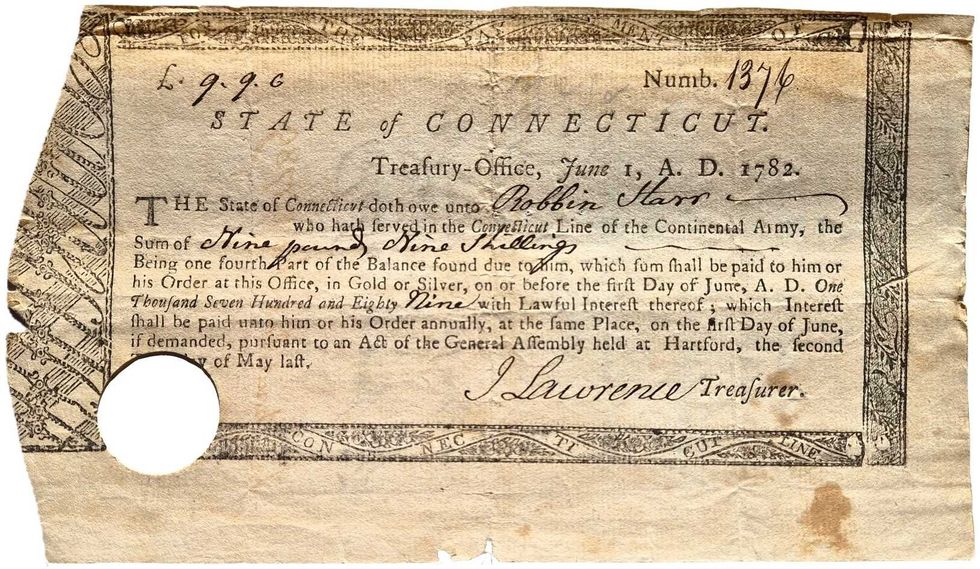 Pay Bill for Robin Starr’s service in the Continental Army.Courtesy the Alex Breanne Corporation
 John Mills speaking at Quinnipiac University.Courtesy the Alex Breanne Corporation
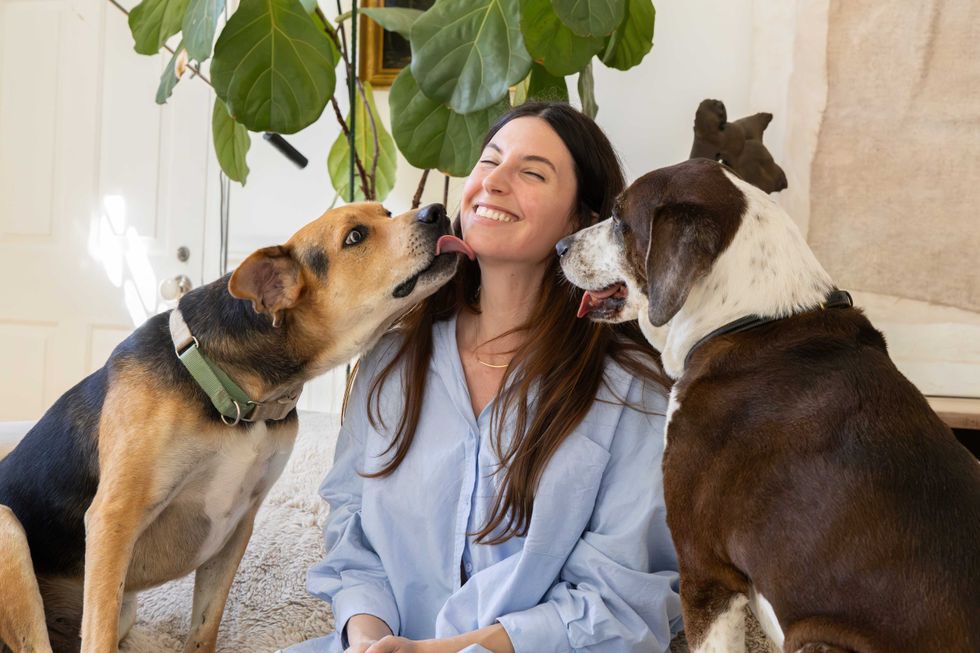 Stephanie Saetta,with her rescue dog George and Blue (left), a shepherd mix awaiting his forever home.Madi Long
 Blue, a 7 year-old Shepard mix, is waiting for his forever home. Madi Long