Two weeks ago we outlined in the very broadest terms one possible way in which America could put her nose to the grindstone and come back as the strongest, most influential entity on the globe.
The Plan was not an America First offshoot of pre-World War II days. It was rather a Plan for which America could be responsible for rebuilding those component parts that had been allowed to rust, wash away, die. And it tried to explain simply how this turnaround could happen.
Unremarkably, we did not convince the world. Remarkably, the world seemed to change in a matter of days.
• • •
Howard Schultz of Starbucks announced a plan to assist his baristas into college programs. Then Stephen Colbert offered more than $800,000 to his home state of South Carolina to meet the needs of its teachers. And finally, Warren Buffett decided to invest in the future of Atlanta.
One of our first thoughts was that the nation as a whole had lost its patience and had decided to plunge into improvements without waiting, or even hoping for, any congressional approval, consent, or debate. But then it occurred to us that our Plan required nothing from Congress to begin with, although legal oversight of individual blueprints as they developed might be required from various benches around the nation.
The Plan is simplicity itself. Those industrial giants sitting on idling cash (and you know who you are) could invest in the needs of a collapsing city or town for an extended promissory length of time. Beginning with an identified area’s first-grade students, all students there would receive an “allowance” of $1 a week — in second grade, $2; in third grade, $3, etc., through high school.
Simultaneously the donor industry (-ies) would be teaching its targeted kids about itself, what it does, how it benefits the world, and how employment in it can be exciting and worthwhile. Donor industries would generate a public relations bonanza, as well as training kids in its program for positions at all levels so that a well-prepared and able work force will be created for the future.
Who, at this moment, needs this PR blitz more than Shell Oil? And who better can afford it?
The money that goes to students through any system is not a bribe, although it may appear so. It is a way of creating knowledge about economic life in this country, making choices, and learning about their own communities so that the temptation, under stress, to tear down, riot, burn and loot their own neighborhoods diminishes over time. Further, it makes new consumers of them and their families.
• • •
In the wake of events in Baltimore at the end of last month, commentators of all sorts offered solutions. The stunning part of these ideas was how much they left out.
(1) This is not a governmental program, nor a new government giveaway. Negotiations for support between industry and targeted locations take place between those two groups, period. Who knows better than the local citizenry what its neighborhoods need? This is private enterprise. Up to and including the educational reforms undertaken in each area. With the resounding lack of success of billions thrown at scholastic “cores” throughout the years, we should have learned that often education is local, too. This might possibly spell the end of the Department of Education, a long-time Republican goal.
(2) This is not Democrat versus Republican, nor of rich versus poor. This is entirely apolitical. When a city or town is identified as needing assistance, its council or mayoralty or schoolboard, police, fire and ambulance services are the movers and shakers. It is they who will be interacting with donor personnel. Voting on municipal issues and budgets should continue as before. No one in the assisted town or city will have any reason to complain about unfairness or lack of clout. In fact, this generous influx of new cash and the building of new markets may even lighten the local budgetary woe of a town or city. All young people benefit, as do their families, their towns and cities, their lives.
(3) There is no separation between boys and girls, or kids of any color, who might benefit. The national press has focused nearly exclusively on young men. What about the young women left behind?
Our intent is to identify a man or woman of good will and even greater resources. Where do we go first to seek these people out? Privately held industries, companies not indebted to stockholders or a stock exchange. Companies where the CEO can, with one swipe of his/her pen, change life for thousands and not feel it.
• • •
It would be our hope that even stockholders, at first put off by seeing their dividends reduced for this “pull up your boot-straps” project, would in the long run be assured they were losing nothing and perhaps gaining a great deal. Assured that the money donated to these projects is in the public good and therefore probably tax-deductible from annual profits, dividend seekers can rest easily.
As for the youngsters being given this chance to improve not only their own prospects but those of their entire families, we think their financial dividends, extending until high school graduation, should also be free of taxation.
• • •
Next: Who benefits most quickly and why? The long-term prospects for a successful Marshall Plan and our individual roles in the process. What kind of people do we need to lead us and why?
Stick around. We may have something here.
John Neufeld is a Salisbury novelist and syndicated commentator for WHDD.FM.
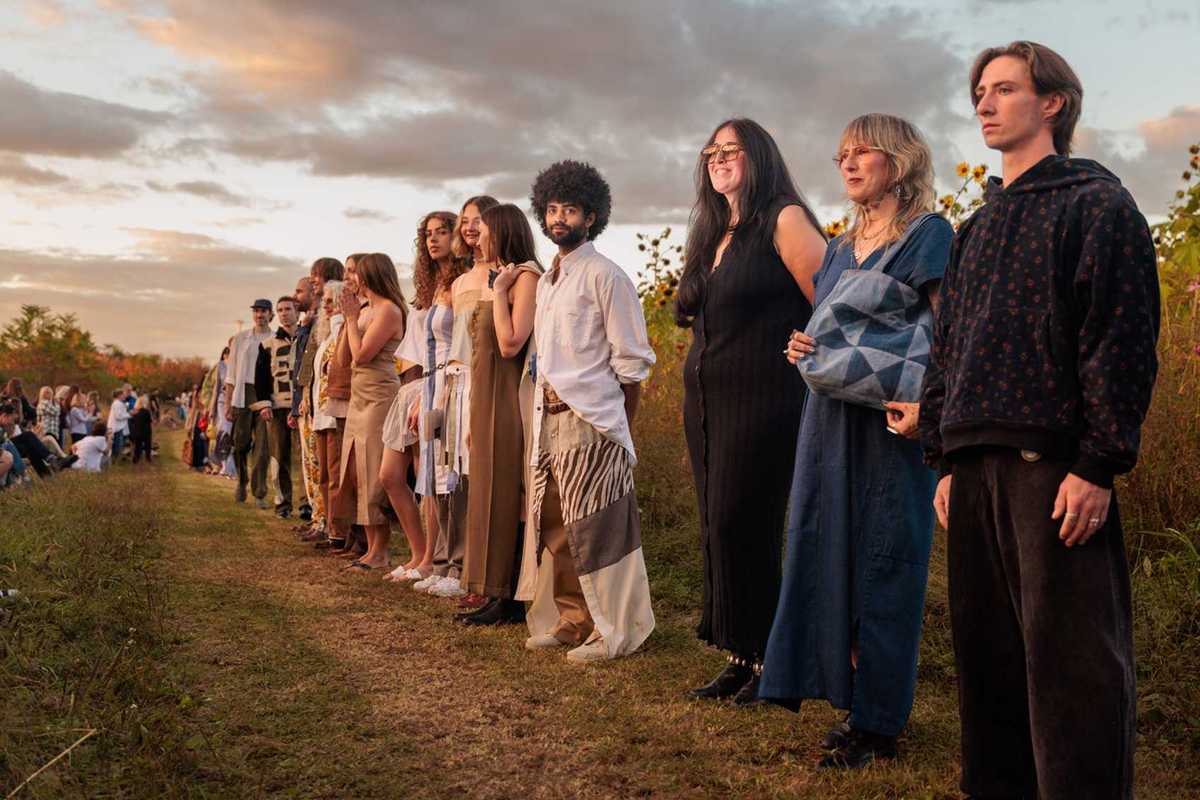
 Models walk the organic runway at HVSFW. Ilan Harel

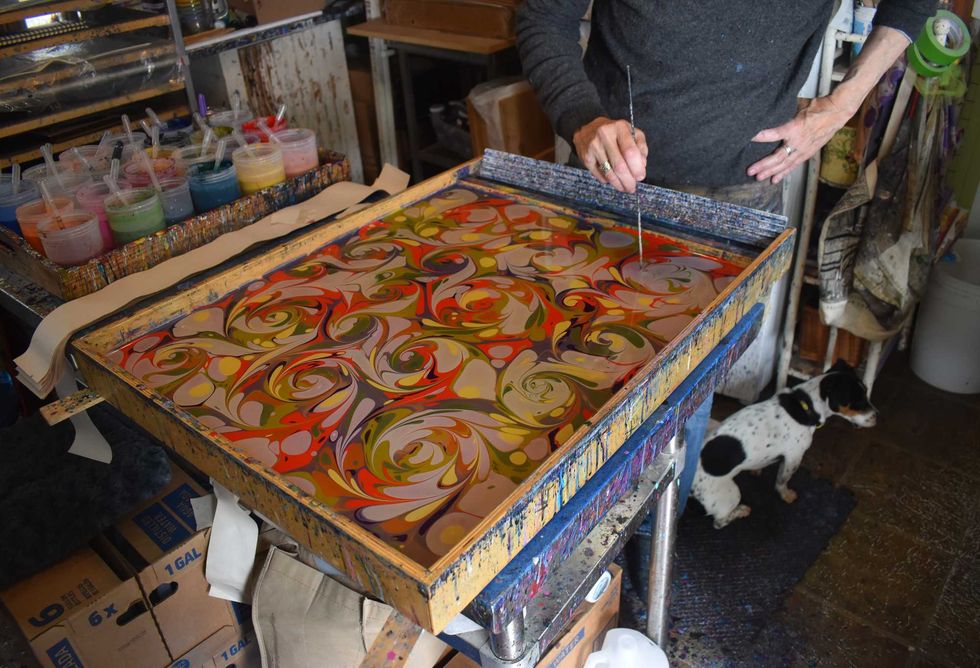 Susan Schneider, owner of Shandell’s, creates a variety of products with marbleized surfaces in her Ashley Falls studio.L. Tomaino



 Roger McKee naming the winners with the first place entry over his left shoulder. Patrick L. Sullivan
 Muriel Stockdale’s “Kevin” took second place in the juried art show at Trinity Episcopal Church.Patrick L. Sullivan