Thank you!
Your support is sustaining the future of local news in our communities.

Mary Rita Ann Nania

NORTH CANAAN — Mary Rita Ann Nania of Granite Avenue, and a resident of Geer for the last four years, died July 8, 2012, five months short of her 95th birthday, of natural causes. She was not a native of the Northwest Corner. Her parents, Camille Albert Pothier and Genevieve Veronica Kelly, met and married in Rhode Island in 1915, but two years later, her father, who had learned the art of dyeing textiles from his father, was offered a job as foreman of a Troy, N.Y., textile plant. Mary was born on Dec. 6, 1917, in Troy. A decade later, while she was still in grade school, her father was engaged as a “consultant” to set up the new dyeing machines at the textile mill in Great Barrington, and the family moved into a rented house on the site of what is now Berkshire Bank on Main Street. She loved Great Barrington but, a year later, her dad got a new assignment, and the family moved back to Rhode Island, where her father had been hired as foreman at the Bradford Dyeing Association in Bradford, R.I.The family really didn’t want to move again; but her mother made an offer on the 77-acre Diamond Hill Farm in nearby Ashaway, R.I., before her father even had a chance to see it.Mary was enrolled in the college course at Westerly High School, played side-center on the girls basketball team and attended the University of Rhode Island. She left college during World War II to work as an inspector of airplane propellers at Hamilton Standard. She found more defects than her boss wanted. She also made a friend at work who introduced her to the man she would marry.During the course of the war, Mary overheard a phone conversation while using a party line telephone and gave information to the FBI that led to the arrest of a German spy — the cook at a Westerly inn.On Nov. 25, 1943, she married S. Joseph Nania — a Yale College graduate, a concert violinist who had lost his hearing and the music supervisor in the Stonington, Conn., school system. They had five children in the next 10 years and lived in an apartment in Pawcatuck, Conn. In early 1955, her husband got a phone call from Bill Meader, a friend and classmate at Yale. There was an opening for a music teacher at Housatonic Valley Regional High School. He got the job, and in August 1955 the family bought its first house, in North Canaan. Three years later, Joseph Nania died suddenly of a heart attack, leaving Mary a widow with five children, the oldest of whom was 13. Though tempted to move back to Rhode Island and the support of an extended family, Mary decided that the Northwest Corner would be a better place to raise her children. She found what would become an 18-year job as a teller at the then-Canaan National Bank. She also worked at a number of part-time jobs, once serving as a reporter for The Lakeville Journal. Mary was active in the community. She was a charter member of both the town Recreation Committee and Civil Defense Team. She helped organize and served as president of North Canaan’s Little Theater Group. She and her brothers were avid tennis players in their early years. In middle age, she tried to learn to play golf, but after several lessons, the pro gently suggested she consider another sport. She won trophies at the Geer Fishing Derbies for the largest trout caught and for the most trout caught. She had both knees replaced in her late 60s, one of which was again replaced when she was 84. She drove a car till she was 91 and never had an accident, though she did have numerous speeding tickets. She was a cook who sold her pies to a local restaurant and a mother and grandmother who baked the cookies, cakes and pizzas her children and grandchildren will never forget.She was ever generous and giving and never really considered or accepted the fact that she herself was poor. She regularly contributed from what little she had to all she thought to be in need and passionately defended any she considered to be downtrodden. She took in and became the legal guardian of a high school girl whose parents had both died suddenly.Mary Nania should principally be remembered, however, for her strength of spirit. Despite the many challenges to health and well-being she was served, she never weakened. With firm resolve, faith in God and the unfailing help and encouragement of her sister-in-law, Mary A. Nania, and other friends and neighbors, she paid off the mortgage and shepherded all five of her children from school and college to careers, marriages and families of their own.She was predeceased by her parents and her brothers, Camille and Gerard Pother; and her son, Peter P. Nania. She is survived by her sons, Anthony J. Nania of Falls Village and Gerard F. Nania of Old Saybrook, Conn.; her daughters, Tomassina (Nania) Panepinto of Altamont, N.Y., and Maria (Nania) Stillman of Brooklyn, N.Y.; two sons-in-law, William Panepinto of Altamont and Richard Stillman of Brooklyn; two daughters-in-law, Lynn (Clayton) Nania of Falls Village and Diane (Grady) Nania of Old Saybrook; eight grandchildren; and three great-grandchildren. Arrangements are under the care of the Newkirk Palmer Funeral Home in North Canaan. A Mass of Christian burial will be held at St. Joseph’s Church on Friday, July 13, at 11 a.m. Though flowers are also welcome, contributions in lieu of flowers may be made to the Northwest Corner Chore Service.

Latest News

‘So Little to Do,’ so much to discover at James Barron Art

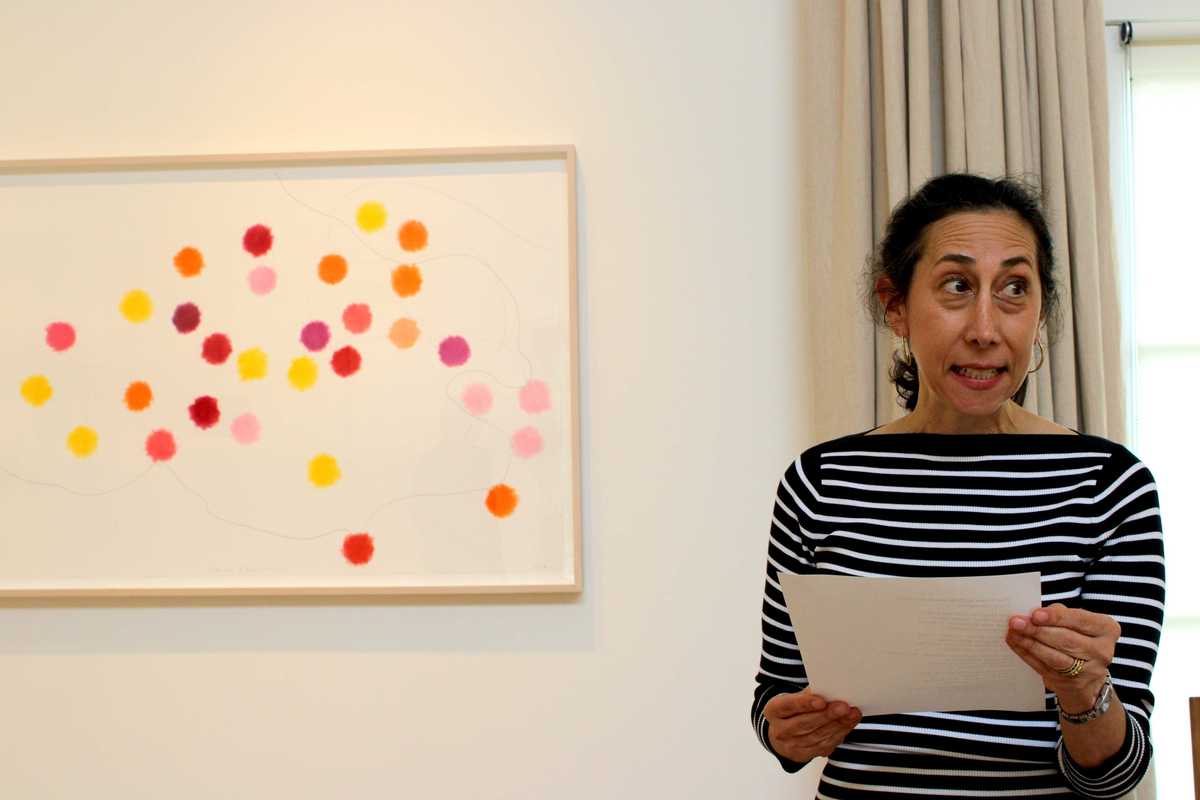
Curator Deborah Goodman Davis reads the Emily Dickinson poem “The Grass So Little Has to Do.” Spencer Finch’s “Following Three Bees (Zinnias)” buzzes in the background.

Photo by Natalia Zukerman

“The Grass Has So Little to Do,” on view at James Barron Art in Kent, takes its title from Emily Dickinson’s poem “The Grass So Little Has to Do,” written in 1862:

“The Grass so little has to do—
A Sphere of simple Green—
With only Butterflies to brood
And Bees to entertain—”

Keep ReadingShow less

Marina Kotchoubey is not a woodworker

Marina Kotchoubey is not a woodworker

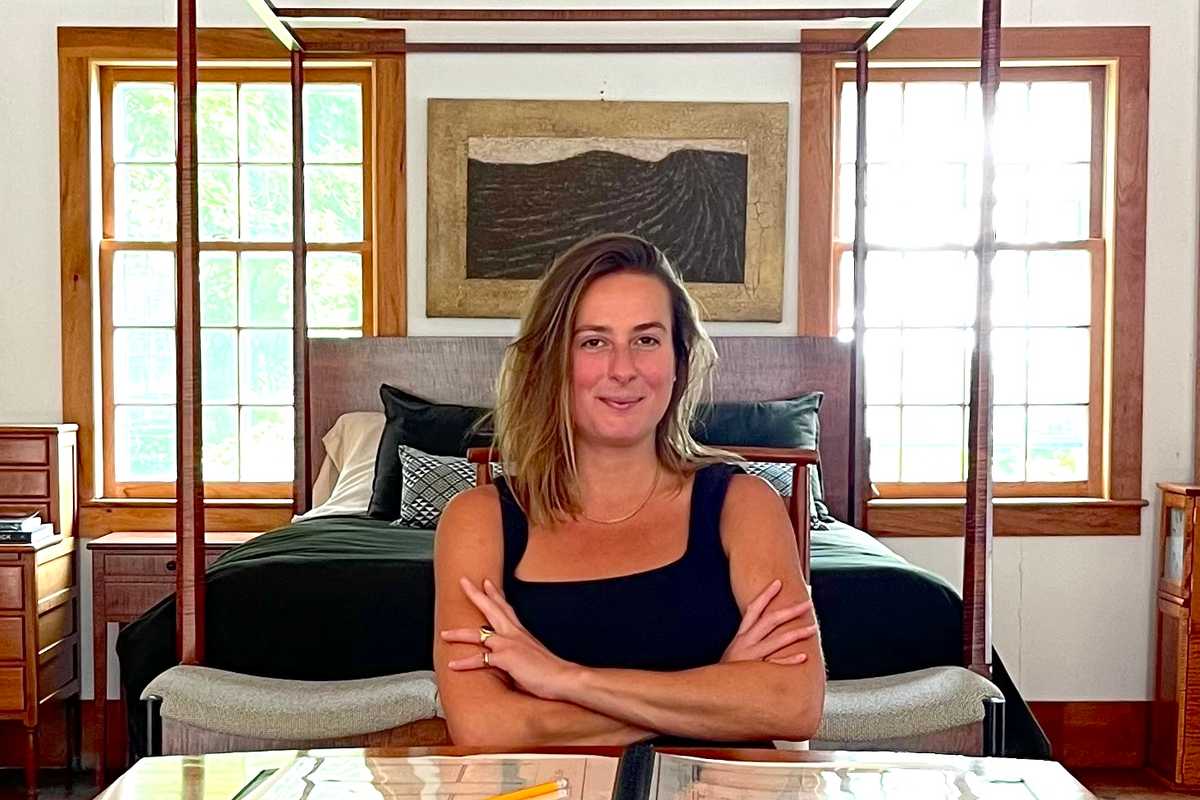
Marina Kotchoubey at the Ian Ingersoll Cabinetmakers showroom in West Cornwall.

Photo by D.H. Callahan

After 40-something years navigating the world of custom fine furniture, Ian Ingersoll was getting ready to retire. Starting off with a little dovetail stool that he sold at a shop in West Cornwall in the 1970s, he’d grown his skill and his business into something he — and the whole town — could be proud of. Shutting down that business was not an option.

Ingersoll built Ian Ingersoll Cabinetmakers, which produced mainly classical Shaker furniture, on passion: the passion he had to make a living through creative challenges and the passion of his employees, who all seem deeply in love with their craft.

Keep ReadingShow less
A legacy of giving at Norfolk Chamber Music Festival

One hundred and twenty years ago, Carl and Ellen Stoeckel commissioned New York architect E.K. Rossiter to design The Music Shed in Norfolk, Connecticut. After nearly a decade of entertaining their friends and neighbors with the finest music of the day, they built a permanent home for their beloved Litchfield County Choral Union.

The commission and full funding of the construction was not unheard of in an era when great fortunes led to public enrichment. Railroad tycoon John D. Rockefeller was instrumental in funding institutes of higher education. Steel baron Andrew Carnegie was building libraries all over the country, and famously said that a man who dies rich is a disgrace, challenging his peers to give their fortunes back to the people.

Keep ReadingShow less
google preferred source

Want more of our stories on Google? Click here to make us a Preferred Source.
Two unique exhibitions at Geary Gallery

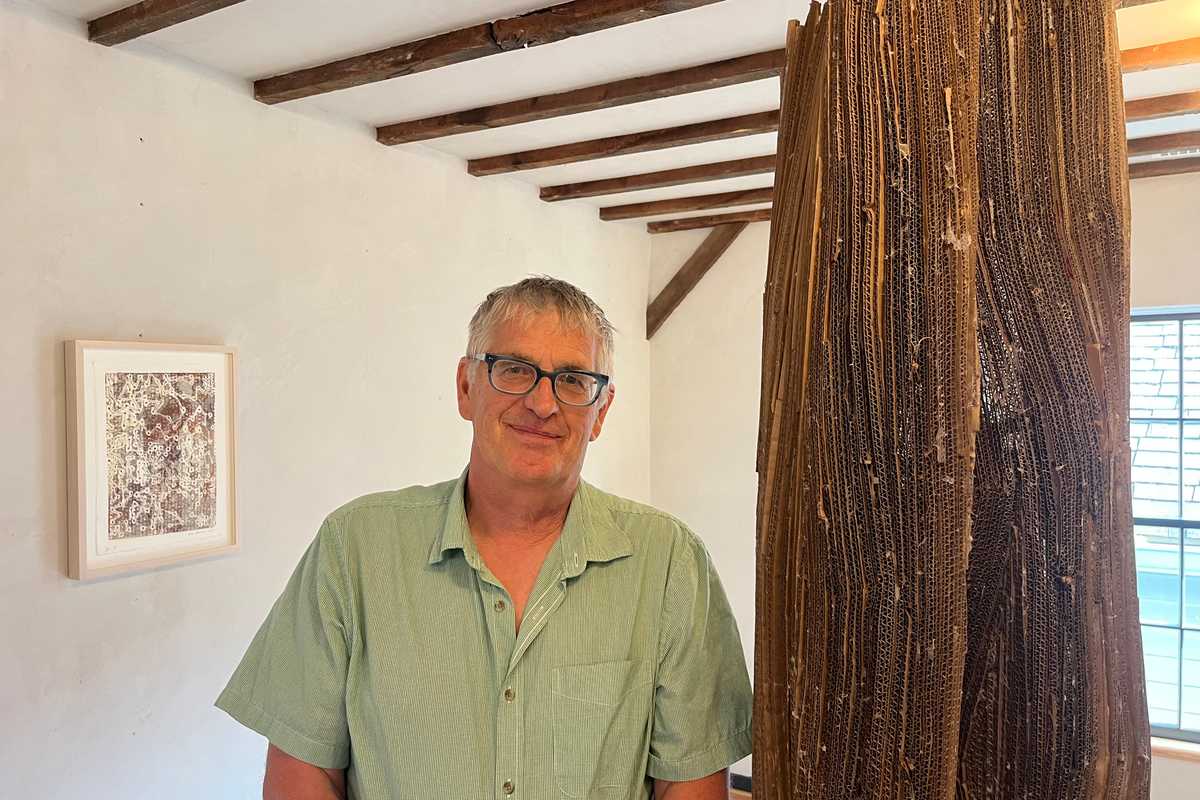
Henry Klimowicz with his sculpture, “Partial Pillar 1”

Photo by D.H. Callahan

On Saturday, Aug. 1, Geary Gallery opened its doors in Salisbury for two unique shows in its first- and second-floor gallery spaces. Art lovers flooded both floors over the course of the afternoon, giving the events a vibrant feeling that enhanced the importance of the art.

On the first floor is a show by Chicago-born, Colorado-based photographer Summers Moore, titled “Lobitos: Pueblo Fantasma,” or “Lobitos: Ghost Town.” The work centers around her daughter’s current hometown in Peru. Moore herself found a home away from home in Colorado in the mid-1980s and encouraged her children to seek out new places outside of their comfort zones.

Keep ReadingShow less

Writer’s retreat in the woods

Writer’s retreat in the woods

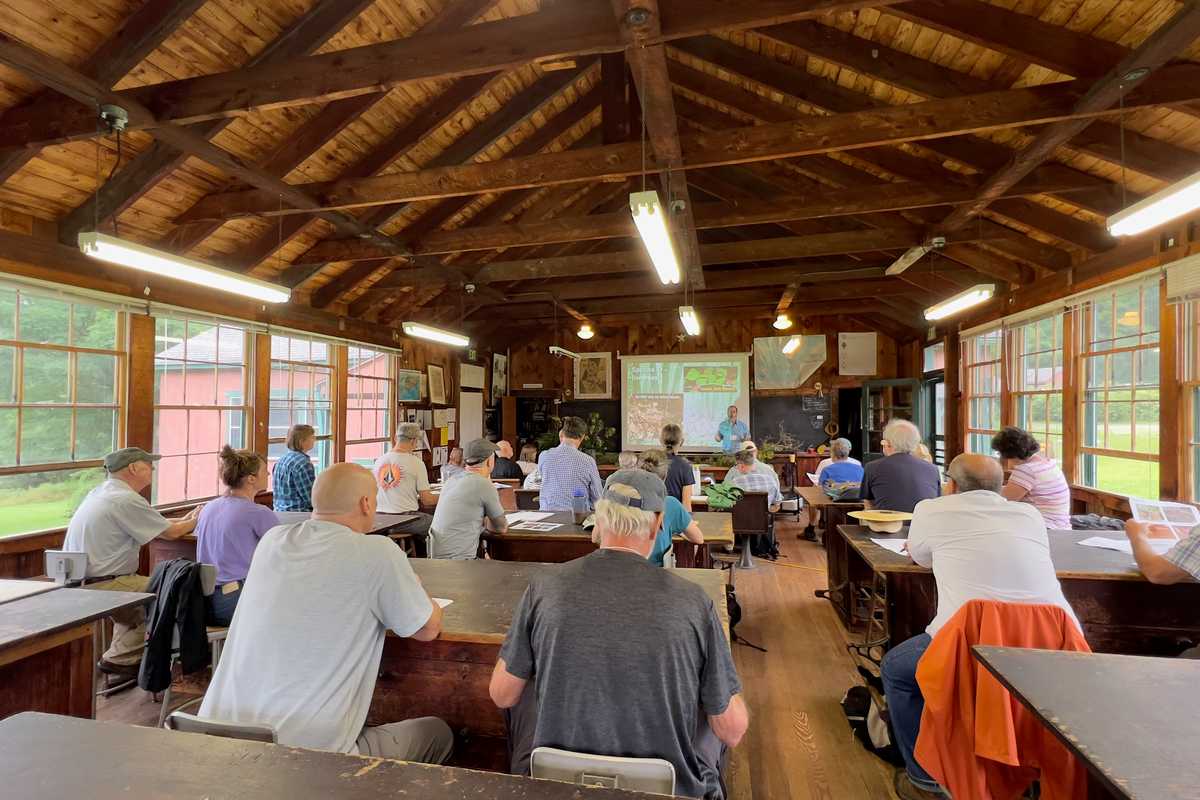
Participants in a 2024 Great Mountain Forest Woodland Academy workshop at Yale Camp.

Photo by Mike Zarfos

Great Mountain Forest (GMF) will host its first Nature Writing Retreat at the historic Yale Camp in Falls Village from Aug. 7-9, 2026. Writers of all levels are invited to draw inspiration from one of New England’s most notable forest landscapes. GMF envisions the retreat becoming an annual event celebrating writing, conservation and the relationship between people and forests.

This immersive three-day retreat reflects on the legacy of Hal Borland, the American writer and New York Times nature columnist whose work was deeply connected to this landscape. The retreat explores how wilderness shapes language, strengthens close observation and fosters environmental consciousness.

Keep ReadingShow less
From Cornwall to Rome, Adam Van Doren at Berkshire Botanical Garden

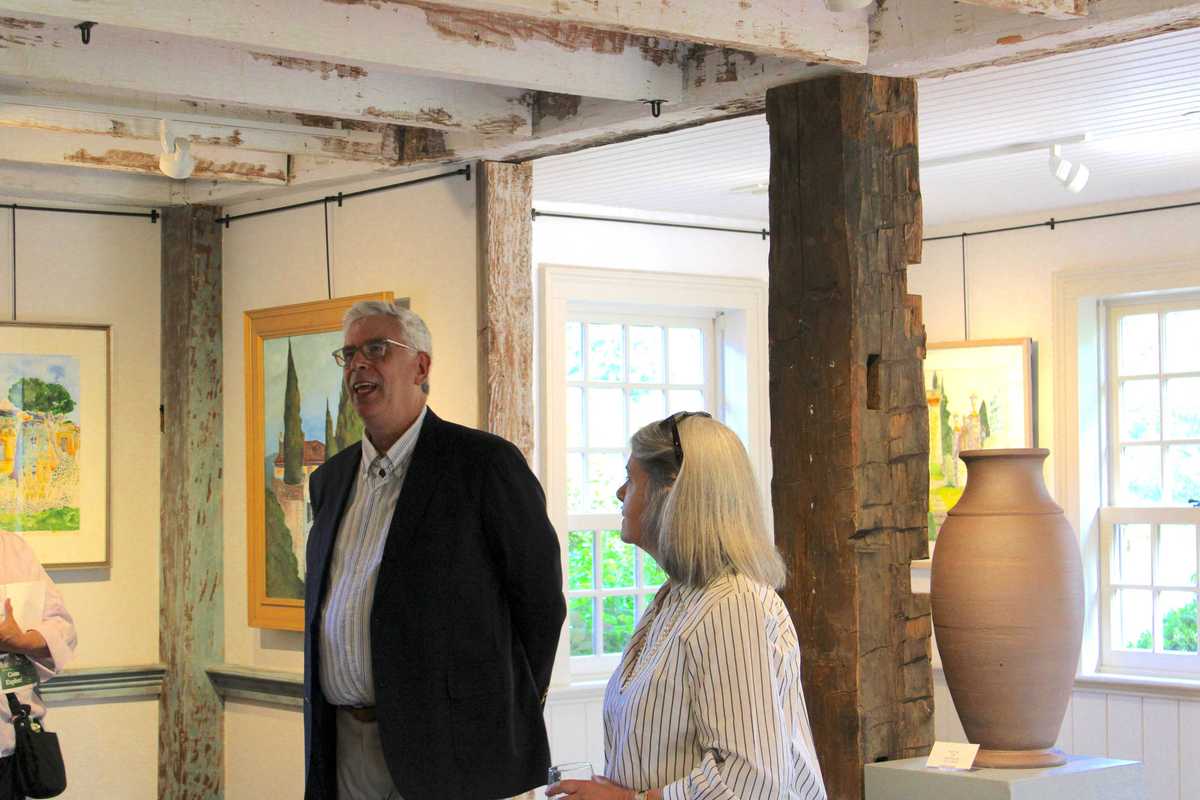
Artist Adam Van Doren and curator Donna Hassler talk to a group of visitors at the Berkshire Botanical Garden. A Stephen Proctor vessel sits to their left.

Photo by Natalia Zukerman

This summer, the Berkshire Botanical Garden in Stockbridge has hosted “Grounded in Nature: Paintings by Adam Van Doren,” an exhibition exploring the intimate relationship between architecture and the natural world.

On view for only a few more weeks in the Leonhardt Galleries, the exhibition features more than 35 watercolor and oil paintings by the New York-based artist, architect, author and Yale professor, curated by art historian Donna Hassler, director emerita of Chesterwood. The works span three distinct places that have shaped Van Doren’s artistic practice: New York City, Cornwall, Connecticut, and his travels throughout Europe.

Keep ReadingShow less
google preferred source

Want more of our stories on Google? Click here to make us a Preferred Source.
google preferred source

Want more of our stories on Google? Click here to make us a Preferred Source.