Last month, Director of U.S. National Intelligence James Clapper got a lot of people’s attention when he conceded the American people should have been told that the National Security Agency was tracking their calls. “Had we been transparent about this from the outset ... we wouldn’t have had the problem we had.” This striking remark exposes another dirty little secret: there are trillions of other improperly classified records that could harmlessly be revealed.In fact, it’s so easy to classify new secrets that government classifiers joke that they can find the authority to classify a ham sandwich. These secrets tend to be permanent. Just last month, the Department of Defense blacked out a fact students learn in U.S. History 101 — that the Cuban Missile Crisis ended with a swap of Soviet nukes in Cuba for the U.S. nukes in Turkey. There are so many new secrets created, and so few old secrets released, that the runaway U.S. classification regime has become a menace to American democracy.The most recent available data shows that in 2012 alone, there were more than 95 million decisions to classify U.S. documents. The cost of storing these secrets for just one year well exceeds ten billion dollars. We can’t be certain of the exact figure, however, because the cost that intelligence agencies, including the CIA and NSA, pay to house their secrets is — surprise, surprise — classified.While the number of government secrets is increasing, the amount of money the government contributes to declassification is shrinking; it’s less than one half of one percent of the total spent on classification. To his credit, President Obama recognized this problem and attempted to fix it. In his executive order governing the classification system, the president established a National Declassification Center and ordered it to review and declassify 400 million pages of historic classified documents before the close of 2013. Disappointingly, only 22 percent of these documents have been declassified and made available to the public. The remarkable takeaway is that agencies are able to ignore a presidential order to declassify their documents.The problem of overclassification is not a cottage complaint from historians deciphering Cold War mysteries. Of all the Edward Snowden revelations, perhaps the most important is that classification is the tool that the executive branch uses to enact policies without public discussion, or consent. According to Representative Jim Sensenbrenner, one of the authors of the Patriot Act, the NSA “ignored restrictions painstakingly crafted by lawmakers and assumed plenary authority never imagined by Congress” by cloaking its actions behind the “thick cloud of secrecy” of the classification system. DNI Clapper, apparently, now agrees.The NSA’s self-conferred authority to warentlessly collect Americans’ telephone metadata is not a legitimate secret. Though, certainly, there are some. These include: war plans before they are conducted; nuclear design information, and some intelligence sources and methods. The protection of legitimate secrets is undermined when they are contaminated with the misclassification of dubious secrets. We should strive for a small graveyard of legitimate secrets protected by a high, impenetrable fence; not a vast prairie of dubious secrets protected only by pickets.To begin fixing the classification system and make good on its promise that “no information may remain classified indefinitely,” the Obama administration must double down on the National Declassification Center. With increased authority and efficiency measures, the National Declassification Center has the potential to become the permanent declassification pipeline of former secrets, now expired.The task of monitoring the classification of current information falls largely to the federal courts and Congress. US courts have recently overturned government secrecy claims about the NSA’s dragnet phone metadata collection program, the government’s refusal to “confirm or deny” its use of drone warfare, and its administration of foreign aid. Continued and expanded judicial review of the government’s secrecy claims will prevent the most egregious secrecy abuses.Congress must also re-embrace its duty to check executive branch claims of secrecy. To start, intelligence oversight committees must ensure that they are receiving the unvarnished truth during their briefings and testimony, and report much more than they do to the public. Congress’s mandate to oversee the classification system is broader than that, though. It was Senator Mike Gravel, after all, who in 1971 entered the secret Pentagon Papers history of the Vietnam War into the Congressional Record for all to read.Reacting to leaks, DNI Clapper has recently declassified more than two thousands pages about the NSA’s telephone metadata collection program. He explained, “the harm to national security in these circumstances is outweighed by the public interest.” This was certainly a positive step. There are trillions more to take.Nate Jones is the FOIA coordinator of the National Security Archive.
Latest News

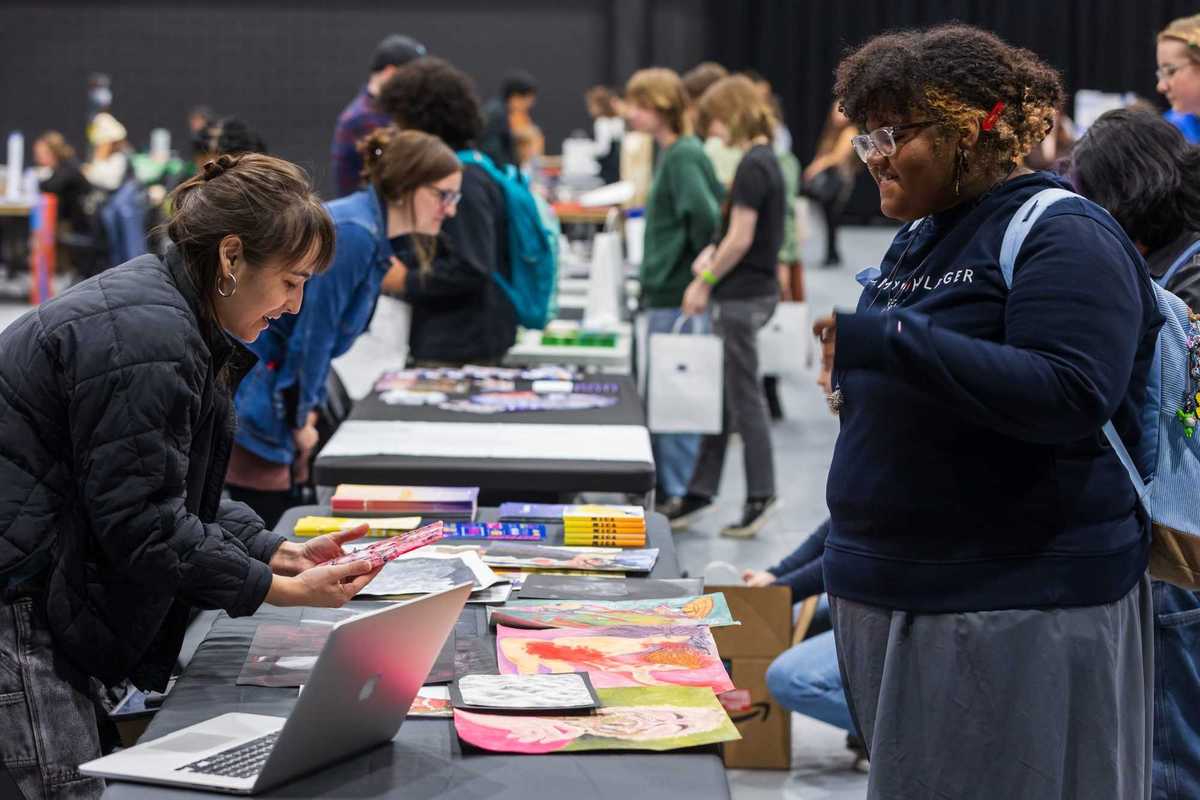
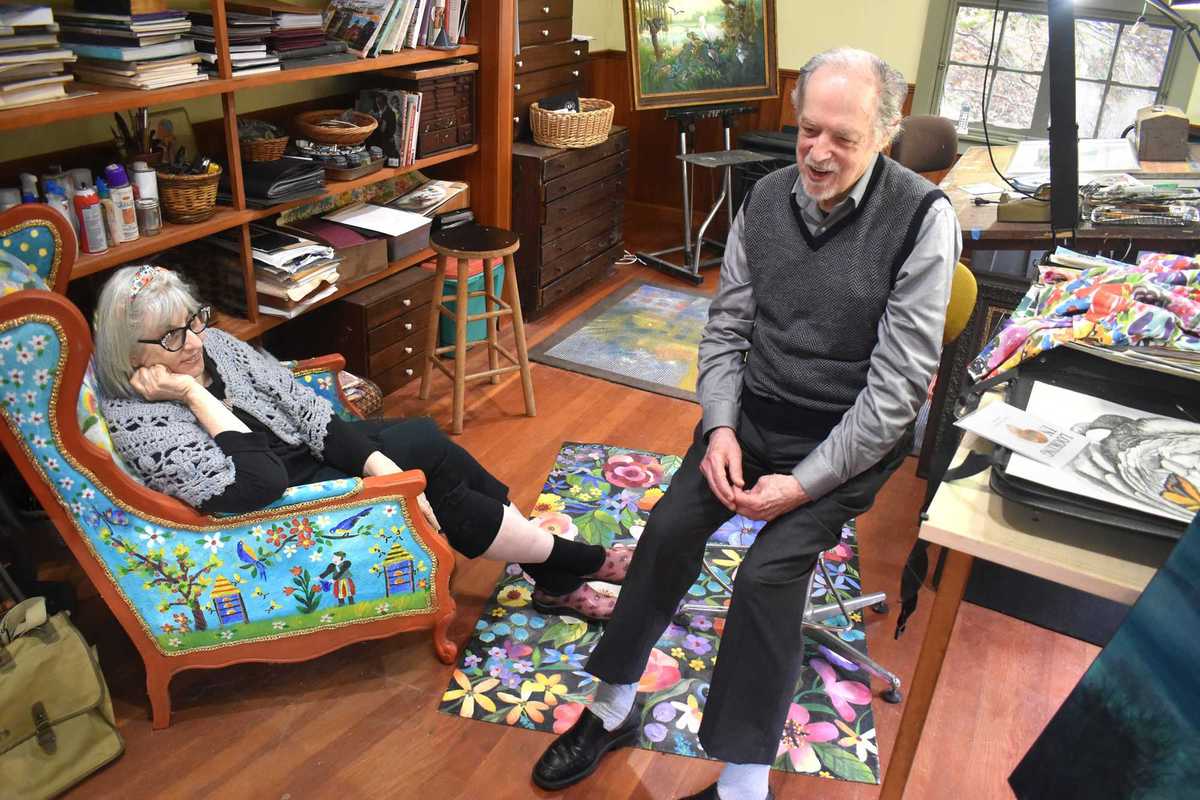
Textile designer Justine Valla sits in her father’s chair, which she painted, alongside her husband, illustrator and muralist Victor Valla, in their Atelier Valla studio.
“I was always drawing as a child,” Justine recalled. Victor dreamed of illustrating magazine covers like those of the “Saturday Evening Post.”
Victor studied design and illustration at Rochester Institute of Technology, then received a fellowship to study painting and printmaking at the University of Illinois at Urbana-Champaigne. He graduated in 1967. The following year, he received a grant from the Tiffany Foundation to study printmaking in Paris at Atelier 17, an experimental graphic arts workshop founded in 1927.
“What a great experience that was!” he recalled.
Returning home after the Paris uprisings of 1968, he discovered that the magazine covers he’d hoped to paint had largely given way to photography. His agent suggested trying record covers, which he pursued along with illustration and graphic design.
He also began teaching at Kean University in New Jersey.
“Kean had a wonderful graphic design and illustration department. I loved teaching Graphic Design, even though I never thought I would.”
He later taught at Syracuse University and Pennsylvania College of Art and Design.
In the late 1980s, he decided to stop teaching and concentrate on his own art. He moved to Falls Village, to a house on the corner of Minor and Prospect Streets.
“I used to call the studio ‘Minor Prospects Atelier,’” he said.
He continued working in illustration and graphic design, creating book covers for stories by H.P. Lovecraft and other authors, along with magazine covers, logos, advertising and murals.
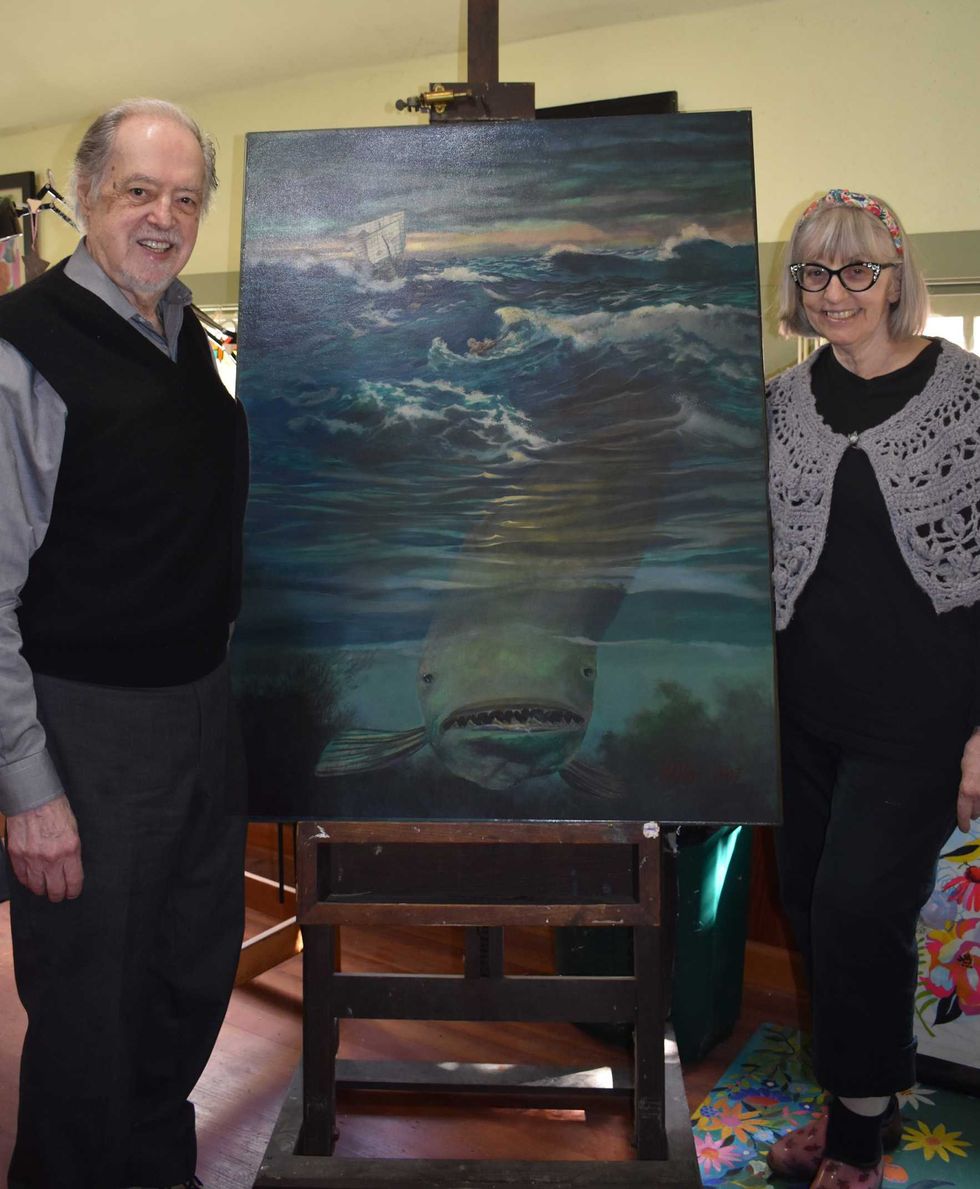 Justine and Victor Valla in their studio with a painting of Victor’s,”Jonah and the Whale.” Robin Roraback
His local commissions include the green and gold Noble Horizons signage and wall murals for the Stockbridge Inn, the Spa at Norwich Inn, Orchards Hotel in Williamstown and the David M. Hunt Library’s children’s section.
Justine grew up in the Bronx and studied at the Fashion Institute of Technology. After graduating, she took on whatever work she could find, including designing toys and novelty items for Russ Berrie. But her true calling was textile design.
She moved to Los Angeles to pursue that calling, where she learned silkscreen printing from 1960s design icon Corita Kent.
“I was in her program at Immaculate Heart College. All fabric design at that time was silk screen. My first job in textile design was in L.A., creating wallpaper for Bob Mitchell Design.”
Justine returned to New York City, where the advent of computers required her to learn new design techniques. She enrolled at Parsons School of Design, studying Photoshop, Illustrator, Lectra U4ia and Kaledo.
Around this time, she met Victor online and moved to Falls Village.
A recruiter found her a job in Arkansas at Dillard’s, a department store chain operating in 30 states and known for its exclusive designer collections.
“They had the best equipment I’d ever seen,” she said.
She became a senior computer-aided design designer there, designing fabric and preparing purchased designs for production.
The Vallas left Falls Village for Little Rock.
“It was a big move,” she said. “It was a different culture, but Little Rock was very progressive.”
The originally planned to stay in Arkansas for five years but ended up remaining for nearly 10.
Then Justine was hit by a car. She suffered injuries to her leg and head and required four years of rehabilitation.
“I lost the ability to paint after the accident. I struggled to paint again.”
The Vallas returned to Connecticut, this time settling in Salisbury, where they’ve lived since 2013.
After leaving Dillard’s, Justine had planned to sell her work through Printsource in New York City, an international showcase for surface and textile design. But after the accident, she no longer had the mobility or energy to travel back and forth to the city.
Instead, she began selling her work locally at craft shows, including clothing, hand-printed tea towels and floorcloths.
She is currently working on selling her collection of textile designs.
In December, Justine will have a show of her tea-themed watercolors at the NorthEast-Millerton Library.
Victor recently exhibited “The American West: A Pictural History” at the NorthEast-Millerton Library. The series, created in the early 1990s, was part of a commission from the Postal Commemorative Society for which he completed 100 paintings in two years.
He hopes to place the series in a museum and has created books from its images, complete with text. Over the years, he has designed many other books that are ready for publication, including “Looking In, Looking Out,” a cosmic view of the universe.
Reflecting on his career, Victor said, “It’s about doing what you love”.
Justine agreed.
To see, purchase or commission work, contact Justine at justinevalla@gmail.com or Victor at victorvalla@comcast.net, or call 860-596-4282.

Want more of our stories on Google? Click here to make us a Preferred Source.

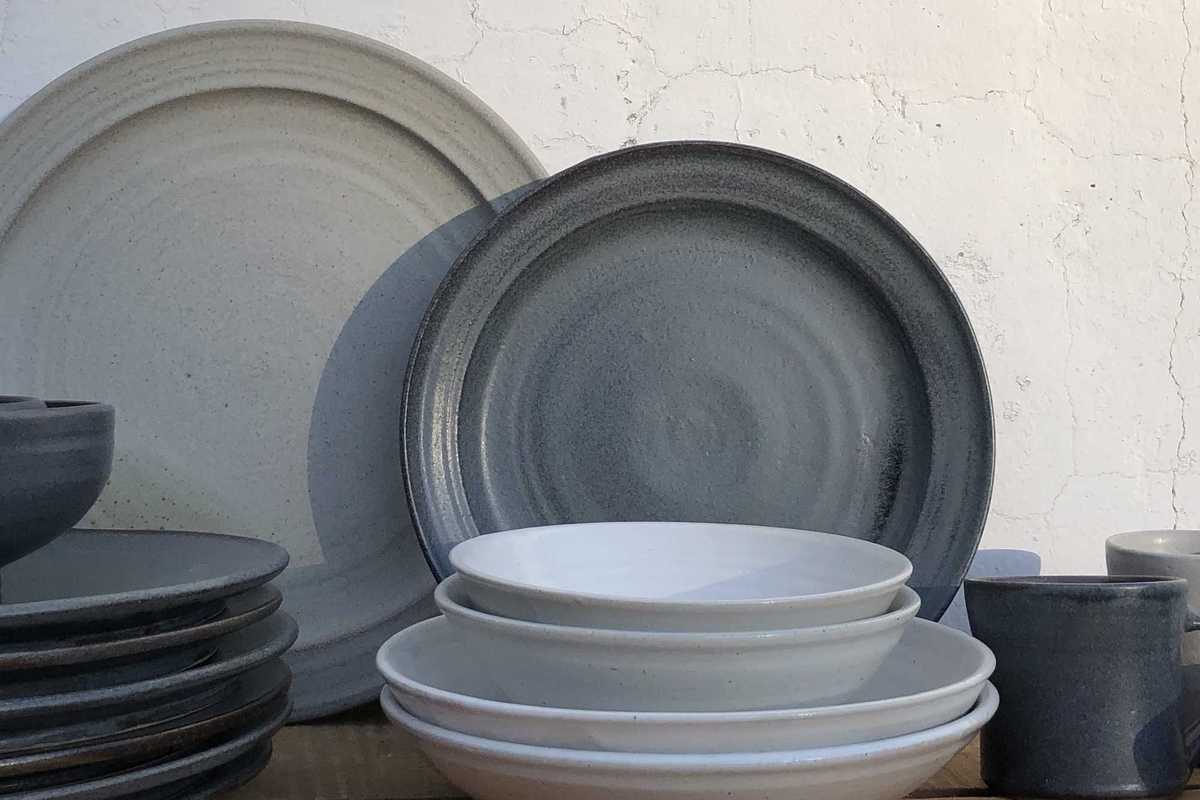
Jane Herold’s beautifully simple dinnerware.
Cornwall ceramicist Jane Herold explained that there’s quite a lot of enthusiasm for Clay Way among the region’s ceramic artists.
“We all need work space, which is hard to find or afford in urban areas. The wood-fire crowd needs lots of wood and outdoor space. This area is great because it’s rural enough for us, but has a wonderfully enthusiastic and supportive population of pottery [patrons].”
While many of the artists are returning from previous years, the loose collection of unofficial organizers likes to keep the event manageable for the public, limiting the number of artists and studios each year. A direct drive from the southernmost point at Ann Heywood’s studio in Wingdale to Herold’s big barn in Cornwall is under 40 minutes. But if you want to catch it all, plan for a full day’s worth of art exploration along some of the most beautiful roads in New England.
Starting at its northernmost point, Herold’s studio will host Matin Malikzada of Afghanistan, whose polished, modern interpretations of traditional forms are instantly recognizable. They’ll be joined by wood-fired ceramicists Steve Johnson, with his raw, organic forms, and Harry Levenstein, whose works relate closely to Johnson’s while making even more direct references to nature.
Herold herself creates work that is both beautiful and utilitarian. Her prolific output of objects is intended to be used by everyday people as part of their daily lives.
Moving south is Todd Piker of Cornwall Bridge Pottery. Piker has been making pots in his giant wood-fired kiln since 1971. The kiln looks more like an ancient blast furnace than something designed to transform clay into ceramics, but over the years, he’s mastered its intricacies and produces an impressive amount of fine work.
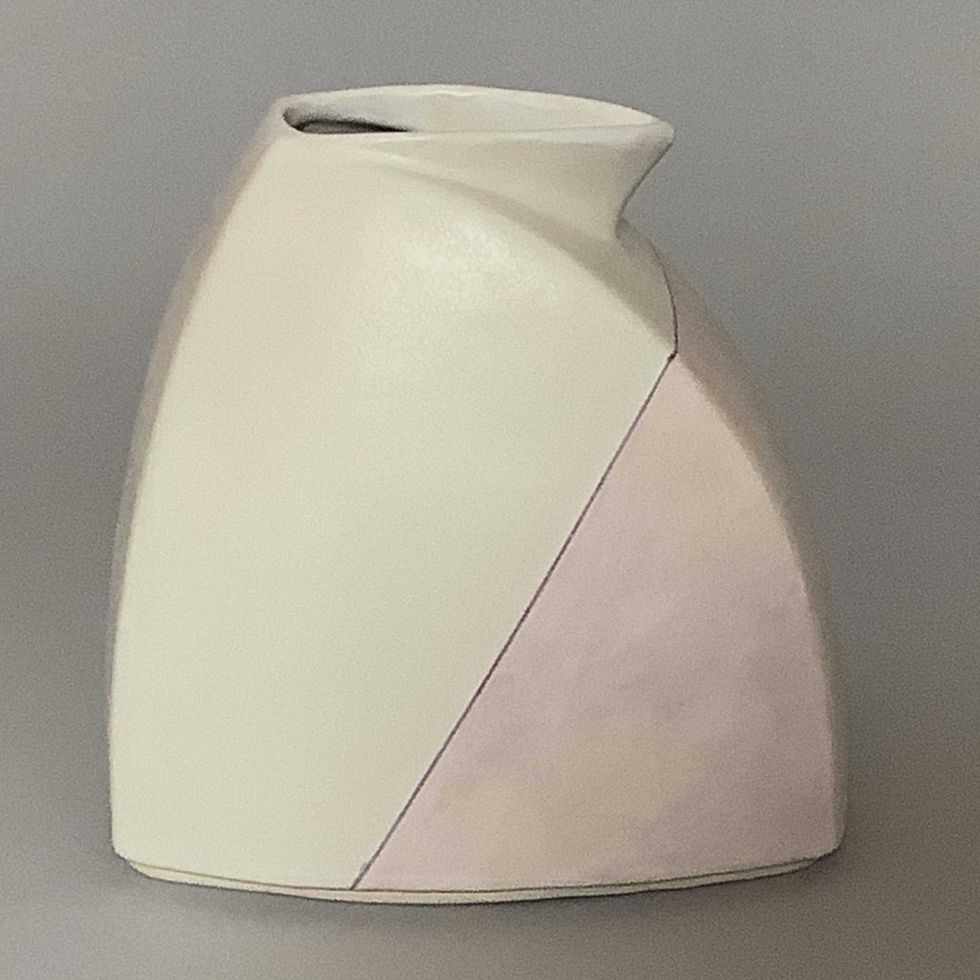 A ceramic vase by Kathleen Heidemann.Provided
Piker will host Sanah Peterson, who works at Cornwall Bridge Pottery and draws inspiration from both her time with Piker and her time traveling the globe as a child. They’ll be joined by Stephanie Haines, whose vibrant, eye-catching work features underglaze illustrations of birds, fruit and the bounty of nature.
Further along in Warren, Jessica Dubin’s pieces will be on display at the studio of Christine Owen. Both artists seem to appreciate the chaos and unpredictable nature of clay but find ways to refine it all using their own unique methods.
Heading east to Washington, Conn., Will Talbot’s creates intricate work while allowing for the unpredictable nature of clay to play a role. His studio will house Tom Knox and his wide variety of textures and forms, as well as New York City-based Alex Lebedev, who lets music and the nature of improvisation guide his work.
There will be two studios participating in South Kent. Alison Palmner, whose page on the Clay Way website states she “strives to achieve a lighthearted meld of human forms, animals and the vessel.” Her studio will host Ben Eberle, who trained under the guidance of legendary potter Toshiko Takaezu; James Guggina, whose intricate work can appear both deliberate and whimsical; and Paula Shalan, who blends rough, unrefined surfaces with polished precision in individual pieces.
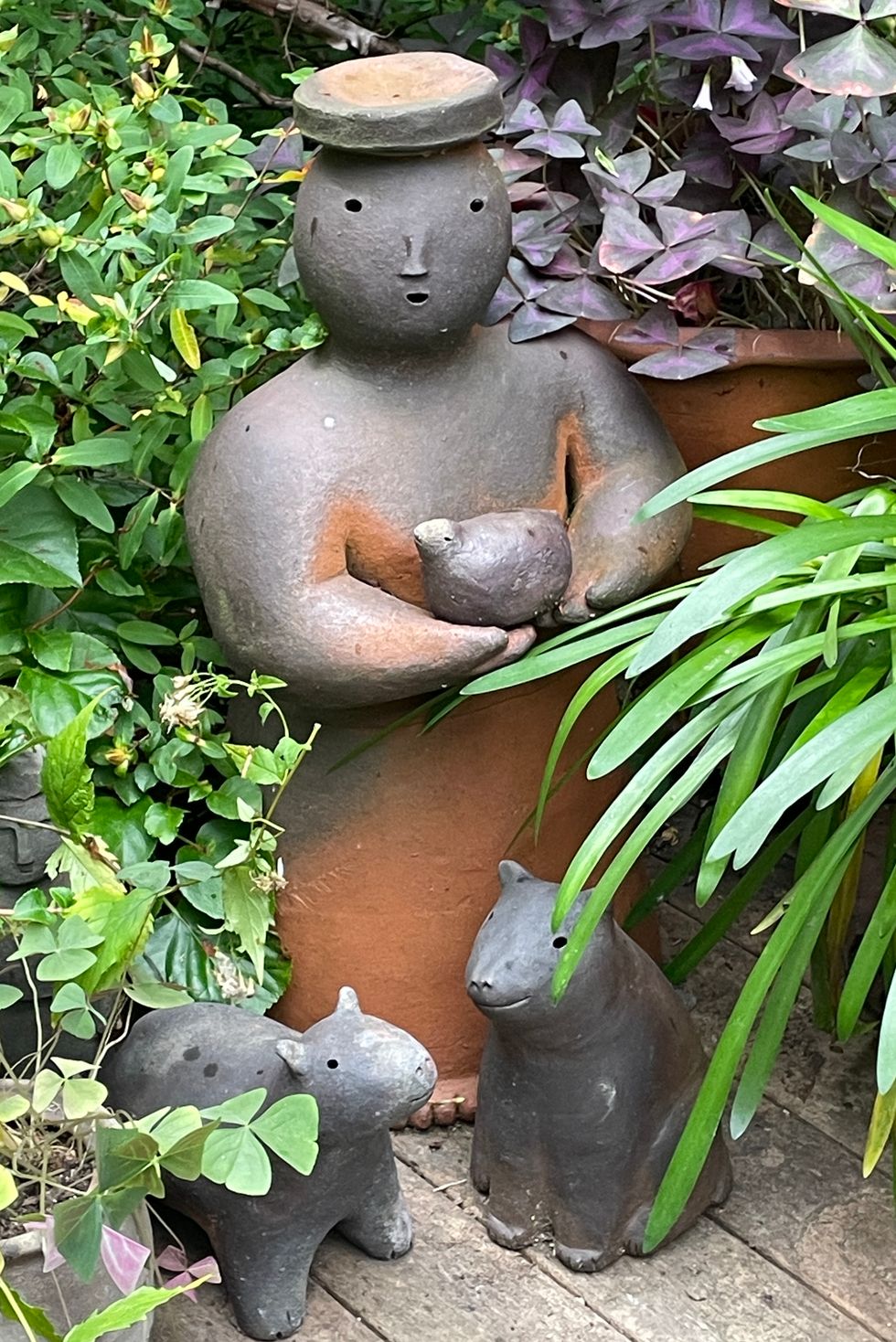 Joy Brown’s delightful ceramic sculptures.Provided
Nearby is Joy Brown, whose work have become a staple of the area, with her figurative sculptures dotting the Northwest Corner. Brown’s studio will also feature Bonnie Levine, who taps into the beauty of chaos and destruction in her work, and Brendan Moore, whose more utilitarian forms are perfect for everyday use.
Finally, the tour crosses the border into Wingdale, New York, where the studios of Drew Montgomery, Ann Heywood and Amy Brenner will host Jackie Sedlock, Lynn Behrendt,and Kathleen Heidemann.
Brenner creates some of the most colorful and vibrant pieces on the tour, while Behrendt’s work is among the most studied and precise. Heywood creates carefully considered, intuitive forms, while Heidemann moves from simple minimalism to intricate textures. Montgomery and Sedlock both find new ways of playing with traditional forms, producing delightfully distinctive pieces.
To learn more about the artists and download a map of participating studios, visit clayway.net
Want more of our stories on Google? Click here to make us a Preferred Source.