Thank you!
Your support is sustaining the future of local news in our communities.

Nearly 80,000 chemicals have never been fully assessed

Dear EarthTalk: What is happening to update and reform the Toxic Substances Control Act of 1976, which I understand is considerably outdated and actually permits the use of thousands of chemicals that have never been adequately tested for safety?

Henry Huse

Norwalk, Conn.

According to the Natural Resources Defense Council (NRDC), a leading environmental research and advocacy organization, upward of 80,000 chemicals commonly used in the United States have never been fully assessed for toxic impacts on human health and the environment.

“Under the current law, it is almost impossible for the EPA [U.S. Environmental Protection Agency] to take regulatory action against dangerous chemicals, even those that are known to cause cancer or other serious health effects,†reports the group.

The Toxic Substances Control Act (TSCA) of 1976 was intended to protect people and the environment from exposure to dangerous chemicals. But the standards at that time dictated that only those chemicals deemed an “unreasonable risk†were subject to testing and regulation. When the law went into effect, some 62,000 chemicals escaped testing and most have remained on the market ever since. In the interim, however, we have learned that many of them have been linked to hormonal, reproductive and immune problems, cancer and a plethora of environmental problems.

And since 1976, an additional 22,000 chemicals have been introduced without any testing for public or environmental safety. Some of the potentially worst offenders can be found in cleaning and personal care products, furniture, building materials, electronics, food and drink containers, and even kids’ toys.

“The law is widely considered to be a failure and, most recently, the Environmental Protection Agency’s own inspector general found it inadequate to ensure that new chemicals are safe,†reports NRDC, which is not the only group concerned about beefing up TSCA.

The Safer Chemicals, Healthy Families Coalition includes more than 200 nonprofits — including Physicians for Social Responsibility, the U.S. Public Interest Research Group, the Environmental Defense Fund and the Lung Cancer Alliance, among many others — representing a collective membership of more than 11 million individual parents, health professionals, advocates for people with learning and developmental disabilities, reproductive health advocates, environmentalists and businesspersons from across the country.

By banding together, coalition leaders hope to convince Congress to fix the problem by finally updating TSCA and creating the “foundation for a sound and comprehensive chemicals policy that protects public health and the environment, while restoring the luster of safety to U.S. goods in the world market.â€

Specifically, the coalition is lobbying Congress to revamp TSCA so that the most dangerous chemicals are phased out or banned outright and others are tested and regulated accordingly, all the while ensuring the public’s right-to-know about the safety and use of chemicals in everyday products. Also, the coalition is calling for federal funding to expand research into greener alternative chemicals to replace those with known health hazards.

Dear EarthTalk: I saw a TV ad for toilet paper with no cardboard core to save paper. I understand that green groups recently struck a deal with Kimberly-Clark to protect eastern U.S. forests from decimation for, among other things, toilet paper. Can you tell me if any efforts are underway to protect Canada’s boreal forest, also long used for making tissue paper?

K. Douglas

Winthrop, Maine

In August 2009, Kimberly-Clark, the paper giant behind the Kleenex, Cottonelle and Scott brands and the largest manufacturer of tissue products in the world, gave in to pressure from Greenpeace and other environmental groups to clean up its act in regard to how it sources its wood fiber and how much recycled content it includes in its products.

After various forms of public haranguing from Greenpeace, the company committed to sourcing 40 percent of its North American tissue fiber — some 600,000 tons yearly — from recycled sources or from forests certified as sustainable by the nonprofit Forest Stewardship Council (FSC). Also, by the end of 2011 Kimberly-Clark will stop buying non-FSC-certified wood fiber from Canada’s vast but fast-shrinking boreal forest — the largest old growth forest on the continent.

One outgrowth of this landmark agreement is Kimberly-Clark’s launch of Scott Naturals Tube-Free toilet paper which, to reduce waste, is wound in such a way that it doesn’t need cardboard tubes. The company estimates that the 17 billion toilet paper tubes produced yearly in the United States account for some 160 million pounds of trash — most of us discard instead of recycle them. By eliminating the tubes, the company hopes to both save cardboard and allow customers to use every last piece of toilet paper, since the last one won’t have any glue on it to stick to the roll. The tube-free TP is being sold initially at Walmart and Sam’s Club stores in the northeastern United States and will be launched nationally and beyond if it catches on with consumers.

Kimberly-Clark’s green awakening will no doubt benefit the tree farms and forests of the Southeast — the locus of logging operations in the United States these days — and it will also benefit Canada’s boreal forest, from which the company still sources a large amount of its wood fiber.

North America’s largest ancient forest by far, the Canadian boreal forest provides habitat for more than a billion birds as well as many a threatened species, including woodland caribou, bald eagles, golden eagles and wolverines. It is also the world’s largest storehouse of terrestrial carbon — all those miles of trees, moss, soil and peat soak up an estimated 186 billions tons of carbon that would otherwise contribute to global warming.

Despite its value to the environment, some 60 percent of Canada’s boreal forest has already been allocated to forestry companies for development and less than 10 percent of it is formally protected in any way. Clear-cut logging by Kimberly-Clark and its competitors has claimed half a million acres of boreal forest annually in Canada’s Ontario and Alberta provinces alone in recent years.

“Because of Kimberly-Clark’s place in the paper products market, the company’s new policy will send a strong signal to its competitors, Procter & Gamble, SCA and Georgia Pacific, that creating a policy that protects ancient forests is a key element of sustainable business,†reports Greenpeace.

Of course, there are plenty of other brands of tissue paper that already make use of primarily recycled and/or sustainably harvested fiber — check out Greenpeace’s Recycled Tissue and Toilet Paper Guide to find out which ones — but they are not easily found at mainstream grocers and big box stores. The more shoppers go for greener options, the more the paper industry will take notice and modify their offerings accordingly.

Send your environmental questions to EarthTalk, in care of E – The Environmental Magazine, PO Box 5098, Westport, CT 06881; earthtalk@emagazine.com.

E is a nonprofit publication. Subscribe: emagazine.com/subscribe; request a free trial issue:  emagazine.com/trial.

Latest News

HVRHS Announces Senior Awards

HVRHS Announces Senior Awards

Senior awards for the HVRHS Class of 2026 have been announced.

Nathan Miller

The Housatonic Valley Regional High School senior awards were announced for the Class of 2026. The graduation ceremony was held Friday, June 19. Student speakers acknowledged the importance of community, as several reflected on overcoming significant adversity in their young lives.

Norma Lake Award - Shanaya Duprey

Keep ReadingShow less

The nature of Upstate Art Weekend

The nature of Upstate Art Weekend
Opening of Upstate Art Weekend at Olana with Helen Toomer, Ellen Harvey, Jean Shin and Gabriela Salazar
D.H. Callahan

On Thursday, June 25, a collection of eager art enthusiasts gathered at Olana State Historic Estate in Hudson to kick off the seventh annual Upstate Art Weekend (UAW).

Helen Toomer, founder, was joined by sculptors Ellen Harvey, Jean Shin and Gabriela Salazar to discuss their work and the legacy of painter Frederic Church. Church, whose 200th birthday is being celebrated this year, is widely credited as one of the founding members of the Hudson River School of painting. The discussion took place at Olana, Church’s grand estate, where the three artists’ installations are on view.

Keep ReadingShow less
Benjamin Reynaert and the art of layered living

Benjamin Reynaert

Jennifer Almquist
Creating a home is, at its core, an act of love.
— Benjamin Reynaert

Benjamin Reynaert is focused on creative direction and interior styling. He is market director at Elle Décor, a design consultant, and author of “The Layered Home: Inspiration for Crafting Cozy, Collected Rooms,” published this year by Clarkson Potter. He co-founded Ticking Tent, a market featuring antiques, luxury items and vintage treasures. The biannual event is held in New Preston, Connecticut, and Bedford, New York.

Adopted from South Korea at 3 months old, Reynaert grew up in Bloomfield Hills, Michigan. He always knew he wanted to be an artist. “I just loved drawing. I loved making things with clay,” he said. “Remembering what it felt like to be creative as kids and applying that to our creativity as adults is essential.” A graduate of the Rhode Island School of Design (RISD), where he earned a BFA and a degree in architecture, Reynaert also studied bookbinding in Rome. His attention to detail and aesthetic sense reflect years of training and a finely tuned eye for objects. “Attending RISD nurtured my creativity and taught me how to problem-solve,” he said.

Keep ReadingShow less
google preferred source

Want more of our stories on Google? Click here to make us a Preferred Source.
Beneath the surface: Delano Dunn and Mickalene Thomas explore history, memory and art

Mickalene Thomas and Delano Dunn at Wassaic Project.

Lucia Landolo

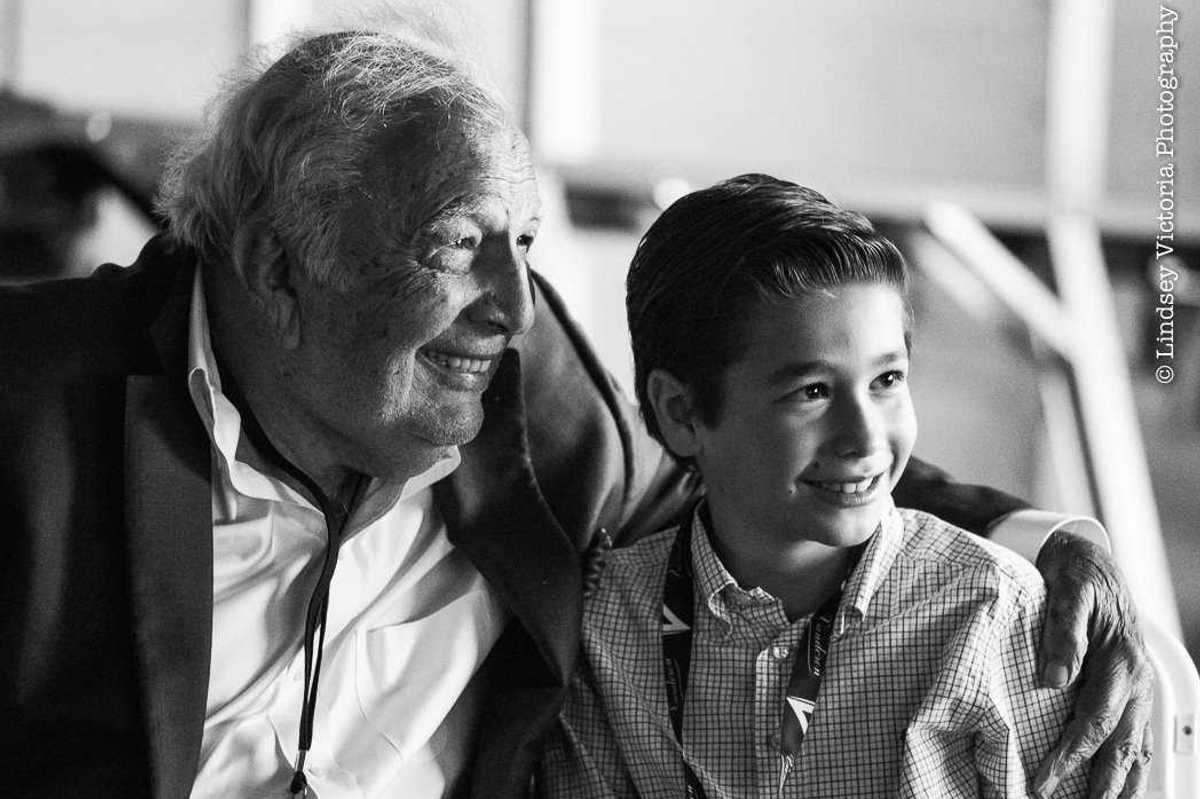
Before “Echoes in the Margin,” Delano Dunn’s new solo exhibition at Troutbeck in Amenia opened, the artist sat down with curator and artist Mickalene Thomas for a conversation at the Wassaic Project on Wednesday, June 24. Their wide-ranging discussion offered an intimate look into Dunn’s practice while situating the work within broader questions of history, memory and representation.

Presented by the Wassaic Project, the exhibition brings Dunn’s richly layered paintings into conversation with Troutbeck itself, the historic estate long associated with artists, writers and civil rights leaders, including W.E.B. Du Bois, Langston Hughes and many more.

Keep ReadingShow less
Local performer Vemilo transforms the Moviehouse

Vemilo performs at the Moviehouse in Millerton.

D.H. Callahan

On Friday, June 26, patrons at the Moviehouse in Millerton were treated to a performance by local artist and musician Vemilo, who returned to the theater’s biggest room for a second full-length show.

Regular patrons will know Theatre Three as the setting for post-screening interviews, Q&As, discussions and the theater’s monthly movie trivia night. Vemilo’s performance entirely reimagined the space. With just a few props and pieces of furniture, the stage was transformed into Vemilo’s sanctuary.

Keep ReadingShow less
After a Hollywood career, Scott Siegler turns failure into fiction

Scott Siegler at his home in Sharon.

D.H. Callahan

Scott Siegler is bored of success stories. But Scott Siegler has had the kind of successful Hollywood career that people write books about.

Before he was 30, he’d earned three degrees. Before he moved to Hollywood, he’d already won an Emmy for one of the nine documentaries he directed and produced. Before he helped launch Netscape, bringing the Internet to the public, he’d already started his own Hollywood studio.

Keep ReadingShow less
google preferred source

Want more of our stories on Google? Click here to make us a Preferred Source.

google preferred source

Want more of our stories on Google? Click here to make us a Preferred Source.