HARLEM VALLEY — Even though this school year represents the launch of the new core curriculum, which is bringing drastic changes to teaching standards in New York schools, the Millbrook Central School District, the Pine Plains Central School District and the North East (Webutuck) Central School District all reported very smooth starts to the 2011-12 school year.“We’re off to a great start. I’m looking forward to another great year,” said Webutuck High School Principal Ken Sauer. “The first day of school is always fun because there is this excitement.… It’s energizing for us when the kids get here.“We can hit the ground running and two days into it, it’s like we never left,” said Sauer.Webutuck Superintendent Jim Gratto agreed. “The kids got right down to business.... You wouldn’t even know it was the second day of school, it was so smooth.”Jay Curtis, the new Webutuck principal for the Eugene Brooks Intermediate School, said that the first day was a very positive experience.“It’s nice to have the kids back in school. It makes the building feel full, makes the building feel like it’s doing what it’s supposed to be doing,” he said.The principals of the Pine Plains schools spoke to the Board of Education on Wednesday, Sept. 7, the first day of school, to talk about how the year started off.High school principal Tara Horst, middle school principal Robert Hess, Seymour Smith principal Richard Azoff and Cold Spring principal James Glynn all spoke very positively about the first day, saying that it went very smoothly.Hess explained that the first day was a good transition into the new school year and was uneventful. “Sometimes no news is good news,” he said.The Pine Plains principals also noted a very low number of students requesting schedule changes. High school principal Horst said that a significant number of the change requests were by students who wanted to challenge themselves with another class instead of an extra study hall.Sauer said that some years, there is a long line outside the guidance office of students wanting or needing to change their schedules, but this year was not like that. Curtis reported a similar experience.Besides the changes in the core curriculum standards, the districts are also adapting to other changes.Pine Plains Superintendent Linda Kaumeyer said that the second big change happening in her school district this year is the implementation of the new Annual Professional Performance Reviews (APPR), which will evaluate teachers and administrators.More information about APPR can be found on the New York State Education Department web site at www.nysed.gov.The start and end times in the Pine Plains School District changed for the Cold Spring Early Learning Center and the Stissing Mountain Middle/High School buildings.Cold Spring is starting and ending its school day five minutes later than last year.The middle and high schools are starting and ending the school day five minutes earlier than last year.The school time did not change at the Seymour Smith Elementary School.The purpose of the time changes was to coordinate bus schedules and allocate enough time for the drivers to complete their routes for all of the buildings.The Pine Plains High School principal said that the students were a bit “bleary-eyed” on the first day of school, but she said she believed that the time change was not the culprit. She also said that the time change was not blamed for any lateness among the students.At Webutuck, the district is adapting to a new configuration of the intermediate school classes and time schedule.The intermediate school now coincides with the start and end time of the high school. The intermediate and high school students are also now sharing bus routes.The common core curriculum changes focus on mathematics and English languages arts (ELA) performance for students in grades three through eight. More information about the new standards can be found online at www.engageny.org.School began at the Millbrook Central School District on Thursday, Sept. 8, although some students in the district started the day before orientation. The district has added new programs and made adjustments to help improve student’s academic performance and educational experience. “We have adopted a school-wide kindergarten through eighth grade program to focus on a reading workshop model for ELA instruction,” said Thomas Libka, principal at Alden Place Elementary. “The program focuses on a differentiated instructional approach and the hope is it will boost individual reading levels. Some teachers were doing that already and now we have gone schoolwide.”A new program will also be offered to departmentalize the fifth grade. Students in fifth grade will have 90-minute blocks planned for ELA and math.“We are excited about this reading model and I saw there is a writing component as well,” said Libka. “So we are excited to see how that works. We’ll know right away how we are doing because there are several assessment points that we do to check on the improvements of each child.”At Alden Place Elementary there will be more conferencing with individual students this school year. Students will be placed into small groups every week and have a dialogue with teachers about developing their reading, writing and math skills. “We are hoping to build a more unique connection with the teacher and the student through this conferencing model,” said Libka.Millbrook Middle School made adjustments to its curriculum to help improve students’ reading skills as well. The middle school added sustained silent readings to two of the home-base periods, which are advisory programs.“Students meet with a teacher every morning and that’s how we start our day, reading for about 18 minutes,” said Phyllis Amori, principal at Millbrook Middle School. “By adding their reading we are really trying to build our students’ literacy skills. We are very excited about that.”Study hall has been changed at the middle school to Self Directed Enrichment (SDE). Students will eventually be able to log into programs geared toward their interests, said Amori. Assistant Principal to Millbrook High School and Athletic Director Brian Devincenzi will don one more hat this year, helping out as middle school principal two days a week. “We do a lot of team building exercises right off the bat,” said Edward Kossman, principal of Millbrook High School, about the focus of the orientation. “Give them a flavor for the culture and how to go about decision making.” Millbrook High School students will also be able to buy breakfast if they choose for a short time period in the morning. Kossman said that the breakfast program would hopefully improve the food service program to help meet the needs of the students. Students will be offered a traditional breakfast of yogurt, cereal or a bacon, egg and cheese sandwich.As for the students, they have their own agenda of things to be excited about for the new school year. Collene Decker, 14, and Kendra Lopez, 14, said their favorite part of school was lunch, and they especially enjoy the pizza. While Mariana Cabrera, 11, said she enjoys homeroom. Gunner Giles, 12, and Zeke Kopilak, 12, said that sports was the best part of school.
Latest News
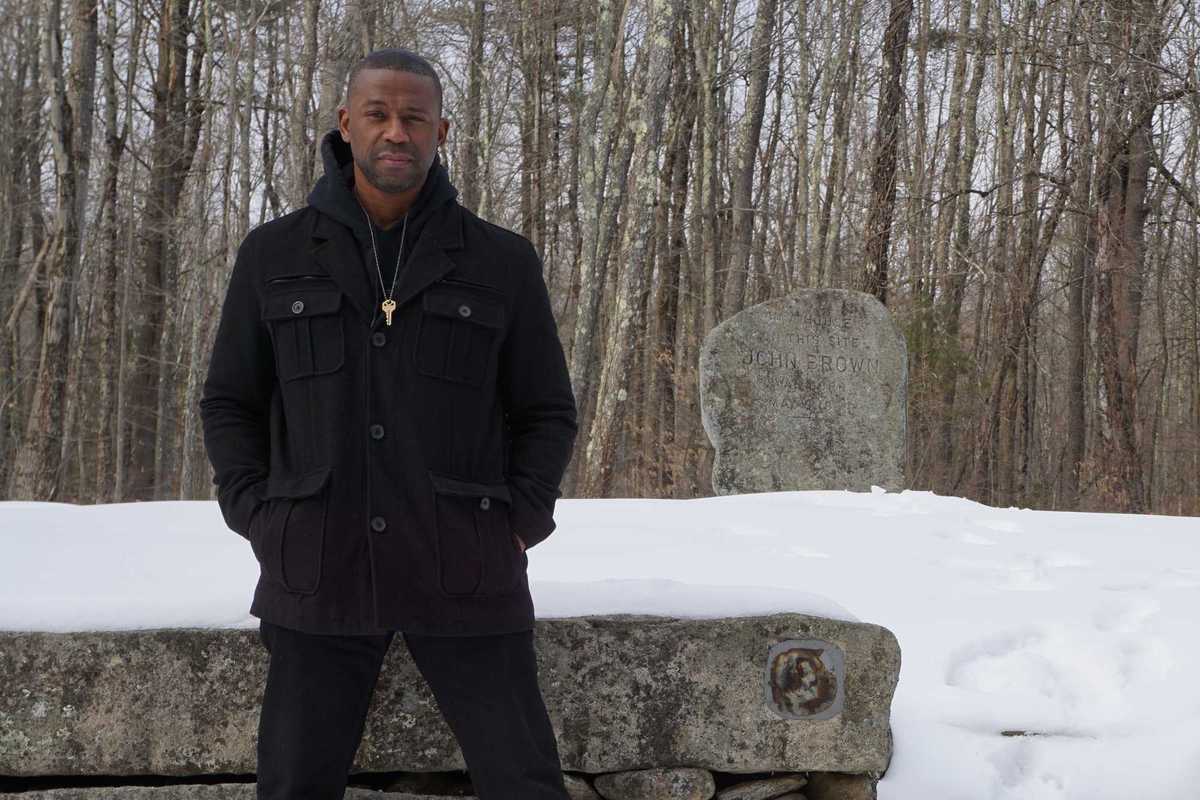
One systemic consequence of slavery is the loss and obscuring of the histories of those who were enslaved. Records were often not kept about where Africans had been stolen from or who they were related to. Families were torn apart, leaving nothing but the faintest traces of the past. The delineation point, where genealogists can no longer trace histories back, is refered to this as the “document wall.”
Today, 250 years after the signing of the Declaration of Independence and more than 160 years since the Emancipation Proclamation, there is a growing effort to restore some of the history stripped from enslaved people and their descendants. Among the leaders of these efforts is Mills, president of the Alex Breanne Corporation, a nonprofit organization that works to identify previously anonymous Black Americans from history and connect them with their living relatives.
The work began with Mills’ sister, who started digging into their family’s past in the 1990’s and introduced him to this emerging world of genealogy. Through that process, the Mills family discovered their great-great-grandfather, Ned Mills, who had been enslaved in Texas. His last name came from his final enslaver and remains the family surname. Through their research, they found that the document wall directly affected their ancestor, who learned of his liberation on June 19, 1865, now commemorated as Juneteenth.
“For the first time,” Mills writes on his website, “American slavery wasn’t something that had happened to anonymous people in a history book. It had happened to my family.”
The discovery gave Mills a familial pride he had been missing for years. That pride fueled his desire to help others find their own history. In 2023, Mills received his certificate in genealogical research from Boston University. He has used his expertise to help descendants of enslaved people uncover histories they never dreamed of learning.
To do this, he uses a process called “reverse genealogy,” identifying a person from the past and working forward to discover their descendants. Along the way, Mills has found some remarkable people who fought for freedom on American soil, some of whom were never freed.
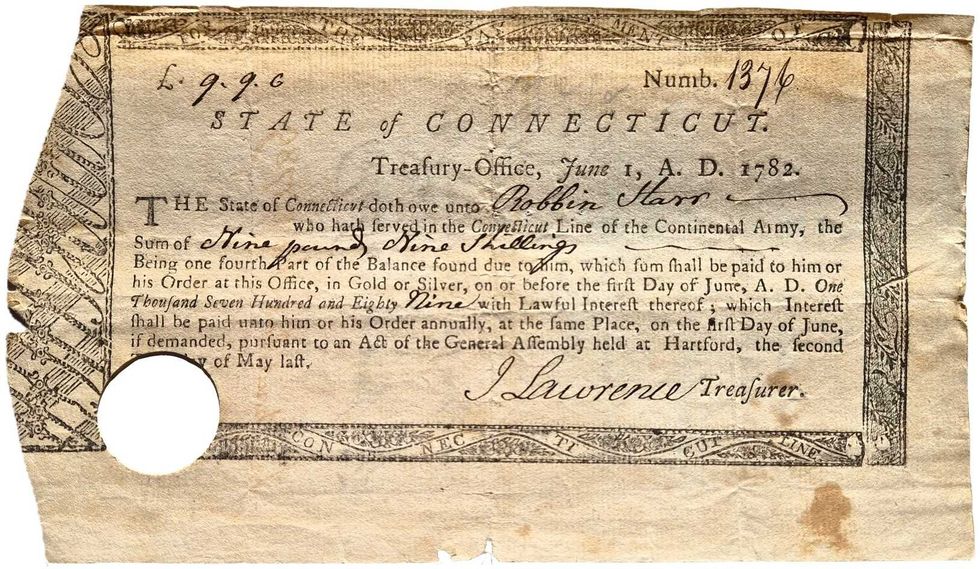 Pay Bill for Robin Starr’s service in the Continental Army.Courtesy the Alex Breanne Corporation
At the Cornwall Historical Society event, Mills will present the stories of four Connecticut families: Job Lathrop of Norwich, the son of Pirmus Armes, about whom Mills has published a book; Prince Mortimer of Middletown, also the subject of a book by Mills;, the three sons of London Wallace of Simsbury; and Robert “Robin” Starr of Danbury, who later lived in Cornwall and Sharon.
A few years ago, Cornwall Consolidated School social studies teacher Will Vincent reached out to Mills for research guidance on a local history project his students were undertaking. Together, they learned about Naomi Freeman of Cornwall. After purchasing an acre of land on Great Hollow Road in 1828, Naomi Freeman became the first Black female landowner in Cornwall.
The students petitioned the town to rename a road after the historic Cornwall resident In April 2025, Great Hollow Road was officially renamed Naomi Freeman Historic Road. U.S. Rep. Jahana Hayes joined Mills and the Cornwall Consildated School students for a presentation of their research.
Since then, Mills has guided the students in their quest to learn more about Starr’s story. Starr was a Revolutionary War soldier who joined the Continental Army to earn enough money to buy his own freedom, receiving the Badge of Merit in the process. The stories of his descendents’ services are equally worthy of their own books.
In recognition of Mills and the students’ work, First Selectman Gordon Ridgway proclaimed Feb. 8 as Robin Starr Day.
Preregistration is required for the event at the Cornwall Historical Society. To learn more about Mills’ work, visit
alexbreanne.org.
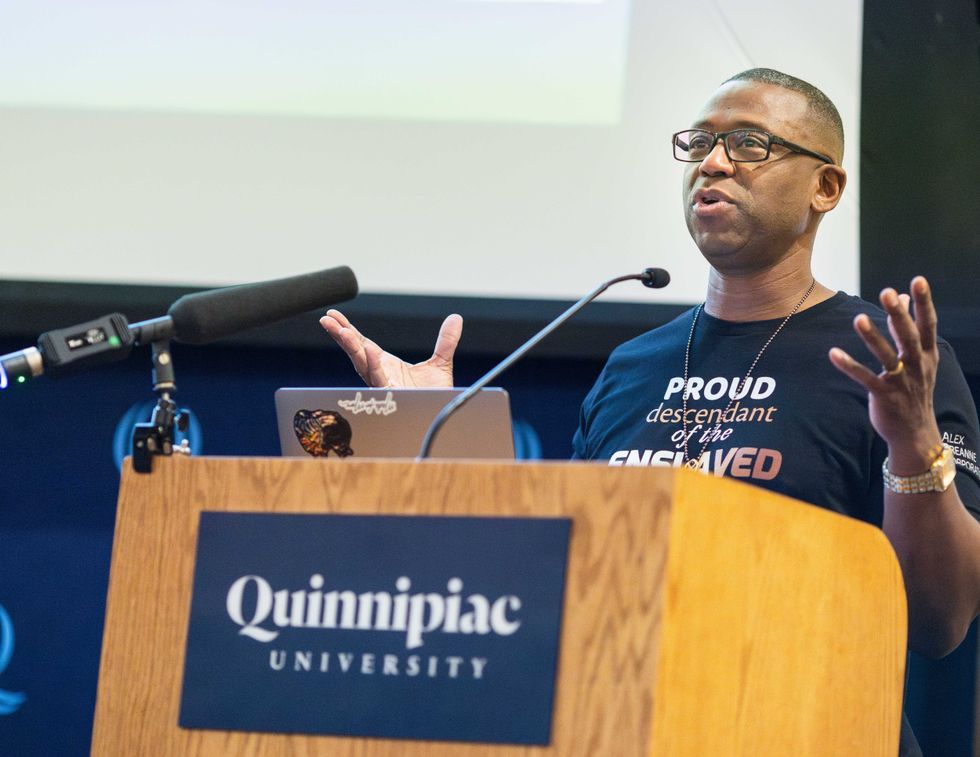 John Mills speaking at Quinnipiac University.Courtesy the Alex Breanne Corporation
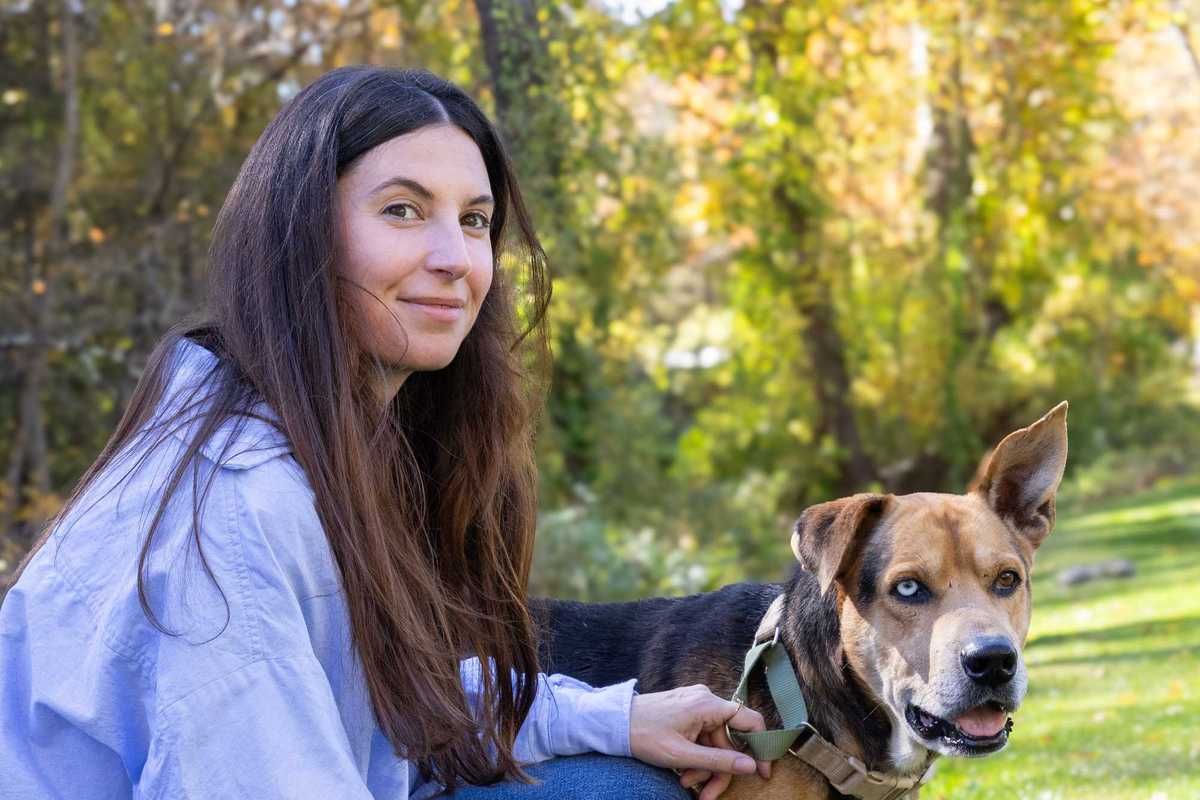
Stephanie Saetta runs Charlie Chicken Bones, a sanctuary in Salisbury.
Dogs have been at the center of Saetta’s life since childhood. She remembers going to the library to research different breeds and trying to convince her parents the family needed a dog. She had her heart set on an Irish Wolfhound, but she was more than happy when her mom brought home a West Highland terrier.
After college, she adopted Charlie as a puppy from a rescue on Long Island. He was a hound-shepherd-Rottweiler mix who suffered from intense seizures. Some veterinarians recommended euthanasia, but Saetta wasn’t ready to give up on him.
When Charlie would have an episode, she would sit with him, nose to nose, talking him through it. She learned to look for the moment he began to come around — when he could smell her again and his tail started to wag.
“You only get one or two of these soul connection dogs, so I do this in his honor,” Saetta said. “I like to think that all the dogs that come through are going to have that person that they connect with just the same.”
Through a network of women working to rescue animals in Texas, she learned about the desperate situations facing many dogs.
With limited space, some public pounds euthanize even healthy animals to make room. Limited access to veterinary care leaves sick dogs or unvaccinated puppies especially vulnerable.
Saetta saw that reality firsthand with a puppy named Gus, a Labrador mix she fostered who has since been adopted. Gus and his sisters had been dumped beside a road, where they were living under an abandoned car. People would leave food for them, but no one would take them to the pound.
“Even the people who rescue animals down there were like, ‘sadly, the best place for them to be is on the side of the road,’” she said. “That’s safer. Someone might actually help them that way.”
Saetta knows that there are far more dogs than any one person can save, but she also knows that helping one dog means one fewer on the street.
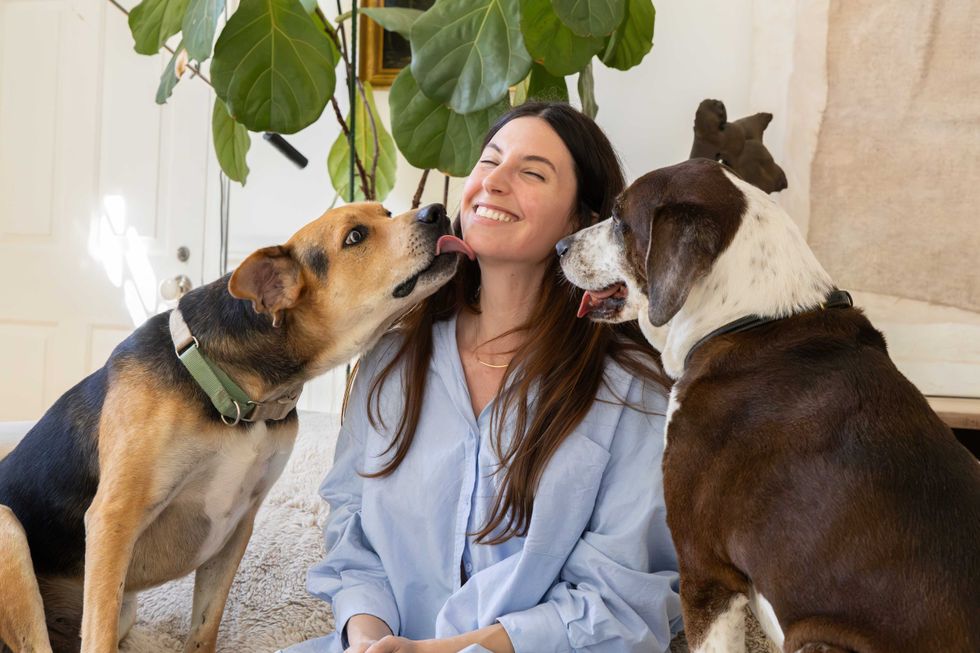 Stephanie Saetta,with her rescue dog George and Blue (left), a shepherd mix awaiting his forever home.Madi Long
Charlie Chicken Bone Sanctuary operates entirely through foster homes, a model that Saetta believes is best for the dogs and the humans hoping to adopt them.
Rather than moving directly from a difficult environment into a permanent home, the dogs have a chance to settle into a quieter setting. They can learn what it’s like to live with a family, sleep somewhere comfortable and receive affection without fighting for attention. Fostering also allows the rescue to really get to know each dog.
“As fosters, we’re honest,” said Saetta. We’ll tell you everything that’s been bad, everything that’s been good. What their temperament is and how they’ve responded to all the things they’ve experienced.”
A successful adoption is not just about finding a dog a home; it’s about finding the right home where the dog and family can thrive together.
Saetta is looking for more people willing to open their homes to foster dogs. She understands that the thought of growing attached and eventually saying goodbye can feel daunting. But she sees that goodbye a little differently.
Fostering means being part of a dog’s journey, even if only for a short time. It gives dogs a safe place to rest, the chance to trust again and the love they have gone without for much of their lives. And when the time comes for them to leave, it is not really a loss. It is the reward of knowing they are moving on to a forever home.
Blue, Saetta’s current foster, is hoping to find his perfect home.
 Blue, a 7 year-old Shepard mix, is waiting for his forever home. Madi Long
Now around 7 years old, Blue spent most of his life wandering the streets of Texas. People sometimes left food out for him, but his mangy, dirty coat kept them from stopping to pet him. Today, he has a chance to experience something different.
Blue is still waiting for his forever home. Saetta believes he would do best as the only dog in a household or alongside another senior dog. He will need someone willing to continue working with him on his training and understand that a dog with his history needs patience.
But what he gives in return is a whole lot of love.
“He’s so enthusiastic, he’s so excited for life, he’s so friendly, and he’s got such a good heart, and he loves to cuddle,” Saetta said. “He’s a good, good, good dog.”
For more information on adopting Blue or how to foster, visit ccbsanctuary.org.


Want more of our stories on Google? Click here to make us a Preferred Source.