In Appreciation: Nicolas C. Osborn

Some people’s indelible presence, steadfast influence, and lingering first- and- lastimpressions bring full-on guffaws when they come to mind.

Such was Nic Osborn, The Berkshire-Litchfield Environmental Council’s (BLEC) long-serving stalwart trustee and our Connecticut Vice President, as well as enduring friend to so many in the Northwest Corner.

Where to begin with remembrances of this one-of-a-kind man who wore the bear’s-head winter hat seemingly year ‘round. Maybe by saying that Nic inhabited space with more wry authority than anyone could ever mimic. Or that he was a true BLEC “mountain man” more at home on a ridgeline, in a canoe, or at a pub than in formal settings, although he was comfortable in the latter too, given his unflappable personality.

Or maybe with the many nights around bonfires under starry/moonlit skies, enjoying adult beverages and howling like wolves. Or Nic’s friendly greeting and farewell – a softly rising “AAAHHHOOOOO;” or his legendary expeditions by canoe or on skis. Or his deep environmental concern for the myriad wetland obligate creatures — especially bog turtles — in whose wild ecosystems he was most happy. Or his annual uber-surprise homemade Halloween costumes at Camp Sloane rocking to brother Eliot’s Outerspace band. Nic’s outsized costumes were elaborate in natural themes — a 12-foot tall T-Rex; a birch tree of similar stature — or sundry mythical creatures, from which Nic eventually emerged as if a giant chrysalis broke open to reveal our hirsute friend.

Nic loved water in any of its states — solid, liquid, and even vaporous while enjoying the morning mists of Race Brook Swamp that rose from behind his Undermountain Valley home. An avid canoeist, he happily competed in white-water rapids or flat-water races. But he also enjoyed sitting in the stillness of a beaver slough simply watching wetland wildlife move about. Along with former competitors and friends Bill Tingley and Schuyler Thompson, Nic was among the few to paddle the entire length of the Housatonic River from its “Source-to-Sound” several times, raising awareness of the river’s plight as they joined up with other groups along the way.

When water fell as snow, he strapped on back country skis and headed up the Taconic Hills or northward to the Green and White Mountains, as well as out to the Rockies or the Wasatch. Whether the runs were ‘steep and deep’ with powder, or slick and icy, Nic loved the thrill of ‘earning his turns,’ by first ‘skinning’ up steep slopes to a high point whence he would launch his graceful choreography with gravity.

I recall many winter gatherings at Butternut Basin with similarly inspired friends from around the northeast, where we raced on our free-heeled skinny skis through slalom gates. It mattered not who won. Nic’s bear-head hat never blew off nor was it shed at the Telemarkers’ apres-ski party.

His other great loves were more interior — steadfast devotion to his wife Robin, and his consummate artwork that included everything from canvas to multimedia and even fabric, as well as community dedication to annual fundraisers for SWSA, the Jane Lloyd Memorial Fund, and others. We especially recall many a jolly late-afternoon BLEC executive committee meeting at the Norfolk Pub where serious environmental issues/solutions were discussed as Nic effortlessly “doodled” frameable works on paper tablecloths.

There was something essentially “BLEC” about our trustworthy Nic, and our utter symbiotic respect-for-the-wild gestalt. We were a perfect fit for a long productive run. He is now the “stuff” of treasured local legend and will be forever missed by the trustees and executive board. God speed, Nic…

With Immense Fondness,

The Berkshire Litchfield Environmental Council

Starling W. Childs, President

Ellery “Woods” Sinclair, Executive Secretary

B. Blake Levitt,

Communications Director

Tim Gray,

Massachusetts Vice

President

Latest News

A new life for Barrington Hall

A new life for Barrington Hall

Dan Baker, left, and Daniel Latzman at Barrington Hall in Great Barrington.

Provided

Barrington Hall in Great Barrington has hosted generations of weddings, proms and community gatherings. When Dan Baker and Daniel Latzman took over the venue last summer, they stepped into that history with a plan not just to preserve it, but to reshape how the space serves the community today.

Barrington Hall is designed for gathering, for shared experience, for the simple act of being together. At a time when connection is often filtered through screens and distraction, their vision is grounded in something simple and increasingly rare: real human connection.

Keep ReadingShow less

Gail Rothschild’s threads of time

Gail Rothschild’s threads of time

Gail Rothschild with her painting “Dead Sea Linen III (73 x 58 inches, 2024, acrylic on canvas.

Natalia Zukerman

There is a moment, looking at a painting by Gail Rothschild, when you realize you are not looking at a painting so much as a map of time. Threads become brushstrokes; fragments become fields of color; something once held in the hand becomes something you stand in front of, both still and in a constant process of changing.

“Textiles connect people,” Rothschild said. “Textiles are something that we’re all intimately involved with, but we take it for granted.”

Keep ReadingShow less

Sherman Players celebrate a century of community theater

Sherman Players celebrate a century of community theater

Cast of “Laughter on the 23rd Floor” from left to right. Tara Vega, Steve Zerilli, Bob Cady (Standing) Seated at the table: Andrew Blanchard, Jon Barker, Colin McLoone, Chris Bird, Rebecca Annalise, Adam Battlestein

Provided

For a century, the Sherman Players have turned a former 19th-century church into a stage where neighbors become castmates, volunteers power productions and community is the main attraction. The company marks its 100th season with a lineup that blends classic works, new writing and homegrown talent.

New England has a long history of community theater and its role in strengthening civic life. The Sherman Players remain a vital example, mounting intimate, noncommercial productions that draw on local participation and speak to the current cultural moment.

Keep ReadingShow less
google preferred source

Want more of our stories on Google? Click here to make us a Preferred Source.
Reimagining opera for a new generation

Reimagining opera for a new generation

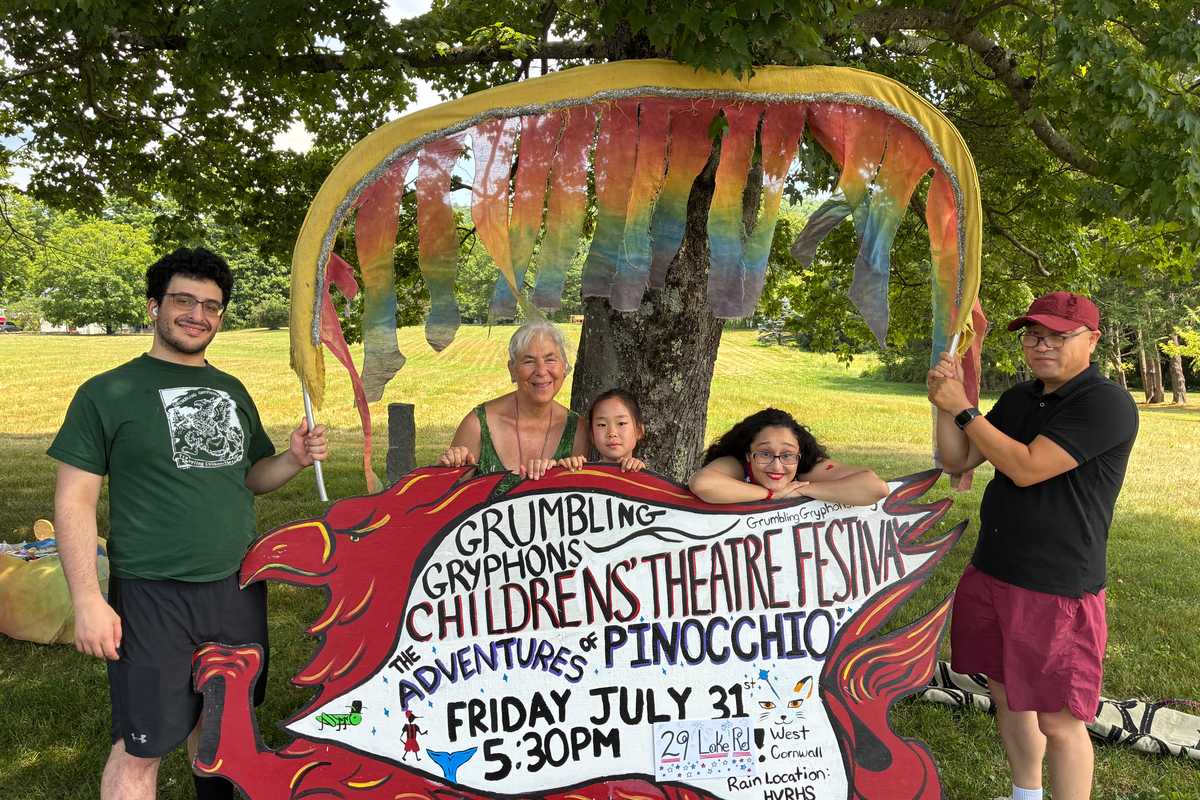
Stage director Geoffrey Larson signs autographs for some of the kids after a family performance.

Provided

For those curious about opera but unsure where to begin, the Mahaiwe Theater in Great Barrington will offer an accessible entry point with “Once Upon an Opera,” a free, family-friendly program on Sunday, April 12, at 2 p.m. The event is designed for opera newcomers and aficionados alike and will include selections from some of opera’s most beloved works.

Luca Antonucci, artistic coordinator, assistant conductor and chorus master for the Berkshire Opera Festival, said the idea first materialized three years ago.

Keep ReadingShow less
BSO charts future amid leadership transition and financial strain

Aerial view of The Shed at Tanglewood in Lenox, Massachusetts.

Provided

The Boston Symphony Orchestra is outlining its path forward following the announcement that music director Andris Nelsons will step down after the 2027 Tanglewood season, closing a 13-year tenure.

In a letter to supporters, the BSO’s Board of Trustees acknowledged that the news has been difficult for many in its community, while emphasizing gratitude for Nelsons’ leadership and plans to celebrate his final season.

Keep ReadingShow less
A tradition of lamb for Easter and Passover

Roasted lamb

Provided

Preparing lamb for the observance of Easter is a long-standing tradition in many cultures, symbolizing new life and purity. For Christians, Easter marks the end of Lenten fasting, allowing for a celebratory feast. A popular choice is roast lamb, often prepared with rosemary, garlic or lemon. It is traditional to serve mint sauce or mint jelly at the table.

The Hebrew Bible suggests that the last plague God inflicted on the Egyptians, to secure the Israelites’ release from slavery, was to kill the firstborn son in every Egyptian home. To differentiate the Israelites from the Egyptians, God instructed them to mark their doorposts with the blood of a lamb. Today, Jews, Christians and Muslims generally believe that God would have known who was Israelite and who was Egyptian without such a sign, but views of God’s omnipotence in the Abrahamic faiths have evolved over the millennia.

Keep ReadingShow less
google preferred source

Want more of our stories on Google? Click here to make us a Preferred Source.

google preferred source

Want more of our stories on Google? Click here to make us a Preferred Source.