
Thank you!
Your support is sustaining the future of local news in our communities.

Police under pressure in tough economy

WINSTED — It has been a challenging year for the Winchester Police Department.

For the past several months the department has been short two fully trained officers. The department generally seeks to have 23 uniformed officers; it now has only 21.

The manpower shortage has led to a spike in the department’s overtime costs, police Chief Nicholas Guerriero said, as officers must now continually fill the holes left by the staffing gap.

But that gap will soon be bridged.

Two new recruits hired by the town are expected to complete their required training and become certified uniformed officers with the department in the next few weeks.

Although both men graduated from the Connecticut Police Academy in Meriden earlier this year, the recruits must also complete several weeks of field training while working under the guidance of a senior Winchester police officer.

During this period, the probationary candidates are not allowed to have contact with the public without being accompanied by, and under the supervision of, a senior training officer.

Currently, both recruits are in the final stages of their field training, Deputy Chief Robert Scannell said, and their probationary period with the department is expected to end the middle of next month.

“Right now is the time when they see what it is all about,� Scannell said of field training, adding that it generally takes about 10 to 12 months from the date of hire before a new recruit is ready to patrol a beat and answer calls.

With the nation and the city still navigating through tough economic times, Guerriero said he understands why some town officials and residents have voiced their concerns about the department’s overtime costs.

The police chief said there are only three reasons why an officer can earn overtime: a necessary investigation of a crime, an emergency or filling a shift.

But Guerriero pointed out that according to the collective bargaining agreement (CBA) the town currently maintains with the police union, there must be at least three uniformed officers — each of whom is covered under the CBA contract — out on patrol at any time.

This means that a third officer must be called in to fill a shift if there are only two available for patrol during any given time period.

“Also, the deputy chief and I can’t take an officer’s place,� Guerriero said, referring to filling the department’s staffing gaps. Both men maintain their own individual employee contracts with the city.

Being down two officers has strained the department in ways other than the bottom line.

Over the past few years, the number of criminal arrests Winchester police make on average has almost doubled. According to Guerriero, the department made 488 criminal arrests in 2004. Last year it made 853.

“And that eats up our man hours,� he said, adding that each time an arrest is made an officer is taken off the beat to process the suspect and fill out the required paperwork.

The number of incident calls the department receives and must respond to has also risen over the last several years. In 1998, Winchester Police had 25 officers and responded to 9,174 calls. Last year, they responded to 11,171 calls with 21 officers.

“And as the calls go up, directed patrols go down,â€� Guerriero said of the proactive,  targeted patrolling of key areas to deter criminal activity in town.

In addition to the new recruits coming online, Guerriero said he has taken other measures to “shut off the spigot for overtime.�

The department recently suspended its involvement in the regional emergency response team, as well as its participation in a regional accident investigation and traffic enforcement team with Thomaston and Torrington.

Winchester’s DARE program in the city’s schools was also suspended until additional funding becomes available.

“There are things that are of a tremendous benefit to the town,� Guerriero said of the suspended programs. “And these are deep cuts that affect the services we can provide to the public.�

The Winchester Police, however, have received some financial relief in other areas. The department is slated to receive $50,000 in federal and state grants this year.

The money, made available to the department through the Federal Stimulus Package, will be used to replace 10 of the headquarter’s aging computers, as well several mobile data terminals used on patrol.

In addition, video cameras in the police station’s cell block, garage and “intoxilator room� (the area where those suspected of driving under the influence of drugs or alcohol are processed) will soon be equipped with audio recording capability.

“That was equipment that we couldn’t have had because the town can’t afford it,â€�  Guerriero said. “It was a lifeline to us.â€�

Latest News

‘So Little to Do,’ so much to discover at James Barron Art

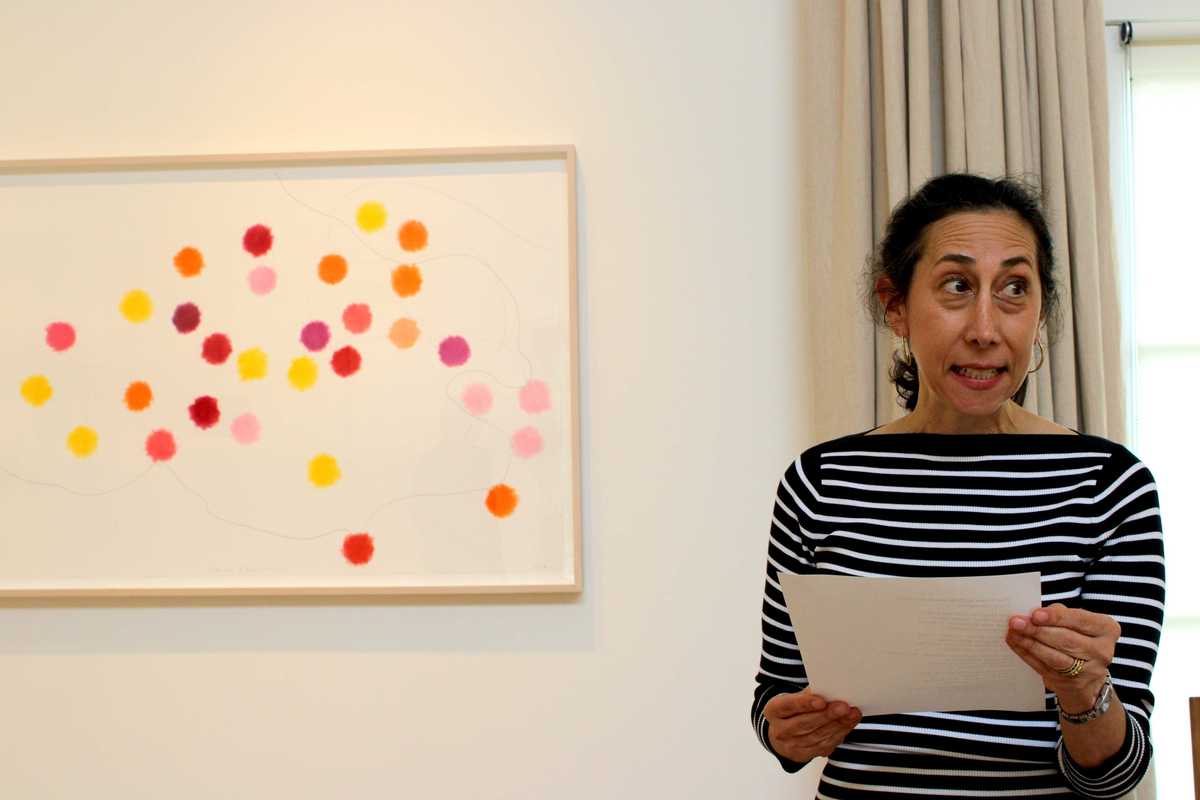
Curator Deborah Goodman Davis reads the Emily Dickinson poem “The Grass So Little Has to Do.” Spencer Finch’s “Following Three Bees (Zinnias)” buzzes in the background.

Photo by Natalia Zukerman

“The Grass Has So Little to Do,” on view at James Barron Art in Kent, takes its title from Emily Dickinson’s poem “The Grass So Little Has to Do,” written in 1862:

“The Grass so little has to do—
A Sphere of simple Green—
With only Butterflies to brood
And Bees to entertain—”

Keep ReadingShow less

Marina Kotchoubey is not a woodworker

Marina Kotchoubey is not a woodworker

Marina Kotchoubey at the Ian Ingersoll Cabinetmakers showroom in West Cornwall.

Photo by D.H. Callahan

After 40-something years navigating the world of custom fine furniture, Ian Ingersoll was getting ready to retire. Starting off with a little dovetail stool that he sold at a shop in West Cornwall in the 1970s, he’d grown his skill and his business into something he — and the whole town — could be proud of. Shutting down that business was not an option.

Ingersoll built Ian Ingersoll Cabinetmakers, which produced mainly classical Shaker furniture, on passion: the passion he had to make a living through creative challenges and the passion of his employees, who all seem deeply in love with their craft.

Keep ReadingShow less
A legacy of giving at Norfolk Chamber Music Festival

One hundred and twenty years ago, Carl and Ellen Stoeckel commissioned New York architect E.K. Rossiter to design The Music Shed in Norfolk, Connecticut. After nearly a decade of entertaining their friends and neighbors with the finest music of the day, they built a permanent home for their beloved Litchfield County Choral Union.

The commission and full funding of the construction was not unheard of in an era when great fortunes led to public enrichment. Railroad tycoon John D. Rockefeller was instrumental in funding institutes of higher education. Steel baron Andrew Carnegie was building libraries all over the country, and famously said that a man who dies rich is a disgrace, challenging his peers to give their fortunes back to the people.

Keep ReadingShow less
google preferred source

Want more of our stories on Google? Click here to make us a Preferred Source.
Two unique exhibitions at Geary Gallery

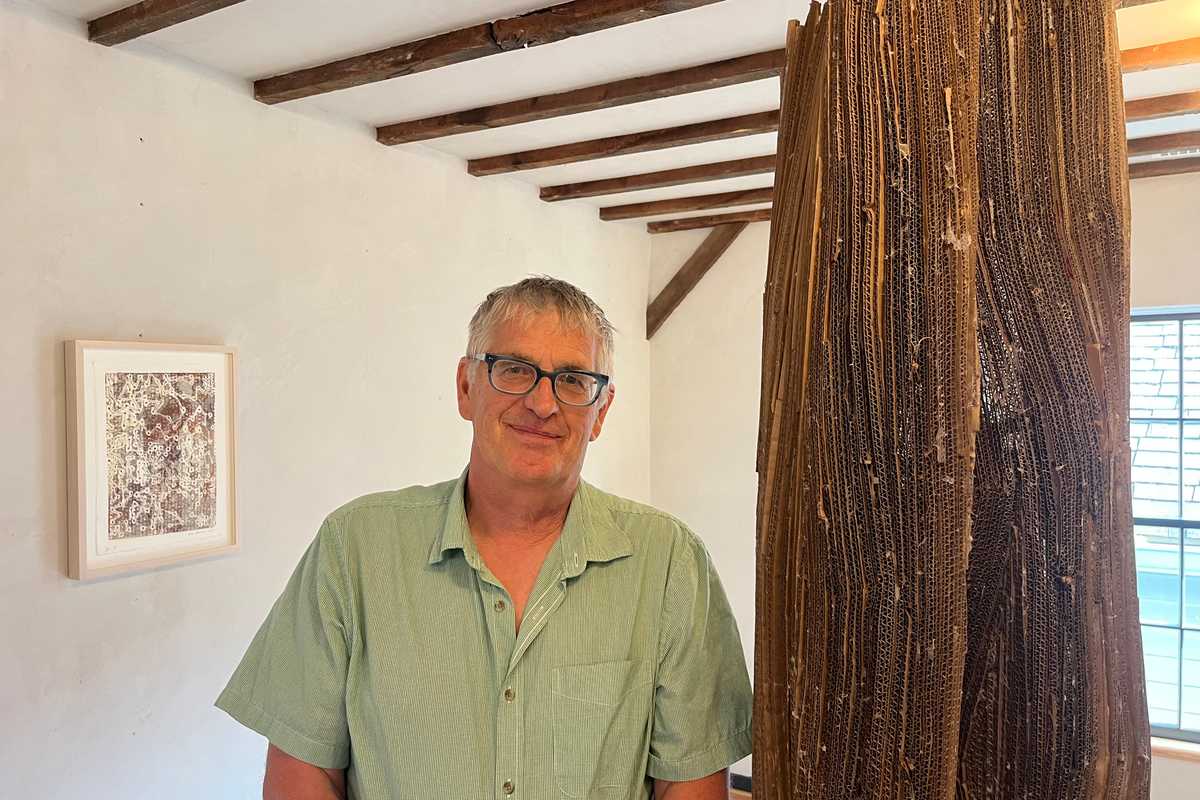
Henry Klimowicz with his sculpture, “Partial Pillar 1”

Photo by D.H. Callahan

On Saturday, Aug. 1, Geary Gallery opened its doors in Salisbury for two unique shows in its first- and second-floor gallery spaces. Art lovers flooded both floors over the course of the afternoon, giving the events a vibrant feeling that enhanced the importance of the art.

On the first floor is a show by Chicago-born, Colorado-based photographer Summers Moore, titled “Lobitos: Pueblo Fantasma,” or “Lobitos: Ghost Town.” The work centers around her daughter’s current hometown in Peru. Moore herself found a home away from home in Colorado in the mid-1980s and encouraged her children to seek out new places outside of their comfort zones.

Keep ReadingShow less

Writer’s retreat in the woods

Writer’s retreat in the woods

Participants in a 2024 Great Mountain Forest Woodland Academy workshop at Yale Camp.

Photo by Mike Zarfos

Great Mountain Forest (GMF) will host its first Nature Writing Retreat at the historic Yale Camp in Falls Village from Aug. 7-9, 2026. Writers of all levels are invited to draw inspiration from one of New England’s most notable forest landscapes. GMF envisions the retreat becoming an annual event celebrating writing, conservation and the relationship between people and forests.

This immersive three-day retreat reflects on the legacy of Hal Borland, the American writer and New York Times nature columnist whose work was deeply connected to this landscape. The retreat explores how wilderness shapes language, strengthens close observation and fosters environmental consciousness.

Keep ReadingShow less
From Cornwall to Rome, Adam Van Doren at Berkshire Botanical Garden

Artist Adam Van Doren and curator Donna Hassler talk to a group of visitors at the Berkshire Botanical Garden. A Stephen Proctor vessel sits to their left.

Photo by Natalia Zukerman

This summer, the Berkshire Botanical Garden in Stockbridge has hosted “Grounded in Nature: Paintings by Adam Van Doren,” an exhibition exploring the intimate relationship between architecture and the natural world.

On view for only a few more weeks in the Leonhardt Galleries, the exhibition features more than 35 watercolor and oil paintings by the New York-based artist, architect, author and Yale professor, curated by art historian Donna Hassler, director emerita of Chesterwood. The works span three distinct places that have shaped Van Doren’s artistic practice: New York City, Cornwall, Connecticut, and his travels throughout Europe.

Keep ReadingShow less
google preferred source

Want more of our stories on Google? Click here to make us a Preferred Source.
google preferred source

Want more of our stories on Google? Click here to make us a Preferred Source.