Latest News
Taiga brings Siberian-inspired dining to Hudson
Elena Spellman
Jun 10, 2026
Taiga is located at 119 Warren St. in Hudson.
Provided
Walking into Taiga in Hudson for the first time did not feel like walking into a restaurant — it felt like stepping into a memory. As a Russian immigrant who grew up between cultures, I did not expect to find a place that evokes such a specific emotional response, both familiar and cinematic. Candlelight flickered against dark wood and vintage wallpaper while old Soviet-era music played softly in the background. The scent of herbs, smoke, tea and fresh blini filled the air — at once unfamiliar and deeply nostalgic. It became clear almost immediately why people speak about Taiga as more than simply a place to eat.
What makes Taiga unusual is that the food is only part of the experience. The restaurant was created by Vlad Larvin and his partner, Waldemar Sirko. Larvin, originally from Biysk, a small town in Siberia’s Altai region, worked in photography and fashion design before opening Taiga — fields that continue to shape every part of the restaurant today. Every detail — the lighting, photography, textures, music, pacing of the evening and even the scent in the air — feels intentionally designed to create emotion and atmosphere, not just visual style.
“We never wanted Taiga to feel like a traditional restaurant,” Larvin said. “We wanted it to feel emotional, immersive and deeply personal — almost like stepping into another world for a few hours.” That philosophy becomes immediately apparent the moment dinner begins.
Nearly everything at Taiga is made from scratch by Larvin, from delicate handmade dumplings to traditional blini and seasonal dishes inspired by Russian, Slavic and Central Asian influences. The menu changes frequently and reflects Larvin’s Siberian upbringing near Kazakhstan and Mongolia, where food culture naturally blended European and Asian traditions. Many ingredients are sourced locally from Hudson Valley farms, while certain teas, herbs, honey and spices come directly from the Altai region of Siberia — creating a menu that feels simultaneously rooted in two different worlds.
As someone who grew up around Russian food, I expected familiarity. What surprised me was the emotional accuracy of the experience. The dishes had the warmth and intimacy of home cooking while still feeling refined and modern. Larvin credits his grandmother, who taught him to cook from a young age, with instilling an emotional foundation around food. “In our culture, food was never just food,” he said. “It was love, care, generosity, conversation and connection.” That idea seems to define the entire atmosphere of Taiga.

Unlike many restaurants designed for quick turnover, Taiga encourages people to slow down. Tables glow under candlelight while guests linger for hours over wine, conversation and shared dishes. The restaurant’s Thursday movie nights further deepen that atmosphere, transforming the dining room into what Larvin describes as a “candlelit cinema,” where carefully selected American, European and Russian films play softly in the background. The effect is surprisingly transporting.
At one point during my visit, I looked around the room and realized almost nobody was looking at their phones. People were talking slowly, laughing, sharing plates and leaning into conversations. That sense of emotional presence is precisely what Larvin hoped to create.
“We want people to slow down, disconnect from the outside world and feel warmth, comfort, curiosity and connection,” he said. “Ideally, dinner at Taiga feels less like going to a restaurant and more like being invited into someone’s home late at night.”
Much of the restaurant itself was restored and designed personally by Larvin and Sirko. Vintage furniture, antique objects and much of the photography throughout the space were collected over years of travel or created by Larvin himself.
For many Americans unfamiliar with Russian or Eastern European culture, Taiga offers an introduction that feels intimate rather than stereotypical. But for Russian-speaking visitors, the experience can feel unexpectedly emotional.
There is something moving about hearing familiar music while eating handmade dumplings in a candlelit room in the Hudson Valley. Something about it collapses distance. For a few hours, Hudson felt connected to another world entirely — one built around hospitality, memory and gathering around a table. And perhaps that is what makes Taiga so compelling. It is not simply serving food. It is creating atmosphere, emotion and human connection in a time when many people seem desperately hungry for exactly that.
Taiga is located at 119 Warren St., Hudson. For menus and reservations, visit
taigarestaurant.com
Keep ReadingShow less
Ancram Center opens restored Annex building
Natalia Zukerman
Jun 10, 2026
The ribbon-cutting ceremony for the opening of The Annex at Ancram Center of the Arts. From left, Dan Sternberg, Ancram Center board member; Stephen Futrell, Ancram Center board member; Mary Barthelme, HCR; Kit White, APG; Andrea Barnet, APG; Crystal Loffler, HCR; Assemblymember Didi Barrett; Paul Ricciardi, Ancram Center Co-Director; Cathy Redlich, Ancram Center board president; Jeff Mousseau, Ancram Center Co-Director; Colleen Lutz, Ancram Town Supervisor; Jane Plasman, Ancram Center board member; Ivy Epstein, Ancram Center board member; Sheryl Boris-Schacter, Ancram Center board member; Lindsay Turley, NYSCA
B. Docktor
The Ancram Center for the Arts marked a major milestone May 22 with a ribbon-cutting ceremony celebrating the opening of The Annex, a restored 1780s building adjacent to the organization’s original Opera House theater in Ancram’s Historic Hamlet District.
Founded in 2016, Ancram Center for the Arts has built a reputation for presenting adventurous contemporary theater and community-centered programming in an intimate setting.
The newly renovated building expands the arts center’s footprint with housing for visiting artists and interns, along with additional classroom and gathering space for community programming and educational workshops. Upgrades to the overall complex also include ADA-accessible entrances and restrooms, reserved parking for patrons with limited mobility and a new outdoor seating area.
More than 60 people attended the celebration, held inside the theater against a backdrop of projected images documenting the restoration process, from demolition and foundation work to the final stages of construction.
Board Chair Cathy Redlich described the opening as a “pivotal moment” in the organization’s 10-year history and credited co-directors Paul Ricciardi and Jeffrey Mousseau with helping shape a vision that connects art and community.
Among those attending the ceremony were representatives from the New York State Council on the Arts, New York State Homes and Community Renewal and the Ancram Preservation Group, all of which helped support the project through funding and preservation efforts.
In a statement, New York State Assemblymember Didi Barrett praised the project’s impact on the wider community, noting that the Annex will provide housing, classroom space and expanded opportunities for residents and visitors alike.
The restoration project received support through the New York Main Street program, administered by New York State Homes and Community Renewal, along with additional funding from NYSCA, the Dormitory Authority of the State of New York and the Ancram Preservation Group.
The opening comes as Ancram Center launches its 2026 season, which includes performances of “Letters from Max” by Sarah Ruhl in July, Todd Almond’s musical memoir “I’m Almost There” in August and Caryl Churchill’s psychological drama “A Number” this fall. The center will also continue its popular “Real People Real Stories” storytelling series this summer.
“As Ancram Center enters its second decade, we are more than ever embracing our commitment to produce powerful works of theater that speak to this moment,” said Mousseau.
“The times we are in call for questioning conventions and creative courage,” added Ricciardi. “We also lean in on the unique shared experience that theater offers to take stock and reflect on what keeps us open and humane while living in uncertain times.”
For more information and tickets to upcoming performances and workshops, visit ancramcenter.org
Keep ReadingShow less
Finding a home on the range
D.H. Callahan
Jun 10, 2026
Flynn Ryan on the Range.
D.H. Callahan
Before Flynn Ryan, the owner of the Millerton Driving Range, moved from Arizona to Lakeville as a high school freshman in early 2020, he had only a passing interest in golf. He was a football guy in Arizona, but when he found out practice for the Housatonic Valley Regional High School athletes was an hour away, he joined the golf team.
A couple of years later, while working on a school assignment to improve the community, Ryan noticed the old driving range. The weeds and grass were up to his eyes. With no connections and no experience, he walked into Talk of the Towne Deli next door, asked for the landowner’s number and called him right there from the parking lot.
What he got was one heck of a deal.
The owner, who didn’t like seeing the range fall into disrepair, was thrilled that a local kid wanted to revitalize the business. He gave Flynn the first year rent-free, use of all his equipment, a little knowhow and, just like that, the high school junior became a business owner.
That’s where it stopped being easy.
At first, Flynn wasn’t very good at golf. But his personality compels him to dive deep into his interests and make himself an expert. It’s the same drive that pushed him to learn how to trade stocks, futures and cryptocurrency as a teen, spending years failing before turning a profit. That first year on the golf team, he earned the honor of most improved.

If you’ve ever been to the range, you know how wonderfully casual it is. It’s the kind of place where nobody cares how good you are. Where people intimidated by the sport can pick up a club and have a great time right next to a seasoned pro. Classic rock pumps through the speakers. There are chairs and a coffee table for people who bring their own picnics and parties. A ragtag collection of clubs invites you to try them out for size. The balls come out of a vending machine. The place is the definition of laid-back.
Flynn’s job seems like the easiest in the world. It is not.
During the warmer months, Flynn gets to the range at 6 a.m., picking up balls in his golf cart. Of course, the back field, where the long balls end up, has to be picked up by hand, one ball at a time. On busy days, that can mean as many as 6,000 balls. Once a week, he mows the whole thing.
It might not sound like all that much, but consider that for most of the year Flynn is working toward a business degree at Old Dominion University in Virginia. When he’s away, his family picks up the slack. His mother, Jennifer, chips balls into the center of the field with a pitching wedge before gathering them up, and his father, Michael, takes care of the mowing. Flynn keeps offering to hire workers, but his parents seem to love working for their entrepreneurial son.
While there’s nothing solid on the books, Flynn dreams of expanding his business with more ranges in the future, as well as hosting events on the Millerton grounds. Until then, he’ll keep the Zeppelin pumping, the ball machine loaded and the grass nicely shorn.
Keep ReadingShow less

Want more of our stories on Google? Click here to make us a Preferred Source.
William Kinsolving reimagines the Rhinelander Affair
Andrew Bavis
Jun 10, 2026
Author William Kinsolving explores race, class and privilege in his new historical novel, “Black and White and Read All Over.”
Andrew Bavis
What historical fiction allows is [to imagine] what’s between the lines of history, what the historian is forbidden to do.
— William Kinsolving
A century ago, the infamous case of Rhinelander v. Rhinelander, also known as the Rhinelander Affair, shook American society. The trial pitted mixed-race maid Alice Jones against the Rhinelanders, one of New York’s oldest and most powerful old-money families, drawing national attention. Now, 100 years later, the trial and the lives of those involved are brought back into focus in new ways in William Kinsolving’s latest novel, “Black and White and Read All Over.”
The book explores the dynamics of power and privilege within a deeply racist and classist society through the lens of what the author describes as “a uniquely American Cinderella love story done in by money and family power.”
It’s important to note that this book is not a biographical account of the Rhinelander Affair, nor does it pretend to be. Instead, it is openly and proudly a work of historical fiction that, rather than being restricted by the historical facts of the events it covers, integrates them into a story focused on the imagined emotions and inner lives of Alice Jones and her family. When asked about this creative decision, Kinsolving said that “what historical fiction allows is [to imagine] what’s between the lines of history, what the historian is forbidden to do.”
The book uses fiction to fill the gaps that court records and New York Times articles do not cover, and in doing so breathes new life into this slice of history. The result is a compelling love story between two people brought together by chance and torn apart by forces of race, class and power beyond their control, alongside a moving portrait of a family’s resilience in the face of a legal system designed to work against them.
One of the core aspects of “Black and White and Read All Over” is its examination of the racism and class politics that defined the period in which the book is set. Because of its subject matter, the book’s central conflict is inherently intertwined with the society of the early 20th century, a time when old-money families held enormous influence in New York and the now-infamous one-drop rule — which classified anyone with African ancestry as Black — shaped racial identity and social standing. The novel leans into this reality, making the Jones family’s status as a working-class, mixed-race household a prominent aspect of their identity and contrasting them with the white, aristocratic Rhinelander family, who serve as embodiments of the privileges and prejudices that dominated society.
The book uses Alice’s experiences, as well as those of her family, to show firsthand the realities of living in a white supremacist society and under a legal system dominated by wealth — realities that will likely resonate with many readers a century later.
Ultimately, “Black and White and Read All Over” is an engaging and thought-provoking novel that uses a tragic love story rooted in history to examine the enduring roles of race, class and power in American society.
For more about the author and to order the book, visit williamkinsolving.com
Keep ReadingShow less
Scot Galliher: Joining conservation and agriculture
Elena Spellman
Jun 10, 2026
Scot Galliher at Silver Mountain Hay in Millerton.
Provided
Farming is not a job. It’s a lifestyle."— Scot Galliher
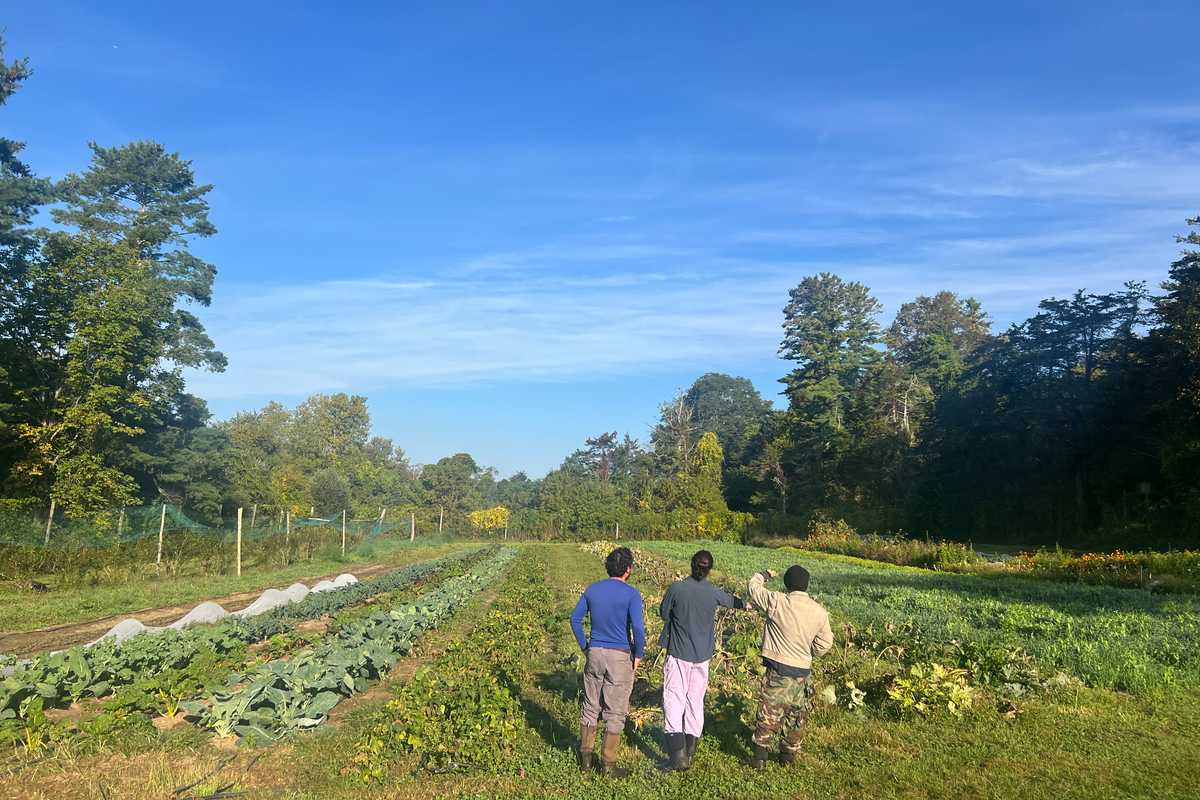
From the fields of Silver Mountain Hay in Millerton, Scot Galliher monitors moisture levels in horse feed, oversees the restoration of historic farmhouses and discusses the architectural details of the towering red barn that has become a local landmark. Two decades ago, he was working on Wall Street after leaving a career analyzing satellite data for a NASA subcontractor. Today, Galliher owns one of the area’s most distinctive agricultural operations — a farm he purchased not simply to grow hay, but to preserve open land threatened by development.
Unlike many farmers who inherit generations of family land, Galliher arrived at agriculture through conservation. After returning from abroad, he already owned another nearby farm and often passed the Silver Mountain property while driving his wife to the Wassaic train station. At the time, development pressure in the region was intensifying, and a developer had reportedly been close to purchasing the land before the deal fell through. Galliher stepped in soon afterward.
“I bought the farm to prevent that from happening,” he said.
That philosophy still shapes the operation today. For Galliher, farming and land preservation are inseparable. The open fields and rural landscapes that define the Harlem Valley survive only because working farms continue to exist, he argues. Without economically viable agriculture, open land eventually disappears — either overtaken by development or left unmanaged.
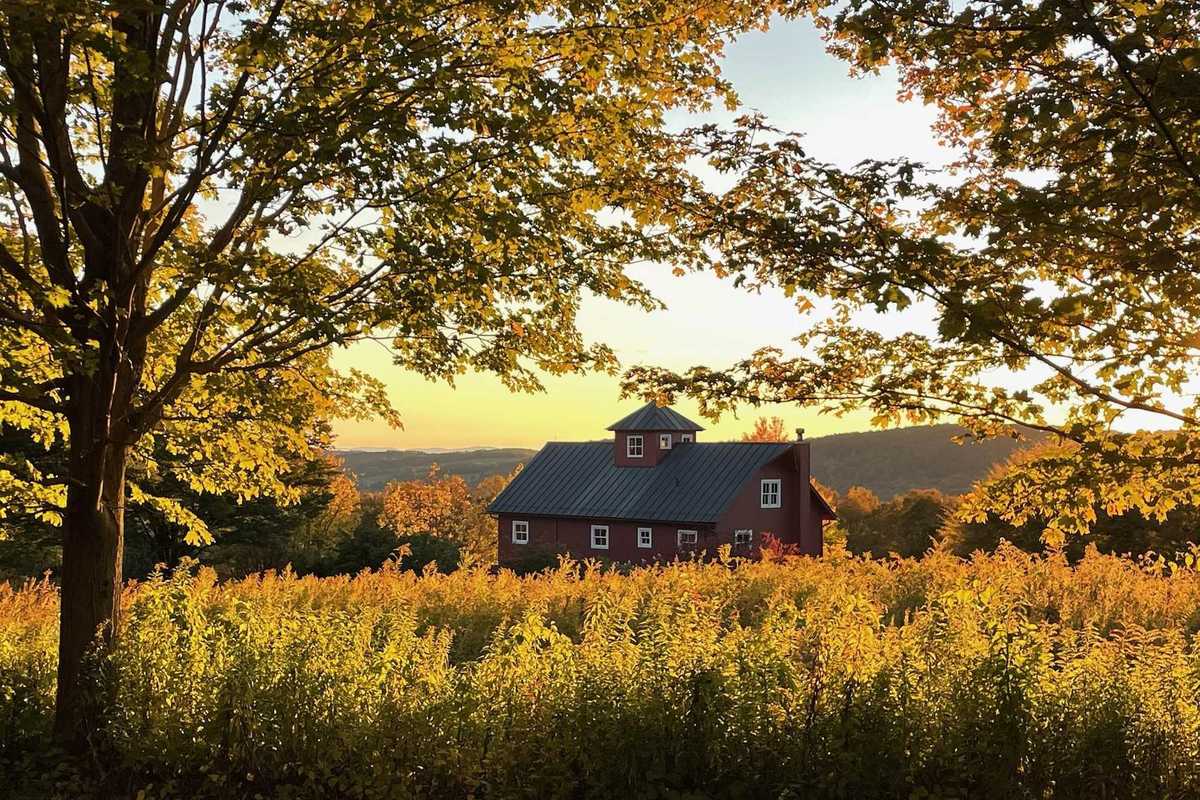
That long-term vision is visible across the property, particularly in the massive red barn that has become one of the area’s most recognizable agricultural structures. After the original dairy barn deteriorated, Galliher began studying historic barns throughout the Northeast before working with an architect to design a replacement that reflected both traditional agricultural design and modern functionality. The finished structure includes clerestory windows that flood the interior with natural light, an Olympic-sized indoor riding arena and infrastructure designed for a future equestrian facility. “I wanted to build an equestrian barn,” Galliher said.
Although the scale of the operation is impressive, Galliher speaks about farming in notably practical terms. Much of what he knows about hay production was learned through direct experience.
“Farming is largely learned through experience,” he said. “You learn by doing.”

Producing premium horse hay, he explained, requires careful attention to weather patterns, moisture levels, grass composition and timing. A sudden storm can destroy thousands of dollars’ worth of hay in less than an hour.
Galliher approaches haymaking with the precision of an engineer. Moisture levels must be carefully controlled to prevent mold, and different horses require different nutritional profiles. While many horse owners prefer softer second-cutting hay, Galliher noted that first-cutting hay is often nutritionally superior. “It is very difficult to make 50,000 feed-quality bales of hay year after year,” he said. Still, despite the technical demands of the work, Galliher describes farming less as an occupation than a way of life. “Farming is not a job,” he said. “It’s a lifestyle.”
He speaks enthusiastically about the smell of fresh hay after a successful harvest and the satisfaction of watching trailers return to the barn at sunset after long summer days in the fields. And after years spent in finance, he says he does not miss Wall Street very much.
“The reward system here is different,” he said. “I think it’s richer. I think it’s more human.”
Today, Silver Mountain Hay stands not only as a working agricultural operation, but also as a reflection of Galliher’s broader philosophy — that preserving rural landscapes requires more than admiration. It requires active stewardship.
Keep ReadingShow less
Housy Juniors top Avon 13-4
Riley Klein
Jun 10, 2026
Ronin Hinman slides into third base.
Riley Klein
NORTH CANAAN – Sam Eddy Field was home to Sunday baseball on June 7 when the Housy Juniors hosted Avon.
Housy won 13-4 with Brayden Foley pitching nine strikeouts in the complete game.
It was the eighth win in a row for the team of players from Cornwall, Falls Village, Kent, Norfolk, North Canaan, Salisbury and Sharon.
On offense, Housy scored early and often. Jaxxon Rogers, Brody Ohler and Landan M. each rounded the bases three times. J.T. Farr scored two runs. Sam Hahn and Ronin Hinman each had one run.

Kieran Bryant and Milo Ellison got on base twice. Greyson Brooks and Colin B. each hit a single. Liam Downey and Joey V. contributed a strong defensive effort.
The game was well attended with spectators dotting the foul lines. It was about 75 degrees, mostly cloudy and breezy.
The Northwest Connecticut Junior Division Little League is for players aged 13 and 14 in the region. The spring league is reaching its end, but the Housy Juniors will continue into summer league with home games played in Sharon.
Keep ReadingShow less

Want more of our stories on Google? Click here to make us a Preferred Source.
loading