With our daily news focused on weather catastrophes and President Trump’s ongoing scandals, the publication of a proposal for gun control by students at Marjory Stoneman Douglas High School has come and gone with little media attention. A month after the mass shooting, which killed 17 and injured 17 others, the Parkland, Fla., students helped organize March for Our Lives to urge legislation preventing gun violence. The Washington D.C. demonstration had over 800 sibling events throughout the United States and around the world.
A Peace Plan for a Safer America is the second major effort by March for our Lives. As the title page announces, the plan was “created by survivors, so you don’t have to be one,” and the professionally designed 12-page proposal offers a fearless multi-pronged approach to decreasing gun violence. Indeed, the wide-ranging Peace Plan demonstrates the seriousness of a group of traumatized youth who believe they must act to protect themselves from another horrifying experience, and not leave gun legislation to adults hamstrung by caution and political calculation.
The Peace Plan features such modest and widely accepted proposals as universal background checks and “red flag” laws to disarm those likely to endanger themselves or others, as well as a ban on assault weapons and high-capacity magazines — firearms used by all the 340 mass shooters in the United States in 2019. In addition, the Plan takes the logical step of calling for a mandatory buyback of all assault weapons and a voluntary buyback of handguns and other firearms — proposals that raise alarms among gun-rights advocates, but that will reduce the estimated 265-393 million firearms currently in circulation by at least 30 percent.
The student’s Peace Plan also includes accountability measures long fought by gun-rights advocates, from a national licensing and gun registry, to an annually renewable “multi-step” gun licensing system, that would involve in-person interviews and a 10-day wait period before approval for purchase. The students also advocate raising the minimum age for gun possession to 21, implementing national standards for locking devices on guns and requiring that lost or stolen guns be reported.
In the belief that their plan for firearm safety needs strong leadership and coordination, the students argue that “the next President” must take several executive actions: 1) declaring a national emergency around the epidemic of gun violence; 2) creating a new White House position, a National Director of Gun Violence Prevention, who reports to the president and manages “multi-agency coordination” in the service of gun violence prevention; and 3) establishing a Safety Corps that, following the model of the Peace Corps, would send 10,000 young people a year to work in communities and nonprofits around the country on paid, one-year engagements.
The student authors show how gun violence affects different groups of people differently. “African American men are ten times more likely to die by gun homicide than white men, but white men are 2.5 times more likely to die by gun suicide than African American men.” They discuss police violence in the context of broader criminal justice reform. And they offer sections on suicides (the majority of gun deaths in the U.S.), domestic violence, and mental illness (“individuals struggling with mental illness are more likely to be victims of gun violence than offenders”).
The students argue that the controversial Heller decision should be reviewed. This decision established that the Second Amendment protects an individual’s right to keep and bear arms for self-defense, unconnected with service in a militia, and that the District of Columbia’s handgun ban and requirement that lawfully owned rifles and shotguns be kept unloaded and disassembled or bound by a trigger lock violated this guarantee.
Finally, on the assumption that youth will vote to protect their own safety, the document argues that every student at age 18 be automatically registered to vote.
A Peace Plan for a Safer America should be assigned in sociology classes at the high school and college level. Neither the teacher nor the students need to agree with everything in the proposal to be inspired by this fearless and systematic proposal unleashed by horrific tragedy.
Carol Ascher, who lives in Sharon, has published seven books of fiction and nonfiction, as well as many essays and stories.
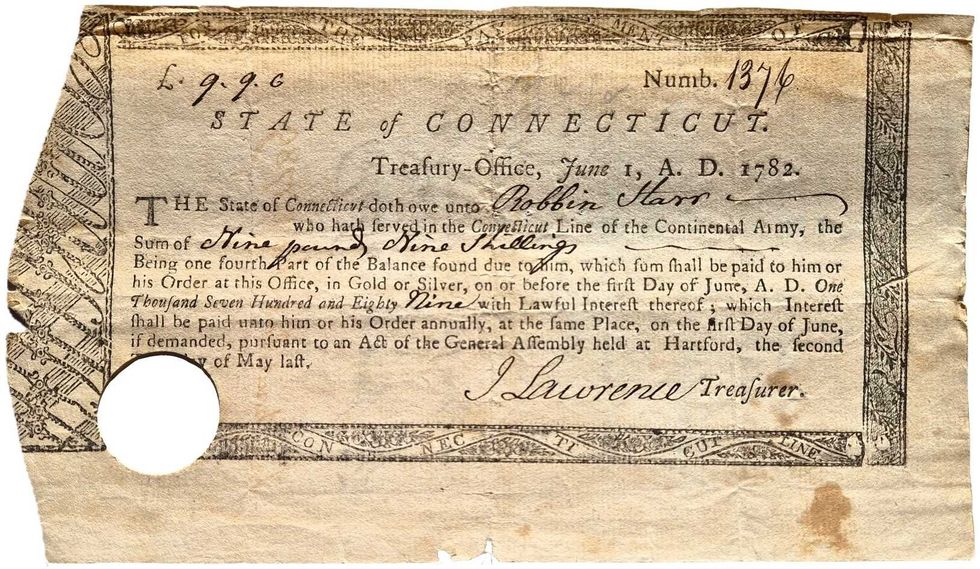 Pay Bill for Robin Starr’s service in the Continental Army.Courtesy the Alex Breanne Corporation
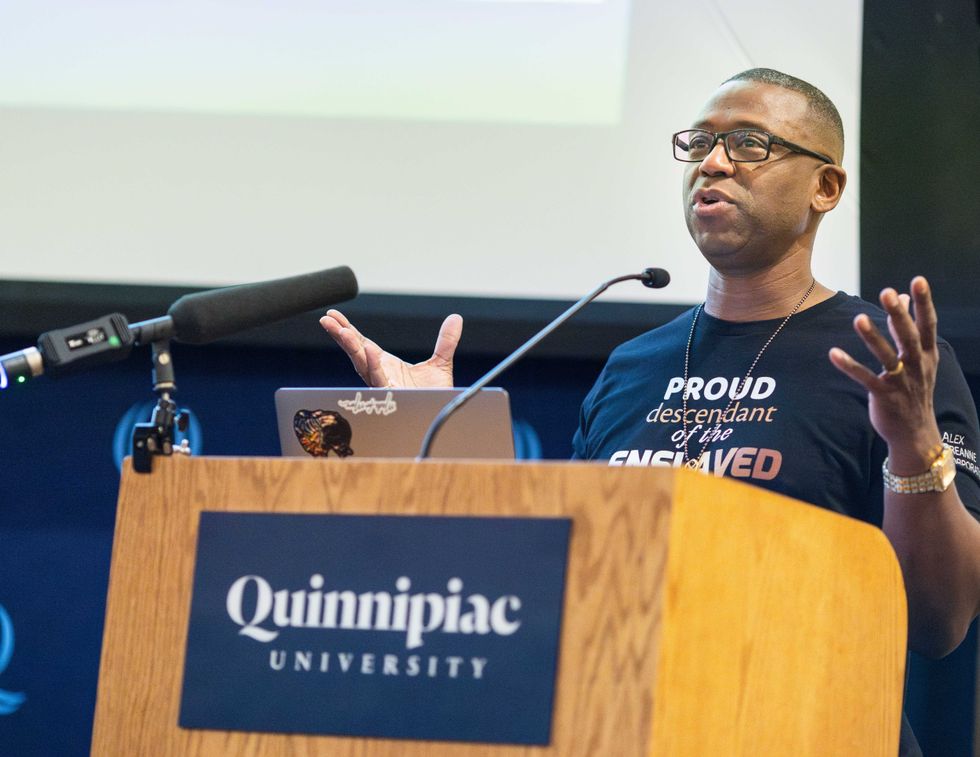 John Mills speaking at Quinnipiac University.Courtesy the Alex Breanne Corporation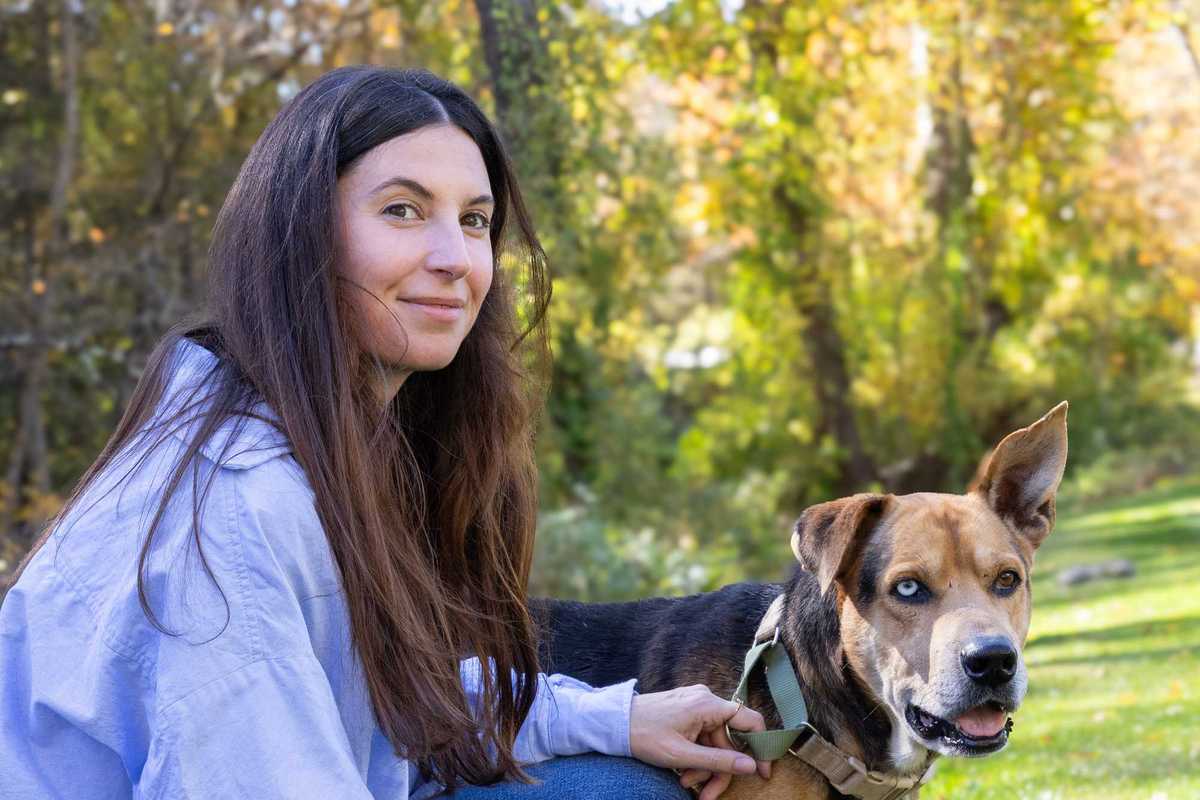
 Stephanie Saetta,with her rescue dog George and Blue (left), a shepherd mix awaiting his forever home.Madi Long
 Blue, a 7 year-old Shepard mix, is waiting for his forever home. Madi Long