Thank you!
Your support is sustaining the future of local news in our communities.

Questions on school budget at hearing

FALLS VILLAGE — Voters heard the details of the proposed spending plans for the Lee H. Kellogg School and the town at a lengthy and sometimes contentious public hearing Monday evening, April 25, at the school.Andrea Downs, chairman of the Board of Education, went through the budget manually, so to speak. (A computer presentation was scratched due to technical difficulties.)Her overall theme was one of frugality. “We worked hard to control costs at the local level and prepare for the increase” in high school tuition. Falls Village is experiencing a sharp rise in the number of students attending Housatonic Valley Regional High School.She added that projections show the number of students going to Housatonic going down in the next two years — from 48 currently, to 42 next year and 37 the year after that.When the current fifth grade gets to high school they will number about 31 students, Downs added.(Note that as of Oct. 1, 2010, the town had 53 students at the high school. The assessment is based on that figure. Each town pays a portion of the regional education budget based on the number of students at the high school in October of the previous fiscal year.)Other cost-cutting measures include: a two-year contract with certified staff that has a 1.1 percent pay raise in the first year and a 1.9 percent raise in the second; removing one bus route; limiting the number of new computers purchased; fewer cultural programs and assemblies; asking the staff to be conservative with supplies “and making do with what we have.”Significant savings have been realized by using a program that shuts down computers and electronics when the building is empty. The budgeted figure for the 2011-12 electricity bill is down $4,550, from $25,550 to $21,000.The Board of Education has made health savings accounts available as an option for faculty and staff; new hires have arrived at lower salaries, contributing to a net decrease in teacher salaries of .8 percent ($6,287); and hours are slightly reduced for the assistant custodian.An addition of $4,000 for after-school progams was explained by Downs: “Dom Caiati has been running them with 35 kids. That tells us there is a real need for this kind of programming.” (Kellogg’s current total enrollment is 83 students.)One change is that Kellogg is pulling out of the Region One summer school program in favor of running its own three-week course. Downs said that transportation to Cornwall Consolidated School had been a negative factor, and Kellogg Principal Maria Bulson added that in previous years Kellogg has never had more than three students for summer school, but with the change of venue 12 have already enrolled.The Kellogg spending plan’s total is $1,737,584, down 2.9 percent ($51,135). However, with the increased Region One assessment of $1,361,216 (up 32.9 percent, or $336,943) the proposed total for education spending in the 2011-12 fiscal year is $3,098,800, up 10.2 percent ($285,808).The Region One budget referendum is Tuesday, May 3.Downs said that any additional savings at Kellogg would necessarily involve cutting programs or reducing staff, and stated that the Board of Education feels that “further cuts would have a negative impact.”Downs noted that the board did offer an early retirement incentive for veteran teachers at the higher end of the salary scale, but there were no takers.And she stressed that there are additional pressures on the faculty as the Scientific Research-Based Interventions (SRBI) progam is implemented. The program is in place throughout the district, and is mandated by the state.Another difficulty in reducing staff is that teachers hold a wide range of teaching certificates, and the school cannot place a teacher with a K-3 certificate (for instance) in a middle school classroom to fill a gap.Questions and comments from the audience were fairly brief. Roberta Scott wondered why so many students were involved in the SRBI “interventions” (additional help and instruction on specific academic or behavioral difficulties).Downs said the program has been well-received at the high school, and Bulson said that in the first year of the program she has seen a decrease in referrals to her office, for either academic or behavioral reasons.Moderator Fred Petersen read a question given to him by someone unable to attend: Why should the taxpayers, not the parents of the children involved, foot the bill for summer school and the after-school program?Downs said with the after-school program the goal was to allow any child to participate regardless of the family’s means, and that summer school is part of the school’s overall responsibility.First Selectman Pat Mechare said that while she admired the after-school program she thought financing it should be up to the parents.Municipal proposalMechare was up next, going through the selectmen’s proposed spending plan, which calls for $1,537,790, down $5,000 or .324 percent.Mechare noted that Town Hall employees had voluntarily agreed to no salary increases. “This is two of the last three fiscal years they’ve done this.”The major issue with the municipal spending plan is the moving of $3,500 from the Recreation Commission to Line 1023 — Fund for Non-Municipal Public Benefit Activities.Mechare said that, based on a search of past minutes of meetings of the Recreation Commission, the $3,500 had gone to the Falls Village Children’s Theater Co., and the Board of Finance had decided that this was a grant.Rec Commission Chairman Doug Cohn disputed this, as did his wife, Denise, speaking from the point of view of the theater group.What followed was a reprise of a discussion from a Board of Finance meeting earlier this month, with Doug Cohn arguing that a newly energized Recreation Commission needs the money, and Lou Timolat from the finance board holding fast to the decision that the funds should be treated as a grant.At one point Timolat said, “What is it you want? Half put back into winter sports and leave half where it is? If that’s what it is then say so.”The discussion was, ultimately, inconclusive.Denise Cohn questioned the selectmen’s bottom line from the current fiscal year, where there is a $64,388 difference between the estimate of expenditures for 2010-11 and the amount budgeted. Mechare said that at the end of the year the selectmen might ask the finance board to put unexpended funds into the town’s various capital accounts.And Downs said that when she first started dealing with budgets, she was counseled that a budget with specific figures is easier to support than one with round figures (which is true of much of the selectmen’s plan).In wrapping up, Petersen reminded the audience that at town meeting voters can do only two things — approve the spending plans as presented or reduce the amounts.

Latest News

Plans to revitalize Norfolk’s Infinity Hall unveiled

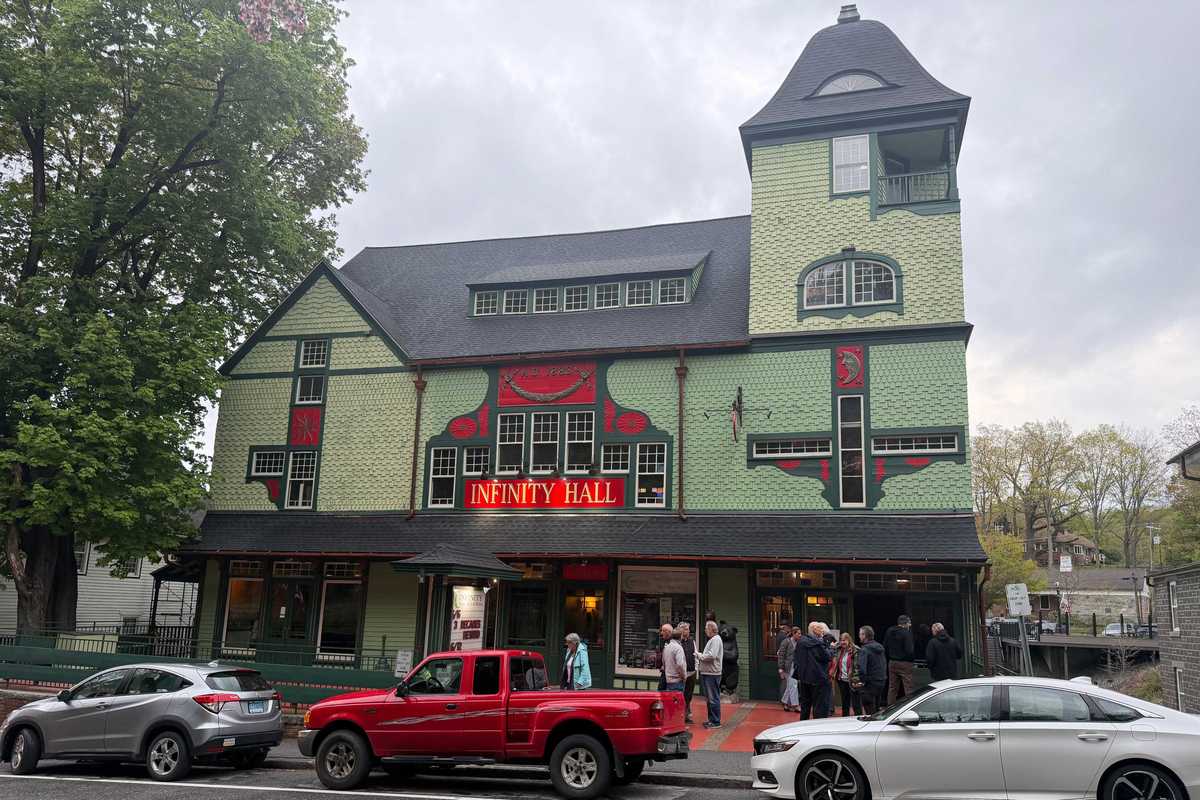
Infinity Hall, built in 1883.

Jennifer Almquist

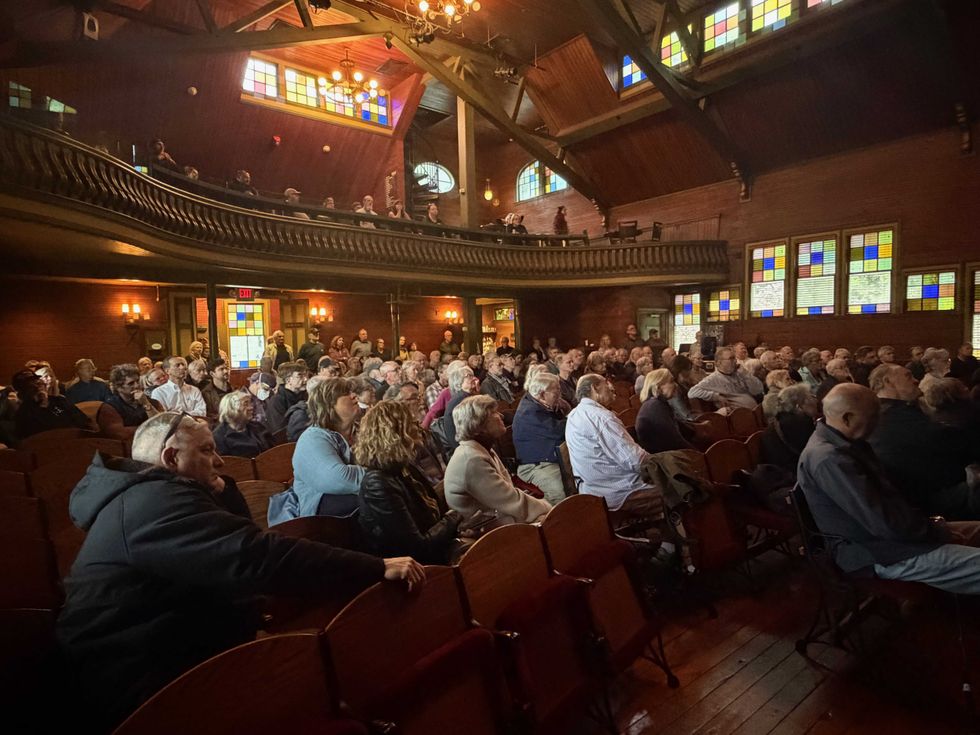
Nearly 200 people packed the wooden seats of Norfolk’s historic Infinity Hall on Thursday, May 14, as David Rosenfeld, owner and founder of Goodworks Entertainment Group, a live entertainment and venue management company, unveiled ambitious plans to restore the restaurant and bar, expand programming and reestablish the venue as a central gathering place for the community.

Since the Norfolk Pub closed on Jan. 31, 2026, the need for a restaurant and evening gathering place has become paramount, and for years residents have wanted Infinity Hall to be more engaged with the community.

Keep ReadingShow less

May Castleberry’s next chapter

May Castleberry’s next chapter

May Castleberry at home in Lakeville.

Natalia Zukerman
Castleberry’s idea of happiness is “looking at a great painting.”

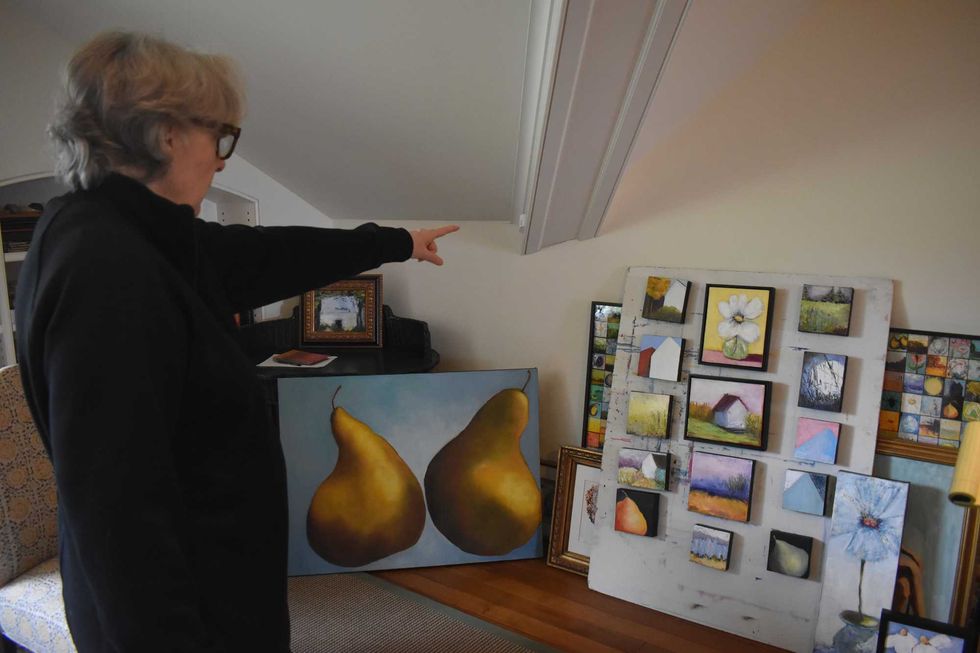
May Castleberry is a ball of sunshine and passion, though she grew up an introverted child, moving with her family from Alberta to Colorado to Texas, finding comfort in mountains, books and wide-open skies. Today, the former art book editor and museum curator has found a new home in Lakeville, where the natural beauty of the Northwest Corner continues to captivate her. Whether walking with friends, painting, reading or visiting beloved local libraries in Salisbury, Norfolk and Cornwall, Castleberry has embraced the region since making her move permanent in 2022, bringing with her a remarkable career shaped by a lifelong love of books and art.

Castleberry grew up in the world of books, and especially art books, and she credits her artist mother, an avid art book collector, with igniting her passions. Castleberry’s high school art teacher in Dallas understood how to teach students to channel their imaginations into books and art.

Keep ReadingShow less
Hoarding 
With Style: Sarah Blodgett’s art of collecting

Sarah Blodgett has turned her passion for collecting into “something larger.”

Photo by Sarah Blodgett

There is something wonderfully disarming about walking into a space where nothing feels overly polished, overly planned or pulled from a catalog — a place where history lingers in the corners, where color is fearless, where the objects on the shelves have stories to tell and where, if you are lucky, a cat named Cinnamon may be supervising the entire operation.

That is the world of Sarah Blodgett.

Keep ReadingShow less
google preferred source

Want more of our stories on Google? Click here to make us a Preferred Source.
Dr. Paul J. Fasano

Dr. Paul J. Fasano

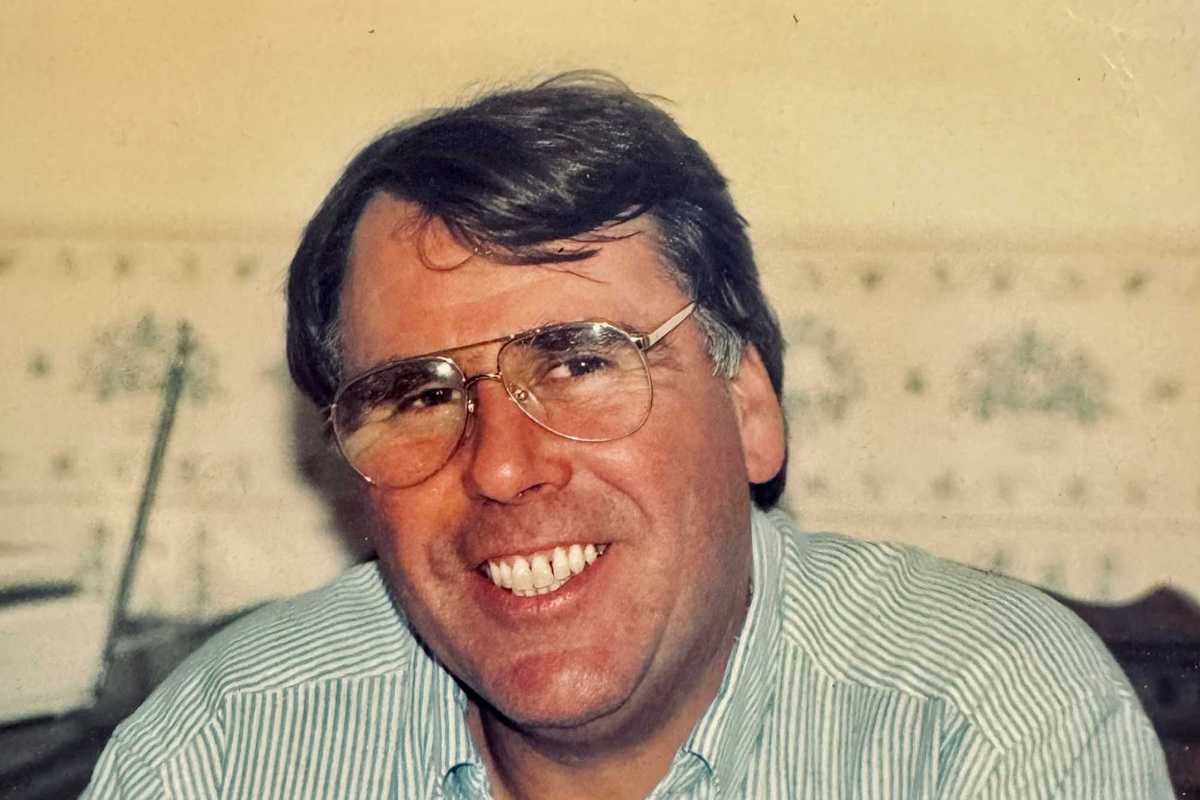
SHARON — Dr. Paul J. Fasano DDS, of Brewster, Massachusetts, passed away peacefully after a long illness on May 10, 2026, in Boston.

Born in Boston to Philip and Laura (Stolarsky) Fasano on Dec. 13, 1946, he grew up in Dorchester with his two brothers Philip and William.Paul attended the Boston Latin School and graduated from Boston College in 1968.He later completed Dental School at New York University in 1972.

Keep ReadingShow less

David Niles Parker

David Niles Parker

KENT — David Niles Parker, 88, of Middletown, Connecticut, passed away at home on May 6, 2026.

Born January 20, 1938, in Wellesley, Massachusetts, the first child to Franklin and Katharine Niles Parker, David graduated from Wellesley High School, received his undergraduate degree from Wesleyan University, studied at the University of Chicago Divinity School, and earned his master’s in education from Harvard.

Keep ReadingShow less
Janet Andre Block is ‘Catching Light’

Artist Janet Andre Block in her studio in Salisbury.

L. Tomaino

What do Johann Sebastian Bach’s Goldberg Variations, Richard Wagner’s Ring Cycle, Wolfgang Amadeus Mozart’s piano concertos and a quiet room have to do with Janet Andre Block’s work? They are among the many elements that shape how she paints, helping guide her into the layered, luminous worlds she creates on canvas.

Block makes layered oil paintings in rich, deep, misty colors. She developed her technique as an undergraduate at the School of the Museum of Fine Arts at Tufts University and then at New York University, and also time spent in Venice earning a master’s degree in studio art.

Keep ReadingShow less
google preferred source

Want more of our stories on Google? Click here to make us a Preferred Source.
google preferred source

Want more of our stories on Google? Click here to make us a Preferred Source.