
Thank you!
Your support is sustaining the future of local news in our communities.

Rail Trail extension gathers steam

COLUMBIA COUNTY — Looking at the village of Millerton as a model, Hillsdale and Copake are hoping that a 5-mile extension of the Harlem Valley Rail Trail will bring a similar boom to the local economy. The towns are seeking to extend the trail from its current terminus in Copake Falls up into the hamlet of Hillsdale.

Grants and inspiration

With the recent announcement that the project has received a $122,000 grant from the state’s Office of Parks, Recreation and Historic Preservation, the extension is only a few steps behind the half-mile Rail Trail construction that the town of Amenia is currently undertaking.

In Amenia, the town took on lead agency status for the project, applying for and receiving a $480,000 grant (with a $120,000 matching commitment) from the state.

In Columbia County it’s a little different. There are two stretches totaling 46 miles of rail beds that have been paved and are in use as trails. One starts in Wassaic and travels north nearly 11 miles before ending in the center of Millerton. There is then an 8-mile undeveloped stretch along Route 22 before the trail picks up again at Under Mountain Road in Ancram and continues for almost 4 miles, ending at Copake Falls.

The proposed construction would continue that trail up into the hamlet of Hillsdale, adding more than 4 miles to the trail. But the extension, which is significantly larger than Amenia’s project, also falls along several municipal jurisdictions.

The players

It’s difficult to say if there is one group leading the way on the project or several; an informal ad-hoc committee consists of residents from both Copake and Hillsdale, the manager of Taconic State Park (which the extension would run through), the Harlem Valley Rail Trail Association and the Copake Land Conservancy (CLC).

Of those groups, the CLC is both the biggest and most visible; the grant was awarded to the CLC in conjunction with the Harlem Valley Rail Trail, but the CLC’s biggest advantage is its size and experience with similar projects.

The CLC was responsible for writing a federal transportation grant on behalf of the Office of Parks, Recreation and Historic Preservation back in 1994. The state has since used up those funds to purchase back sections of the rail bed in Columbia County, with the goal that the land would eventually be converted into a rail trail.

“We have a good amount of experience and capacity with large state grants, things like farmland protection programs,� explained CLC’s Director of Outreach and Resource Development Tom Crowell. “Those grants approach $1 million. With that experience, we also have a full-time staff that the other groups involved just didn’t have, to meet state requirements.�

Lisa Deleeuw, the administrative director of the Harlem Valley Rail Trail Association and the organization’s only paid staff, agreed, saying that the CLC will be of enormous assistance during the entire grant administration process.

“We’re the push behind the grant,� she added, “and the Copake and Hillsdale residents are really going to be the force behind a lot of fundraising.�

The benefits

The CLC benefits from the open space initiative that the Harlem Valley Rail Trail promotes while the Rail Trail association moves closer to its goal of eventually converting the entire 46 miles of the Harlem Valley line rail bed. Copake and Hillsdale have identified the Rail Trail in their comprehensive plans as vital in their towns’ futures.

In Hillsdale, the town’s hamlet committee received professional planning assistance from a New York-based firm that helps communities devise long-range plans to rebuild stronger communities

“They came up with this over 100-page document that we received back in September,� said Bart Zieglar, a member of the Hillsdale Hamlet Committee and a part of the extension project group. “And one of their main conclusions is that we should get the Rail Trail.�

Zieglar said that group used Millerton as an example of how a municipality could utilize the Rail Trail to its advantage.

“To me, it’s pretty obvious that the Rail Trail gave a boost to the economy in Millerton,� said John Scutieri, the village’s mayor. “A lot of people come from quite a distance to use it, and they’re not just going to use the trail, they’re going to take advantage of the restaurants and shops.�

Scutieri said that some of the recent improvements and additions to the village, including an additional parking lot on South Center Street, are directly related to Rail Trail use.

“I’m excited about the anticipation of an expansion north of the village,� he added. “It’s a huge asset to us.�

The reality of time

But actual construction of the extension could be some time down the road. This month the CLC is expected to receive the grant contract from the state and then begin the process of selecting a design and engineering firm. That will involve sending out a Request for Proposals (RFP) to various firms, following a rather restrictive process the state requires in exchange for the grants. The Amenia Town Board, acting as lead agency for its half-mile extension, knows first-hand how regimented that process can be.

“There are many guidelines that we have to go over with the Department of Transportation,� Amenia Supervisor Wayne Euvrard said. “There are specific lists of approved contractors. Sometimes, with certain state grants, there’s a lot more paperwork involved. It takes a bit of time and effort, but [grants] are the only way that small towns and counties can do future development.�

The firm that is selected to handle the Copake/Hillsdale extension will be looking into the various logistics of the project, including the actual construction plans as well as projected costs.

“Estimates could run anywhere from $100,000 to $400,000 or more per mile of construction,� Crowell pointed out. All parties agreed that significant grant funding would be needed to cover the costs of construction. Local fundraising, whether from private donors or local organizations, will also be needed; the $120,000 design grant requires a $40,000 match, which will have to be raised privately; the local municipalities will not be assisting in funding the project. But being awarded a state grant is a good sign that the state is interested in supporting the project, Deleeuw said.

“By the time the grant period is over this will be a shovel-ready project,� she said confidently.

“The Rail Trail will be a way to bring more people into the hamlet of Hillsdale,� Zieglar said. “It’s a reason for people to come here. We’re hoping to eventually establish a whole little village, where there could be shops that could service cyclists, sandwich and food shops, things that would appeal to people using the trail. If this extension is built, Hillsdale will be the northern terminus of the Harlem Valley Rail Trail. We could draw people in from all over Columbia County.�

Latest News

‘So Little to Do,’ so much to discover at James Barron Art

Curator Deborah Goodman Davis reads the Emily Dickinson poem “The Grass So Little Has to Do.” Spencer Finch’s “Following Three Bees (Zinnias)” buzzes in the background.

Photo by Natalia Zukerman

“The Grass Has So Little to Do,” on view at James Barron Art in Kent, takes its title from Emily Dickinson’s poem “The Grass So Little Has to Do,” written in 1862:

“The Grass so little has to do—
A Sphere of simple Green—
With only Butterflies to brood
And Bees to entertain—”

Keep ReadingShow less

Marina Kotchoubey is not a woodworker

Marina Kotchoubey is not a woodworker

Marina Kotchoubey at the Ian Ingersoll Cabinetmakers showroom in West Cornwall.

Photo by D.H. Callahan

After 40-something years navigating the world of custom fine furniture, Ian Ingersoll was getting ready to retire. Starting off with a little dovetail stool that he sold at a shop in West Cornwall in the 1970s, he’d grown his skill and his business into something he — and the whole town — could be proud of. Shutting down that business was not an option.

Ingersoll built Ian Ingersoll Cabinetmakers, which produced mainly classical Shaker furniture, on passion: the passion he had to make a living through creative challenges and the passion of his employees, who all seem deeply in love with their craft.

Keep ReadingShow less
A legacy of giving at Norfolk Chamber Music Festival

One hundred and twenty years ago, Carl and Ellen Stoeckel commissioned New York architect E.K. Rossiter to design The Music Shed in Norfolk, Connecticut. After nearly a decade of entertaining their friends and neighbors with the finest music of the day, they built a permanent home for their beloved Litchfield County Choral Union.

The commission and full funding of the construction was not unheard of in an era when great fortunes led to public enrichment. Railroad tycoon John D. Rockefeller was instrumental in funding institutes of higher education. Steel baron Andrew Carnegie was building libraries all over the country, and famously said that a man who dies rich is a disgrace, challenging his peers to give their fortunes back to the people.

Keep ReadingShow less
google preferred source

Want more of our stories on Google? Click here to make us a Preferred Source.
Two unique exhibitions at Geary Gallery

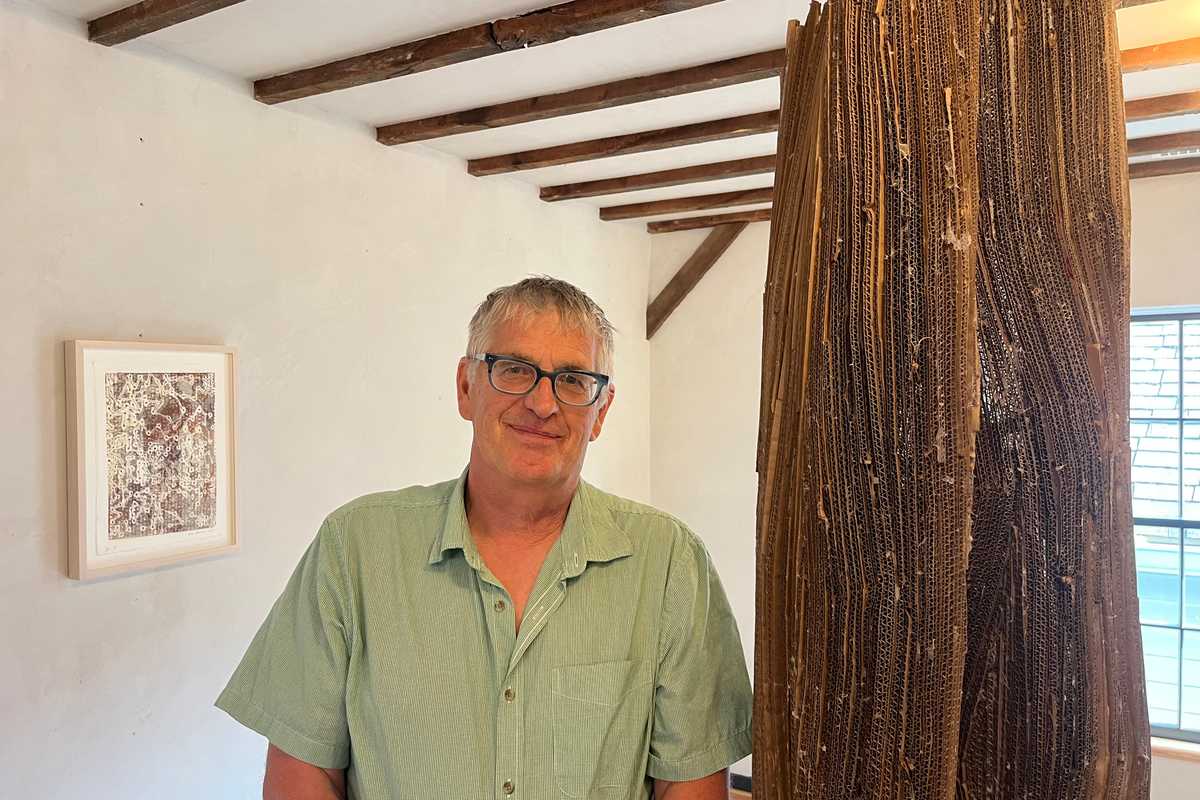
Henry Klimowicz with his sculpture, “Partial Pillar 1”

Photo by D.H. Callahan

On Saturday, Aug. 1, Geary Gallery opened its doors in Salisbury for two unique shows in its first- and second-floor gallery spaces. Art lovers flooded both floors over the course of the afternoon, giving the events a vibrant feeling that enhanced the importance of the art.

On the first floor is a show by Chicago-born, Colorado-based photographer Summers Moore, titled “Lobitos: Pueblo Fantasma,” or “Lobitos: Ghost Town.” The work centers around her daughter’s current hometown in Peru. Moore herself found a home away from home in Colorado in the mid-1980s and encouraged her children to seek out new places outside of their comfort zones.

Keep ReadingShow less

Writer’s retreat in the woods

Writer’s retreat in the woods

Participants in a 2024 Great Mountain Forest Woodland Academy workshop at Yale Camp.

Photo by Mike Zarfos

Great Mountain Forest (GMF) will host its first Nature Writing Retreat at the historic Yale Camp in Falls Village from Aug. 7-9, 2026. Writers of all levels are invited to draw inspiration from one of New England’s most notable forest landscapes. GMF envisions the retreat becoming an annual event celebrating writing, conservation and the relationship between people and forests.

This immersive three-day retreat reflects on the legacy of Hal Borland, the American writer and New York Times nature columnist whose work was deeply connected to this landscape. The retreat explores how wilderness shapes language, strengthens close observation and fosters environmental consciousness.

Keep ReadingShow less
From Cornwall to Rome, Adam Van Doren at Berkshire Botanical Garden

Artist Adam Van Doren and curator Donna Hassler talk to a group of visitors at the Berkshire Botanical Garden. A Stephen Proctor vessel sits to their left.

Photo by Natalia Zukerman

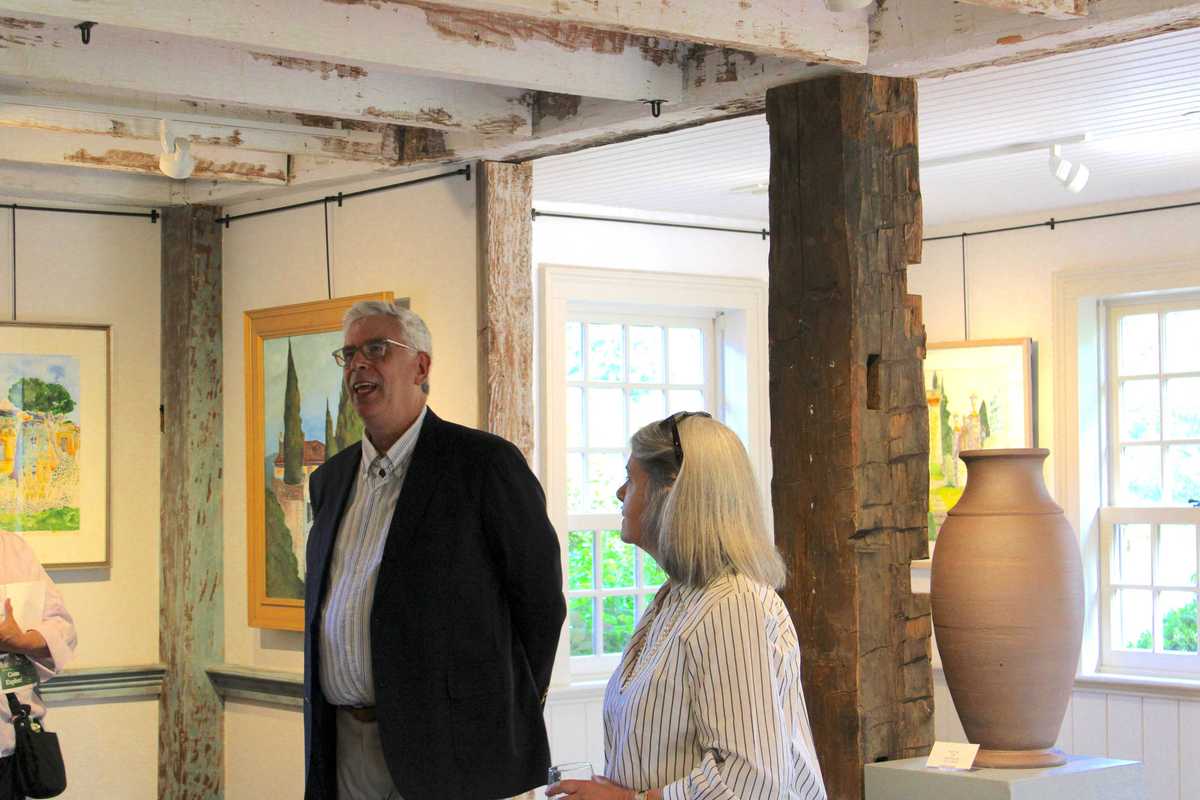
This summer, the Berkshire Botanical Garden in Stockbridge has hosted “Grounded in Nature: Paintings by Adam Van Doren,” an exhibition exploring the intimate relationship between architecture and the natural world.

On view for only a few more weeks in the Leonhardt Galleries, the exhibition features more than 35 watercolor and oil paintings by the New York-based artist, architect, author and Yale professor, curated by art historian Donna Hassler, director emerita of Chesterwood. The works span three distinct places that have shaped Van Doren’s artistic practice: New York City, Cornwall, Connecticut, and his travels throughout Europe.

Keep ReadingShow less
google preferred source

Want more of our stories on Google? Click here to make us a Preferred Source.
google preferred source

Want more of our stories on Google? Click here to make us a Preferred Source.