SALISBURY — At a town meeting Oct. 22, voters ratified the acceptance of a piece of land that has been town property since 1989 and authorized leasing a metal warehouse building at the future firehouse site to Illinois Tool Works (ITW), a four-year deal at $30,000 per year.
The town also accepted the town report, dedicated to longtime Board of Finance member and community philanthropist Zenas Block (see related story this page).
And two key dates were set: the annual town meeting to receive the audited report from the chairman of the Board of Finance and the town treasurer will be on Wednesday, Feb. 4, 2009, 7:30 p.m.; the annual budget meeting will be Wednesday, May 20, 2009, 7:30 p.m. Both will be at Town Hall.
There were some fireworks during the discussion of the parcel of land, a lot on what is known as the Greystone Farm subdivision, near Route 112. First Selectman Curtis Rand said that though the parcel had been deeded to the town, a note on the survey map said the gift was subject to approval at a town meeting, or it would revert to an adjacent lot.
“There have been some twists and turns along the way,� said Rand. “We looked through town meeting records since 1989 to see if it had been ratified, but evidently it fell through the cracks.�
Some present at the meeting offered opinions as to the status of the parcel — if there had been connection with an affordable housing plan, or questions about the parcel’s zoning status — but it wasn’t until Michael Flint spoke up that things got a bit tense.
Flint asked about access to the parcel from town property. Rand replied, “We’re not 100 percent sure, but we can do an informal survey.�
“Why should we accept a piece of land that’s landlocked?� Flint asked.
“I’d just as soon it not go to the owners of [adjacent] lot 6 as a freebie,� responded Rand.
Flint ultimately suggested the resolution be withdrawn. “Not voting on it leaves it where it stands now, and gives us time to do some fact-finding.
“No one in this room would buy a piece of land without knowing about access or use,� he finished.
Moderator Charles Vail then asked for a motion that the resolution be moved for a vote, a procedural requirement that was momentarily derailed when Flint asked for a paper ballot.
Vail and Town Clerk Patricia Williams had to go downstairs to consult the statutes. Flint’s request was subsequently denied.
And the resolution to officially accept the parcel was passed by voice vote, with just a handful of “no’s.�
The ITW lease agreement didn’t sail through the meeting either. Rand said the building in question is a 6,000-square-foot metal building on the eastern side, attached to the main building (soon to be the firehouse).
It is currently used for shipping and receiving.
“ITW asked if they could keep their shipping and receiving there,� said Rand. “We negotiated the price — I talked to three brokers who said it was a fair price for warehousing.�
ITW will pay the utilities and the costs to maintain the partition between the buildings, Rand continued, and after the four years of the lease are up the space can be used by the fire department for storage.
Flint, noting that the summary of the lease agreement included language that allowed for manufacturing in the building, asked, “Are these the actual terms of the contract, or what we surmise it might be?�
Others at the meeting said they thought the rent was too cheap; asked for another town meeting to vote on the final lease; or opined that the selectmen could be trusted to handle an agreement of this nature and that the prospect of examining a lease in a town meeting was “a dumb idea.�
But Flint stuck to his guns. “This is yet another time we as townspeople do not see the full document, and frankly I think it’s time we saw full documents.�
“We did it this way before we got the Chicago lawyers and our lawyer involved,� replied Rand.
The resolution then passed by voice vote.

 Pay Bill for Robin Starr’s service in the Continental Army.Courtesy the Alex Breanne Corporation
 John Mills speaking at Quinnipiac University.Courtesy the Alex Breanne Corporation
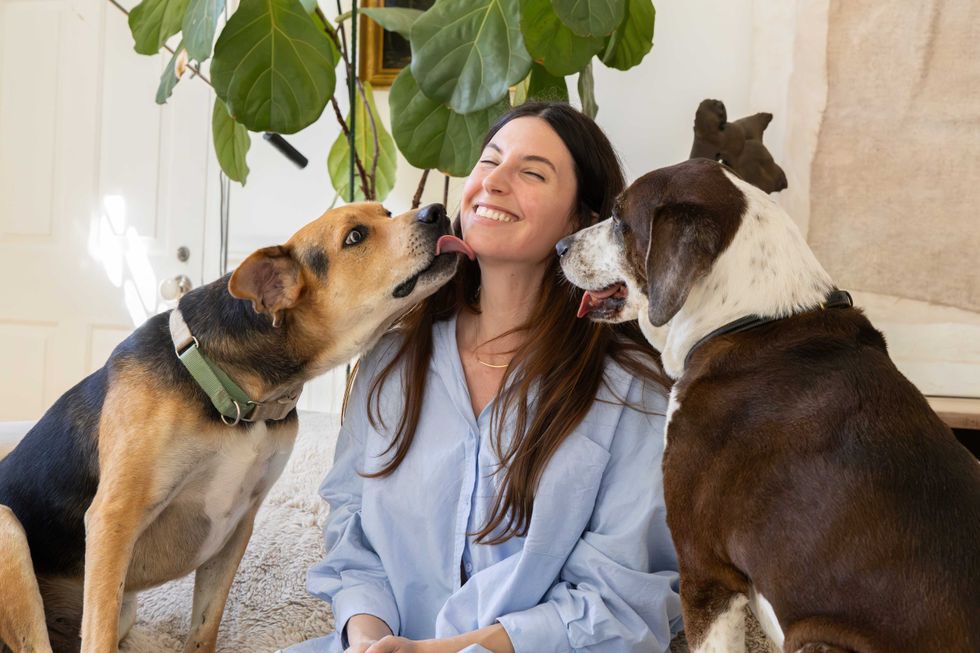 Stephanie Saetta,with her rescue dog George and Blue (left), a shepherd mix awaiting his forever home.Madi Long
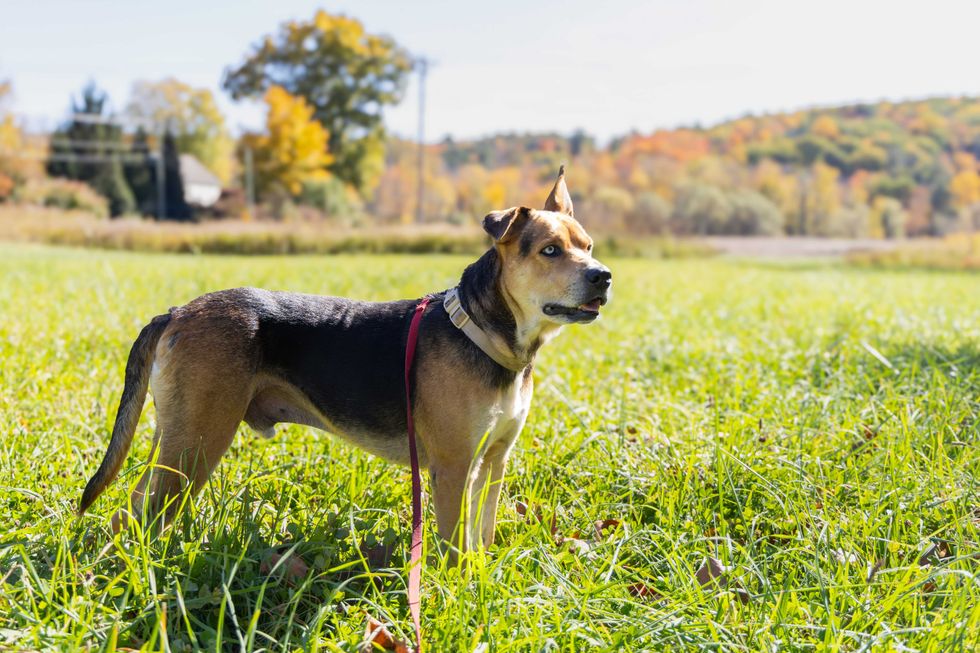 Blue, a 7 year-old Shepard mix, is waiting for his forever home. Madi Long