SALISBURY, Conn. —While many might know Dugway Road as home to the recently reopened Amesville bridge, far fewer are aware that it was once a training hub for Olympic athletes.
A few hundred yards down the river from the new bridge, a series of gates hang over the river. This is where the U.S. national team for whitewater slalom would live and train for many months out of the year.
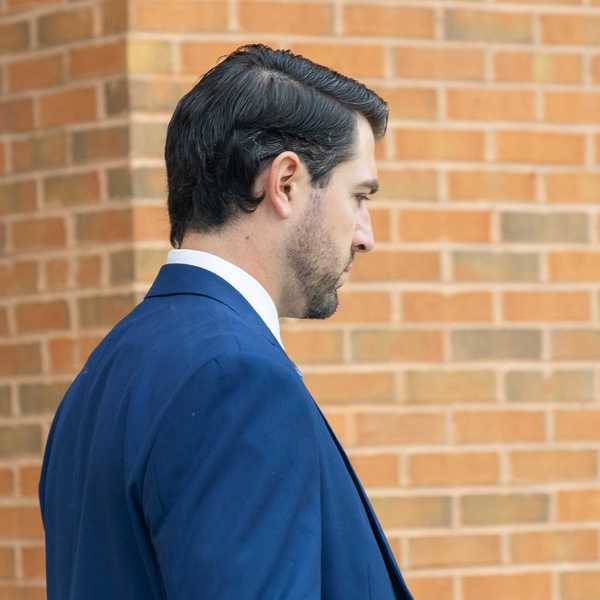
On a recent sunny morning, whitewater racer Devin McEwan stood on the bank, gazing out at the course. “Today, training has mostly moved to [Washington] D.C. and Charlotte [N.C.], but for a while, this was a nexus of training in the U.S.”
“I grew up surrounded by the white water slalom national team,” he explained.
A native of Lakeville, McEwan was introduced to the sport at a young age by his father, Jamie McEwan. An Olympic bronze medalist in 1972 and competitor in 1992, Jamie McEwan often took his children “along for the ride” in doubles canoes on the Housatonic. For Devin, the sport stuck.
“I got my own kayak when I was 10 and started competing in my teens.”
By 2001, Devin McEwan was competing on the U.S. national team alongside his father.
The gates (which look like posts strung on wires that stretch across the river) just past the power plant make up a training course for whitewater slalom racing. The paddler must pass through all of the hanging gates (there are usually about 20 of them) in the indicated direction (usually five or six will have red markings, which mean the paddler must pass through them going upstream).
The course in Falls Village is roughly the length of a competition course — about 300 meters. For many years, members of the national team, including the McEwans, used this course to train. They also shared a house across the street.
“To me [the house] has a romance to it,” McEwan said. “There is a culture around the sport. When everyone is together, and they spend as much time as possible outside — that I love.”
Although now most of the canoeing and kayaking on the Housatonic is fairly casual, McEwan continues to train here when he is around. He explained that the river is best in the spring and fall, when the water level is higher.
“There used to be a daily release from the power plant that made the river better for training, but that stopped a while ago.”
Today, whitewater slalom training has moved farther south: An artificial course was just opened in Charlotte. It is there that McEwan will spend some of his summer, training as part of the Olympic team for this year’s summer games.
To qualify for the Olympics, McEwan and his partner had to win two sets of trial competitions this spring in Charlotte and Oklahoma City.
Prior to his Olympic training, though, McEwan will travel to Spain and France to compete in a series of World Cup competitions. These usually take place on past Olympic courses; the course McEwan will run on in Spain is the one his father competed on during the 1992 Barcelona Olympics.
After returning from Europe to train in Charlotte, McEwan will finally head to Rio in July, where he will spend more than a week training before the Games begin in August.
While McEwan will continue to travel and train elsewhere, and the river will be left to more casual paddlers, the gates by the power station continue to hang, just where he left them.